Babysitter Instructions
बच्चे की देखभाल के निर्देश
Parents are giving instructions to a babysitter about their child's routine, feeding, bedtime, and emergency contacts.
माता-पिता बच्चों की देखभाल करने वाली को बच्चे की दिनचर्या, खाने, सोने के समय और आपातकालीन संपर्कों के बारे में निर्देश दे रहे हैं।
संवाद8
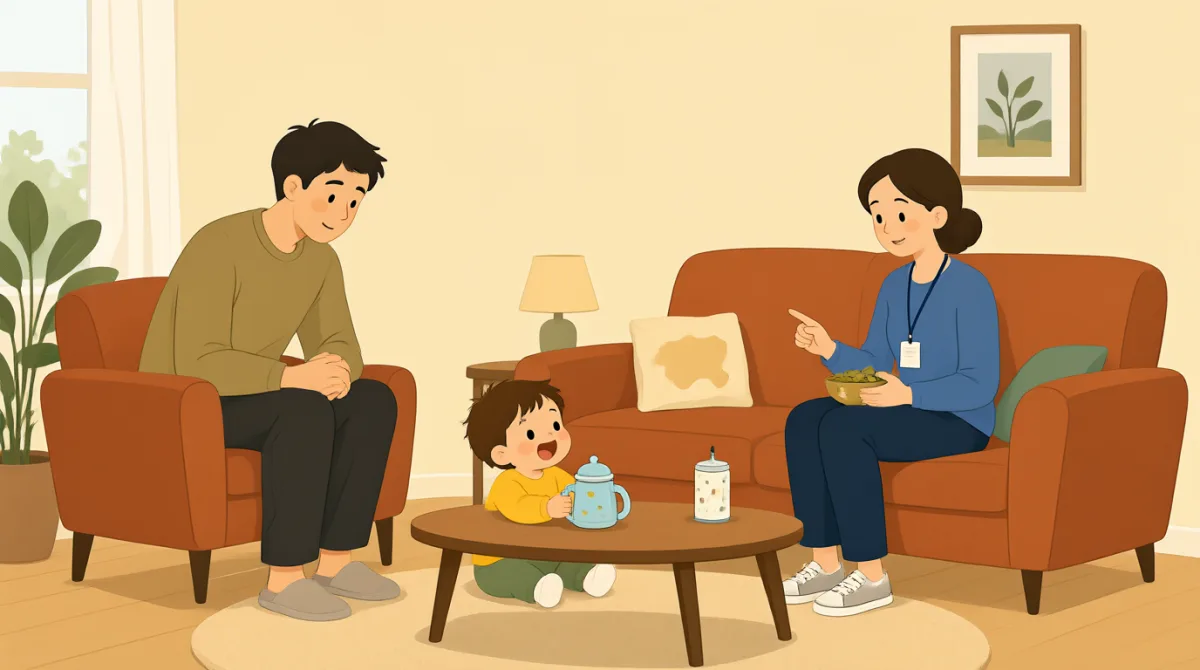

Hi Emma, thanks again for coming over tonight. Jack and I really appreciate it!
हाय एमा, आज रात आने के लिए फिर से धन्यवाद। जैक और मैं सचमुच तुम्हारे एहसानमंद हैं!

No problem at all, Grace! Happy to help. So, what's the plan for Liam this evening?
कोई बात नहीं, ग्रेस! मदद करके खुशी हुई। तो, आज शाम लियाम के लिए क्या योजना है?

Alright, so Liam usually has his dinner around 6 PM. There's some mac and cheese in the fridge, just warm it up for him. After that, he likes to play with his train set until about 7:30.
अच्छा, लियाम आम तौर पर शाम का खाना करीब 6 बजे खाता है। फ्रिज में मैकरोनी और चीज़ रखी है, बस उसके लिए गरम कर देना। उसके बाद, उसे करीब 7:30 तक अपनी ट्रेन से खेलना पसंद है।
Right, and then it's bath time. He usually takes a quick one, maybe 10-15 minutes. After the bath, he'll want a story. We left a few books on his bedside table.
हाँ, और फिर नहाने का समय है। वह आम तौर पर जल्दी नहा लेता है, शायद 10-15 मिनट में। नहाने के बाद, उसे कहानी सुननी होगी। हमने उसके पलंग के पास वाली मेज़ पर कुछ किताबें रखी हैं।
Got it. Dinner, playtime, bath, and then a story. What time is bedtime?
समझ गई। खाना, खेलने का समय, नहाना, और फिर कहानी। सोने का समय क्या है?
Bedtime is typically 8 PM. Read him two stories, and he should be good to go. He might ask for water, so his sippy cup will be on his nightstand.
आमतौर पर सोने का समय रात 8 बजे है। उसे दो कहानियाँ पढ़कर सुनाना, फिर वह सोने के लिए तैयार हो जाएगा। हो सकता है वह पानी माँगे, इसलिए उसका सिप्पी कप उसके बिस्तर के पास वाली मेज़ पर होगा।
Oh, and if you need anything, our cell numbers are on the fridge. For emergencies, Liam's pediatrician's number is there too, right next to ours.
ओह, और अगर तुम्हें किसी चीज़ की ज़रूरत हो, तो हमारे मोबाइल नंबर फ्रिज पर हैं। आपातकाल के लिए, लियाम के बाल-रोग विशेषज्ञ का नंबर भी वहीं है, हमारे नंबरों के ठीक बगल में।
Perfect, thanks for all the details! I think I've got everything. Have a great evening out!
बहुत बढ़िया, सारी बातें बताने के लिए धन्यवाद! लगता है मुझे सब समझ आ गया है। बाहर तुम्हारी शाम अच्छी बीते!
शब्दावली9
- appreciateआभारी होना
To feel grateful for something someone does for you. Use it to thank someone politely, like 'We really appreciate your help.'
किसी के आपके लिए कुछ करने पर उसके प्रति कृतज्ञ महसूस करना। किसी को विनम्रता से धन्यवाद देने के लिए इसका इस्तेमाल करें, जैसे 'We really appreciate your help.' (हम आपकी मदद के लिए सचमुच आभारी हैं।)
- planयोजना
A schedule or arrangement for what to do. In childcare, ask 'What's the plan?' to learn about the child's routine.
क्या करना है, इसका तय कार्यक्रम या इंतज़ाम। बच्चों की देखभाल के संदर्भ में, बच्चे की दिनचर्या जानने के लिए पूछें 'What's the plan?' (क्या योजना है?)।
- dinnerशाम का खाना
The main evening meal. Common in family routines; say 'He has dinner at 6 PM' to describe schedules.
दिन का मुख्य शाम का भोजन। परिवार की दिनचर्या में आम है; समय बताने के लिए कहें 'He has dinner at 6 PM' (वह शाम 6 बजे खाना खाता है)।
- fridgeफ्रिज
Short for refrigerator, where food is kept cold. Useful in instructions: 'The food is in the fridge.'
रेफ्रिजरेटर का छोटा रूप, जहाँ खाना ठंडा रखा जाता है। निर्देश देते समय यह काम आता है: 'The food is in the fridge.' (खाना फ्रिज में है।)
- bath timeनहाने का समय
The time when a child takes a bath. Part of evening routines; say 'It's bath time now.' to signal the activity.
वह समय जब बच्चा नहाता है। यह शाम की दिनचर्या का हिस्सा होता है; बच्चे को बताने के लिए कहें 'It's bath time now.' (अब नहाने का समय है।)
- bedtimeसोने का समय
The time a child goes to bed to sleep. Essential for parents and babysitters: 'Bedtime is 8 PM.'
वह समय जब बच्चा सोने के लिए बिस्तर पर जाता है। माता-पिता और बच्चों की देखभाल करने वालों के लिए यह जानना ज़रूरी है: 'Bedtime is 8 PM.' (सोने का समय रात 8 बजे है।)
- storyकहानी
A short tale read to children before bed. Common in routines: 'Read him a story.' to help them relax.
सोने से पहले बच्चों को पढ़कर सुनाई जाने वाली छोटी कथा। दिनचर्या में आम है: बच्चे को शांत करने के लिए 'Read him a story.' (उसे एक कहानी पढ़कर सुनाएँ।)
- emergencyआपातकाल
A sudden serious or dangerous situation. In childcare, share 'emergency contacts' like doctor numbers for safety.
अचानक पैदा हुई गंभीर या खतरनाक स्थिति। बच्चों की देखभाल में सुरक्षा के लिए डॉक्टर के नंबर जैसे 'emergency contacts' (आपातकालीन संपर्क) साझा करें।
- pediatricianबाल-रोग विशेषज्ञ
A doctor who specializes in children's health. Useful to know: 'Call the pediatrician in emergencies.'
बच्चों के स्वास्थ्य में विशेषज्ञता रखने वाला डॉक्टर। यह जानना उपयोगी है: 'Call the pediatrician in emergencies.' (आपातकाल में बाल-रोग विशेषज्ञ को फ़ोन करें।)
मुख्य वाक्य8
- 1
Thanks again for coming over tonight. Jack and I really appreciate it!
आज रात आने के लिए फिर से धन्यवाद। जैक और मैं सचमुच तुम्हारे एहसानमंद हैं!
This is a polite way to thank someone for help. Use it when expressing gratitude in social situations like babysitting. 'Appreciate' shows strong thanks; 'coming over' means visiting a home.
किसी की मदद के लिए धन्यवाद देने का यह एक विनम्र तरीका है। बच्चों की देखभाल जैसे सामाजिक मौकों पर आभार जताने के लिए इसका इस्तेमाल करें। 'Appreciate' से गहरा आभार व्यक्त होता है; 'coming over' का मतलब है किसी के घर आना।
- 2
So, what's the plan for Liam this evening?
तो, आज शाम लियाम के लिए क्या योजना है?
A casual question to ask about a schedule. Useful for getting details in childcare; 'what's the plan' is a common idiom for 'what are the arrangements?'
किसी दिनचर्या के बारे में पूछने का यह अनौपचारिक तरीका है। बच्चों की देखभाल के बारे में जानकारी लेने में उपयोगी है; 'what's the plan' का आम मुहावरेदार अर्थ है 'क्या इंतज़ाम है?'।
- 3
There's some mac and cheese in the fridge, just warm it up for him.
फ्रिज में मैकरोनी और चीज़ रखी है, बस उसके लिए गरम कर देना।
Gives simple food instructions. 'Warm it up' means heat in microwave; practical for routines. Use in babysitting to explain meals clearly.
यह खाने के बारे में आसान निर्देश देता है। 'Warm it up' का मतलब है माइक्रोवेव में गरम करना। रोज़मर्रा की देखभाल में खाने के निर्देश साफ़ तौर पर देने के लिए इसका इस्तेमाल करें।
- 4
After the bath, he'll want a story. We left a few books on his bedside table.
नहाने के बाद, उसे कहानी सुननी होगी। हमने उसके पलंग के पास वाली मेज़ पर कुछ किताबें रखी हैं।
Describes sequence in routine using 'after' for order. 'He'll want' predicts child's need; useful for explaining bedtime steps to caregivers.
यहाँ 'after' का इस्तेमाल दिनचर्या के क्रम को बताने के लिए किया गया है। 'He'll want' बच्चे की ज़रूरत का अनुमान जताता है; देखभाल करने वालों को सोने से पहले के काम समझाने में यह उपयोगी है।
- 5
Got it. Dinner, playtime, bath, and then a story.
समझ गई। खाना, खेलने का समय, नहाना, और फिर कहानी।
Shows understanding by repeating key points. 'Got it' means 'I understand'; list items with 'and then' for sequences. Great for confirming instructions.
मुख्य बातों को दोहराकर समझने की पुष्टि की गई है। 'Got it' का मतलब है 'मैं समझ गई'; क्रम बताने के लिए चीज़ों की सूची में 'and then' का इस्तेमाल करें। निर्देशों की पुष्टि करने का यह अच्छा तरीका है।
- 6
Bedtime is typically 8 PM. Read him two stories, and he should be good to go.
आमतौर पर सोने का समय रात 8 बजे है। उसे दो कहानियाँ पढ़कर सुनाना, फिर वह सोने के लिए तैयार हो जाएगा।
States routine time with 'typically' for usual cases. 'Should be good to go' idiom means ready to sleep; use to give bedtime advice.
आम तौर पर होने वाली बात बताने के लिए समय के साथ 'typically' का इस्तेमाल किया गया है। 'Should be good to go' एक मुहावरा है जिसका अर्थ है कि बच्चा सोने के लिए तैयार होगा; सोने के समय के बारे में सलाह देने में इसका इस्तेमाल करें।
- 7
If you need anything, our cell numbers are on the fridge.
अगर तुम्हें किसी चीज़ की ज़रूरत हो, तो हमारे मोबाइल नंबर फ्रिज पर हैं।
Provides contact info using 'if' for conditions. 'Cell numbers' means mobile phones; essential for safety in parenting exchanges.
यहाँ किसी शर्त को बताने के लिए 'if' का इस्तेमाल करके संपर्क की जानकारी दी गई है। 'Cell numbers' का मतलब मोबाइल फ़ोन नंबर है; बच्चे की देखभाल की व्यवस्था में सुरक्षा के लिए यह जानकारी ज़रूरी है।
- 8
Perfect, thanks for all the details! I think I've got everything.
बहुत बढ़िया, सारी बातें बताने के लिए धन्यवाद! लगता है मुझे सब समझ आ गया है।
Polite closing to confirm understanding. 'I've got everything' means I remember all info; use at end of instructions to show readiness.
समझ की पुष्टि करते हुए बातचीत समाप्त करने का यह विनम्र तरीका है। 'I've got everything' का मतलब है कि मुझे सारी जानकारी याद है; निर्देशों के अंत में अपनी तैयारी जताने के लिए इसका इस्तेमाल करें।