Playground Supervision
खेल के मैदान में बच्चों की निगरानी
Parents or caregivers are supervising children at a playground, engaging in brief interactions about safety, sharing, and children's activities.
माता-पिता या देखभाल करने वाले खेल के मैदान में बच्चों पर नज़र रखते हैं और सुरक्षा, बारी-बारी से खेलने तथा बच्चों की गतिविधियों के बारे में छोटी-मोटी बातें करते हैं।
संवाद8
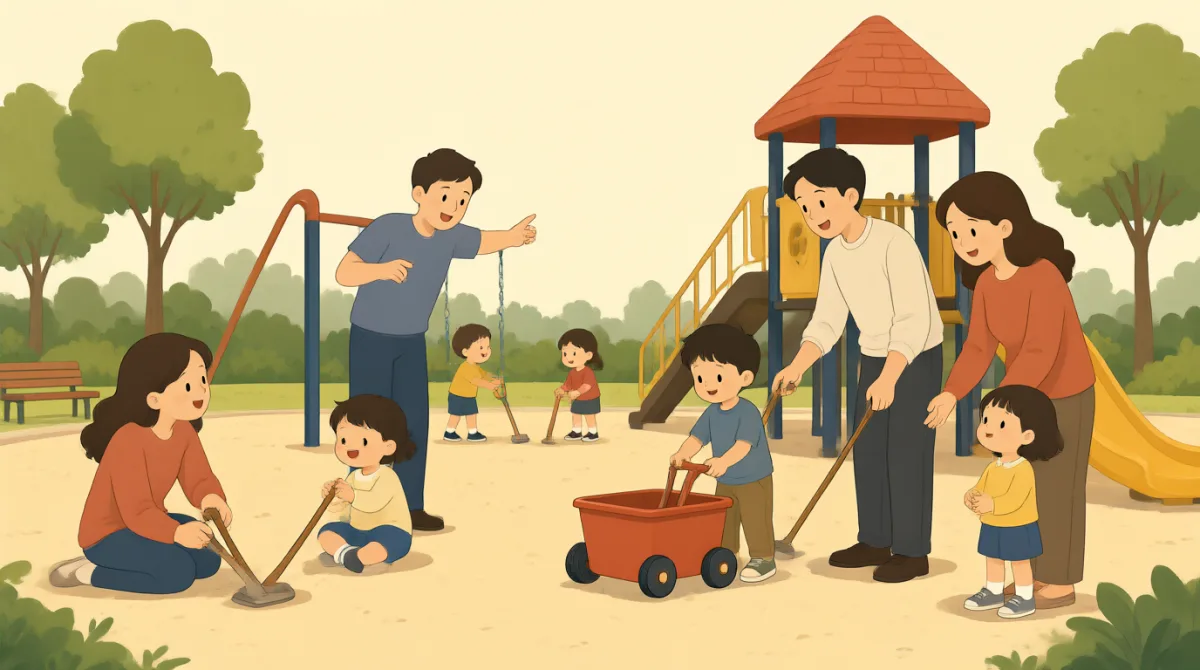

Hi Jack! Looks like the kids are having a blast on the swings.
हाय जैक! लगता है बच्चे झूलों पर खूब मज़े कर रहे हैं।

Hey Mia! They sure are. Mine just discovered the slide, so I'm keeping an eye on him there.
अरे, मिया! हाँ, बिल्कुल। मेरे बेटे ने अभी-अभी फिसलपट्टी देखी है, तो मैं उस पर नज़र रख रहा हूँ।
Oh, the slide is always a hit! Just make sure he doesn't cut in line. My daughter is very particular about taking turns.
अरे, फिसलपट्टी तो हमेशा बच्चों को खूब पसंद आती है! बस ध्यान रखना कि वह कतार में आगे न घुस जाए। मेरी बेटी बारी का इंतज़ार करने को लेकर बहुत पक्की है।
Good point. I'll remind him to wait his turn. Kids can get so excited, they forget sometimes.
सही कहा। मैं उसे अपनी बारी का इंतज़ार करने की याद दिलाऊँगा। बच्चे कभी-कभी इतने उत्साहित हो जाते हैं कि भूल जाते हैं।
Absolutely. My little one is trying to share her toy truck, which is a big step for her. She usually guards her toys.
बिल्कुल। मेरी नन्ही बेटी अपना खिलौना ट्रक बाँटने की कोशिश कर रही है, जो उसके लिए बड़ी बात है। आमतौर पर वह अपने खिलौने किसी को हाथ नहीं लगाने देती।
That's wonderful progress! Sharing at the playground is a great life lesson. It's nice to see them learning those social skills.
यह तो बहुत अच्छी तरक्की है! खेल के मैदान में चीज़ें बाँटना ज़िंदगी का एक बड़ा सबक है। अच्छा लगता है उन्हें ये सामाजिक हुनर सीखते देखकर।
It really is. Well, I'm going to grab a water bottle for her. It's getting pretty warm out here.
सच में। अच्छा, मैं उसके लिए पानी की बोतल लेने जा रही हूँ। यहाँ काफ़ी गर्मी हो रही है।
Good idea. We should probably head home soon too. They're starting to look a bit tired.
अच्छा ख़याल है। हमें भी शायद जल्द ही घर चलना चाहिए। वे थोड़े थके हुए लगने लगे हैं।
शब्दावली8
- blastबहुत मज़ा
A 'blast' means a lot of fun. We say 'having a blast' when someone is enjoying themselves very much, like kids playing at the playground.
'blast' का मतलब है बहुत मज़ा। जब कोई बहुत आनंद ले रहा हो, जैसे खेल के मैदान में बच्चे, तो हम 'having a blast' कहते हैं।
- keeping an eye onनज़र रखना
This idiom means watching someone carefully to make sure they are safe. It's useful when supervising children in public places.
इस मुहावरे का मतलब है किसी पर ध्यान से नज़र रखना, ताकि यह पक्का हो सके कि वह सुरक्षित है। सार्वजनिक जगहों पर बच्चों की निगरानी करते समय यह काम आता है।
- cut in lineकतार में आगे घुसना
To 'cut in line' means to go ahead of others who are waiting their turn. It's polite to avoid this and wait patiently.
'cut in line' का मतलब है अपनी बारी का इंतज़ार कर रहे लोगों से आगे निकल जाना। ऐसा करने से बचना और धैर्य से अपनी बारी का इंतज़ार करना अच्छा व्यवहार है।
- particular aboutको लेकर बहुत पक्का होना
Being 'particular about' something means caring a lot about it or having strict rules for it. For example, being particular about fairness in games.
'particular about' होने का मतलब है किसी चीज़ की बहुत परवाह करना या उसके लिए सख़्त नियम रखना। जैसे, खेलों में निष्पक्षता को लेकर बहुत पक्का होना।
- taking turnsबारी-बारी से करना
This phrase means sharing time or activities one after another. It's a key social skill taught to children during play.
इस वाक्यांश का मतलब है बारी-बारी से समय बिताना या कोई गतिविधि करना। खेलते समय बच्चों को सिखाया जाने वाला यह एक ज़रूरी सामाजिक हुनर है।
- shareबाँटना
To 'share' means to let others use or have some of what you have, like toys. It's important for building friendships.
'share' का मतलब है अपनी चीज़ में से कुछ दूसरों को इस्तेमाल करने या रखने देना, जैसे खिलौने। दोस्ती बढ़ाने के लिए यह ज़रूरी है।
- progressतरक्की
Progress means improvement or moving forward in learning a skill, like a child learning to share toys.
'progress' का मतलब है किसी हुनर को सीखने में सुधार होना या आगे बढ़ना, जैसे किसी बच्चे का खिलौने बाँटना सीखना।
- social skillsसामाजिक हुनर
Social skills are abilities to interact well with others, such as sharing, waiting, and being polite. They help in everyday situations like playgrounds.
'social skills' वे क्षमताएँ हैं जिनसे हम दूसरों के साथ अच्छी तरह व्यवहार करते हैं, जैसे चीज़ें बाँटना, इंतज़ार करना और विनम्र रहना। ये खेल के मैदान जैसी रोज़मर्रा की जगहों पर काम आती हैं।
मुख्य वाक्य8
- 1
Looks like the kids are having a blast on the swings.
लगता है बच्चे झूलों पर खूब मज़े कर रहे हैं।
This is a casual greeting sentence using 'looks like' to observe something obvious. It's useful for starting conversations about what you see, and 'having a blast' is an idiomatic way to say enjoying fun.
यह एक अनौपचारिक बातचीत शुरू करने वाला वाक्य है। इसमें 'looks like' का इस्तेमाल सामने दिख रही बात पर टिप्पणी करने के लिए होता है। आप जो देख रहे हैं, उसके बारे में बातचीत शुरू करने के लिए यह काम आता है। 'having a blast' मज़े करने का मुहावरेदार तरीका है।
- 2
I'm keeping an eye on him there.
मैं वहाँ उस पर नज़र रख रहा हूँ।
This sentence uses the present continuous tense to describe an ongoing action of watching for safety. It's practical for talking about supervision in childcare situations.
इस वाक्य में वर्तमान जारी काल का इस्तेमाल सुरक्षा के लिए किसी पर लगातार नज़र रखने की बात बताने के लिए हुआ है। बच्चों की देखभाल के दौरान निगरानी के बारे में बात करते समय यह उपयोगी है।
- 3
Just make sure he doesn't cut in line.
बस ध्यान रखना कि वह कतार में आगे न घुस जाए।
Here, 'make sure' is used to give advice or a reminder, followed by a negative clause. This pattern is common for suggesting polite behavior, especially with children.
यहाँ 'make sure' के बाद नकारात्मक उपवाक्य देकर सलाह या याद दिलाने की बात कही गई है। बच्चों को, ख़ासकर, विनम्रता से व्यवहार करने की सलाह देने के लिए यह आम ढाँचा है।
- 4
My daughter is very particular about taking turns.
मेरी बेटी बारी-बारी से खेलने को लेकर बहुत पक्की है।
This uses 'be particular about' to describe someone's preference or rule. The present simple tense shows a general habit, useful for explaining children's personalities.
यहाँ 'be particular about' का इस्तेमाल किसी की पसंद या नियम बताने के लिए हुआ है। सामान्य आदत बताने के लिए वर्तमान सामान्य काल का इस्तेमाल किया गया है। बच्चों के स्वभाव के बारे में बताने में यह उपयोगी है।
- 5
Kids can get so excited, they forget sometimes.
बच्चे कभी-कभी इतने उत्साहित हो जाते हैं कि भूल जाते हैं।
This is a compound sentence with 'can get' for possibility and 'so...that' implied for result. It's a natural way to explain why children might not follow rules during play.
यहाँ 'can get' से संभावना जताई गई है और 'so...that' का भाव निहित है, जो नतीजा बताता है। खेलते समय बच्चे नियम क्यों भूल सकते हैं, यह समझाने का यह स्वाभाविक तरीका है।
- 6
Sharing at the playground is a great life lesson.
खेल के मैदान में चीज़ें बाँटना ज़िंदगी का एक बड़ा सबक है।
The sentence uses 'is' for a general truth and 'life lesson' for something valuable learned in daily life. It's useful for discussing positive behaviors in parenting talks.
इस वाक्य में सामान्य सच बताने के लिए 'is' और रोज़मर्रा की ज़िंदगी में सीखी जाने वाली किसी मूल्यवान बात के लिए 'life lesson' का इस्तेमाल हुआ है। माता-पिता की बातचीत में अच्छे व्यवहार पर चर्चा करते समय यह उपयोगी है।
- 7
It's getting pretty warm out here.
यहाँ काफ़ी गर्मी हो रही है।
Present continuous 'is getting' shows a changing situation, and 'out here' specifies location. This is a common way to comment on weather and suggest actions like drinking water.
वर्तमान जारी रूप 'is getting' से बदलती हुई स्थिति का पता चलता है और 'out here' जगह बताता है। मौसम पर टिप्पणी करने और पानी पीने जैसे काम सुझाने का यह आम तरीका है।
- 8
They're starting to look a bit tired.
वे थोड़े थके हुए लगने लगे हैं।
'Starting to' indicates the beginning of a change, with 'a bit' softening the description. It's practical for observing children's energy levels and deciding to end activities.
'Starting to' बदलाव की शुरुआत बताता है और 'a bit' बात को थोड़ा नरम बनाता है। बच्चों की ऊर्जा के स्तर पर ध्यान देने और गतिविधियाँ खत्म करने का फ़ैसला लेने में यह वाक्य काम आता है।