Asking for a Receipt
रसीद माँगना
After the transaction is complete, the driver requests a receipt from the attendant.
लेन-देन पूरा होने के बाद, ड्राइवर कर्मचारी से रसीद माँगता है।
संवाद6
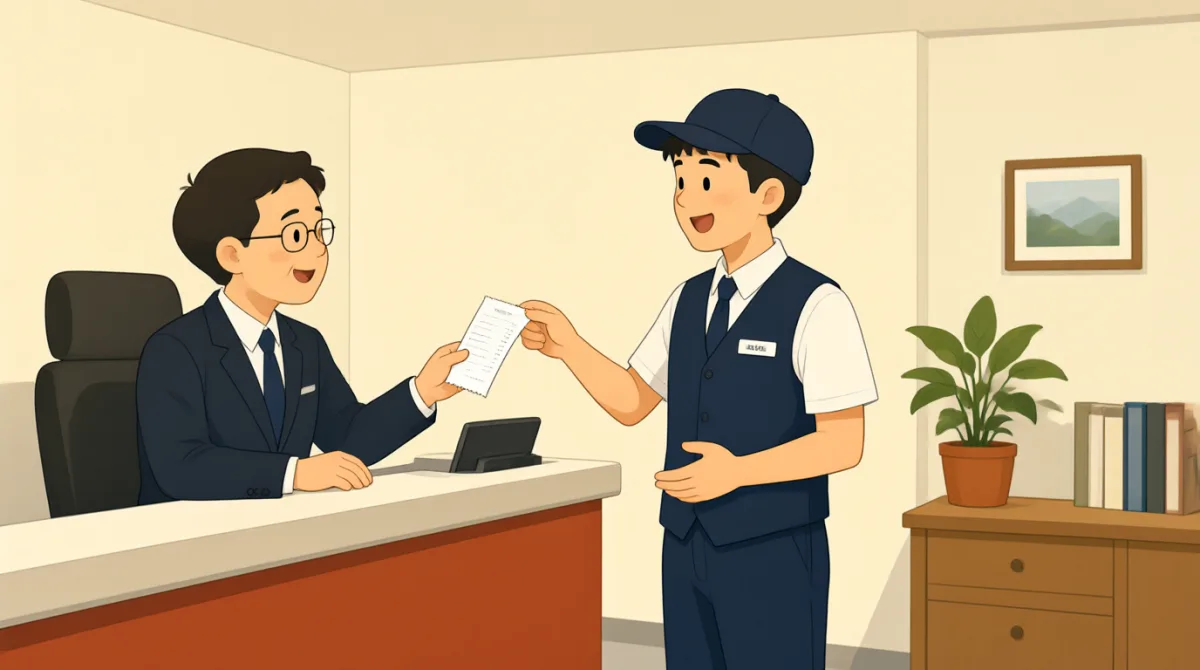

All set. Thanks!
हो गया। शुक्रिया!

You're welcome. Would you like your receipt inside, or do you need one right now?
कोई बात नहीं। क्या आप अपनी रसीद अंदर लेना चाहेंगे, या आपको अभी चाहिए?
Oh, actually, could I get a receipt now, please?
ओह, दरअसल, क्या मुझे अभी रसीद मिल सकती है, कृपया?
Sure, no problem. Here you go.
ज़रूर, कोई बात नहीं। लीजिए।
Thanks a lot!
बहुत-बहुत शुक्रिया!
Have a good day!
आपका दिन अच्छा रहे!
शब्दावली7
- receiptरसीद
A receipt is a piece of paper that shows what you bought and how much you paid. It's useful for keeping records or returns.
रसीद वह कागज़ होता है जिसमें यह दर्ज होता है कि आपने क्या खरीदा और कितने पैसे दिए। इसे हिसाब रखने या सामान लौटाने के लिए संभालकर रखना उपयोगी होता है।
- all setहो गया
All set means everything is ready or finished. Use it when something is complete, like after filling gas.
“All set” का मतलब है कि सब कुछ तैयार है या पूरा हो चुका है। कोई काम पूरा होने पर, जैसे गाड़ी में पेट्रोल भरवाने के बाद, आप यह कह सकते हैं।
- you're welcomeकोई बात नहीं
You're welcome is a polite response to 'thank you.' It shows you are happy to help.
“You're welcome” का इस्तेमाल “thank you” के विनम्र जवाब के रूप में होता है। इससे पता चलता है कि आपको मदद करके खुशी हुई।
- actuallyदरअसल
Actually is used to correct or add information gently. It softens a change in what you were going to say.
“Actually” का इस्तेमाल किसी बात को हल्के ढंग से सुधारने या उसमें जानकारी जोड़ने के लिए किया जाता है। इससे आप अपनी बात में बदलाव को सहज बना सकते हैं।
- sureज़रूर
Sure means yes or okay in a casual way. It's a friendly agreement to a request.
“Sure” का अनौपचारिक अर्थ “हाँ” या “ठीक है” होता है। किसी अनुरोध को दोस्ताना ढंग से स्वीकार करने के लिए इसका इस्तेमाल करें।
- no problemकोई बात नहीं
No problem means it's easy or not difficult. Use it to reassure someone that their request is fine.
“No problem” का मतलब है कि कोई परेशानी या मुश्किल नहीं है। इसका इस्तेमाल करके आप सामने वाले को भरोसा दिला सकते हैं कि उसका अनुरोध आपके लिए बिल्कुल ठीक है।
- here you goलीजिए
Here you go is a casual way to hand something over, like giving an item to someone.
“Here you go” किसी को चीज़ देते समय कहने का अनौपचारिक तरीका है।
मुख्य वाक्य6
- 1
All set. Thanks!
हो गया। शुक्रिया!
This short sentence means the task is done, and you're expressing thanks. It's useful at the end of a service like filling gas. The period after 'set' makes it two simple statements joined casually.
इस छोटे-से वाक्य का मतलब है कि काम पूरा हो गया है और आप शुक्रिया कह रहे हैं। पेट्रोल भरवाने जैसी सेवा के अंत में यह कहना उपयोगी है। 'set' के बाद का पूर्णविराम इसे अनौपचारिक ढंग से बोले गए दो छोटे वाक्यों में बाँटता है।
- 2
You're welcome. Would you like your receipt inside, or do you need one right now?
कोई बात नहीं। क्या आप अपनी रसीद अंदर लेना चाहेंगे, या आपको अभी चाहिए?
This is a polite response to thanks, followed by an offer with choices using 'or.' It's useful for customer service to give options. The question helps clarify the customer's needs.
इसमें शुक्रिया का विनम्र जवाब देने के बाद 'or' के ज़रिए दो विकल्प दिए गए हैं। ग्राहक सेवा में सामने वाले को विकल्प देने के लिए यह उपयोगी है। सवाल से यह भी स्पष्ट हो जाता है कि ग्राहक को क्या चाहिए।
- 3
Oh, actually, could I get a receipt now, please?
ओह, दरअसल, क्या मुझे अभी रसीद मिल सकती है, कृपया?
This politely requests something with 'could I' for a soft ask, and 'please' adds courtesy. 'Actually' corrects or adjusts the request. Use it when changing your mind in a conversation.
'could I' से आप विनम्रता से कुछ माँग सकते हैं और 'please' अनुरोध को और शिष्ट बनाता है। 'Actually' से आप अपनी बात को सुधारते या बदलते हैं। बातचीत में अपना इरादा बदलने पर इसका इस्तेमाल करें।
- 4
Sure, no problem. Here you go.
ज़रूर, कोई बात नहीं। लीजिए।
This agrees to a request casually and hands over the item. 'Sure' and 'no problem' show easy agreement. It's practical for quick service interactions, using short phrases for efficiency.
इस वाक्य में आप किसी अनुरोध को सहजता से स्वीकार करते हुए सामने वाले को चीज़ देते हैं। 'Sure' और 'no problem' से सहमति जताना आसान और सहज लगता है। छोटी सेवा-संबंधी बातचीत में कम शब्दों में काम की बात कहने के लिए यह उपयोगी है।
- 5
Thanks a lot!
बहुत-बहुत शुक्रिया!
This is a strong way to say thank you, more emphatic than just 'thanks.' Use it to show extra appreciation after help. It's informal and common in everyday English.
यह शुक्रिया कहने का ज़ोरदार तरीका है और सिर्फ़ 'thanks' कहने से ज़्यादा आभार जताता है। किसी की मदद के बाद खास तौर पर धन्यवाद देने के लिए इसका इस्तेमाल करें। यह अनौपचारिक है और रोज़मर्रा की अंग्रेज़ी में आम है।
- 6
Have a good day!
आपका दिन अच्छा रहे!
This is a friendly goodbye wishing well. It's a common closing in service situations. Use it to end conversations positively; the imperative 'have' suggests a command for good wishes.
यह शुभकामनाएँ देते हुए विदा कहने का एक दोस्ताना तरीका है। सेवा-संबंधी बातचीत में इसे अक्सर अंत में कहा जाता है। बातचीत को सकारात्मक ढंग से खत्म करने के लिए इसका इस्तेमाल करें; शुभकामना देने के लिए 'have' का प्रयोग आदेश के रूप में किया गया है।