Asking for Supplies
درخواست لوازم
An employee needs a common office supply (e.g., pens, paper, stapler) and asks a colleague or the office manager for it.
کارمندی به یکی از لوازم معمول اداری (مثلاً خودکار، کاغذ یا منگنه) نیاز دارد و از همکار یا مسئول دفتر درخواستش میکند.
گفتوگو9
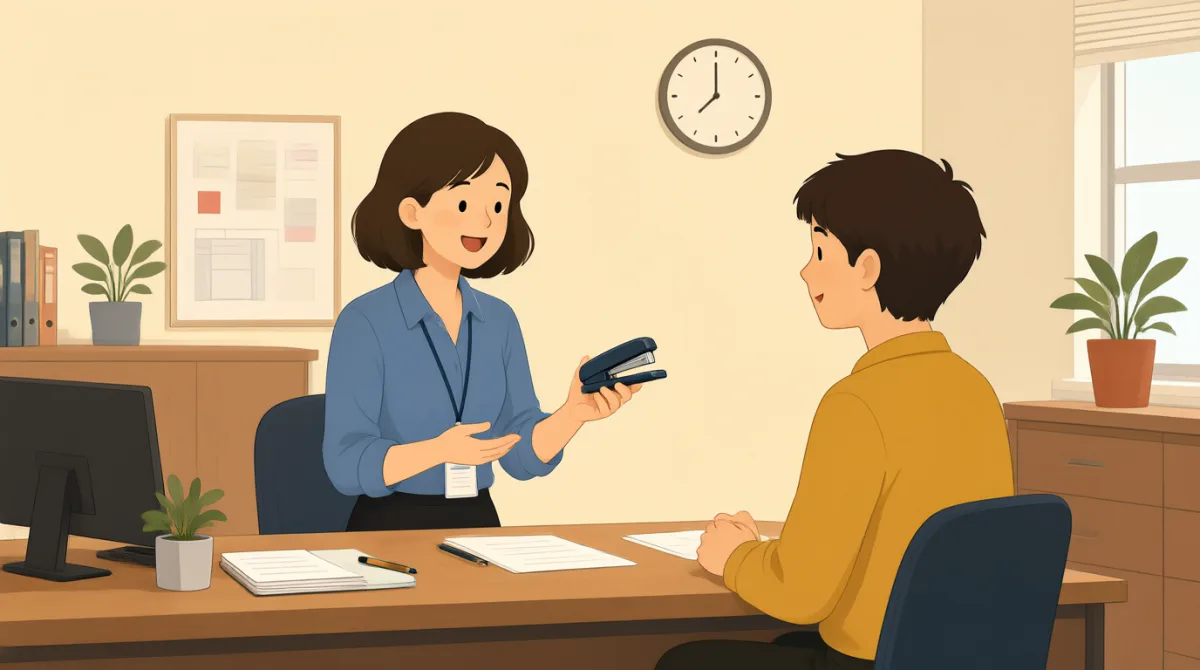

Hey Jack, do you happen to know where we keep the extra pens? I'm completely out.
سلام جک، اتفاقی میدونی خودکارهای اضافه رو کجا نگه میداریم؟ خودکارهای من کاملاً تموم شده.

Oh, sure, Emma. Most of the general office supplies are in the cabinet next to the printer in the break room.
آره، حتماً اِما. بیشتر لوازم عمومی دفتر توی کمد کنار دستگاه چاپگر، توی اتاق استراحت هست.
The break room, got it. I must have missed that. Thanks!
اتاق استراحت، فهمیدم. حتماً حواسم بهش نبوده. ممنون!
No problem! If you can't find what you need there, let me know. Sometimes we have a small stash in the supply closet near my desk.
خواهش میکنم! اگه چیزی رو که لازم داری اونجا پیدا نکردی، بهم بگو. گاهی یه مقدار کم از وسایل رو توی کمد لوازم کنار میزم نگه میداریم.
Will do. I'll take a look there first. And while I'm asking, do you know if we have any more of those sticky notes? The smaller ones?
حتماً. اول اونجا رو نگاه میکنم. راستی، حالا که دارم میپرسم، میدونی از اون یادداشتچسبها چیزی مونده؟ از کوچیکها؟
Hmm, for the sticky notes, those usually go fast. Check the same cabinet, but if they're not there, you might need to put in a request with Lisa from admin. She handles ordering supplies.
هوم، یادداشتچسبها معمولاً زود تموم میشن. همون کمد رو نگاه کن، ولی اگه اونجا نبودن، شاید لازم باشه از لیزا توی بخش اداری درخواست بدی. سفارش لوازم با اونه.
Okay, that's good to know. Thanks for the heads-up on Lisa.
باشه، خوبه که اینو بدونم. ممنون که دربارهٔ لیزا خبرم کردی.
Anytime, Emma. Let me know if you strike out with the pens.
خواهش میکنم، اِما. اگه خودکار گیرت نیومد بهم بگو.
I will! Thanks again, Jack.
حتماً! باز هم ممنون، جک.
واژگان6
- cabinetکمد
A piece of furniture with doors or drawers used for storing items, like office supplies in a workplace.
وسیلهای با در یا کشو که برای نگهداری وسایل به کار میرود؛ مثلاً لوازم اداری در محیط کار.
- break roomاتاق استراحت
A shared room in an office where employees can relax, eat, or get supplies during breaks.
اتاقی مشترک در اداره که کارمندان میتوانند در زمان استراحت در آن استراحت کنند، غذا بخورند یا وسایل بردارند.
- stashذخیرهٔ کوچک
A small hidden or personal supply of something useful, often kept for quick access.
مقدار کمی از چیزی مفید که برای دسترسی سریع، معمولاً در جایی نگه داشته میشود.
- sticky notesیادداشتچسبها
Small pieces of paper with adhesive on the back for writing quick reminders that can stick to surfaces.
تکههای کوچک کاغذی که پشتشان چسب دارد و میتوان رویشان یادآوریهای کوتاه نوشت و به سطوح چسباند.
- heads-upخبر دادن از قبل
Informal way to give advance notice or a tip about something important to watch out for.
روش غیررسمی برای اطلاع دادن یا دادن نکتهای دربارهٔ چیزی مهم که باید به آن توجه کرد.
- strike outنتیجه نگرفتن
Informal expression meaning to fail or have no success in finding or doing something.
اصطلاحی غیررسمی به معنی موفق نشدن در پیدا کردن یا انجام دادن چیزی.
جملات کلیدی8
- 1
Hey Jack, do you happen to know where we keep the extra pens? I'm completely out.
سلام جک، اتفاقی میدونی خودکارهای اضافه رو کجا نگه میداریم؟ خودکارهای من کاملاً تموم شده.
This is a polite way to ask for information in a casual workplace setting. 'Do you happen to know' softens the question to make it less direct, and 'I'm completely out' means you have none left. Useful for starting a request without sounding demanding.
این جمله راهی مؤدبانه برای پرسیدن اطلاعات در محیط کاریِ دوستانه است. 'Do you happen to know' پرسش را ملایمتر میکند تا خیلی مستقیم به نظر نرسد و 'I'm completely out' یعنی چیزی برایت باقی نمانده است. با این جمله میتوانی درخواستت را بدون اینکه مطالبهگر به نظر برسی مطرح کنی.
- 2
Most of the general office supplies are in the cabinet next to the printer in the break room.
بیشتر لوازم عمومی دفتر توی کمد کنار دستگاه چاپگر، در اتاق استراحت هستند.
This sentence gives clear directions using prepositions like 'in,' 'next to,' and 'in' to describe location. It's practical for explaining where things are kept in an office, helping colleagues navigate shared spaces.
این جمله با استفاده از حرفهای اضافهای مثل 'in'، 'next to' و 'in' مکان را بهروشنی توضیح میدهد. برای گفتن اینکه وسایل را در اداره کجا نگه میدارند کاربردی است و به همکاران کمک میکند بخشهای مشترک را پیدا کنند.
- 3
The break room, got it. I must have missed that. Thanks!
اتاق استراحت، فهمیدم. حتماً حواسم بهش نبوده. ممنون!
A quick way to acknowledge information and show understanding. 'Got it' is informal for 'I understand,' and 'I must have missed that' politely admits oversight. Use this to confirm and thank someone briefly.
راهی کوتاه برای تأیید اطلاعات و نشان دادن اینکه متوجه شدهای. 'Got it' شکل غیررسمیِ 'I understand' است و 'I must have missed that' مؤدبانه میگوید که متوجه موضوع نشده بودی. برای تأیید و تشکر کوتاه از این عبارتها استفاده کن.
- 4
If you can't find what you need there, let me know.
اگه چیزی رو که لازم داری اونجا پیدا نکردی، بهم بگو.
This offers further help using a conditional 'if' clause. It's a common polite expression in teamwork, showing willingness to assist, and useful for building good relationships at work.
این جمله با استفاده از یک جملهٔ شرطی با 'if' پیشنهاد کمک بیشتری میدهد. در کار گروهی، راهی رایج و مؤدبانه برای نشان دادن آمادگی به کمک است و به ایجاد رابطهٔ خوب در محیط کار کمک میکند.
- 5
And while I'm asking, do you know if we have any more of those sticky notes? The smaller ones?
راستی، حالا که دارم میپرسم، میدونی از اون یادداشتچسبها چیزی مونده؟ از کوچیکها؟
This chains a second question politely with 'And while I'm asking.' It uses 'if' for a yes/no question and specifies 'the smaller ones' for clarity. Great for adding related requests without interrupting the conversation.
این جمله با 'And while I'm asking' پرسش دومی را مؤدبانه به گفتوگو اضافه میکند. برای پرسش بله یا خیر از 'if' استفاده شده و عبارت 'the smaller ones' مشخص میکند منظورت کدامهاست. برای اضافه کردن درخواست مرتبط، بدون اینکه گفتوگو را قطع کنی، عبارت مناسبی است.
- 6
Check the same cabinet, but if they're not there, you might need to put in a request with Lisa from admin.
همون کمد رو نگاه کن، ولی اگه اونجا نبودن، شاید لازم باشه از لیزا توی بخش اداری درخواست بدی.
This gives advice with a contrast using 'but' and a suggestion with 'might need to.' 'Put in a request' means to formally ask for something. Useful for guiding someone through office procedures.
این جمله با 'but' توصیهای همراه با تضاد میدهد و با 'might need to' پیشنهادی مطرح میکند. 'Put in a request' یعنی رسماً چیزی را درخواست کردن. برای راهنمایی دیگران دربارهٔ روالهای اداری مفید است.
- 7
Thanks for the heads-up on Lisa.
ممنون که دربارهٔ لیزا خبرم کردی.
An informal thank you for useful information. 'Heads-up' means advance notice. This is a natural way to appreciate tips in casual office talks, helping express gratitude quickly.
این جمله راهی غیررسمی برای تشکر بابت اطلاعات مفید است. 'Heads-up' یعنی اطلاعرسانی از قبل. در گفتوگوهای دوستانهٔ کاری، راهی طبیعی برای قدردانی سریع از یک نکته است.
- 8
Let me know if you strike out with the pens.
اگه خودکار گیرت نیومد بهم بگو.
Offers help if something fails, using 'strike out' idiomatically for 'fail.' The conditional 'if' makes it supportive. Use this to show you're available for backup in workplace interactions.
این جمله پیشنهاد کمک میدهد اگر کاری به نتیجه نرسد و از 'strike out' بهصورت اصطلاحی با معنی 'fail' استفاده میکند. جملهٔ شرطی با 'if' لحن حمایتی ایجاد میکند. برای نشان دادن آمادگی به کمک در محیط کار از این عبارت استفاده کن.