Asking for Supplies
ขออุปกรณ์สำนักงาน
An employee needs a common office supply (e.g., pens, paper, stapler) and asks a colleague or the office manager for it.
พนักงานต้องการอุปกรณ์สำนักงานทั่วไป เช่น ปากกา กระดาษ หรือที่เย็บกระดาษ จึงขอจากเพื่อนร่วมงานหรือผู้จัดการสำนักงาน
บทสนทนา9
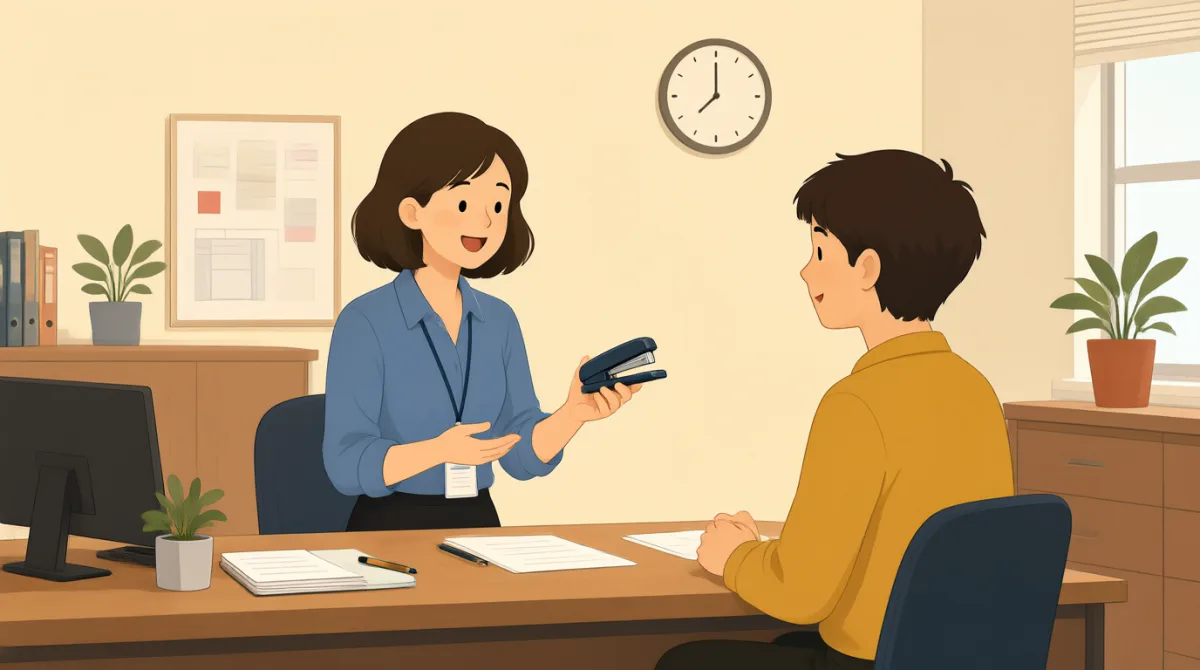

Hey Jack, do you happen to know where we keep the extra pens? I'm completely out.
เฮ้ แจ็ก พอจะรู้ไหมว่าเราเก็บปากกาสำรองไว้ที่ไหน? ปากกาฉันหมดเกลี้ยงเลย

Oh, sure, Emma. Most of the general office supplies are in the cabinet next to the printer in the break room.
อ๋อ ได้สิ เอ็มมา อุปกรณ์สำนักงานทั่วไปส่วนใหญ่อยู่ในตู้ข้างเครื่องพิมพ์ในห้องพักพนักงานน่ะ
The break room, got it. I must have missed that. Thanks!
ห้องพักพนักงาน เข้าใจแล้ว ฉันคงไม่ทันสังเกตเอง ขอบใจนะ!
No problem! If you can't find what you need there, let me know. Sometimes we have a small stash in the supply closet near my desk.
ไม่มีปัญหา! ถ้าหาของที่ต้องการไม่เจอที่นั่นก็บอกฉันนะ บางทีเรามีของสำรองเล็ก ๆ น้อย ๆ อยู่ในห้องเก็บอุปกรณ์ใกล้โต๊ะฉัน
Will do. I'll take a look there first. And while I'm asking, do you know if we have any more of those sticky notes? The smaller ones?
ได้เลย เดี๋ยวฉันไปดูก่อนนะ ไหน ๆ ก็ถามแล้ว รู้ไหมว่าเรายังมีกระดาษโน้ตกาวพวกนั้นเหลืออีกไหม? แบบแผ่นเล็กน่ะ
Hmm, for the sticky notes, those usually go fast. Check the same cabinet, but if they're not there, you might need to put in a request with Lisa from admin. She handles ordering supplies.
อืม กระดาษโน้ตกาวพวกนั้นปกติหมดเร็ว ลองดูในตู้เดิมนะ แต่ถ้าไม่มี อาจต้องยื่นคำขอกับลิซาจากฝ่ายธุรการ เธอเป็นคนจัดการสั่งซื้ออุปกรณ์สำนักงาน
Okay, that's good to know. Thanks for the heads-up on Lisa.
โอเค ดีเลยที่รู้ ขอบใจที่บอกเรื่องลิซานะ
Anytime, Emma. Let me know if you strike out with the pens.
ยินดีเสมอ เอ็มมา ถ้าหาปากกาไม่ได้ก็บอกฉันนะ
I will! Thanks again, Jack.
ได้เลย! ขอบใจอีกครั้งนะ แจ็ก
คำศัพท์6
- cabinetตู้
A piece of furniture with doors or drawers used for storing items, like office supplies in a workplace.
เฟอร์นิเจอร์ที่มีประตูหรือลิ้นชัก ใช้เก็บของต่าง ๆ เช่น อุปกรณ์สำนักงานในที่ทำงาน
- break roomห้องพักพนักงาน
A shared room in an office where employees can relax, eat, or get supplies during breaks.
ห้องส่วนกลางในสำนักงานที่พนักงานใช้พักผ่อน กินอาหาร หรือหยิบอุปกรณ์ระหว่างพัก
- stashของสำรองเล็ก ๆ น้อย ๆ
A small hidden or personal supply of something useful, often kept for quick access.
ของที่มีประโยชน์ซึ่งเก็บสำรองไว้เล็กน้อยหรือเก็บไว้ใช้ส่วนตัว มักเก็บไว้ในที่หยิบใช้ได้สะดวก
- sticky notesกระดาษโน้ตกาว
Small pieces of paper with adhesive on the back for writing quick reminders that can stick to surfaces.
กระดาษแผ่นเล็กที่มีกาวด้านหลัง ใช้เขียนข้อความเตือนสั้น ๆ และแปะติดบนพื้นผิวต่าง ๆ ได้
- heads-upคำเตือนล่วงหน้า
Informal way to give advance notice or a tip about something important to watch out for.
วิธีพูดแบบไม่เป็นทางการเพื่อแจ้งให้รู้ล่วงหน้าหรือให้คำแนะนำเกี่ยวกับเรื่องสำคัญที่ควรระวัง
- strike outหาไม่เจอ
Informal expression meaning to fail or have no success in finding or doing something.
สำนวนไม่เป็นทางการที่หมายถึงล้มเหลวหรือไม่ประสบความสำเร็จในการหาหรือทำบางสิ่ง
ประโยคสำคัญ8
- 1
Hey Jack, do you happen to know where we keep the extra pens? I'm completely out.
เฮ้ แจ็ก พอจะรู้ไหมว่าเราเก็บปากกาสำรองไว้ที่ไหน? ปากกาฉันหมดเกลี้ยงเลย
This is a polite way to ask for information in a casual workplace setting. 'Do you happen to know' softens the question to make it less direct, and 'I'm completely out' means you have none left. Useful for starting a request without sounding demanding.
ประโยคนี้เป็นวิธีถามข้อมูลอย่างสุภาพในที่ทำงานแบบไม่เป็นทางการ วลี 'Do you happen to know' ช่วยให้คำถามฟังดูไม่ตรงเกินไป ส่วน 'I'm completely out' หมายถึงของหมดแล้ว ใช้เริ่มต้นขอความช่วยเหลือได้โดยไม่ฟังดูเหมือนเรียกร้อง
- 2
Most of the general office supplies are in the cabinet next to the printer in the break room.
อุปกรณ์สำนักงานทั่วไปส่วนใหญ่อยู่ในตู้ข้างเครื่องพิมพ์ในห้องพักพนักงาน
This sentence gives clear directions using prepositions like 'in,' 'next to,' and 'in' to describe location. It's practical for explaining where things are kept in an office, helping colleagues navigate shared spaces.
ประโยคนี้บอกตำแหน่งอย่างชัดเจน โดยใช้คำบุพบทอย่าง 'in' และ 'next to' เพื่ออธิบายว่าสิ่งของอยู่ที่ไหน เหมาะสำหรับบอกเพื่อนร่วมงานว่าเก็บของไว้ตรงไหนในสำนักงาน
- 3
The break room, got it. I must have missed that. Thanks!
ห้องพักพนักงาน เข้าใจแล้ว ฉันคงไม่ทันสังเกตเอง ขอบใจนะ!
A quick way to acknowledge information and show understanding. 'Got it' is informal for 'I understand,' and 'I must have missed that' politely admits oversight. Use this to confirm and thank someone briefly.
เป็นวิธีสั้น ๆ ในการรับทราบข้อมูลและแสดงว่าเข้าใจแล้ว 'Got it' เป็นคำพูดไม่เป็นทางการที่หมายถึง 'เข้าใจแล้ว' ส่วน 'I must have missed that' เป็นการยอมรับอย่างสุภาพว่าตัวเองอาจมองข้ามไป ใช้ยืนยันว่าเข้าใจพร้อมกล่าวขอบคุณได้อย่างกระชับ
- 4
If you can't find what you need there, let me know.
ถ้าหาของที่ต้องการไม่เจอที่นั่นก็บอกฉันนะ
This offers further help using a conditional 'if' clause. It's a common polite expression in teamwork, showing willingness to assist, and useful for building good relationships at work.
ประโยคนี้เสนอความช่วยเหลือเพิ่มเติมโดยใช้ประโยคเงื่อนไข 'if' เป็นสำนวนสุภาพที่ใช้กันทั่วไปในการทำงานเป็นทีม แสดงความเต็มใจช่วยเหลือและช่วยสร้างความสัมพันธ์ที่ดีในที่ทำงาน
- 5
And while I'm asking, do you know if we have any more of those sticky notes? The smaller ones?
ไหน ๆ ก็ถามแล้ว รู้ไหมว่าเรายังมีกระดาษโน้ตกาวพวกนั้นเหลืออีกไหม? แบบแผ่นเล็กน่ะ
This chains a second question politely with 'And while I'm asking.' It uses 'if' for a yes/no question and specifies 'the smaller ones' for clarity. Great for adding related requests without interrupting the conversation.
ประโยคนี้ต่อคำถามที่สองอย่างสุภาพด้วย 'And while I'm asking' ใช้ 'if' สำหรับคำถามที่ตอบว่าใช่หรือไม่ใช่ และระบุว่าเป็น 'the smaller ones' เพื่อให้ชัดเจน เหมาะสำหรับเพิ่มคำขอที่เกี่ยวข้องโดยไม่ขัดจังหวะการสนทนา
- 6
Check the same cabinet, but if they're not there, you might need to put in a request with Lisa from admin.
ลองดูในตู้เดิมนะ แต่ถ้าไม่มี อาจต้องยื่นคำขอกับลิซาจากฝ่ายธุรการ
This gives advice with a contrast using 'but' and a suggestion with 'might need to.' 'Put in a request' means to formally ask for something. Useful for guiding someone through office procedures.
ประโยคนี้ให้คำแนะนำโดยใช้ 'but' เพื่อแสดงความขัดแย้ง และใช้ 'might need to' เพื่อเสนอสิ่งที่อาจจำเป็นต้องทำ 'Put in a request' หมายถึงยื่นคำขออย่างเป็นทางการ ใช้แนะนำขั้นตอนต่าง ๆ ในสำนักงานได้
- 7
Thanks for the heads-up on Lisa.
ขอบใจที่บอกเรื่องลิซานะ
An informal thank you for useful information. 'Heads-up' means advance notice. This is a natural way to appreciate tips in casual office talks, helping express gratitude quickly.
เป็นคำขอบคุณแบบไม่เป็นทางการสำหรับข้อมูลที่มีประโยชน์ 'Heads-up' หมายถึงการแจ้งให้รู้ล่วงหน้า เป็นวิธีธรรมชาติในการขอบคุณสำหรับคำแนะนำระหว่างคุยกันในที่ทำงานแบบสบาย ๆ
- 8
Let me know if you strike out with the pens.
ถ้าหาปากกาไม่ได้ก็บอกฉันนะ
Offers help if something fails, using 'strike out' idiomatically for 'fail.' The conditional 'if' makes it supportive. Use this to show you're available for backup in workplace interactions.
ประโยคนี้เสนอความช่วยเหลือหากอีกฝ่ายหาของไม่เจอ โดยใช้สำนวน 'strike out' ในความหมายว่าไม่สำเร็จ เงื่อนไข 'if' ทำให้ฟังดูพร้อมช่วยเหลือ ใช้บอกว่าอีกฝ่ายขอความช่วยเหลือเพิ่มเติมได้