Asking for Supplies
索要辦公用品
An employee needs a common office supply (e.g., pens, paper, stapler) and asks a colleague or the office manager for it.
一名員工需要常見的辦公用品(例如鋼筆、紙張、訂書機),並向同事或辦公室經理索要。
對話9
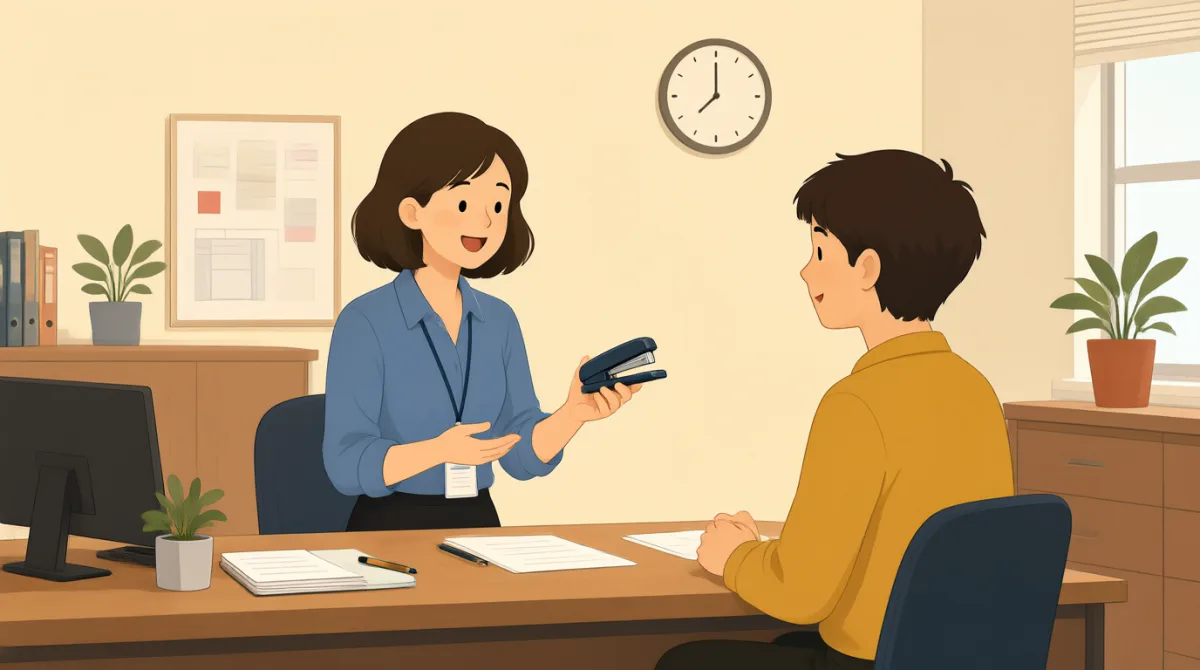

Hey Jack, do you happen to know where we keep the extra pens? I'm completely out.
嘿,傑克,你知不知道備用筆放在哪裡?我的筆用完了。

Oh, sure, Emma. Most of the general office supplies are in the cabinet next to the printer in the break room.
哦,當然,艾瑪。大多數普通辦公用品都放在休息室印表機旁邊的櫃子裡。
The break room, got it. I must have missed that. Thanks!
休息室,明白了。我肯定沒注意到。謝謝!
No problem! If you can't find what you need there, let me know. Sometimes we have a small stash in the supply closet near my desk.
沒問題!如果你在那裡找不到需要的,告訴我。有時我辦公桌附近的儲物櫃裡有少量存貨。
Will do. I'll take a look there first. And while I'm asking, do you know if we have any more of those sticky notes? The smaller ones?
好。我先去那裡看看。順便問一下,你知道我們還有沒有那種小號的便利貼嗎?
Hmm, for the sticky notes, those usually go fast. Check the same cabinet, but if they're not there, you might need to put in a request with Lisa from admin. She handles ordering supplies.
嗯,便利貼通常用得很快。看看同一個櫃子,如果不在那裡,你可能需要向行政部的麗薩提交申請。她負責訂購用品。
Okay, that's good to know. Thanks for the heads-up on Lisa.
好的,知道了。謝謝你提醒麗薩的事情。
Anytime, Emma. Let me know if you strike out with the pens.
隨時都可以,艾瑪。如果鋼筆沒找到,告訴我。
I will! Thanks again, Jack.
會的!再次感謝你,傑克。
詞彙6
- cabinet櫃子
A piece of furniture with doors or drawers used for storing items, like office supplies in a workplace.
一種帶門或抽屜的傢俱,用來存放物品,比如辦公室裡的辦公用品。
- break room休息室
A shared room in an office where employees can relax, eat, or get supplies during breaks.
辦公室裡供員工休息、吃東西或在休息時間取用辦公用品的共用房間。
- stash儲備
A small hidden or personal supply of something useful, often kept for quick access.
少量存放起來、方便隨時取用的實用物品,通常是個人留存的備用品。
- sticky notes便利貼
Small pieces of paper with adhesive on the back for writing quick reminders that can stick to surfaces.
背面帶有黏膠的小紙片,可以寫簡短提醒並貼在物體表面。
- heads-up提醒;提前告知
Informal way to give advance notice or a tip about something important to watch out for.
一種非正式的說法,表示提前告知某件需要留意的重要事情,或給出提示。
- strike out沒找到;碰壁
Informal expression meaning to fail or have no success in finding or doing something.
一種非正式表達,表示沒能找到某樣東西或沒能辦成某事。
關鍵句8
- 1
Hey Jack, do you happen to know where we keep the extra pens? I'm completely out.
嘿,傑克,你知不知道備用筆放在哪裡?我的筆用完了。
This is a polite way to ask for information in a casual workplace setting. 'Do you happen to know' softens the question to make it less direct, and 'I'm completely out' means you have none left. Useful for starting a request without sounding demanding.
在輕鬆的職場環境中,這是一種禮貌地詢問資訊的方式。“Do you happen to know”能讓問題聽起來沒那麼直接;“I'm completely out”表示你手頭一點都不剩了。用這句話提出請求,聽起來不會咄咄逼人。
- 2
Most of the general office supplies are in the cabinet next to the printer in the break room.
大多數普通辦公用品都放在休息室印表機旁邊的櫃子裡。
This sentence gives clear directions using prepositions like 'in,' 'next to,' and 'in' to describe location. It's practical for explaining where things are kept in an office, helping colleagues navigate shared spaces.
這句話用“in”“next to”和“in”等介詞清楚地說明物品的位置。在辦公室裡告訴同事東西放在哪裡時很實用,也能幫助大家找到共用空間。
- 3
The break room, got it. I must have missed that. Thanks!
休息室,知道了。我肯定沒注意到。謝謝!
A quick way to acknowledge information and show understanding. 'Got it' is informal for 'I understand,' and 'I must have missed that' politely admits oversight. Use this to confirm and thank someone briefly.
這是一種簡短回應,表示你聽明白了。“Got it”是“我明白了”的非正式說法;“I must have missed that”則是禮貌地承認自己之前沒留意。可以用它來確認資訊並簡單道謝。
- 4
If you can't find what you need there, let me know.
如果你在那裡找不到需要的東西,告訴我。
This offers further help using a conditional 'if' clause. It's a common polite expression in teamwork, showing willingness to assist, and useful for building good relationships at work.
這句話用“if”引導條件句,表示願意繼續提供幫助。在團隊合作中,這是一種常見而禮貌的說法,也有助於建立良好的同事關係。
- 5
And while I'm asking, do you know if we have any more of those sticky notes? The smaller ones?
既然問到這兒了,你知道我們還有沒有那種便利貼嗎?小號的那種?
This chains a second question politely with 'And while I'm asking.' It uses 'if' for a yes/no question and specifies 'the smaller ones' for clarity. Great for adding related requests without interrupting the conversation.
“And while I'm asking”可以禮貌地引出第二個問題。這句話用“if”詢問有沒有某樣東西,並用“the smaller ones”進一步說明是哪一種。適合順便提出相關請求,又不會打斷談話。
- 6
Check the same cabinet, but if they're not there, you might need to put in a request with Lisa from admin.
看看同一個櫃子,不過如果裡面沒有,你可能得向行政部的麗薩提交申請。
This gives advice with a contrast using 'but' and a suggestion with 'might need to.' 'Put in a request' means to formally ask for something. Useful for guiding someone through office procedures.
這句話用“but”表達轉折,並用“might need to”提出建議。“Put in a request”表示正式提出申請。用它可以告訴別人如何按辦公室流程辦事。
- 7
Thanks for the heads-up on Lisa.
謝謝你提醒我麗薩那邊的事。
An informal thank you for useful information. 'Heads-up' means advance notice. This is a natural way to appreciate tips in casual office talks, helping express gratitude quickly.
這是一種非正式的感謝方式,用來感謝別人提供了有用的資訊。“Heads-up”表示提前提醒。在輕鬆的辦公室交談中,這樣說很自然,也能簡潔地表達謝意。
- 8
Let me know if you strike out with the pens.
如果沒找到筆,告訴我。
Offers help if something fails, using 'strike out' idiomatically for 'fail.' The conditional 'if' makes it supportive. Use this to show you're available for backup in workplace interactions.
這句話用習語“strike out”表示沒能成功找到東西,並提出在這種情況下可以提供幫助。“if”引導的條件句讓表達聽起來很貼心。職場交流中可以用它來表示願意隨時幫忙。