Asking for Supplies
सामान माँगना
An employee needs a common office supply (e.g., pens, paper, stapler) and asks a colleague or the office manager for it.
एक कर्मचारी को दफ़्तर की कोई आम चीज़ (जैसे पेन, कागज़ या स्टेपलर) चाहिए और वह किसी सहकर्मी या ऑफ़िस मैनेजर से माँगता है।
संवाद9
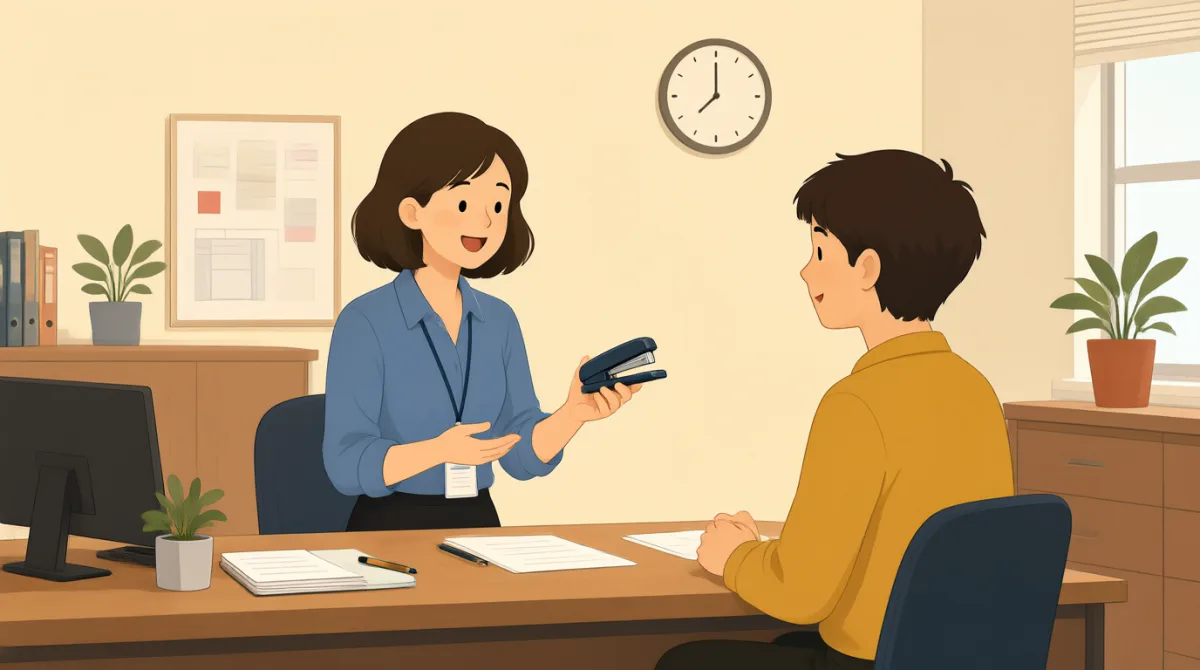

Hey Jack, do you happen to know where we keep the extra pens? I'm completely out.
अरे जैक, क्या तुम्हें पता है कि अतिरिक्त पेन कहाँ रखे हैं? मेरे पास तो एक भी नहीं बचा।

Oh, sure, Emma. Most of the general office supplies are in the cabinet next to the printer in the break room.
ओह, हाँ, एमा। दफ़्तर का ज़्यादातर सामान ब्रेक रूम में प्रिंटर के पास वाली अलमारी में रखा है।
The break room, got it. I must have missed that. Thanks!
ब्रेक रूम, समझ गई। शायद मेरी नज़र नहीं पड़ी थी। शुक्रिया!
No problem! If you can't find what you need there, let me know. Sometimes we have a small stash in the supply closet near my desk.
कोई बात नहीं! अगर वहाँ तुम्हें जो चाहिए वह न मिले, तो मुझे बताना। कभी-कभी मेरे डेस्क के पास वाले सप्लाई रूम में थोड़ा-बहुत सामान रखा होता है।
Will do. I'll take a look there first. And while I'm asking, do you know if we have any more of those sticky notes? The smaller ones?
ठीक है, ऐसा ही करूँगी। पहले वहाँ देखती हूँ। और जब पूछ ही रही हूँ, तो क्या तुम्हें पता है कि वे छोटे वाले चिपकने वाले नोट और हैं?
Hmm, for the sticky notes, those usually go fast. Check the same cabinet, but if they're not there, you might need to put in a request with Lisa from admin. She handles ordering supplies.
हम्म, चिपकने वाले नोट तो आम तौर पर जल्दी खत्म हो जाते हैं। उसी अलमारी में देखो, लेकिन अगर वहाँ न हों, तो शायद तुम्हें प्रशासन विभाग की लिसा से माँग करनी पड़े। वही सामान मँगवाने का काम देखती है।
Okay, that's good to know. Thanks for the heads-up on Lisa.
अच्छा, यह जानना काम का है। लिसा के बारे में पहले से बताने के लिए शुक्रिया।
Anytime, Emma. Let me know if you strike out with the pens.
कभी भी, एमा। अगर पेन न मिलें, तो मुझे बताना।
I will! Thanks again, Jack.
ज़रूर! फिर से शुक्रिया, जैक।
शब्दावली6
- cabinetअलमारी
A piece of furniture with doors or drawers used for storing items, like office supplies in a workplace.
दरवाज़ों या दराज़ों वाला फर्नीचर, जिसमें दफ़्तर का सामान जैसी चीज़ें रखी जाती हैं।
- break roomब्रेक रूम
A shared room in an office where employees can relax, eat, or get supplies during breaks.
दफ़्तर का साझा कमरा, जहाँ कर्मचारी आराम करते हैं, खाना खाते हैं या अवकाश के दौरान सामान लेते हैं।
- stashछिपाकर रखा थोड़ा-सा सामान
A small hidden or personal supply of something useful, often kept for quick access.
किसी काम की चीज़ का थोड़ा-सा भंडार, जिसे अक्सर जल्दी इस्तेमाल करने के लिए छिपाकर या अलग से रखा जाता है।
- sticky notesचिपकने वाले नोट
Small pieces of paper with adhesive on the back for writing quick reminders that can stick to surfaces.
पीछे चिपकने वाली सतह वाले कागज़ के छोटे टुकड़े, जिन पर जल्दी से याद दिलाने वाली बातें लिखकर किसी जगह चिपकाया जा सकता है।
- heads-upपहले से दी गई सूचना
Informal way to give advance notice or a tip about something important to watch out for.
किसी ज़रूरी बात के बारे में पहले से आगाह करने या काम की सलाह देने का अनौपचारिक तरीका।
- strike outनाकाम होना
Informal expression meaning to fail or have no success in finding or doing something.
अनौपचारिक अभिव्यक्ति, जिसका मतलब है किसी चीज़ को ढूँढ़ने या करने में असफल होना।
मुख्य वाक्य8
- 1
Hey Jack, do you happen to know where we keep the extra pens? I'm completely out.
अरे जैक, क्या तुम्हें पता है कि अतिरिक्त पेन कहाँ रखे हैं? मेरे पास तो एक भी नहीं बचा।
This is a polite way to ask for information in a casual workplace setting. 'Do you happen to know' softens the question to make it less direct, and 'I'm completely out' means you have none left. Useful for starting a request without sounding demanding.
यह अनौपचारिक कार्यस्थल पर जानकारी माँगने का विनम्र तरीका है। 'Do you happen to know' सवाल को कम सीधा बनाता है, जबकि 'I'm completely out' का मतलब है कि आपके पास कुछ भी नहीं बचा। माँग को ज़ोरदार बनाए बिना बातचीत शुरू करने के लिए यह उपयोगी है।
- 2
Most of the general office supplies are in the cabinet next to the printer in the break room.
दफ़्तर का ज़्यादातर सामान ब्रेक रूम में प्रिंटर के पास वाली अलमारी में रखा है।
This sentence gives clear directions using prepositions like 'in,' 'next to,' and 'in' to describe location. It's practical for explaining where things are kept in an office, helping colleagues navigate shared spaces.
इस वाक्य में 'in,' 'next to' और 'in' जैसे संबंधसूचक शब्दों से जगह साफ़-साफ़ बताई गई है। दफ़्तर में चीज़ें कहाँ रखी हैं, यह बताने और सहकर्मियों को साझा जगहों में रास्ता समझाने के लिए यह काम का है।
- 3
The break room, got it. I must have missed that. Thanks!
ब्रेक रूम, समझ गई। शायद मेरी नज़र नहीं पड़ी थी। शुक्रिया!
A quick way to acknowledge information and show understanding. 'Got it' is informal for 'I understand,' and 'I must have missed that' politely admits oversight. Use this to confirm and thank someone briefly.
जानकारी को स्वीकार करने और यह दिखाने का छोटा-सा तरीका कि आप समझ गए हैं। 'Got it' का अनौपचारिक अर्थ है 'मैं समझ गया/गई', और 'I must have missed that' कहकर आप विनम्रता से मानते हैं कि आपकी नज़र उस पर नहीं पड़ी थी। बात की पुष्टि करने और संक्षेप में धन्यवाद देने के लिए इसका इस्तेमाल करें।
- 4
If you can't find what you need there, let me know.
अगर वहाँ तुम्हें जो चाहिए वह न मिले, तो मुझे बताना।
This offers further help using a conditional 'if' clause. It's a common polite expression in teamwork, showing willingness to assist, and useful for building good relationships at work.
यह 'if' वाले शर्तसूचक उपवाक्य का इस्तेमाल करके आगे मदद की पेशकश करता है। टीम में सहयोग दिखाने का यह आम विनम्र तरीका है और कार्यस्थल पर अच्छे संबंध बनाने में मदद करता है।
- 5
And while I'm asking, do you know if we have any more of those sticky notes? The smaller ones?
और जब पूछ ही रही हूँ, तो क्या तुम्हें पता है कि वे छोटे वाले चिपकने वाले नोट और हैं?
This chains a second question politely with 'And while I'm asking.' It uses 'if' for a yes/no question and specifies 'the smaller ones' for clarity. Great for adding related requests without interrupting the conversation.
'And while I'm asking' के ज़रिए दूसरी बात विनम्रता से पूछी जाती है। हाँ-या-नहीं वाले सवाल के लिए 'if' का इस्तेमाल होता है, और बात साफ़ करने के लिए 'the smaller ones' कहा गया है। बातचीत रोके बिना उससे जुड़ी एक और चीज़ माँगने का यह अच्छा तरीका है।
- 6
Check the same cabinet, but if they're not there, you might need to put in a request with Lisa from admin.
उसी अलमारी में देखो, लेकिन अगर वे वहाँ न हों, तो शायद तुम्हें प्रशासन विभाग की लिसा से माँग करनी पड़े।
This gives advice with a contrast using 'but' and a suggestion with 'might need to.' 'Put in a request' means to formally ask for something. Useful for guiding someone through office procedures.
यह 'but' से विरोध दिखाते हुए सलाह देता है और 'might need to' से एक सुझाव देता है। 'Put in a request' का मतलब है किसी चीज़ के लिए औपचारिक रूप से माँग करना। दफ़्तर की प्रक्रिया में किसी का मार्गदर्शन करने के लिए यह उपयोगी है।
- 7
Thanks for the heads-up on Lisa.
लिसा के बारे में पहले से बताने के लिए शुक्रिया।
An informal thank you for useful information. 'Heads-up' means advance notice. This is a natural way to appreciate tips in casual office talks, helping express gratitude quickly.
काम की जानकारी के लिए अनौपचारिक धन्यवाद। 'Heads-up' का मतलब है पहले से दी गई सूचना। दफ़्तर की सहज बातचीत में किसी की सलाह के लिए आभार जताने का यह स्वाभाविक और छोटा तरीका है।
- 8
Let me know if you strike out with the pens.
अगर पेन न मिलें, तो मुझे बताना।
Offers help if something fails, using 'strike out' idiomatically for 'fail.' The conditional 'if' makes it supportive. Use this to show you're available for backup in workplace interactions.
यह किसी चीज़ के न मिलने पर मदद की पेशकश करता है और 'strike out' का इस्तेमाल 'असफल होना' के अर्थ में करता है। 'If' वाली शर्त इसे सहयोगी बनाती है। कार्यस्थल की बातचीत में यह दिखाने के लिए कहें कि ज़रूरत पड़ने पर आप मदद के लिए मौजूद हैं।