Asking for Directions (Car)
پرسیدن مسیر (با خودرو)
A driver is lost and pulls over to ask a pedestrian for directions to a specific location.
رانندهای که مسیر را گم کرده، کنار میزند تا از عابری نشانی مقصدی مشخص را بپرسد.
گفتوگو10
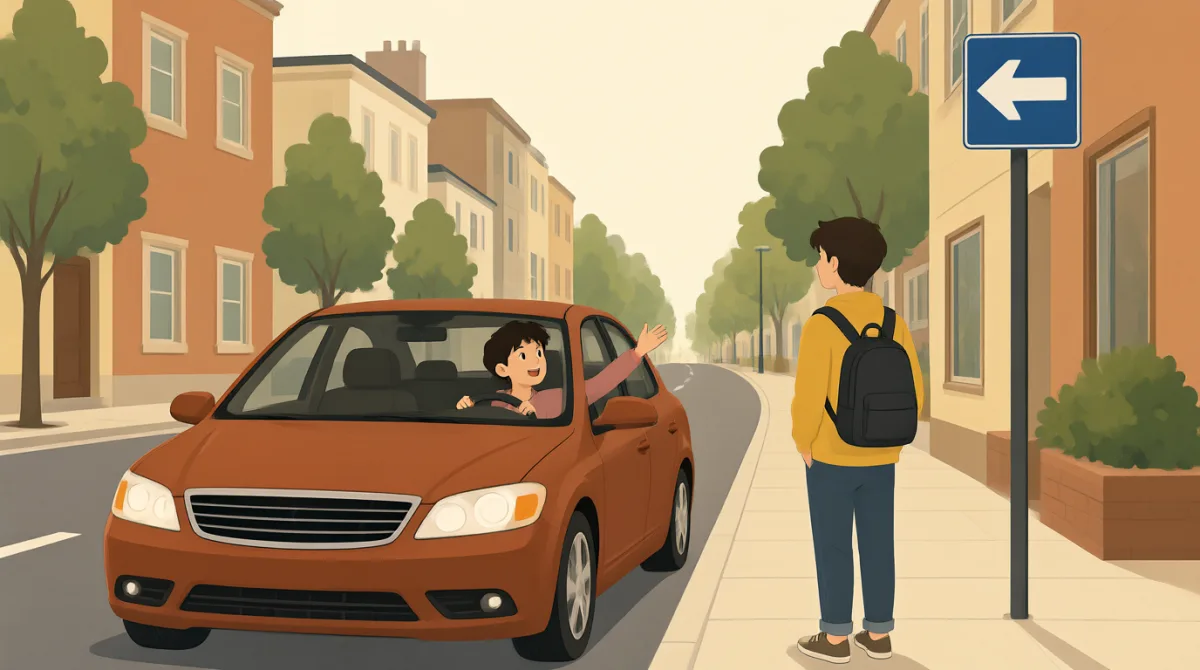

Excuse me! Could you possibly help me? I think I'm a bit lost.
ببخشید! ممکنه لطفاً کمکم کنید؟ فکر کنم یککم گم شدهام.

Of course! What are you looking for?
حتماً! دنبال کجا میگردید؟
I'm trying to get to the main library. Do you know how to get there from here?
میخوام برم کتابخانهٔ مرکزی. میدونید از اینجا چطور میتونم برم اونجا؟
The main library, huh? Okay, you're quite a bit off course. You need to go back the way you came, to the traffic light.
کتابخانهٔ مرکزی؟ خب، خیلی از مسیرتون دور افتادید. باید از همون راهی که اومدید برگردید تا چراغ راهنمایی.
Back to the traffic light? Got it. And then?
تا چراغ راهنمایی برگردم؟ فهمیدم. بعدش چی؟
At the traffic light, turn left. Go straight for about half a mile, and you'll see the library on your right. It's a big brick building.
سر چراغ راهنمایی به چپ بپیچید. حدود نیم مایل مستقیم برید تا کتابخانه رو سمت راستتون ببینید. یه ساختمون آجری بزرگه.
Left at the light, half a mile, big brick building on the right. Okay, I think I've got it. So, no turns after that left at the light, just straight?
سر چراغ به چپ، نیم مایل، ساختمون آجری بزرگ سمت راست. خب، فکر کنم گرفتم. یعنی بعد از اون پیچ به چپ سر چراغ، دیگه نپیچم و فقط مستقیم برم؟
Exactly. Just straight until you see it. You can't miss it.
دقیقاً. فقط مستقیم برید تا ببینیدش. محاله از دستش بدید.
Perfect! Thank you so much for your help. I really appreciate it.
عالیه! خیلی ممنون که کمکم کردید. واقعاً ازتون ممنونم.
You're very welcome! Drive safely.
خواهش میکنم! بااحتیاط رانندگی کنید.
واژگان8
- lostگمشده
If you are lost, it means you do not know where you are or how to get to your destination. Use this when asking for directions.
اگر بگویید "lost"، یعنی نمیدانید کجا هستید یا چطور به مقصدتان برسید. وقتی نشانی میپرسید از این واژه استفاده کنید.
- traffic lightچراغ راهنمایی
A traffic light is a signal at a road intersection that controls traffic with red, yellow, and green lights. Common in directions for driving.
"traffic light" چراغی در تقاطع خیابان است که با چراغهای قرمز، زرد و سبز رفتوآمد را کنترل میکند. این عبارت در نشانی دادن برای رانندگی زیاد به کار میرود.
- turn leftبه چپ پیچیدن
This means to change direction to the left when driving or walking. It's a basic direction phrase used in navigation.
"turn left" یعنی هنگام رانندگی یا پیادهروی مسیرتان را به سمت چپ عوض کنید. این عبارت پایهای برای راهنمایی مسیر است.
- go straightمستقیم رفتن
To go straight means to continue in the same direction without turning. Often used in giving or asking for directions.
"go straight" یعنی بدون پیچیدن، در همان مسیر ادامه دهید. هنگام نشانی دادن یا پرسیدن مسیر زیاد از آن استفاده میشود.
- half a mileنیم مایل
Half a mile is about 800 meters, a common distance unit in English-speaking countries for driving directions.
"half a mile" یعنی حدود ۸۰۰ متر؛ مایل واحد رایجی برای بیان مسافت در نشانیهای رانندگی در کشورهای انگلیسیزبان است.
- on your rightسمت راست شما
This indicates the location to the right side as you face it. Useful for describing where something is while giving directions.
"on your right" یعنی چیزی در سمت راست شما قرار دارد. هنگام نشانی دادن، برای توضیح محل چیزی به کار میآید.
- can't miss itمحاله از دستش بدید
This idiom means it's very easy to find or notice something because it's obvious. Use it to reassure someone about directions.
اصطلاح "can't miss it" یعنی پیدا کردن یا دیدن چیزی خیلی آسان است، چون کاملاً به چشم میآید. برای اطمینان دادن به کسی دربارهٔ مسیر از آن استفاده کنید.
- drive safelyبااحتیاط رانندگی کنید
A polite way to say goodbye to someone driving, wishing them a safe journey. Common in transportation conversations.
"drive safely" راهی مؤدبانه برای خداحافظی با کسی است که رانندگی میکند و آرزوی سفری امن برای اوست. در گفتوگوهای مربوط به رفتوآمد زیاد استفاده میشود.
جملات کلیدی10
- 1
Excuse me! Could you possibly help me? I think I'm a bit lost.
ببخشید! ممکنه لطفاً کمکم کنید؟ فکر کنم یککم گم شدهام.
This is a polite way to start asking for help when you're lost. 'Could you possibly' makes it very courteous. Use it to approach strangers for directions.
این جمله راهی مؤدبانه برای شروع درخواست کمک وقتی گم شدهاید است. عبارت "Could you possibly" درخواست را بسیار مؤدبانه میکند. وقتی برای پرسیدن نشانی به غریبهها نزدیک میشوید، از آن استفاده کنید.
- 2
What are you looking for?
دنبال کجا میگردید؟
A natural response when someone asks for help. It directly asks for the destination. Useful for clarifying in direction-giving situations.
این پاسخ طبیعیای است وقتی کسی کمک میخواهد. با این پرسش، مستقیم مقصد را میپرسید. برای روشن کردن موضوع هنگام نشانی دادن مفید است.
- 3
Do you know how to get there from here?
میدونید از اینجا چطور میتونم برم اونجا؟
This question seeks directions from the current location to a place. 'Get there' means to arrive at. Great for confirming routes.
این پرسش برای گرفتن مسیر از جای فعلیتان تا مقصد است. "Get there" یعنی به آنجا رسیدن. برای پرسیدن مسیر و اطمینان از آن بسیار مناسب است.
- 4
You need to go back the way you came, to the traffic light.
باید از همون راهی که اومدید برگردید تا چراغ راهنمایی.
Gives a direction to return along the same path. 'The way you came' refers to the route taken. Essential for correcting wrong turns while driving.
این جمله راهنمایی میکند که از همان مسیری که آمدهاید برگردید. "The way you came" به مسیری اشاره دارد که طی کردهاید. دانستن این عبارت هنگام اصلاح مسیر اشتباه رانندگی ضروری است.
- 5
At the traffic light, turn left. Go straight for about half a mile.
سر چراغ راهنمایی به چپ بپیچید. حدود نیم مایل مستقیم برید.
This combines specific instructions: turn at a point and continue straight a distance. 'About' shows approximation. Key pattern for step-by-step directions.
در این جمله دو راهنمایی مشخص کنار هم آمده است: در یک نقطه بپیچید و مسافتی را مستقیم ادامه دهید. "About" یعنی مسافت تقریبی است. این الگوی مهمی برای توضیح مرحلهبهمرحلهٔ مسیر است.
- 6
You'll see the library on your right. It's a big brick building.
کتابخانه رو سمت راستتون میبینید. یه ساختمون آجری بزرگه.
Describes a landmark to help identify the place. 'You'll see' predicts visibility. Use details like 'big brick building' to make directions clear.
این جمله برای شناسایی مکان، یک نشانهٔ دیداری را توصیف میکند. "You'll see" پیشبینی میکند که چیزی را خواهید دید. برای روشنتر شدن مسیر، از جزئیاتی مثل "big brick building" استفاده کنید.
- 7
So, no turns after that left at the light, just straight?
یعنی بعد از اون پیچ به چپ سر چراغ، دیگه نپیچم و فقط مستقیم برم؟
This confirms understanding by repeating and asking for clarification. It's a good habit in conversations to avoid mistakes. 'Just straight' means only go forward.
با تکرار مسیر و درخواست توضیح بیشتر، مطمئن میشوید که درست متوجه شدهاید. این کار خوبی است تا در گفتوگو از اشتباه جلوگیری کنید. "Just straight" یعنی فقط مستقیم بروید.
- 8
You can't miss it.
محاله از دستش بدید.
Reassures the listener that the place is easy to spot. Informal and encouraging. Use at the end of directions to build confidence.
این جمله به شنونده اطمینان میدهد که پیدا کردن مکان آسان است. لحنی غیررسمی و دلگرمکننده دارد. برای اینکه در پایان توضیح مسیر به طرف مقابل اعتمادبهنفس بدهید، از آن استفاده کنید.
- 9
Thank you so much for your help. I really appreciate it.
خیلی ممنون که کمکم کردید. واقعاً ازتون ممنونم.
Expresses strong gratitude. 'So much' and 'really appreciate' emphasize thanks. Always use after receiving help to be polite.
این جمله قدردانی زیادی را نشان میدهد. "So much" و "really appreciate" بر تشکر تأکید میکنند. برای رعایت ادب، پس از دریافت کمک از این جمله استفاده کنید.
- 10
You're very welcome! Drive safely.
خواهش میکنم! بااحتیاط رانندگی کنید.
A polite response to thanks, with a safety wish for drivers. 'You're welcome' is standard; add context-specific advice like this.
این پاسخ مؤدبانهای به تشکر است و آرزوی ایمنی برای راننده را هم در بر دارد. "You're welcome" پاسخ رایج به تشکر است؛ میتوانید توصیهای متناسب با موقعیت هم به آن اضافه کنید.