Asking for Directions (Car)
問路(駕車)
A driver is lost and pulls over to ask a pedestrian for directions to a specific location.
一位司機迷路了,靠邊停車向一位行人詢問如何前往某個特定地點。
對話10
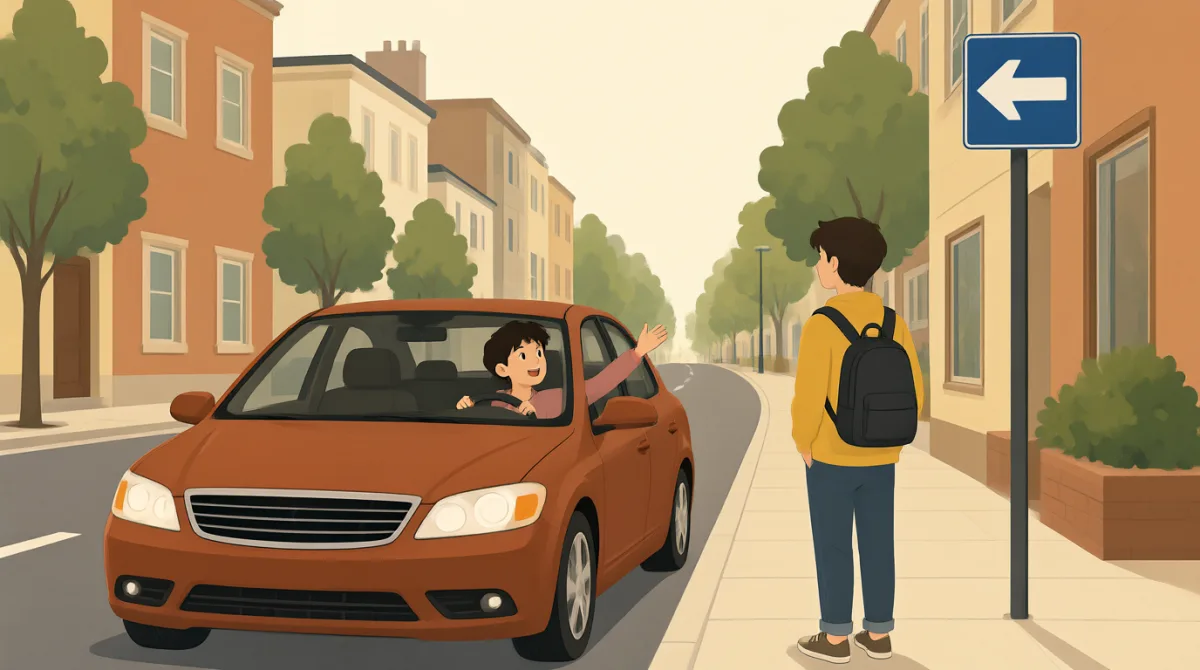

Excuse me! Could you possibly help me? I think I'm a bit lost.
打擾一下!您能幫我一下嗎?我好像有點迷路了。

Of course! What are you looking for?
當然可以!您在找什麼?
I'm trying to get to the main library. Do you know how to get there from here?
我正要去總圖書館。您知道從這裡怎麼走嗎?
The main library, huh? Okay, you're quite a bit off course. You need to go back the way you came, to the traffic light.
總圖書館啊?嗯,您走得有點偏了。您需要原路返回,回到紅綠燈那裡。
Back to the traffic light? Got it. And then?
回到紅綠燈?明白了。然後呢?
At the traffic light, turn left. Go straight for about half a mile, and you'll see the library on your right. It's a big brick building.
在紅綠燈那裡左轉。直走大約半英里,您就會在右手邊看到圖書館了。那是一棟很大的磚砌建築。
Left at the light, half a mile, big brick building on the right. Okay, I think I've got it. So, no turns after that left at the light, just straight?
紅綠燈左轉,半英里,右手邊的大磚房。好的,我想我明白了。所以,紅綠燈左轉之後,就一直直走,不用再轉彎了?
Exactly. Just straight until you see it. You can't miss it.
沒錯。一直走到你看到它為止。你不會錯過的。
Perfect! Thank you so much for your help. I really appreciate it.
太好了!非常感謝您的幫助。我真的很感激。
You're very welcome! Drive safely.
不客氣!開車小心。
詞彙8
- lost迷路的
If you are lost, it means you do not know where you are or how to get to your destination. Use this when asking for directions.
如果你迷路了,意思就是你不知道自己在哪裡,也不知道怎麼到達目的地。問路時可以這樣說。
- traffic light紅綠燈
A traffic light is a signal at a road intersection that controls traffic with red, yellow, and green lights. Common in directions for driving.
紅綠燈是設在道路交叉口、用紅黃綠燈控制交通的訊號燈。問駕車路線時經常會提到它。
- turn left向左轉
This means to change direction to the left when driving or walking. It's a basic direction phrase used in navigation.
意思是開車或步行時向左改變方向。這是問路和指路時常用的基本表達。
- go straight直走
To go straight means to continue in the same direction without turning. Often used in giving or asking for directions.
go straight 的意思是沿著當前方向繼續前進,不要轉彎。指路或問路時經常會用到。
- half a mile半英里
Half a mile is about 800 meters, a common distance unit in English-speaking countries for driving directions.
半英里大約是800米。在英語國家,駕車指路時常用英里來表示距離。
- on your right在你的右手邊
This indicates the location to the right side as you face it. Useful for describing where something is while giving directions.
表示某個地點位於你面向前方時的右側。指路時可以用它來說明某個地方在哪裡。
- can't miss it很容易找到
This idiom means it's very easy to find or notice something because it's obvious. Use it to reassure someone about directions.
這個習語的意思是某個地方很顯眼,很容易找到。指路時可以用它來讓對方放心。
- drive safely開車小心
A polite way to say goodbye to someone driving, wishing them a safe journey. Common in transportation conversations.
這是向開車的人道別時祝對方一路平安的禮貌說法。在交通出行的對話中很常見。
關鍵句10
- 1
Excuse me! Could you possibly help me? I think I'm a bit lost.
打擾一下!您能幫我一下嗎?我好像有點迷路了。
This is a polite way to start asking for help when you're lost. 'Could you possibly' makes it very courteous. Use it to approach strangers for directions.
迷路時,這是一種禮貌的求助開場白。'Could you possibly'(您能否……)讓語氣格外客氣。向陌生人問路時可以這樣說。
- 2
What are you looking for?
您在找什麼?
A natural response when someone asks for help. It directly asks for the destination. Useful for clarifying in direction-giving situations.
有人向你求助時,這是一種自然的回應。它直接詢問對方要去哪裡,適合在指路時瞭解對方的目的地。
- 3
Do you know how to get there from here?
您知道從這裡怎麼去那裡嗎?
This question seeks directions from the current location to a place. 'Get there' means to arrive at. Great for confirming routes.
這個問題是在詢問從當前位置到某個地方的路線。'Get there'(到達那裡)指抵達目的地,也可以用來確認路線。
- 4
You need to go back the way you came, to the traffic light.
您需要原路返回,回到紅綠燈那裡。
Gives a direction to return along the same path. 'The way you came' refers to the route taken. Essential for correcting wrong turns while driving.
這句話是讓對方沿著來時的路線返回。'The way you came' 指之前走過的路線。開車時發現走錯路,這個表達很實用。
- 5
At the traffic light, turn left. Go straight for about half a mile.
在紅綠燈那裡左轉。直走大約半英里。
This combines specific instructions: turn at a point and continue straight a distance. 'About' shows approximation. Key pattern for step-by-step directions.
這句話把具體的路線指示連在一起:在某個地點轉彎,然後直行一段距離。'About' 表示大約。這是一步步指路時很實用的句型。
- 6
You'll see the library on your right. It's a big brick building.
您會在右手邊看到圖書館。那是一棟很大的磚砌建築。
Describes a landmark to help identify the place. 'You'll see' predicts visibility. Use details like 'big brick building' to make directions clear.
這句話用地標幫助對方認出目的地。'You'll see' 表示對方會看到某個地方。加上 'big brick building' 這樣的細節,路線就會更清楚。
- 7
So, no turns after that left at the light, just straight?
所以,在紅綠燈那裡左轉之後,就一直直走,不用再轉彎了?
This confirms understanding by repeating and asking for clarification. It's a good habit in conversations to avoid mistakes. 'Just straight' means only go forward.
這句話透過複述路線並確認細節來確保自己聽懂了。對話中養成確認的習慣,可以避免走錯路。'Just straight' 的意思是隻管直走。
- 8
You can't miss it.
您不會錯過的。
Reassures the listener that the place is easy to spot. Informal and encouraging. Use at the end of directions to build confidence.
這句話是在讓對方放心,表示那個地方很容易找到。語氣輕鬆又鼓勵人,常用在指路的最後。
- 9
Thank you so much for your help. I really appreciate it.
非常感謝您的幫助。我真的很感激。
Expresses strong gratitude. 'So much' and 'really appreciate' emphasize thanks. Always use after receiving help to be polite.
這句話表達了由衷的感謝。'So much' 和 'really appreciate' 都加強了感謝的語氣。得到幫助後這樣說很有禮貌。
- 10
You're very welcome! Drive safely.
不客氣!開車小心。
A polite response to thanks, with a safety wish for drivers. 'You're welcome' is standard; add context-specific advice like this.
這句話既禮貌地回應了感謝,也祝開車的人一路平安。'You're welcome' 是常見的“不客氣”說法,也可以像這裡一樣加上適合情境的關照。