Asking for Directions (Car)
طلب الاتجاهات (بالسيارة)
A driver is lost and pulls over to ask a pedestrian for directions to a specific location.
ضلّ سائق الطريق فتوقّف جانبًا ليسأل أحد المارة عن كيفية الوصول إلى مكان محدد.
حوار10
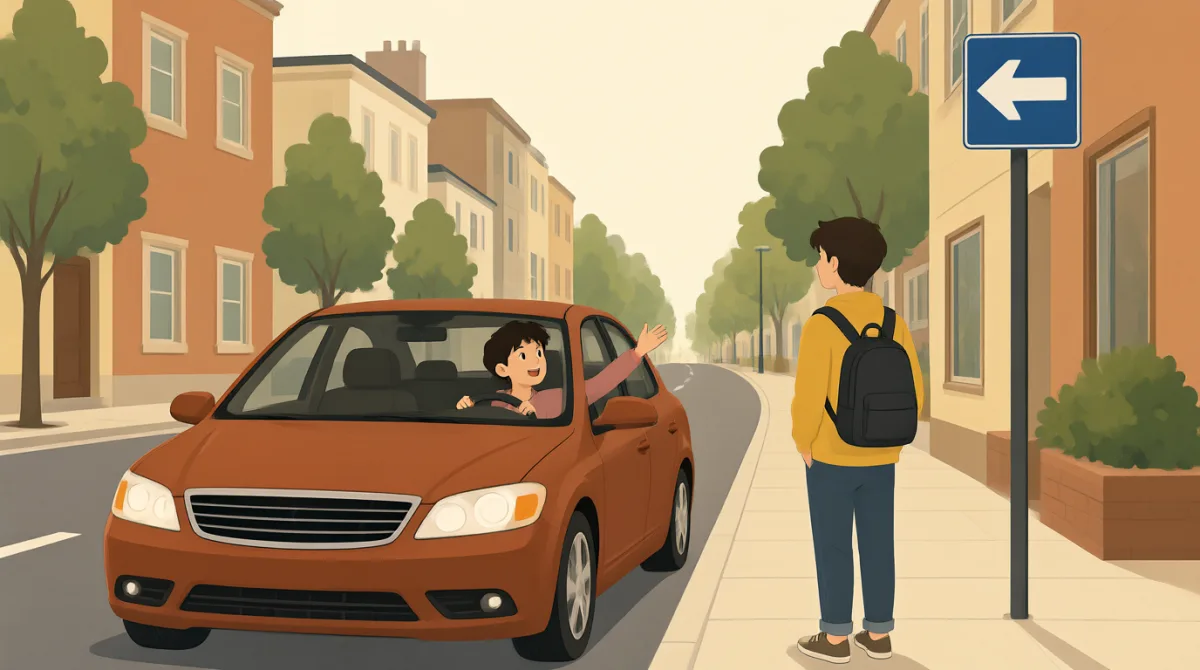

Excuse me! Could you possibly help me? I think I'm a bit lost.
عذرًا! هل يمكنك مساعدتي من فضلك؟ أظن أنني تهت قليلًا.

Of course! What are you looking for?
بالطبع! ما المكان الذي تبحث عنه؟
I'm trying to get to the main library. Do you know how to get there from here?
أحاول الوصول إلى المكتبة الرئيسية. هل تعرف كيف أصل إليها من هنا؟
The main library, huh? Okay, you're quite a bit off course. You need to go back the way you came, to the traffic light.
المكتبة الرئيسية، فهمت. حسنًا، لقد ابتعدت كثيرًا عن الطريق. عليك أن تعود من الطريق الذي أتيت منه إلى إشارة المرور.
Back to the traffic light? Got it. And then?
أعود إلى إشارة المرور؟ فهمت. وماذا بعد؟
At the traffic light, turn left. Go straight for about half a mile, and you'll see the library on your right. It's a big brick building.
عند إشارة المرور، انعطف يسارًا. تابع سيرك مستقيمًا لمسافة نصف ميل تقريبًا، وسترى المكتبة على يمينك. إنها مبنى كبير من الطوب.
Left at the light, half a mile, big brick building on the right. Okay, I think I've got it. So, no turns after that left at the light, just straight?
انعطف يسارًا عند الإشارة، ثم نصف ميل، والمبنى الكبير من الطوب على اليمين. حسنًا، أظن أنني فهمت. إذن لا منعطفات بعد الانعطاف يسارًا عند الإشارة، فقط أتابع مستقيمًا؟
Exactly. Just straight until you see it. You can't miss it.
بالضبط. تابع سيرك مستقيمًا حتى تراه. لن تخطئه.
Perfect! Thank you so much for your help. I really appreciate it.
ممتاز! شكرًا جزيلًا على مساعدتك. أنا ممتن حقًا.
You're very welcome! Drive safely.
على الرحب والسعة! قُد بحذر.
المفردات8
- lostتائه
If you are lost, it means you do not know where you are or how to get to your destination. Use this when asking for directions.
إذا كنت تائهًا، فهذا يعني أنك لا تعرف أين أنت أو كيف تصل إلى وجهتك. استخدم هذه الكلمة عندما تسأل عن الاتجاهات.
- traffic lightإشارة مرور
A traffic light is a signal at a road intersection that controls traffic with red, yellow, and green lights. Common in directions for driving.
إشارة المرور جهاز عند تقاطع الطرق ينظم حركة السير بأضواء حمراء وصفراء وخضراء. كثيرًا ما تُذكر في إعطاء الاتجاهات أثناء القيادة.
- turn leftانعطف يسارًا
This means to change direction to the left when driving or walking. It's a basic direction phrase used in navigation.
تعني تغيير الاتجاه نحو اليسار أثناء القيادة أو المشي. إنها عبارة أساسية تُستخدم في إعطاء الاتجاهات.
- go straightتابع السير مستقيمًا
To go straight means to continue in the same direction without turning. Often used in giving or asking for directions.
تعني عبارة "go straight" أن تواصل السير في الاتجاه نفسه دون أن تنعطف. تُستخدم كثيرًا عند إعطاء الاتجاهات أو السؤال عنها.
- half a mileنصف ميل
Half a mile is about 800 meters, a common distance unit in English-speaking countries for driving directions.
نصف الميل يساوي نحو 800 متر، وهو مقياس شائع للمسافات في اتجاهات القيادة في البلدان الناطقة بالإنجليزية.
- on your rightعلى يمينك
This indicates the location to the right side as you face it. Useful for describing where something is while giving directions.
تشير هذه العبارة إلى موقع شيء على الجهة اليمنى وأنت متجه نحوه. وهي مفيدة لوصف مكان شيء عند إعطاء الاتجاهات.
- can't miss itلن تخطئه
This idiom means it's very easy to find or notice something because it's obvious. Use it to reassure someone about directions.
هذا تعبير اصطلاحي يعني أن من السهل جدًا العثور على شيء أو ملاحظته لأنه واضح. استخدمه لطمأنة شخص بشأن الاتجاهات.
- drive safelyقُد بحذر
A polite way to say goodbye to someone driving, wishing them a safe journey. Common in transportation conversations.
عبارة مهذبة لتوديع شخص يقود سيارة والتمني له برحلة آمنة. وهي شائعة في المحادثات المتعلقة بالتنقل.
الجمل الأساسية10
- 1
Excuse me! Could you possibly help me? I think I'm a bit lost.
عذرًا! هل يمكنك مساعدتي من فضلك؟ أظن أنني تهت قليلًا.
This is a polite way to start asking for help when you're lost. 'Could you possibly' makes it very courteous. Use it to approach strangers for directions.
هذه طريقة مهذبة لبدء طلب المساعدة عندما تضل الطريق. تجعل عبارة "Could you possibly" الطلب في غاية اللطف والتهذيب. استخدمها عندما تطلب الاتجاهات من أشخاص لا تعرفهم.
- 2
What are you looking for?
ما المكان الذي تبحث عنه؟
A natural response when someone asks for help. It directly asks for the destination. Useful for clarifying in direction-giving situations.
هذا رد طبيعي عندما يطلب منك شخص المساعدة. يسأل مباشرة عن وجهته، وهو مفيد لمعرفة المكان المقصود عند إعطاء الاتجاهات.
- 3
Do you know how to get there from here?
هل تعرف كيف أصل إلى هناك من هنا؟
This question seeks directions from the current location to a place. 'Get there' means to arrive at. Great for confirming routes.
يسأل هذا السؤال عن الطريق من موقعك الحالي إلى مكان ما. تعني عبارة "get there" الوصول إلى ذلك المكان. وهو سؤال مفيد للتأكد من الطريق.
- 4
You need to go back the way you came, to the traffic light.
عليك أن تعود من الطريق الذي أتيت منه إلى إشارة المرور.
Gives a direction to return along the same path. 'The way you came' refers to the route taken. Essential for correcting wrong turns while driving.
تعطي هذه الجملة توجيهًا للعودة في الطريق نفسه. تشير عبارة "the way you came" إلى المسار الذي سلكته. وهي مهمة لتصحيح الطريق عند الانعطاف خطأً أثناء القيادة.
- 5
At the traffic light, turn left. Go straight for about half a mile.
عند إشارة المرور، انعطف يسارًا. تابع سيرك مستقيمًا لمسافة نصف ميل تقريبًا.
This combines specific instructions: turn at a point and continue straight a distance. 'About' shows approximation. Key pattern for step-by-step directions.
تجمع هذه الجملة بين تعليمات محددة: الانعطاف عند نقطة معينة ثم متابعة السير مستقيمًا لمسافة محددة. تشير كلمة "about" إلى أن المسافة تقريبية. وهذا نمط أساسي لإعطاء الاتجاهات خطوة بخطوة.
- 6
You'll see the library on your right. It's a big brick building.
سترى المكتبة على يمينك. إنها مبنى كبير من الطوب.
Describes a landmark to help identify the place. 'You'll see' predicts visibility. Use details like 'big brick building' to make directions clear.
تصف هذه الجملة معلمًا يساعد على التعرّف إلى المكان. تتنبأ عبارة "You'll see" بأن المكان سيظهر أمامك. استخدم أوصافًا مثل "big brick building" لتوضيح الاتجاهات.
- 7
So, no turns after that left at the light, just straight?
إذن، لا منعطفات بعد الانعطاف يسارًا عند الإشارة، فقط أتابع مستقيمًا؟
This confirms understanding by repeating and asking for clarification. It's a good habit in conversations to avoid mistakes. 'Just straight' means only go forward.
تتأكد بهذه الجملة من فهمك عبر تكرار التعليمات وطلب التوضيح. من الجيد فعل ذلك في المحادثات لتجنب الأخطاء. تعني عبارة "Just straight" أن تتابع السير إلى الأمام فقط.
- 8
You can't miss it.
لن تخطئه.
Reassures the listener that the place is easy to spot. Informal and encouraging. Use at the end of directions to build confidence.
تطمئن هذه العبارة المستمع إلى أن العثور على المكان سهل. وهي غير رسمية ومشجعة، ويمكنك قولها في نهاية إعطاء الاتجاهات لتعزيز ثقته.
- 9
Thank you so much for your help. I really appreciate it.
شكرًا جزيلًا على مساعدتك. أنا ممتن حقًا.
Expresses strong gratitude. 'So much' and 'really appreciate' emphasize thanks. Always use after receiving help to be polite.
تعبّر الجملة عن امتنان كبير. تؤكد عبارتا "So much" و"really appreciate" على الشكر. قلها دائمًا بعد تلقي المساعدة لتكون مهذبًا.
- 10
You're very welcome! Drive safely.
على الرحب والسعة! قُد بحذر.
A polite response to thanks, with a safety wish for drivers. 'You're welcome' is standard; add context-specific advice like this.
هذا رد مهذب على الشكر، يتضمن تمنّي السلامة للسائق. عبارة "You're welcome" هي الرد المعتاد، ويمكنك إضافة نصيحة تناسب الموقف مثل هذه.