Asking for Directions (Car)
গাড়িতে পথ জিজ্ঞাসা করা
A driver is lost and pulls over to ask a pedestrian for directions to a specific location.
পথ হারিয়ে এক চালক গাড়ি রাস্তার পাশে থামিয়ে নির্দিষ্ট একটি জায়গায় যাওয়ার পথ জানতে এক পথচারীকে জিজ্ঞাসা করেন।
সংলাপ10
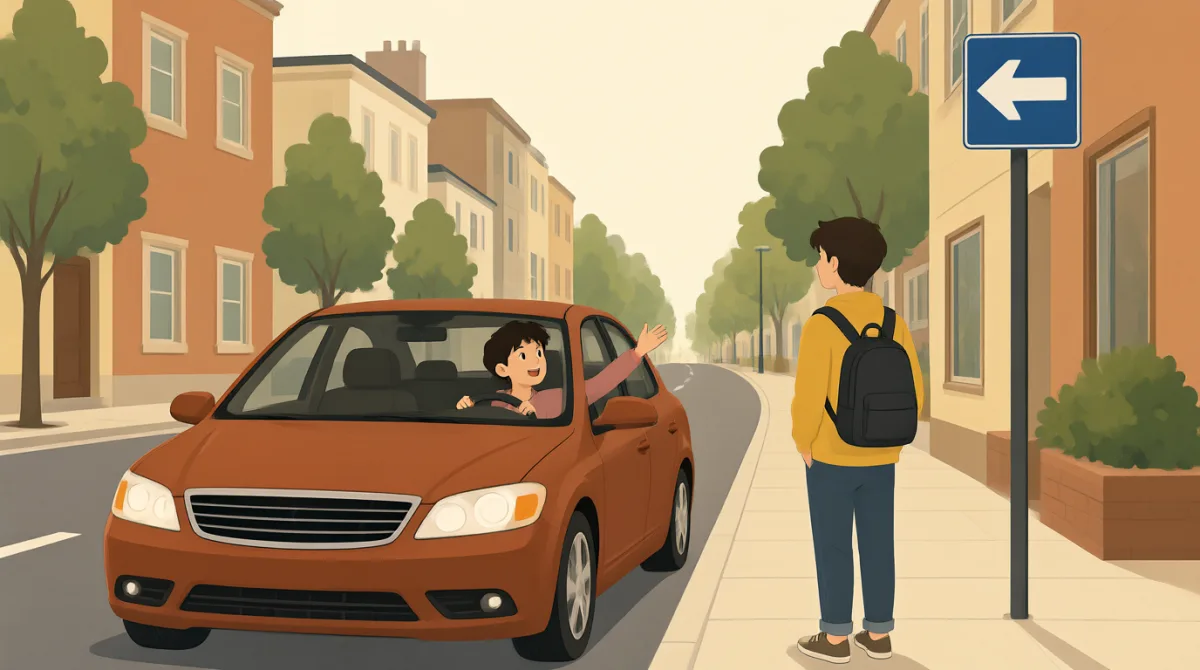

Excuse me! Could you possibly help me? I think I'm a bit lost.
মাফ করবেন! আপনি কি একটু সাহায্য করতে পারবেন? মনে হয় আমি একটু পথ হারিয়ে ফেলেছি।

Of course! What are you looking for?
অবশ্যই! আপনি কোথায় যেতে চাইছেন?
I'm trying to get to the main library. Do you know how to get there from here?
আমি মূল লাইব্রেরিতে যাওয়ার চেষ্টা করছি। এখান থেকে সেখানে কীভাবে যেতে হয়, আপনি জানেন?
The main library, huh? Okay, you're quite a bit off course. You need to go back the way you came, to the traffic light.
মূল লাইব্রেরি, তাই তো? আচ্ছা, আপনি বেশ খানিকটা ভুল পথে চলে এসেছেন। যেদিক দিয়ে এসেছেন, সেই পথেই ট্রাফিক সিগন্যাল পর্যন্ত ফিরে যান।
Back to the traffic light? Got it. And then?
ট্রাফিক সিগন্যাল পর্যন্ত ফিরে যাব? বুঝেছি। তারপর?
At the traffic light, turn left. Go straight for about half a mile, and you'll see the library on your right. It's a big brick building.
সিগন্যালের কাছে বাঁ দিকে মোড় নেবেন। প্রায় আধা মাইল সোজা গেলে ডান দিকে লাইব্রেরিটা দেখতে পাবেন। ওটা বড় ইটের একটা ভবন।
Left at the light, half a mile, big brick building on the right. Okay, I think I've got it. So, no turns after that left at the light, just straight?
সিগন্যালে বাঁ দিকে, আধা মাইল, ডান দিকে বড় ইটের ভবন। আচ্ছা, মনে হয় বুঝেছি। তাহলে সিগন্যালে বাঁ দিকে মোড় নেওয়ার পর আর কোথাও মোড় নিতে হবে না, শুধু সোজা যাব?
Exactly. Just straight until you see it. You can't miss it.
ঠিক তাই। ওটা দেখা পর্যন্ত শুধু সোজা যাবেন। চোখ এড়াবে না।
Perfect! Thank you so much for your help. I really appreciate it.
দারুণ! সাহায্য করার জন্য আপনাকে অনেক ধন্যবাদ। আমি সত্যিই কৃতজ্ঞ।
You're very welcome! Drive safely.
আপনাকে স্বাগতম! সাবধানে গাড়ি চালাবেন।
শব্দভান্ডার8
- lostপথ হারানো
If you are lost, it means you do not know where you are or how to get to your destination. Use this when asking for directions.
আপনি যদি পথ হারিয়ে ফেলেন, তার মানে আপনি কোথায় আছেন বা গন্তব্যে কীভাবে যাবেন তা জানেন না। পথ জিজ্ঞাসা করার সময় এই শব্দটি ব্যবহার করুন।
- traffic lightট্রাফিক সিগন্যাল
A traffic light is a signal at a road intersection that controls traffic with red, yellow, and green lights. Common in directions for driving.
ট্রাফিক লাইট হলো রাস্তার মোড়ে থাকা একটি সংকেত, যা লাল, হলুদ ও সবুজ বাতি দিয়ে যানবাহন চলাচল নিয়ন্ত্রণ করে। গাড়ি চালানোর পথনির্দেশে এটি প্রায়ই বলা হয়।
- turn leftবাঁ দিকে মোড় নেওয়া
This means to change direction to the left when driving or walking. It's a basic direction phrase used in navigation.
গাড়ি চালানোর সময় বা হাঁটার সময় বাঁ দিকে দিক পরিবর্তন করাকে বোঝায়। পথনির্দেশে ব্যবহৃত একটি মৌলিক বাক্যাংশ।
- go straightসোজা যাওয়া
To go straight means to continue in the same direction without turning. Often used in giving or asking for directions.
সোজা যাওয়া মানে মোড় না নিয়ে একই দিকে এগিয়ে চলা। পথ জিজ্ঞাসা করা বা কাউকে পথ দেখানোর সময় এটি প্রায়ই ব্যবহৃত হয়।
- half a mileআধা মাইল
Half a mile is about 800 meters, a common distance unit in English-speaking countries for driving directions.
আধা মাইল প্রায় ৮০০ মিটারের সমান। ইংরেজিভাষী দেশগুলোতে গাড়ি চালানোর পথনির্দেশে দূরত্বের এই এককটি প্রায়ই ব্যবহৃত হয়।
- on your rightআপনার ডান দিকে
This indicates the location to the right side as you face it. Useful for describing where something is while giving directions.
কোনো কিছুর দিকে মুখ করে দাঁড়ালে সেটি ডান পাশে আছে—এ কথা বোঝায়। পথনির্দেশের সময় কোনো জায়গার অবস্থান জানাতে এটি কাজে লাগে।
- can't miss itচোখ এড়াবে না
This idiom means it's very easy to find or notice something because it's obvious. Use it to reassure someone about directions.
এই বাগ্ধারার অর্থ, কোনো কিছু সহজেই খুঁজে পাওয়া বা চোখে পড়ার মতো স্পষ্ট। পথনির্দেশ শুনে কেউ নিশ্চিন্ত হয়, এমন কথা বলতে এটি ব্যবহার করুন।
- drive safelyসাবধানে গাড়ি চালাবেন
A polite way to say goodbye to someone driving, wishing them a safe journey. Common in transportation conversations.
গাড়ি চালাচ্ছেন এমন কাউকে বিদায় জানানোর সময় নিরাপদ যাত্রা কামনা করে এ কথা বলা হয়। যানবাহন নিয়ে কথোপকথনে এটি প্রচলিত।
গুরুত্বপূর্ণ বাক্য10
- 1
Excuse me! Could you possibly help me? I think I'm a bit lost.
মাফ করবেন! আপনি কি একটু সাহায্য করতে পারবেন? মনে হয় আমি একটু পথ হারিয়ে ফেলেছি।
This is a polite way to start asking for help when you're lost. 'Could you possibly' makes it very courteous. Use it to approach strangers for directions.
পথ হারিয়ে গেলে সাহায্য চাওয়ার শুরুতে এটি ভদ্রভাবে বলা যায়। 'Could you possibly' কথাটিকে আরও বিনয়ী করে তোলে। অপরিচিত কারও কাছে পথ জানতে এভাবে বলতে পারেন।
- 2
What are you looking for?
আপনি কোথায় যেতে চাইছেন?
A natural response when someone asks for help. It directly asks for the destination. Useful for clarifying in direction-giving situations.
কেউ সাহায্য চাইলে স্বাভাবিকভাবে এভাবে উত্তর দেওয়া যায়। এতে সরাসরি জিজ্ঞেস করা হয় তিনি কোথায় যেতে চান। পথ দেখানোর সময় গন্তব্য পরিষ্কার করে নিতে এটি কাজে লাগে।
- 3
Do you know how to get there from here?
এখান থেকে সেখানে কীভাবে যেতে হয়, আপনি জানেন?
This question seeks directions from the current location to a place. 'Get there' means to arrive at. Great for confirming routes.
এ প্রশ্নে বর্তমান জায়গা থেকে কোনো স্থানে যাওয়ার পথ জানতে চাওয়া হয়। 'Get there' মানে সেখানে পৌঁছানো। পথ নিশ্চিত করতে এটি ব্যবহার করতে পারেন।
- 4
You need to go back the way you came, to the traffic light.
যেদিক দিয়ে এসেছেন, সেই পথেই ট্রাফিক সিগন্যাল পর্যন্ত ফিরে যান।
Gives a direction to return along the same path. 'The way you came' refers to the route taken. Essential for correcting wrong turns while driving.
একই পথ ধরে ফিরে যাওয়ার নির্দেশ দেওয়া হয়েছে। 'The way you came' বলতে আসার পথটিকেই বোঝায়। গাড়ি চালাতে গিয়ে ভুল মোড় নিলে সঠিক পথ দেখাতে এই বাক্যটি কাজে লাগে।
- 5
At the traffic light, turn left. Go straight for about half a mile.
সিগন্যালে বাঁ দিকে মোড় নেবেন। প্রায় আধা মাইল সোজা যাবেন।
This combines specific instructions: turn at a point and continue straight a distance. 'About' shows approximation. Key pattern for step-by-step directions.
এখানে নির্দিষ্ট জায়গায় মোড় নেওয়া এবং নির্দিষ্ট দূরত্ব সোজা যাওয়ার নির্দেশ একসঙ্গে দেওয়া হয়েছে। 'About' দিয়ে আনুমানিক দূরত্ব বোঝানো হয়। ধাপে ধাপে পথ দেখানোর জন্য এটি একটি দরকারি ধরন।
- 6
You'll see the library on your right. It's a big brick building.
ডান দিকে লাইব্রেরিটা দেখতে পাবেন। ওটা বড় ইটের একটা ভবন।
Describes a landmark to help identify the place. 'You'll see' predicts visibility. Use details like 'big brick building' to make directions clear.
জায়গাটি চিনে নিতে সাহায্য করার জন্য এখানে একটি পরিচিত চিহ্নের বর্ণনা দেওয়া হয়েছে। 'You'll see' দিয়ে বোঝানো হয় যে জায়গাটি চোখে পড়বে। পথ স্পষ্ট করে বলতে 'big brick building'-এর মতো বর্ণনা যোগ করুন।
- 7
So, no turns after that left at the light, just straight?
তাহলে, সিগন্যালে বাঁ দিকে মোড় নেওয়ার পর আর কোথাও মোড় নিতে হবে না, শুধু সোজা যাব?
This confirms understanding by repeating and asking for clarification. It's a good habit in conversations to avoid mistakes. 'Just straight' means only go forward.
শোনা নির্দেশ আবার বলে এবং স্পষ্ট করে জেনে নিয়ে বক্তা নিশ্চিত হচ্ছেন যে তিনি ঠিক বুঝেছেন। ভুল এড়াতে কথোপকথনে এ অভ্যাসটি ভালো। 'Just straight' মানে শুধু সোজা এগিয়ে যাওয়া।
- 8
You can't miss it.
চোখ এড়াবে না।
Reassures the listener that the place is easy to spot. Informal and encouraging. Use at the end of directions to build confidence.
এ কথা শুনে অপরজন আশ্বস্ত হন যে জায়গাটি সহজেই চোখে পড়বে। এটি অনানুষ্ঠানিক ও উৎসাহব্যঞ্জক কথা। পথনির্দেশের শেষে শুনে নিশ্চিন্ত করতে এটি বলতে পারেন।
- 9
Thank you so much for your help. I really appreciate it.
সাহায্য করার জন্য আপনাকে অনেক ধন্যবাদ। আমি সত্যিই কৃতজ্ঞ।
Expresses strong gratitude. 'So much' and 'really appreciate' emphasize thanks. Always use after receiving help to be polite.
এ বাক্যে গভীর কৃতজ্ঞতা প্রকাশ করা হয়। 'So much' এবং 'really appreciate' ধন্যবাদ জানানোর অনুভূতিকে জোরালো করে। কেউ সাহায্য করলে ভদ্রতা করে এ কথা বলুন।
- 10
You're very welcome! Drive safely.
আপনাকে স্বাগতম! সাবধানে গাড়ি চালাবেন।
A polite response to thanks, with a safety wish for drivers. 'You're welcome' is standard; add context-specific advice like this.
ধন্যবাদের উত্তরে ভদ্রভাবে বলা হয়, সঙ্গে চালকের নিরাপদ যাত্রাও কামনা করা হয়। 'You're welcome' একটি প্রচলিত উত্তর; এর সঙ্গে পরিস্থিতি অনুযায়ী এমন শুভকামনা যোগ করতে পারেন।