Asking for Directions (Car)
(कार से) रास्ता पूछना
A driver is lost and pulls over to ask a pedestrian for directions to a specific location.
एक ड्राइवर रास्ता भटक जाता है और किसी खास जगह का रास्ता पूछने के लिए गाड़ी सड़क किनारे रोकता है।
संवाद10
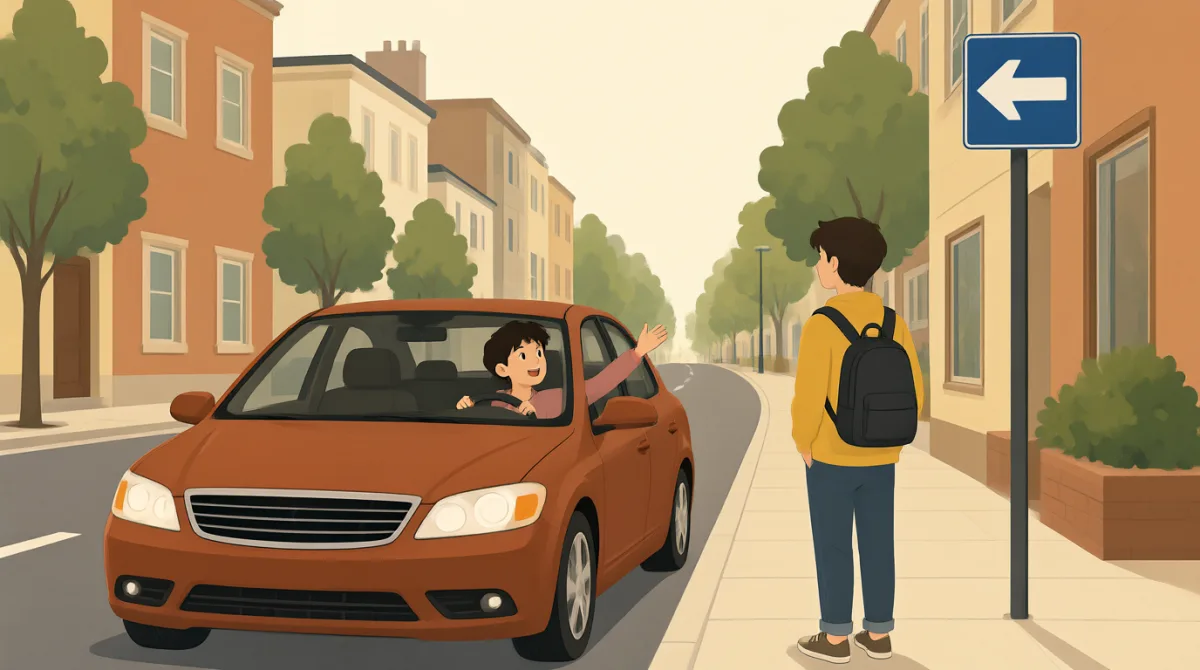

Excuse me! Could you possibly help me? I think I'm a bit lost.
माफ़ कीजिए! क्या आप मेरी ज़रा मदद कर सकते हैं? मुझे लगता है मैं थोड़ा रास्ता भटक गया हूँ।

Of course! What are you looking for?
ज़रूर! आप क्या ढूँढ़ रहे हैं?
I'm trying to get to the main library. Do you know how to get there from here?
मैं मुख्य पुस्तकालय जाने की कोशिश कर रहा हूँ। क्या आपको पता है कि यहाँ से वहाँ कैसे पहुँचा जाए?
The main library, huh? Okay, you're quite a bit off course. You need to go back the way you came, to the traffic light.
मुख्य पुस्तकालय, अच्छा? ठीक है, आप रास्ते से काफ़ी भटक गए हैं। आपको वापस उसी रास्ते से जाना होगा, जहाँ से आए थे, ट्रैफ़िक लाइट तक।
Back to the traffic light? Got it. And then?
ट्रैफ़िक लाइट तक वापस? समझ गया। फिर?
At the traffic light, turn left. Go straight for about half a mile, and you'll see the library on your right. It's a big brick building.
ट्रैफ़िक लाइट पर बाएँ मुड़िए। लगभग आधा मील सीधे जाइए, फिर आपको अपनी दाईं ओर पुस्तकालय दिखेगा। वह ईंटों की एक बड़ी इमारत है।
Left at the light, half a mile, big brick building on the right. Okay, I think I've got it. So, no turns after that left at the light, just straight?
लाइट पर बाएँ, आधा मील, दाईं ओर ईंटों की बड़ी इमारत। ठीक है, मुझे लगता है समझ गया। तो लाइट पर बाएँ मुड़ने के बाद कोई और मोड़ नहीं, बस सीधे जाना है?
Exactly. Just straight until you see it. You can't miss it.
बिल्कुल। बस सीधे जाइए, जब तक वह दिख न जाए। वह आसानी से दिख जाएगा।
Perfect! Thank you so much for your help. I really appreciate it.
बहुत बढ़िया! आपकी मदद के लिए बहुत-बहुत धन्यवाद। मैं सचमुच आपका आभारी हूँ।
You're very welcome! Drive safely.
कोई बात नहीं! सावधानी से गाड़ी चलाइए।
शब्दावली8
- lostरास्ता भटका हुआ
If you are lost, it means you do not know where you are or how to get to your destination. Use this when asking for directions.
अगर आप “lost” हैं, तो इसका मतलब है कि आपको पता नहीं कि आप कहाँ हैं या अपनी मंज़िल तक कैसे पहुँचना है। रास्ता पूछते समय इस शब्द का इस्तेमाल करें।
- traffic lightट्रैफ़िक लाइट
A traffic light is a signal at a road intersection that controls traffic with red, yellow, and green lights. Common in directions for driving.
“Traffic light” सड़क के चौराहे पर लगा वह संकेत होता है जो लाल, पीली और हरी बत्तियों से यातायात को नियंत्रित करता है। गाड़ी चलाने का रास्ता बताने में यह आम तौर पर इस्तेमाल होता है।
- turn leftबाएँ मुड़ना
This means to change direction to the left when driving or walking. It's a basic direction phrase used in navigation.
“Turn left” का मतलब है गाड़ी चलाते या पैदल जाते समय बाईं ओर मुड़ना। रास्ता बताने में इस्तेमाल होने वाला यह दिशा-सूचक एक बुनियादी वाक्यांश है।
- go straightसीधे जाना
To go straight means to continue in the same direction without turning. Often used in giving or asking for directions.
“Go straight” का मतलब है बिना मुड़े उसी दिशा में आगे बढ़ते रहना। रास्ता पूछते या बताते समय इसका अक्सर इस्तेमाल होता है।
- half a mileआधा मील
Half a mile is about 800 meters, a common distance unit in English-speaking countries for driving directions.
“Half a mile” लगभग 800 मीटर होता है। अंग्रेज़ी बोलने वाले देशों में गाड़ी चलाने के रास्ते बताते समय दूरी की यह इकाई आम है।
- on your rightआपकी दाईं ओर
This indicates the location to the right side as you face it. Useful for describing where something is while giving directions.
“On your right” बताता है कि कोई चीज़ आपके सामने की ओर देखते समय दाईं तरफ़ है। रास्ता बताते हुए किसी जगह की स्थिति बताने में यह उपयोगी है।
- can't miss itआसानी से दिख जाना
This idiom means it's very easy to find or notice something because it's obvious. Use it to reassure someone about directions.
“Can't miss it” मुहावरे का मतलब है कि कोई चीज़ इतनी साफ़ दिखाई देती है कि उसे ढूँढ़ना या देख पाना बहुत आसान है। रास्ता बताते समय किसी को भरोसा दिलाने के लिए इसका इस्तेमाल करें।
- drive safelyसावधानी से गाड़ी चलाना
A polite way to say goodbye to someone driving, wishing them a safe journey. Common in transportation conversations.
“Drive safely” गाड़ी चलाने वाले को विदा कहते समय सुरक्षित यात्रा की शुभकामना देने का एक विनम्र तरीका है। यातायात से जुड़ी बातचीत में यह आम है।
मुख्य वाक्य10
- 1
Excuse me! Could you possibly help me? I think I'm a bit lost.
माफ़ कीजिए! क्या आप मेरी ज़रा मदद कर सकते हैं? मुझे लगता है मैं थोड़ा रास्ता भटक गया हूँ।
This is a polite way to start asking for help when you're lost. 'Could you possibly' makes it very courteous. Use it to approach strangers for directions.
रास्ता भटकने पर मदद माँगने की शुरुआत करने का यह एक विनम्र तरीका है। “Could you possibly” (क्या आप ज़रा कर सकते हैं) बात को बहुत शिष्ट बनाता है। रास्ता पूछने के लिए किसी अनजान व्यक्ति से बात शुरू करते समय इसका इस्तेमाल करें।
- 2
What are you looking for?
आप क्या ढूँढ़ रहे हैं?
A natural response when someone asks for help. It directly asks for the destination. Useful for clarifying in direction-giving situations.
जब कोई मदद माँगता है, तो यह उसका स्वाभाविक जवाब है। इसमें सीधे पूछा जाता है कि उसे कहाँ जाना है। रास्ता बताने से पहले बात स्पष्ट करने के लिए यह उपयोगी है।
- 3
Do you know how to get there from here?
क्या आपको पता है कि यहाँ से वहाँ कैसे पहुँचा जाए?
This question seeks directions from the current location to a place. 'Get there' means to arrive at. Great for confirming routes.
इस सवाल से आप अपनी मौजूदा जगह से किसी दूसरी जगह तक पहुँचने का रास्ता पूछते हैं। “Get there” का मतलब है वहाँ पहुँचना। रास्ते की पुष्टि करने के लिए यह वाक्य बहुत काम का है।
- 4
You need to go back the way you came, to the traffic light.
आपको वापस उसी रास्ते से जाना होगा, जहाँ से आए थे, ट्रैफ़िक लाइट तक।
Gives a direction to return along the same path. 'The way you came' refers to the route taken. Essential for correcting wrong turns while driving.
इस वाक्य में उसी रास्ते से लौटने का निर्देश दिया गया है। “The way you came” का मतलब है वह रास्ता जिससे आप आए थे। गाड़ी चलाते समय गलत मोड़ लेने पर रास्ता सुधारने के लिए यह वाक्यांश बहुत काम का है।
- 5
At the traffic light, turn left. Go straight for about half a mile.
ट्रैफ़िक लाइट पर बाएँ मुड़िए। लगभग आधा मील सीधे जाइए।
This combines specific instructions: turn at a point and continue straight a distance. 'About' shows approximation. Key pattern for step-by-step directions.
इसमें दो साफ़ निर्देश जुड़े हैं: एक जगह पर मुड़ना और फिर कुछ दूरी तक सीधे जाना। “About” का मतलब है कि दूरी अनुमानित है। कदम-दर-कदम रास्ता बताने का यह एक ज़रूरी तरीका है।
- 6
You'll see the library on your right. It's a big brick building.
आपको अपनी दाईं ओर पुस्तकालय दिखेगा। वह ईंटों की एक बड़ी इमारत है।
Describes a landmark to help identify the place. 'You'll see' predicts visibility. Use details like 'big brick building' to make directions clear.
यह जगह पहचानने में मदद करने के लिए एक पहचान-चिह्न का वर्णन करता है। “You'll see” बताता है कि वह चीज़ आपको दिखाई देगी। रास्ता साफ़ बताने के लिए “big brick building” (ईंटों की बड़ी इमारत) जैसे विवरण दें।
- 7
So, no turns after that left at the light, just straight?
तो लाइट पर बाएँ मुड़ने के बाद कोई और मोड़ नहीं, बस सीधे जाना है?
This confirms understanding by repeating and asking for clarification. It's a good habit in conversations to avoid mistakes. 'Just straight' means only go forward.
इस वाक्य में आप बात दोहराकर और स्पष्टीकरण माँगकर यह पक्का करते हैं कि आपने सही समझा है। गलतियों से बचने के लिए बातचीत में यह अच्छी आदत है। “Just straight” का मतलब है केवल सीधे आगे जाना।
- 8
You can't miss it.
वह आसानी से दिख जाएगा।
Reassures the listener that the place is easy to spot. Informal and encouraging. Use at the end of directions to build confidence.
इससे सुनने वाले को भरोसा दिलाया जाता है कि वह जगह आसानी से दिखाई देगी। यह अनौपचारिक और हौसला बढ़ाने वाला वाक्य है। रास्ता बताते हुए अंत में इसका इस्तेमाल करने से सामने वाले को भरोसा मिलता है।
- 9
Thank you so much for your help. I really appreciate it.
आपकी मदद के लिए बहुत-बहुत धन्यवाद। मैं सचमुच आपका आभारी हूँ।
Expresses strong gratitude. 'So much' and 'really appreciate' emphasize thanks. Always use after receiving help to be polite.
इस वाक्य से आप दिल से आभार जताते हैं। “So much” और “really appreciate” धन्यवाद को ज़ोर देकर कहते हैं। विनम्रता दिखाने के लिए मदद मिलने के बाद इसका इस्तेमाल करें।
- 10
You're very welcome! Drive safely.
कोई बात नहीं! सावधानी से गाड़ी चलाइए।
A polite response to thanks, with a safety wish for drivers. 'You're welcome' is standard; add context-specific advice like this.
यह धन्यवाद का विनम्र जवाब है और साथ ही गाड़ी चलाने वाले के लिए सुरक्षित यात्रा की शुभकामना भी है। “You're welcome” धन्यवाद का सामान्य जवाब है; इसके साथ ऐसी परिस्थिति के मुताबिक शुभकामना भी जोड़ सकते हैं।