Offering Help to Someone Else
کمک به دیگران
You witness someone else spilling coffee. You want to offer practical help, such as getting napkins or alerting staff, without being intrusive.
میبینید کسی قهوهاش را میریزد. میخواهید بدون فضولی، کمک عملی پیشنهاد دهید؛ مثلاً دستمال بیاورید یا به کارکنان خبر بدهید.
گفتوگو8
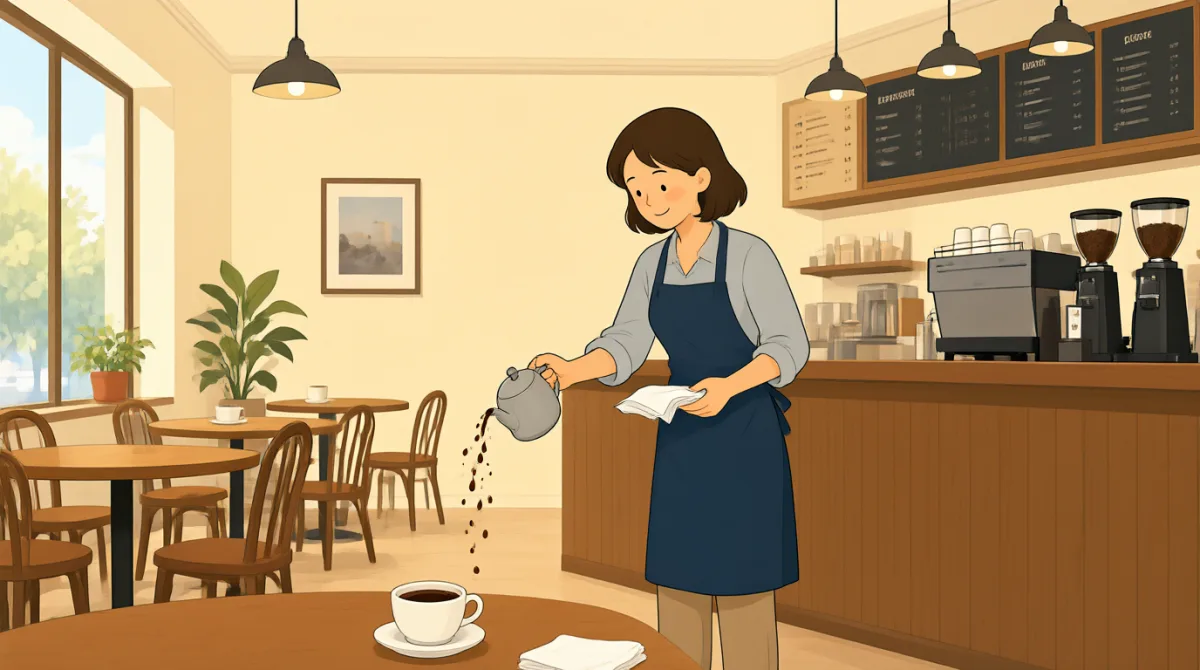

Oh, no! Are you okay? Looks like you've spilled your coffee!
اوه، نه! حالتون خوبه؟ انگار قهوهتون رو ریختید!

Ugh, yeah, completely soaked it. My hand just slipped. What a mess!
اَه، آره، همهجا خیس شد. دستم یهدفعه لیز خورد. چه افتضاحی!
Don't worry about it. Happens to the best of us. Do you need a hand with anything? I could grab some napkins, or maybe alert the staff if you want?
نگرانش نباشید. برای همه پیش میاد. کاری هست بتونم کمکتون کنم؟ میتونم چندتا دستمال بیارم، یا اگه بخواید به کارکنان خبر بدم.
That would be so helpful, thank you! If you could just point me to where the napkins are, I can probably manage. Don't want to bother the staff too much.
خیلی لطف میکنید، ممنون! اگه فقط بگید دستمالها کجان، احتمالاً خودم از پسش برمیام. نمیخوام زیاد مزاحم کارکنان بشم.
No bother at all. They're usually by the counter, right next to the sugar station. I'll go fetch them for you. Don't move, I'll be right back.
اصلاً مزاحمتی نیست. معمولاً کنار پیشخوان، درست کنار ایستگاه شکر هستن. براتون میارم. تکون نخورید، زود برمیگردم.
Oh, you don't have to! I can go.
اوه، لازم نیست! خودم میرم.
It's no trouble, really. You stay put and deal with the immediate spill. I'll be quick.
واقعاً زحمتی نیست. شما همینجا بمونید و فعلاً جلوی ریختوپاش رو بگیرید. زود برمیگردم.
Okay, thank you so much! That's really kind of you.
باشه، خیلی ممنون! واقعاً لطف دارید.
واژگان10
- spilledریخت
Past tense of 'spill', meaning to accidentally pour liquid out of a container, like coffee on the floor or clothes. Use it to describe accidents: 'I spilled my drink.'
گذشتهٔ فعل 'spill' است و یعنی مایعی را تصادفی از ظرف بیرون ریختن؛ مثلاً قهوه روی زمین یا لباس. برای توصیف اتفاقهای ناخواسته به کار میرود: 'I spilled my drink.' (نوشیدنیام را ریختم.)
- soakedخیسِ خیس
Covered or filled with liquid, often completely wet. In this context, it describes clothes or items after spilling: 'My shirt is soaked with water.' It's useful for everyday accidents.
یعنی چیزی با مایع پوشیده شده یا مایع به آن نفوذ کرده و معمولاً کاملاً خیس است. اینجا برای لباس یا وسایلی به کار میرود که بعد از ریختن مایع خیس شدهاند: 'My shirt is soaked with water.' (پیراهنم از آب خیسِ خیس شده.) برای اتفاقهای روزمره کاربرد دارد.
- slippedلیز خورد
Past tense of 'slip', meaning to slide or lose control accidentally. Common in accidents: 'The cup slipped from my hand.' Helps explain why something fell.
گذشتهٔ فعل 'slip' است و یعنی چیزی ناخواسته سر بخورد یا کنترلش از دست برود. در توصیف اتفاقها رایج است: 'The cup slipped from my hand.' (فنجان از دستم لیز خورد.) با این واژه میتوانید توضیح دهید چرا چیزی افتاده است.
- messافتضاح
A dirty or disordered situation, often from an accident. Use it to express frustration: 'What a mess!' It's casual and common in informal English.
به وضعیت کثیف یا بههمریختهای گفته میشود که اغلب بر اثر اتفاقی پیش آمده است. برای نشاندادن کلافگی میتوانید بگویید: 'What a mess!' (چه افتضاحی!) این عبارت در انگلیسی محاورهای و رایج است.
- grabسریع برداشتن؛ آوردن
To quickly take or get something. Informal and practical: 'Grab some napkins' means to fetch them fast. Good for offering quick help in daily life.
یعنی چیزی را سریع برداشتن یا تهیهکردن. این واژه لحنی محاورهای و کاربردی دارد: 'Grab some napkins' یعنی سریع چندتا دستمال بیاور. برای پیشنهاد کمک فوری در زندگی روزمره مناسب است.
- alertخبر دادن؛ مطلع کردن
To warn or inform someone about a problem. Here, 'alert the staff' means to tell workers about the spill. Useful in public places like cafes.
یعنی کسی را از مشکلی باخبر کردن یا دربارهاش به او هشدار دادن. اینجا 'alert the staff' یعنی کارکنان را از ریختن قهوه باخبر کردن. در جاهای عمومی مثل کافه کاربرد دارد.
- botherمزاحم شدن
To cause trouble or inconvenience. 'No bother' means it's not a problem at all. Polite way to reassure someone when helping: 'It's no bother to help you.'
یعنی برای کسی دردسر یا زحمتی ایجاد کردن. 'No bother' یعنی اصلاً زحمتی نیست. این عبارت راهی مؤدبانه برای اطمیناندادن به کسی هنگام کمککردن است: 'It's no bother to help you.' (کمککردن به شما اصلاً زحمتی نیست.)
- fetchرفتن و آوردن
To go and bring back something. Similar to 'get', but implies going to retrieve: 'I'll fetch the napkins.' Kind and helpful in offering assistance.
یعنی رفتن و چیزی را آوردن. از 'get' شبیهتر نیست، اما رفتن برای برداشتن چیزی را میرساند: 'I'll fetch the napkins.' (میرم دستمالها رو بیارم.) برای پیشنهاد کمک، لحنی دوستانه و همراهانه دارد.
- stay putهمانجا ماندن
An idiom meaning to remain in place, don't move. Casual advice: 'Stay put and I'll help.' Useful for keeping someone safe during cleanup.
اصطلاحی است به معنی همانجا ماندن و حرکتنکردن. توصیهای خودمانی: 'Stay put and I'll help.' (همینجا بمون تا کمکت کنم.) برای اینکه کسی هنگام تمیزکاری در جای امنی بماند، کاربردی است.
- kindمهربان
Nice or helpful in a gentle way. 'That's really kind of you' expresses gratitude for someone's help. Common in polite responses to favors.
یعنی خوشبرخورد یا کمککننده، به شکلی صمیمانه و دلنشین. 'That's really kind of you' برای تشکر از کمک کسی گفته میشود و پاسخ رایجی به لطف دیگران است.
جملات کلیدی7
- 1
Oh, no! Are you okay? Looks like you've spilled your coffee!
اوه، نه! حالتون خوبه؟ انگار قهوهتون رو ریختید!
This is a concerned reaction to an accident. 'Oh, no!' shows surprise and worry. 'Are you okay?' checks for injury first. Useful for starting a helpful conversation; the present perfect 'you've spilled' describes a recent action.
این جمله واکنشی نگران به یک اتفاق است. 'Oh, no!' تعجب و نگرانی را نشان میدهد. 'Are you okay?' اول میپرسد کسی آسیب دیده است یا نه. برای شروع گفتوگویی همراهانه مفید است؛ زمان حال کامل در 'you've spilled' به کاری اشاره میکند که همینتازگی انجام شده است.
- 2
Don't worry about it. Happens to the best of us.
نگرانش نباشید. برای همه پیش میاد.
Reassures someone after a mistake. 'Don't worry about it' means no need to feel bad. 'Happens to the best of us' is an idiom saying accidents happen to everyone, even good people. Great for comforting friends casually.
این جمله بعد از اشتباه، به طرف مقابل آرامش میدهد. 'Don't worry about it' یعنی لازم نیست ناراحت باشید. 'Happens to the best of us' اصطلاحی است که میگوید چنین اتفاقهایی برای همه، حتی بهترین آدمها، پیش میآیند. برای دلداریدادن به دوستان لحنی خودمانی دارد.
- 3
Do you need a hand with anything? I could grab some napkins, or maybe alert the staff if you want?
کاری هست بتونم کمکتون کنم؟ میتونم چندتا دستمال بیارم یا اگه بخواید به کارکنان خبر بدم.
Offers help politely. 'Need a hand' is an idiom for assistance. The conditional 'I could' suggests options without pressure. Useful pattern for volunteering help in situations like spills; shows specific actions.
این جمله مؤدبانه پیشنهاد کمک میدهد. 'Need a hand' اصطلاحی به معنی کمکلازمداشتن است. عبارت شرطی 'I could' چند گزینه پیشنهاد میدهد، بیآنکه فشاری وارد کند. این الگو برای پیشنهاد کمک در موقعیتهایی مثل ریختن چیزی کاربردی است و کارهای مشخصی را مطرح میکند.
- 4
That would be so helpful, thank you!
خیلی لطف میکنید، ممنون!
Accepts an offer gratefully. 'That would be' is conditional for future help. Adds 'so' for emphasis on helpfulness. Essential for polite responses when someone assists you; builds positive interactions.
این جمله پیشنهاد را با قدردانی میپذیرد. 'That would be' برای صحبت دربارهٔ کمکی است که در آینده انجام میشود. 'so' میزان مفیدبودن کمک را پررنگ میکند. برای پاسخ مؤدبانه به کسی که کمک میکند، عبارت مهمی است و باعث تعامل مثبت میشود.
- 5
No bother at all. They're usually by the counter, right next to the sugar station.
اصلاً مزاحمتی نیست. معمولاً کنار پیشخوان، درست کنار ایستگاه شکر هستن.
Downplays the effort of helping. 'No bother at all' reassures it's easy. Gives directions with 'by' and 'next to' for location. Practical for guiding someone in a cafe; uses simple prepositions for everyday navigation.
گوینده زحمت کمککردن را کوچک جلوه میدهد. 'No bother at all' اطمینان میدهد که اصلاً سخت نیست. عبارتهای 'by' و 'next to' برای گفتن مکان، راهنمایی میدهند. این جمله در کافه برای راهنمایی کاربردی است و از حروف اضافهٔ سادهٔ مکانی استفاده میکند.
- 6
You stay put and deal with the immediate spill. I'll be quick.
شما همینجا بمونید و فعلاً جلوی ریختوپاش رو بگیرید. زود برمیگردم.
Instructs someone to stay still while offering to act. 'Stay put' is an idiom for not moving. 'Immediate' means right now. 'I'll be quick' promises speed. Useful for managing accidents safely; imperative form for directions.
گوینده از طرف مقابل میخواهد همانجا بماند و خودش برای کمک اقدام میکند. 'Stay put' اصطلاحی به معنی حرکتنکردن است. 'Immediate' یعنی همین حالا یا فوری. 'I'll be quick' قول میدهد که کار زود انجام شود. برای مدیریت ایمن اتفاقها مفید است و از ساختار امری برای راهنمایی استفاده میکند.
- 7
Okay, thank you so much! That's really kind of you.
باشه، خیلی ممنون! واقعاً لطف دارید.
Shows appreciation. 'Thank you so much' emphasizes gratitude. 'That's really kind of you' compliments the helper. Perfect ending phrase for accepting favors; 'so much' and 'really' intensify politeness in English.
این جمله قدردانی را نشان میدهد. 'Thank you so much' تأکید بیشتری بر تشکر دارد. 'That's really kind of you' از کسی که کمک کرده تعریف میکند. برای پایاندادن به پذیرش یک لطف مناسب است؛ 'so much' و 'really' در انگلیسی بر ادب و قدردانی تأکید میگذارند.