Taking a Rest Stop
Hacer una parada para descansar
During the trip, the bus stops for a short break. Emma asks David how long they have and where to meet before getting back on the bus.
Durante el viaje, el autobús hace una breve parada. Emma le pregunta a David cuánto tiempo tienen y dónde deben reunirse antes de volver a subir al autobús.
Diálogo8
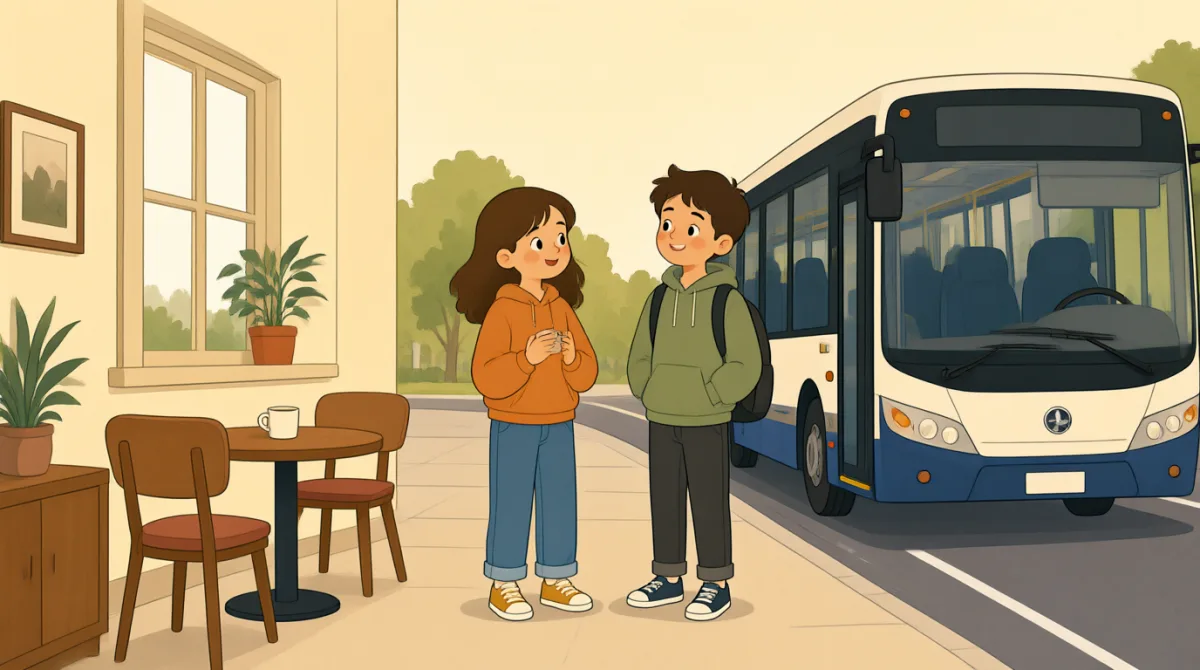

David, how long is this rest stop? I need to get a snack.
David, ¿cuánto dura esta parada? Necesito comprar algo para picar.

We have twenty minutes. The bus leaves again at three fifteen.
Tenemos veinte minutos. El autobús vuelve a salir a las tres y cuarto.
Where should I meet you before we get back on the bus?
¿Dónde debería reunirme contigo antes de volver a subir al autobús?
Meet me by the front door at three ten. Please be on time.
Nos vemos junto a la puerta principal a las tres y diez. Por favor, sé puntual.
Okay. Is there a place to buy coffee inside?
Vale. ¿Hay algún sitio donde comprar café aquí dentro?
Yes, there’s a small café next to the restrooms.
Sí, hay una pequeña cafetería junto a los baños.
Great. I’ll get coffee and come back before three ten.
Genial. Compraré un café y volveré antes de las tres y diez.
Sounds good. Keep your ticket with you, and enjoy the break.
Perfecto. Lleva el billete contigo y disfruta del descanso.
Vocabulario8
- rest stopparada para descansar
A place where a bus stops so passengers can take a short break during a trip.
Un lugar donde para el autobús para que los pasajeros puedan descansar un rato durante el viaje.
- get a snackcomprar algo para picar
To buy or find a small amount of food to eat. You can use this phrase when you feel a little hungry.
Comprar o buscar algo de comer, normalmente una pequeña cantidad. Puedes usar esta expresión cuando tienes un poco de hambre.
- leaves againvuelve a salir
Means the bus starts its journey again after stopping. You can use “leave” to talk about when a bus or train departs.
Quiere decir que el autobús reanuda el viaje después de parar. Puedes usar “leave” para hablar de la hora a la que sale un autobús o un tren.
- be on timeser puntual
To arrive or do something at the planned time. Use this phrase when someone should not be late.
Llegar o hacer algo a la hora prevista. Usa esta expresión cuando quieres decir que alguien no debe llegar tarde.
- next tojunto a
Means beside or very close to something. Use it to describe where a place is.
Quiere decir que algo está al lado o muy cerca de otra cosa. Úsala para indicar dónde está un lugar.
- come backvolver
To return to a place. You can use it to say you will return after going somewhere else.
Regresar a un lugar. Puedes usar esta expresión para decir que regresarás después de ir a otro sitio.
- keep your ticket with youllevar el billete contigo
Means to carry your ticket and not leave it behind. This is useful advice when traveling.
Quiere decir que debes llevar el billete contigo y no dejarlo olvidado. Es un consejo útil cuando viajas.
- enjoy the breakdisfrutar del descanso
A friendly way to tell someone to have a pleasant rest. You can use it when someone has free time during a trip.
Una forma amable de desearle a alguien que disfrute de su descanso. Puedes usarla cuando alguien tiene un rato libre durante un viaje.
Frases clave7
- 1
How long is this rest stop?
¿Cuánto dura esta parada?
Use this question to ask how much time you have during a break. You can replace “rest stop” with another event or activity.
Usa esta pregunta para preguntar cuánto tiempo tienes durante una pausa. Puedes sustituir “rest stop” por otro evento o actividad.
- 2
We have twenty minutes.
Tenemos veinte minutos.
This is a simple way to say how much time is available. Replace “twenty minutes” with a different amount of time.
Es una forma sencilla de decir cuánto tiempo hay disponible. Sustituye “twenty minutes” por otra cantidad de tiempo.
- 3
Where should I meet you before we get back on the bus?
¿Dónde debería reunirme contigo antes de volver a subir al autobús?
Use this to ask where to meet someone before continuing a trip. You can change “the bus” to another place or vehicle.
Usa esta frase para preguntar dónde reunirte con alguien antes de continuar el viaje. Puedes cambiar “the bus” por otro lugar o medio de transporte.
- 4
Meet me by the front door at three ten.
Nos vemos junto a la puerta principal a las tres y diez.
This gives someone a meeting place and time. You can use “Meet me by…” to make clear plans.
Esta frase indica un lugar y una hora para reunirse. Puedes usar “Meet me by…” para dejar claros los planes.
- 5
Is there a place to buy coffee inside?
¿Hay algún sitio donde comprar café aquí dentro?
Use this question to ask if you can buy something in a building. Replace “coffee” with another item.
Usa esta pregunta para preguntar si puedes comprar algo dentro de un edificio. Sustituye “coffee” por otro producto.
- 6
I’ll get coffee and come back before three ten.
Compraré un café y volveré antes de las tres y diez.
This tells someone what you plan to do and when you will return. Use “I’ll” for a simple future plan.
Esta frase le dice a alguien qué tienes pensado hacer y cuándo regresarás. Usa “I’ll” para expresar un plan sencillo en el futuro.
- 7
Keep your ticket with you, and enjoy the break.
Lleva el billete contigo y disfruta del descanso.
This sentence gives a reminder and a friendly wish. You can change “ticket” or “break” to fit another situation.
Esta frase sirve para dar un recordatorio y expresar un deseo amable. Puedes cambiar “ticket” o “break” para adaptarlos a otra situación.