Taking a Rest Stop
आराम के लिए बस का रुकना
During the trip, the bus stops for a short break. Emma asks David how long they have and where to meet before getting back on the bus.
सफ़र के दौरान बस थोड़ी देर के आराम के लिए रुकती है। एमा डेविड से पूछती है कि उनके पास कितना समय है और बस में वापस चढ़ने से पहले उन्हें कहाँ मिलना है।
संवाद8
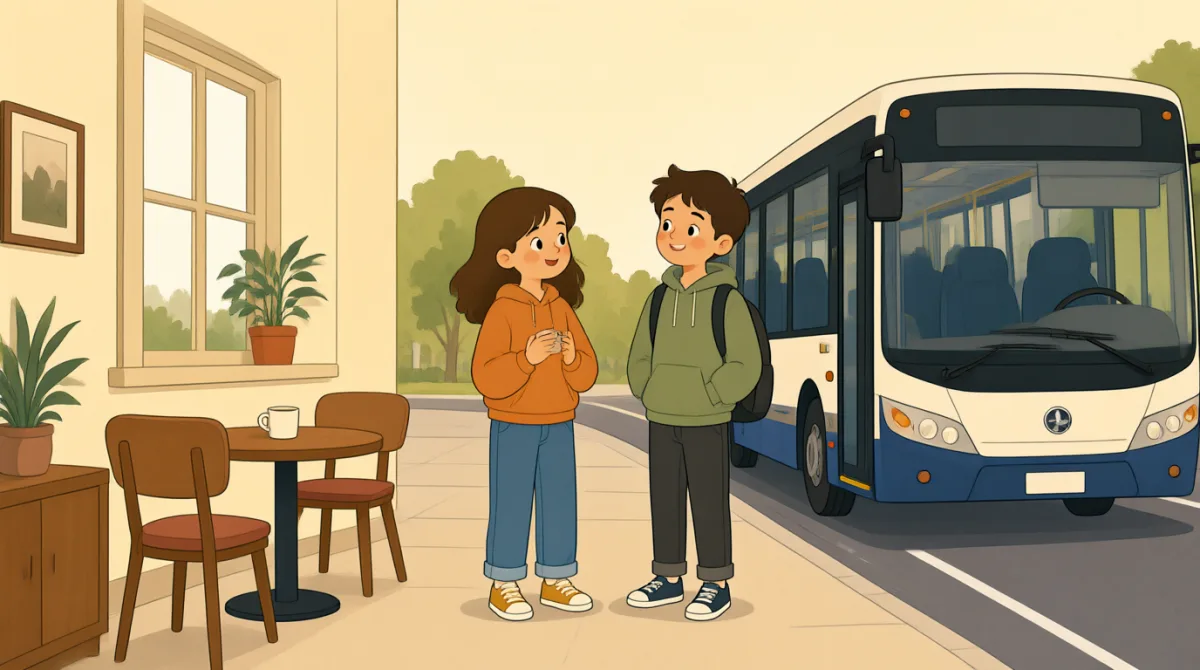

David, how long is this rest stop? I need to get a snack.
डेविड, यह आराम का पड़ाव कितनी देर का है? मुझे कुछ खाने के लिए लेना है।

We have twenty minutes. The bus leaves again at three fifteen.
हमारे पास बीस मिनट हैं। बस तीन बजकर पंद्रह मिनट पर फिर से चलेगी।
Where should I meet you before we get back on the bus?
बस में वापस चढ़ने से पहले मैं तुमसे कहाँ मिलूँ?
Meet me by the front door at three ten. Please be on time.
तीन बजकर दस मिनट पर सामने वाले दरवाज़े के पास मुझसे मिलना। समय पर आना।
Okay. Is there a place to buy coffee inside?
ठीक है। क्या अंदर कॉफ़ी खरीदने की कोई जगह है?
Yes, there’s a small café next to the restrooms.
हाँ, शौचालयों के पास एक छोटा-सा कैफ़े है।
Great. I’ll get coffee and come back before three ten.
बढ़िया। मैं कॉफ़ी लेकर तीन बजकर दस मिनट से पहले वापस आ जाऊँगी।
Sounds good. Keep your ticket with you, and enjoy the break.
ठीक है। अपना टिकट अपने पास रखना और आराम का मज़ा लेना।
शब्दावली8
- rest stopआराम का पड़ाव
A place where a bus stops so passengers can take a short break during a trip.
ऐसी जगह जहाँ बस सफ़र के दौरान यात्रियों को थोड़ी देर आराम करने का मौका देने के लिए रुकती है।
- get a snackकुछ खाने के लिए लेना
To buy or find a small amount of food to eat. You can use this phrase when you feel a little hungry.
खाने के लिए थोड़ी-सी चीज़ खरीदना या ढूँढ़ना। थोड़ी भूख लगने पर आप इस वाक्यांश का इस्तेमाल कर सकते हैं।
- leaves againफिर से रवाना होती है
Means the bus starts its journey again after stopping. You can use “leave” to talk about when a bus or train departs.
इसका मतलब है कि रुकने के बाद बस फिर से अपना सफ़र शुरू करती है। बस या ट्रेन के चलने के समय की बात करने के लिए आप “leave” का इस्तेमाल कर सकते हैं।
- be on timeसमय पर पहुँचना
To arrive or do something at the planned time. Use this phrase when someone should not be late.
तय समय पर पहुँचना या कोई काम करना। जब किसी को देर नहीं करनी चाहिए, तब इस वाक्यांश का इस्तेमाल करें।
- next toके पास
Means beside or very close to something. Use it to describe where a place is.
इसका मतलब है किसी चीज़ के बगल में या उसके बहुत करीब। किसी जगह की स्थिति बताने के लिए इसका इस्तेमाल करें।
- come backवापस आना
To return to a place. You can use it to say you will return after going somewhere else.
किसी जगह पर लौटना। कहीं और जाने के बाद वापस लौटने की बात कहने के लिए आप इसका इस्तेमाल कर सकते हैं।
- keep your ticket with youअपना टिकट अपने पास रखना
Means to carry your ticket and not leave it behind. This is useful advice when traveling.
इसका मतलब है कि टिकट अपने साथ रखें और उसे कहीं छोड़कर न जाएँ। सफ़र के दौरान यह सलाह काम आती है।
- enjoy the breakआराम का मज़ा लेना
A friendly way to tell someone to have a pleasant rest. You can use it when someone has free time during a trip.
किसी को आराम के सुखद पल बिताने की दोस्ताना शुभकामना देने का तरीका। सफ़र के दौरान खाली समय मिलने पर आप इसका इस्तेमाल कर सकते हैं।
मुख्य वाक्य7
- 1
How long is this rest stop?
यह आराम का पड़ाव कितनी देर का है?
Use this question to ask how much time you have during a break. You can replace “rest stop” with another event or activity.
आराम के दौरान आपके पास कितना समय है, यह पूछने के लिए इस सवाल का इस्तेमाल करें। आप “rest stop” की जगह किसी दूसरी घटना या गतिविधि का नाम रख सकते हैं।
- 2
We have twenty minutes.
हमारे पास बीस मिनट हैं।
This is a simple way to say how much time is available. Replace “twenty minutes” with a different amount of time.
कितना समय उपलब्ध है, यह बताने का यह एक आसान तरीका है। “twenty minutes” की जगह समय की कोई दूसरी अवधि रख सकते हैं।
- 3
Where should I meet you before we get back on the bus?
बस में वापस चढ़ने से पहले मैं तुमसे कहाँ मिलूँ?
Use this to ask where to meet someone before continuing a trip. You can change “the bus” to another place or vehicle.
सफ़र जारी रखने से पहले किसी से मिलने की जगह पूछने के लिए इसका इस्तेमाल करें। आप “the bus” की जगह कोई दूसरी जगह या वाहन रख सकते हैं।
- 4
Meet me by the front door at three ten.
तीन बजकर दस मिनट पर सामने वाले दरवाज़े के पास मुझसे मिलना।
This gives someone a meeting place and time. You can use “Meet me by…” to make clear plans.
इससे किसी को मिलने की जगह और समय बताया जाता है। पक्की योजना बताने के लिए आप “Meet me by…” का इस्तेमाल कर सकते हैं।
- 5
Is there a place to buy coffee inside?
क्या अंदर कॉफ़ी खरीदने की कोई जगह है?
Use this question to ask if you can buy something in a building. Replace “coffee” with another item.
किसी इमारत के अंदर कोई चीज़ खरीदने की जगह है या नहीं, यह पूछने के लिए इस सवाल का इस्तेमाल करें। “coffee” की जगह किसी दूसरी चीज़ का नाम रख सकते हैं।
- 6
I’ll get coffee and come back before three ten.
मैं कॉफ़ी लेकर तीन बजकर दस मिनट से पहले वापस आ जाऊँगी।
This tells someone what you plan to do and when you will return. Use “I’ll” for a simple future plan.
इससे किसी को पता चलता है कि आप क्या करने की योजना बना रहे हैं और कब लौटेंगे। भविष्य की एक साधारण योजना बताने के लिए “I’ll” का इस्तेमाल करें।
- 7
Keep your ticket with you, and enjoy the break.
अपना टिकट अपने पास रखना और आराम का मज़ा लेना।
This sentence gives a reminder and a friendly wish. You can change “ticket” or “break” to fit another situation.
इस वाक्य में एक याद दिलाने वाली बात और दोस्ताना शुभकामना है। किसी दूसरी स्थिति के मुताबिक आप “ticket” या “break” की जगह दूसरे शब्द रख सकते हैं।