Paying for the Photos
Pagar las fotos
Emma chooses the photo she likes and pays for the prints. Jack tells her when they will be ready to pick up.
Emma elige la foto que le gusta y paga las copias. Jack le dice cuándo estarán listas para recoger.
Diálogo8
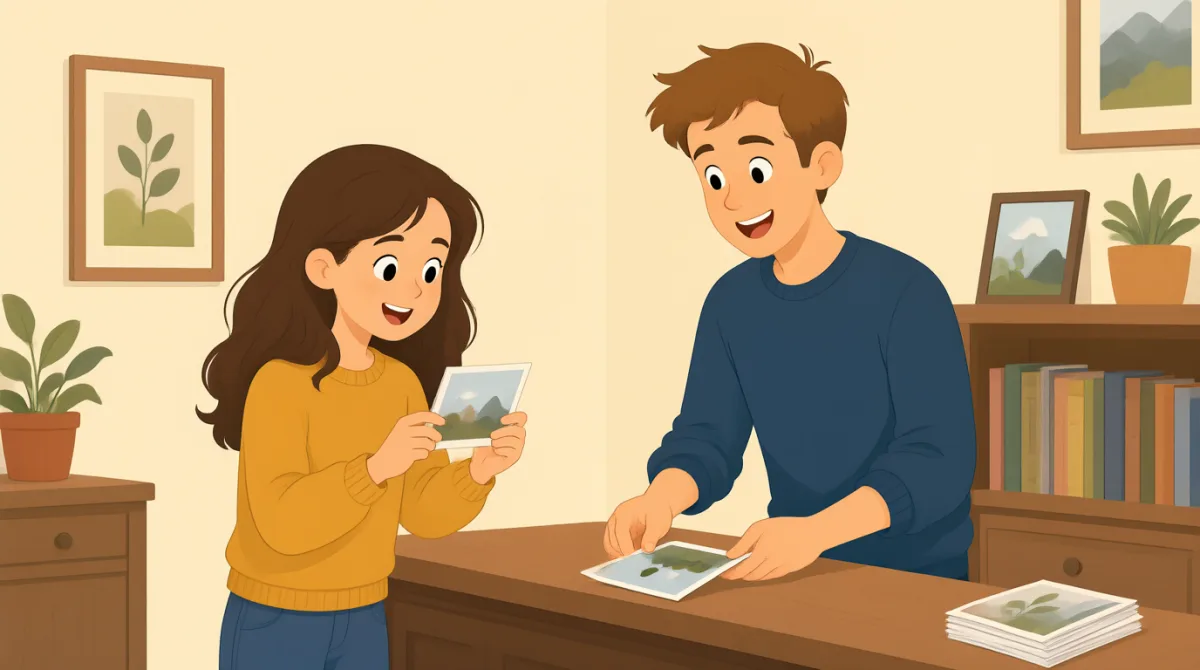

I like this photo. How much are the prints?
Me gusta esta foto. ¿Cuánto cuestan las copias?

Two prints are twelve dollars. Would you like two?
Dos copias cuestan doce dólares. ¿Quiere dos?
Yes, please. Can I pay by card?
Sí, por favor. ¿Puedo pagar con tarjeta?
Sure. You can tap your card here. They’ll be ready in twenty minutes.
Claro. Puede acercar la tarjeta aquí. Estarán listas en veinte minutos.
Great. Should I wait here, or come back later?
Perfecto. ¿Me quedo aquí esperando o vuelvo más tarde?
You can come back in twenty minutes. Keep your receipt, please.
Puede volver en veinte minutos. Guarde el recibo, por favor.
Thanks! I’ll come back and pick them up then.
¡Gracias! Volveré entonces a recogerlas.
You’re welcome. I’ll have them ready at the front desk.
De nada. Las tendré listas en el mostrador de recepción.
Vocabulario8
- printscopias impresas
Prints are paper copies of the photo. Here, Emma is asking how much the copies will cost.
Las «copias impresas» son ejemplares de la foto en papel. Aquí, Emma pregunta cuánto cuestan.
- pay by cardpagar con tarjeta
To pay by card means to use a bank or credit card instead of cash. You can use this phrase when asking how to pay.
«Pagar con tarjeta» significa usar una tarjeta bancaria o de crédito en vez de efectivo. Puedes usar esta expresión para preguntar cómo pagar.
- tap your cardacercar la tarjeta
To tap your card means to touch it to a card reader to make a payment. This is a common way to pay in shops.
«Acercar la tarjeta» significa ponerla junto al lector de tarjetas para hacer un pago. Es una forma habitual de pagar en las tiendas.
- be readyestar listo/a
If something will be ready, it will be finished and available to use or collect. You can ask when an order will be ready.
Si algo estará listo, quiere decir que estará terminado y disponible para usar o recoger. Puedes preguntar cuándo estará listo un pedido.
- come backvolver
To come back means to return to a place later. Here, Jack tells Emma she can return to collect her photos.
«Volver» significa regresar a un lugar más tarde. Aquí, Jack le dice a Emma que puede regresar a recoger sus fotos.
- keep your receiptguardar el recibo
A receipt is a paper or digital record of a purchase. Keep it in case you need to show proof of payment.
Un recibo es un comprobante en papel o digital de una compra. Guárdalo por si necesitas demostrar que pagaste.
- pick them uprecogerlas
To pick something up means to go and collect it. You can use this phrase for orders, packages, or items you left somewhere.
«Recoger» algo significa ir a buscarlo. Puedes usar esta expresión para pedidos, paquetes o cosas que dejaste en algún sitio.
- front deskmostrador de recepción
The front desk is the main counter near the entrance of a business. Jack says Emma’s photos will be waiting there.
El mostrador de recepción es el mostrador principal, cerca de la entrada de un negocio. Jack dice que las fotos de Emma la estarán esperando allí.
Frases clave8
- 1
How much are the prints?
¿Cuánto cuestan las copias?
Use this question to ask the price of printed photos or other items. You can replace “the prints” with the item you want to buy.
Usa esta pregunta para preguntar el precio de fotos impresas u otros artículos. Puedes sustituir “the prints” por el artículo que quieras comprar.
- 2
Would you like two?
¿Quiere dos?
This is a polite way to offer a number of items. Change “two” to the amount you want to offer.
Esta es una forma cortés de ofrecer cierta cantidad de artículos. Cambia “two” por la cantidad que quieras ofrecer.
- 3
Can I pay by card?
¿Puedo pagar con tarjeta?
Use this question to ask whether card payment is accepted. You can replace “by card” with another payment method.
Usa esta pregunta para saber si aceptan pagos con tarjeta. Puedes sustituir “by card” por otro método de pago.
- 4
They’ll be ready in twenty minutes.
Estarán listas en veinte minutos.
This tells someone when an order will be finished. Replace “twenty minutes” with the expected waiting time.
Esta frase le indica a alguien cuándo estará terminado un pedido. Sustituye “twenty minutes” por el tiempo de espera previsto.
- 5
Should I wait here, or come back later?
¿Me quedo aquí esperando o vuelvo más tarde?
Use this question to ask whether you should stay or return later. It is useful when an order is not ready yet.
Usa esta pregunta para saber si debes quedarte o volver más tarde. Es útil cuando un pedido todavía no está listo.
- 6
Keep your receipt, please.
Guarde el recibo, por favor.
This is a polite way to remind someone to save their receipt. You can use it after a customer pays.
Esta es una forma cortés de recordarle a alguien que guarde el recibo. Puedes usarla después de que un cliente pague.
- 7
I’ll come back and pick them up then.
Volveré entonces a recogerlas.
Use this sentence to say you will return later to collect something. Replace “them” with the item you will pick up.
Usa esta frase para decir que volverás más tarde a recoger algo. Sustituye “them” por el artículo que vayas a recoger.
- 8
I’ll have them ready at the front desk.
Las tendré listas en el mostrador de recepción.
This tells someone where an order will be waiting. You can replace “them” and “at the front desk” with the items and collection place.
Esta frase le indica a alguien dónde estará esperando un pedido. Puedes sustituir “them” y “at the front desk” por los artículos y el lugar donde se recogerán.