The Argument About Forgotten Plans
Der Streit wegen der vergessenen Verabredung
Emma and Jack argue after Jack forgets their plans for the evening. They both feel hurt, but the disagreement gets sharper when they try to explain what happened.
Emma und Jack streiten sich, nachdem Jack ihre Pläne für den Abend vergessen hat. Beide fühlen sich verletzt, doch der Streit wird heftiger, als sie versuchen zu erklären, was passiert ist.
Dialog10
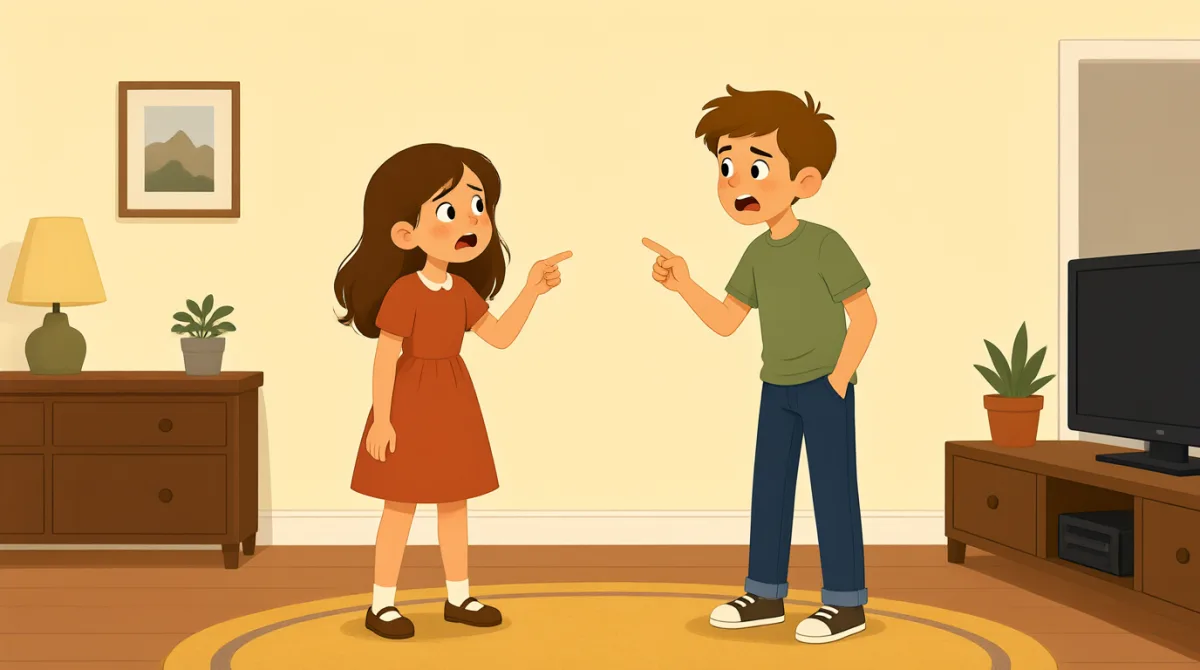

Jack, we agreed to meet at seven, and I waited for nearly an hour. I know things come up, but I wish you’d let me know you weren’t coming.
Jack, wir hatten vereinbart, uns um sieben zu treffen, und ich habe fast eine Stunde gewartet. Ich weiß, dass manchmal etwas dazwischenkommt, aber ich hätte mir gewünscht, dass du mir Bescheid sagst, dass du nicht kommst.

I’m sorry I didn’t show up. I completely lost track of time at work, and by the time I checked my phone, I saw your messages. That’s on me.
Tut mir leid, dass ich nicht gekommen bin. Bei der Arbeit habe ich völlig die Zeit aus den Augen verloren, und als ich dann auf mein Handy geschaut habe, habe ich deine Nachrichten gesehen. Das war mein Fehler.
It’s not just that you forgot. I’d been looking forward to tonight, and when you didn’t come or even call, I felt like our plans didn’t matter to you.
Es geht nicht nur darum, dass du es vergessen hast. Ich hatte mich auf den Abend gefreut, und als du weder gekommen bist noch angerufen hast, hatte ich das Gefühl, dass dir unsere Verabredung nicht wichtig ist.
I get why you’re upset, but I wasn’t sitting there thinking your plans didn’t matter. I had a deadline, and everything got hectic. I didn’t do it on purpose.
Ich verstehe, warum du sauer bist, aber ich saß nicht da und dachte, dass mir unsere Verabredung egal ist. Ich hatte eine Deadline, und alles wurde hektisch. Ich habe das nicht absichtlich gemacht.
I’m not saying you did it on purpose. But when I tried to tell you how hurt I was, you immediately started explaining why it wasn’t your fault.
Ich sage nicht, dass du es absichtlich gemacht hast. Aber als ich dir sagen wollte, wie verletzt ich war, hast du sofort angefangen zu erklären, warum es nicht deine Schuld war.
Because it felt like you’d already decided I didn’t care. I was trying to explain what happened, not brush off how you felt, but maybe I came across that way.
Weil es sich so angefühlt hat, als hättest du schon entschieden, dass ich mich nicht für dich interessiere. Ich wollte erklären, was passiert ist, und deine Gefühle nicht abtun, aber vielleicht kam es so rüber.
I hadn’t decided that. I was angry and disappointed, and I wanted you to acknowledge that I’d been left waiting. Instead, we both got defensive.
Das hatte ich nicht entschieden. Ich war wütend und enttäuscht und wollte, dass du anerkennst, dass ich warten musste. Stattdessen sind wir beide gleich in die Defensive gegangen.
You’re right that I should’ve acknowledged it first. But when you said I always put work ahead of you, I felt like one mistake was being treated as a pattern.
Du hast recht, ich hätte das zuerst anerkennen sollen. Aber als du gesagt hast, dass ich die Arbeit immer dir vorziehe, hatte ich das Gefühl, dass ein einzelner Fehler so behandelt wird, als wäre das ständig so.
I said that because I was hurt, and I shouldn’t have made it sound like this happens every time. Still, tonight mattered to me, and I need you to understand that.
Ich habe das gesagt, weil ich verletzt war, und ich hätte es nicht so darstellen sollen, als würde das jedes Mal passieren. Trotzdem war mir der heutige Abend wichtig, und ich möchte, dass du das verstehst.
I hear you. I’m still frustrated about how we’re talking to each other, though. Can we take a minute before this turns into another round of accusations?
Ich verstehe dich. Trotzdem bin ich frustriert darüber, wie wir miteinander reden. Können wir kurz durchatmen, bevor das in die nächste Runde mit Vorwürfen ausartet?
Wortschatz6
- lost track of timedie Zeit aus den Augen verlieren
To lose track of time means to become so focused on something that you do not notice how much time has passed. Jack uses it to explain why he missed their plans.
„To lose track of time“ bedeutet, sich so sehr auf etwas zu konzentrieren, dass man nicht merkt, wie viel Zeit vergangen ist. Jack erklärt damit, warum er ihre Verabredung verpasst hat.
- That’s on me.That’s on me.
This means “That’s my responsibility” or “It was my fault.” Use it to accept responsibility for a mistake.
Das bedeutet „Dafür bin ich verantwortlich“ oder „Das war mein Fehler“. Damit übernimmst du die Verantwortung für einen Fehler.
- come updazwischenkommen
Here, “things come up” means unexpected situations happen. It is a common way to acknowledge that plans can sometimes be interrupted.
Hier bedeutet „things come up“, dass unerwartete Dinge passieren. Das ist eine gängige Formulierung, um anzuerkennen, dass Pläne manchmal durchkreuzt werden.
- brush offabtun
To brush off someone’s feelings is to dismiss them or act as if they are not important. It is useful when explaining how someone’s response came across.
Jemandes Gefühle „to brush off“ heißt, sie abzutun oder so zu tun, als wären sie nicht wichtig. Die Wendung ist hilfreich, wenn du erklären möchtest, wie eine Reaktion auf andere gewirkt hat.
- put work ahead of youdie Arbeit dir vorziehen
This means to give work more importance or priority than another person. The phrase can describe a concern about someone’s priorities in a relationship.
Das bedeutet, der Arbeit mehr Bedeutung oder Vorrang einzuräumen als einer anderen Person. Die Wendung kann die Sorge ausdrücken, dass jemand in einer Beziehung falsche Prioritäten setzt.
- another round of accusationseine weitere Runde mit Vorwürfen
An accusation is a claim that someone has done something wrong. “Another round” suggests the accusations may start again.
Ein Vorwurf ist die Behauptung, dass jemand etwas falsch gemacht hat. „Another round“ deutet an, dass die Vorwürfe wieder von vorn anfangen könnten.
Wichtige Sätze8
- 1
I know things come up, but I wish you’d let me know you weren’t coming.
I know things come up, but I wish you’d let me know you weren’t coming.
This sentence acknowledges that unexpected problems happen while clearly expressing what you needed. Reuse “I wish you’d let me know…” to explain how someone could have handled a situation better.
Mit diesem Satz erkennst du an, dass unerwartete Probleme auftreten, und sagst gleichzeitig klar, was du gebraucht hättest. Verwende „I wish you’d let me know…“, um zu erklären, wie jemand eine Situation besser hätte handhaben können.
- 2
That’s on me.
That’s on me.
This is a brief, direct way to take responsibility for a mistake. Use it when you want to acknowledge fault without making excuses.
Das ist eine kurze, direkte Möglichkeit, die Verantwortung für einen Fehler zu übernehmen. Verwende die Wendung, wenn du deinen Fehler eingestehen möchtest, ohne Ausreden zu machen.
- 3
I’d been looking forward to tonight, and when you didn’t come or even call, I felt like our plans didn’t matter to you.
I’d been looking forward to tonight, and when you didn’t come or even call, I felt like our plans didn’t matter to you.
This explains both the situation and its emotional impact without claiming to know the other person’s intentions. You can adapt the structure to describe how someone’s actions made you feel.
Der Satz beschreibt sowohl die Situation als auch ihre emotionale Wirkung, ohne zu behaupten, die Absichten der anderen Person zu kennen. Du kannst diese Struktur anpassen, um zu beschreiben, wie dich das Verhalten einer Person fühlen ließ.
- 4
I was trying to explain what happened, not brush off how you felt, but maybe I came across that way.
I was trying to explain what happened, not brush off how you felt, but maybe I came across that way.
This sentence clarifies your intention while recognizing how your behavior may have seemed. Reuse “I was trying to…, but maybe I came across that way” to repair a misunderstanding.
Mit diesem Satz erklärst du deine Absicht und erkennst zugleich an, wie dein Verhalten gewirkt haben könnte. Verwende „I was trying to…, but maybe I came across that way“, um ein Missverständnis auszuräumen.
- 5
I wanted you to acknowledge that I’d been left waiting.
I wanted you to acknowledge that I’d been left waiting.
This clearly states what kind of response the speaker needed. Use “I wanted you to acknowledge that…” when asking someone to recognize the impact of their actions.
Damit sagst du klar, welche Reaktion du gebraucht hättest. Verwende „I wanted you to acknowledge that…“, wenn du jemanden bitten möchtest anzuerkennen, welche Auswirkungen sein Verhalten hatte.
- 6
You’re right that I should’ve acknowledged it first.
You’re right that I should’ve acknowledged it first.
This is a specific apology that accepts the other person’s point. Use “You’re right that I should’ve…” to admit what you could have done differently.
Das ist eine konkrete Entschuldigung, bei der du dem anderen in einem bestimmten Punkt recht gibst. Verwende „You’re right that I should’ve…“, um einzugestehen, was du anders hättest machen können.
- 7
I shouldn’t have made it sound like this happens every time.
I shouldn’t have made it sound like this happens every time.
This takes responsibility for exaggerating or making a mistake seem like a repeated pattern. Adapt “I shouldn’t have made it sound like…” when correcting how you expressed something.
Damit übernimmst du die Verantwortung dafür, etwas übertrieben oder einen Fehler so dargestellt zu haben, als würde er immer wieder passieren. Verwende „I shouldn’t have made it sound like…“, um zu korrigieren, wie du etwas ausgedrückt hast.
- 8
Can we take a minute before this turns into another round of accusations?
Can we take a minute before this turns into another round of accusations?
This calmly suggests a pause before a disagreement gets worse. Use “Can we take a minute before…” to propose a break and prevent an argument from escalating.
Damit schlägst du ruhig eine Pause vor, bevor sich der Streit verschärft. Verwende „Can we take a minute before…“, um eine Unterbrechung vorzuschlagen und eine Eskalation zu verhindern.