Initial Approach and Explanation
首次搭話並解釋
The person needing to cut in line approaches someone at the front and briefly explains their urgent situation.
需要插隊的人走上前,向隊伍前面的人簡要說明他們的緊急情況。
對話6
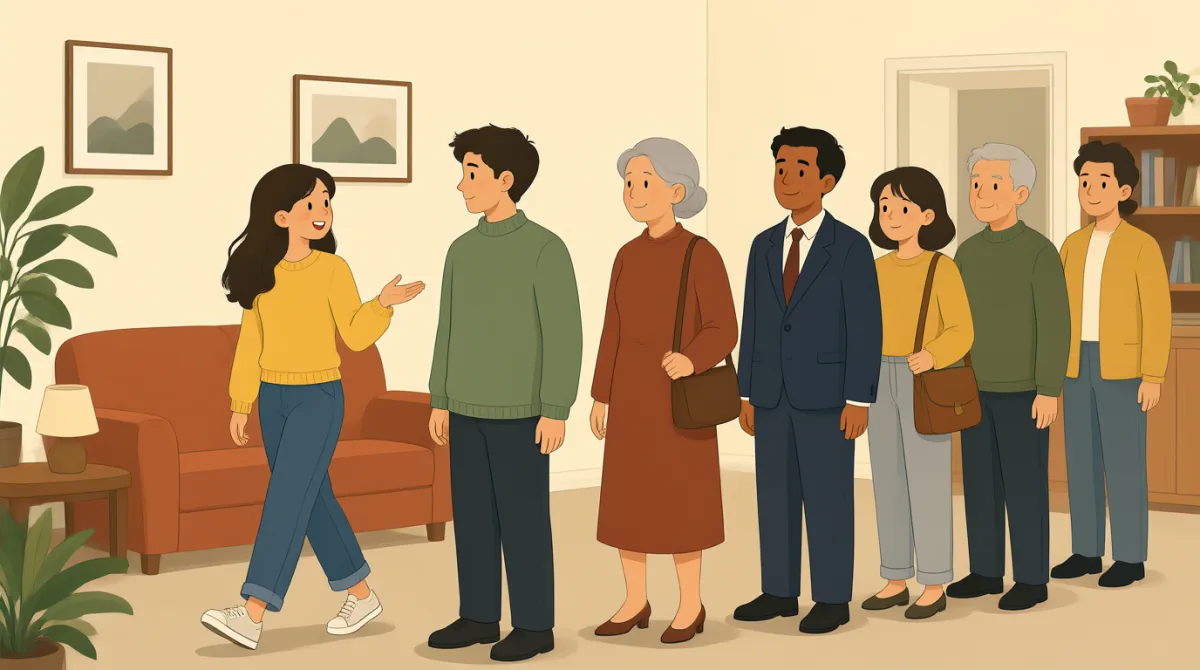

Excuse me, I'm so sorry to bother you, but I was wondering if I could possibly go ahead of you?
打擾一下,非常抱歉,但是我想知道我是否可以插到您前面?

Oh, sure. Is everything alright? Is there an emergency?
哦,好的。一切都好嗎?有什麼緊急情況嗎?
Yes, actually. My son is quite sick and I need to get him to the urgent care clinic immediately. We're already running a bit late.
是的,其實。我兒子病得很重,我需要立刻帶他去緊急護理診所。我們已經有點晚了。
Oh, I'm so sorry to hear that! Of course, please go right ahead. I hope he feels better soon.
哦,聽到這個我很難過!當然,請您儘管前面。希望他快點好起來。
Thank you so much, I really appreciate your understanding. You've been a lifesaver.
非常感謝您,我真的很感謝您的理解。您真是幫了大忙。
No problem at all. Just be careful and get him seen quickly.
沒問題。小心點,快點去看醫生。
詞彙7
- excuse打擾
To say 'excuse me' is a polite way to get someone's attention or apologize for interrupting them in a conversation or situation.
說“excuse me”是一種禮貌的方式,可以引起別人的注意,也可以為在交談或某種場合中打斷對方而道歉。
- bother打擾
To bother someone means to interrupt or annoy them slightly; it's often used in apologies like 'sorry to bother you' to show politeness.
“bother someone”指稍微打擾或惹惱某人。它常用於“sorry to bother you”這樣的道歉表達中,顯得更有禮貌。
- wondering想知道
Wondering means thinking about something or being curious; it's used to politely ask a question, like 'I was wondering if...' to make requests softer.
“wondering”指思考某件事或對某事感到好奇。用“I was wondering if...”提問時,語氣會更委婉,聽起來不像直接提出要求。
- ahead前面
Ahead means in front of others; in lines, 'go ahead' means to move forward before someone else, often used when allowing someone to cut in politely.
“ahead”指在別人前面。在排隊時,“go ahead”表示先於別人往前走,常用於禮貌地讓別人插隊。
- emergency緊急情況
An emergency is a sudden, serious situation that needs immediate help, like a medical problem; it's useful for explaining why you need to act quickly.
“emergency”指突然發生、需要立即處理的嚴重情況,比如醫療問題。需要解釋為什麼必須趕快行動時,這個詞很有用。
- urgent緊急的
Urgent means needing quick action because it's important or time-sensitive; say 'urgent care' for a clinic that handles non-life-threatening emergencies.
“urgent”表示事情很重要或時間緊迫,需要儘快處理。說“urgent care”時,指處理非危及生命的緊急狀況的診所。
- lifesaver救星
A lifesaver is someone who helps you out of a difficult situation; it's an idiomatic expression to thank someone greatly, like saving your day.
“lifesaver”指在你陷入困境時幫助你的人。這是一種習語,用來表達非常感謝,意思是對方幫了大忙,簡直像救了你一樣。
關鍵句6
- 1
Excuse me, I'm so sorry to bother you, but I was wondering if I could possibly go ahead of you?
打擾一下,非常抱歉,不過我想問問,我能不能先到您前面?
This is a very polite way to make a request to cut in line. It uses 'excuse me' for attention, 'sorry to bother' for apology, and 'I was wondering if... possibly' to soften the ask, making it suitable for urgent but polite situations like emergencies.
這是請求插隊時非常禮貌的說法。用“excuse me”引起對方注意,用“sorry to bother”表示抱歉,再用“I was wondering if... possibly”讓請求聽起來更委婉。遇到緊急情況時,這樣說既禮貌又合適。
- 2
Oh, sure. Is everything alright? Is there an emergency?
哦,當然可以。您還好嗎?是有什麼緊急情況嗎?
This shows a kind response allowing the request and asking for more details. 'Oh, sure' means yes casually, and 'is everything alright?' is a common empathetic question; use it when someone asks for a favor to show concern.
這句話既友善地答應了對方,也詢問了更多情況。“Oh, sure”是比較隨意的肯定回答;“is everything alright?”是常見的關切問法。別人向你請求幫忙時,可以這樣表達關心。
- 3
Yes, actually. My son is quite sick and I need to get him to the urgent care clinic immediately.
是的,確實如此。我兒子病得很重,我得馬上帶他去緊急護理診所。
This explains the urgent reason briefly. 'Yes, actually' confirms politely, and 'immediately' emphasizes speed; it's useful for justifying a request in time-sensitive situations, with simple present tense for current needs.
這句話簡要說明了情況緊急的原因。“Yes, actually”禮貌地確認了對方的猜測,“immediately”強調必須馬上行動。在解釋有時間壓力的請求時,這種說法很實用;一般現在時也能表達眼下的需要。
- 4
Oh, I'm so sorry to hear that! Of course, please go right ahead.
哦,聽到這個我很難過!當然可以,您請先走。
This expresses sympathy and agrees to the request. 'I'm sorry to hear that' shows empathy, and 'go right ahead' means proceed without delay; use this pattern to respond kindly to someone's urgent explanation.
這句話表達了同情,也答應了對方的請求。“I'm sorry to hear that”表示關心和同情;“go right ahead”表示可以馬上繼續或先走。聽到別人解釋緊急情況時,可以用這樣的說法友善回應。
- 5
Thank you so much, I really appreciate your understanding. You've been a lifesaver.
太感謝您了,我真的很感激您的理解。您真是幫了我的大忙。
This is a strong way to thank someone after help. 'Thank you so much' is emphatic gratitude, 'I appreciate' shows value for their kindness, and 'lifesaver' is idiomatic; ideal for ending polite interactions where someone helped in a pinch.
這是得到幫助後表達感謝的有力說法。“Thank you so much”表達非常感激;“I appreciate”表示珍惜對方的善意;“lifesaver”則是習語。在別人危急時刻幫了忙之後,用這些表達來禮貌地結束對話很合適。
- 6
No problem at all. Just be careful and get him seen quickly.
完全沒關係。您小心點,趕緊帶他去看醫生吧。
This downplays the help given while offering advice. 'No problem at all' means it was easy to help, and 'get him seen' is a phrasal verb for receiving medical attention; use it to respond humbly and caringly in supportive situations.
這句話輕描淡寫地回應了對方的感謝,同時給出關心的建議。“No problem at all”表示幫這個忙併不麻煩;“get him seen”是一個短語,指讓他得到醫生診治。在這種互相支援的場合,可以用它來謙和又體貼地回應。