Requesting Utensils/Condiments
索取餐具/調味品
You've received your order but realize you need extra napkins, forks, or specific condiments like soy sauce. You ask the staff for these additional items.
你已經拿到了外賣,但發現需要額外的紙巾、叉子或特定的調味品,比如醬油。你向工作人員索取這些額外物品。
對話8
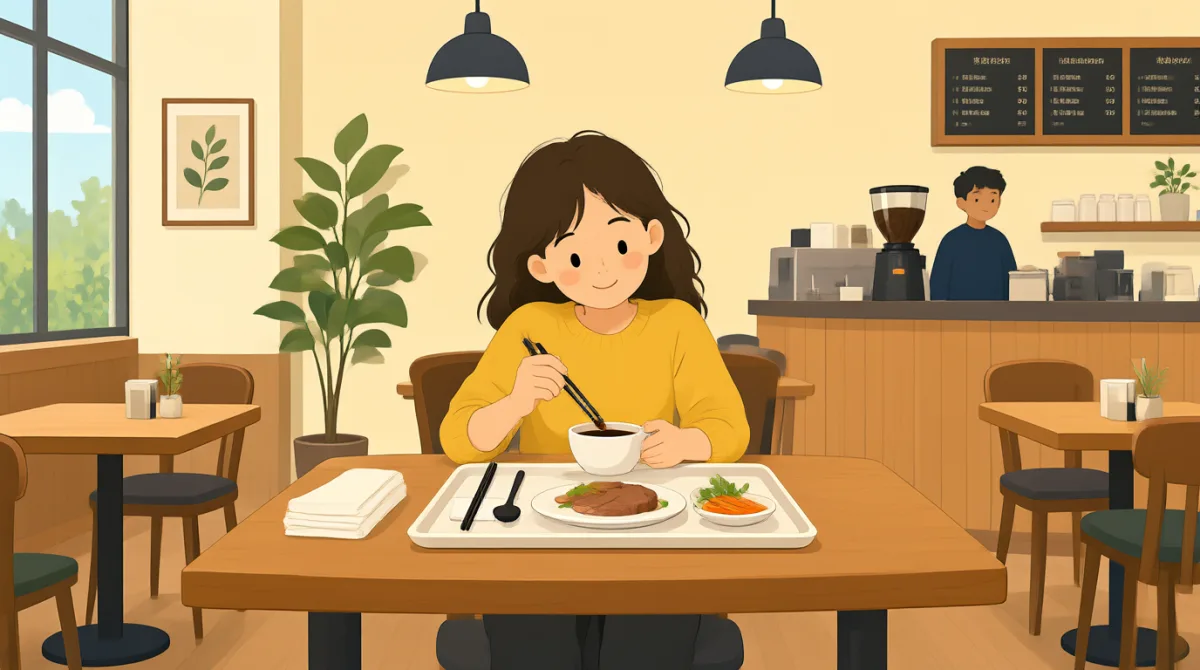

Excuse me, I just picked up my order for a 'David Chen,' but I realized I didn't get any napkins or forks. Could I grab some?
不好意思,我剛剛拿了我的訂單,是給‘David 陳’的,但是我發現我沒有拿到任何紙巾和叉子。我能拿一些嗎?

Certainly! They should have been in the bag, but no worries. How many forks and napkins do you need?
當然!它們應該在袋子裡,不過沒關係。你需要多少叉子和紙巾?
Just two forks, please, and a handful of napkins would be great. Oh, and do you happen to have any soy sauce packets?
只要兩個叉子就行,然後一疊紙巾就夠了。對了,你們有沒有醬油包?
Yes, we do. Are you looking for regular soy sauce or low-sodium?
有的。您要普通醬油還是低鹽醬油?
Just the regular kind, please. Maybe three packets.
普通的就行,請給我三包。
Alright, two forks, a handful of napkins, and three regular soy sauce packets coming right up!
好的,兩個叉子,一疊紙巾,還有三包普通醬油,馬上就好!
Thank you so much! You're a lifesaver.
太謝謝你了!你真是幫了大忙。
You're very welcome! Have a great day and enjoy your meal!
不客氣!祝您有愉快的一天,用餐愉快!
詞彙11
- Excuse me不好意思
A polite way to get someone's attention or interrupt nicely, often used in public places like restaurants.
在公共場所(比如餐廳)想引起別人注意或禮貌地打斷對方時,可以用這個禮貌的說法。
- picked up取了
Past tense of 'pick up,' meaning to collect or retrieve something, like an order from a store or restaurant.
'pick up' 的過去式,意思是取走或領取某樣東西,比如從商店或餐廳取訂單。
- napkins紙巾
Paper tissues used for wiping hands or mouth while eating; essential for takeout food to avoid mess.
吃飯時用來擦手或擦嘴的紙巾。吃外賣時很實用,可以避免弄髒。
- forks叉子
Utensils with prongs for eating food; plastic ones are common for to-go orders.
帶有尖齒、用來吃東西的餐具。外賣訂單裡常見的是塑膠叉子。
- grab拿
Informal word meaning to quickly take or get something, like extra items from a counter.
比較口語的說法,意思是快速拿取或獲取某樣東西,比如從櫃檯上再拿些用品。
- handful一把;一小疊
A small amount that fits in one hand, used to describe a casual quantity like napkins.
指一隻手能拿住的少量東西,可用來隨意描述紙巾等物品的數量。
- soy sauce packets醬油包
Small sealed packets of soy sauce, a common Asian condiment for flavoring food in takeout.
小包裝的醬油,是外賣中常見的調味品,可以給食物增添風味。
- regular普通的;標準的
Meaning the standard or normal version, not special or modified, like regular soy sauce vs. low-salt.
指常規或標準版本,沒有特別調整,比如普通醬油,相對於低鹽醬油而言。
- low-sodium低鈉的;低鹽的
A type of food or condiment with reduced salt content, popular for health reasons.
指含鹽量較低的食品或調味品,很多人出於健康考慮會選擇這類產品。
- coming right up馬上就好
An idiomatic expression meaning something will be ready very soon, often said by service staff.
這個習慣用語表示某件事很快就會準備好,服務人員經常會這樣說。
- lifesaver救星
Slang for someone who provides crucial help in a difficult situation, showing strong gratitude.
口語說法,指在困難時提供了關鍵幫助的人,用來表達非常感謝。
關鍵句10
- 1
Excuse me, I just picked up my order for a 'David Chen,' but I realized I didn't get any napkins or forks. Could I grab some?
不好意思,我剛剛拿了我的訂單,是給‘David Chen’的,不過我發現我沒拿到紙巾和叉子。可以再給我一些嗎?
This polite request uses 'excuse me' to start, past tense 'picked up' and 'realized' for recent actions, and 'could I' for a soft request. Useful for politely asking for missing items after collecting an order.
這句禮貌的請求以 'excuse me' 開頭,用過去式 'picked up' 和 'realized' 描述剛發生的事,並用 'could I' 委婉地提出請求。取完訂單後發現少了東西時,可以這樣禮貌地詢問。
- 2
Certainly! They should have been in the bag, but no worries.
當然!它們應該在袋子裡,不過沒關係。
'Certainly' means 'of course' politely; 'should have been' expresses expectation, and 'no worries' reassures casually. Great for customer service responses to show helpfulness without blame.
'Certainly' 是禮貌地表示“當然”;'should have been' 表達原本的預期,而 'no worries' 則輕鬆地安慰對方。這些說法適合服務人員回應顧客,表示願意幫忙,也不會責怪對方。
- 3
How many forks and napkins do you need?
您需要幾個叉子和多少紙巾?
A simple question using 'how many' for quantity, with plural nouns. Practical for clarifying customer needs in service situations like restaurants.
這是一個簡單的問句,用 'how many' 詢問數量,並搭配複數名詞。在餐廳等服務場合,可以用它來確認顧客需要什麼、需要多少。
- 4
Just two forks, please, and a handful of napkins would be great.
只要兩個叉子就好,再給我一小疊紙巾就行。
'Just' softens the request, 'please' adds politeness, and 'would be great' expresses preference positively. Use this to specify quantities casually and appreciatively.
'Just' 讓請求聽起來更柔和,'please' 表示禮貌,而 'would be great' 則積極地表達偏好。你可以用這句話隨意說明需要的數量,同時顯得客氣。
- 5
Oh, and do you happen to have any soy sauce packets?
哦,對了,你們有醬油包嗎?
'Do you happen to have' is a polite way to ask if something is available by chance. The 'oh, and' adds an afterthought. Ideal for adding extra requests naturally.
'Do you happen to have' 是禮貌地詢問對方是否剛好有某樣東西。'Oh, and' 用來補充想到的請求。臨時想再要些東西時,這種說法很自然。
- 6
Are you looking for regular soy sauce or low-sodium?
您想要普通醬油還是低鹽醬油?
An alternative question using 'or' to offer choices. 'Looking for' means seeking. Useful in service to confirm preferences and show attentiveness.
這是用 'or' 提供選項的選擇問句。'Looking for' 的意思是尋找或想要。在服務場合,這樣問可以確認顧客的偏好,也能體現周到。
- 7
Just the regular kind, please. Maybe three packets.
普通的就好,謝謝。給我三包吧。
'Just' specifies simply, 'kind' refers to type, and 'maybe' suggests tentatively. Helps in making precise requests for items like condiments.
'Just' 用來明確只要某一種,'kind' 指種類,而 'maybe' 表示不太確定、語氣比較委婉。這些詞能幫你準確地提出醬料等物品的需求。
- 8
Alright, two forks, a handful of napkins, and three regular soy sauce packets coming right up!
好的,兩個叉子、一小疊紙巾,還有三包普通醬油,馬上就好!
'Alright' acknowledges, lists items for confirmation, and 'coming right up' means soon. This repeating order summary builds trust and is common in fast service.
'Alright' 表示回應確認,接著把物品列出來再次核對;'coming right up' 的意思是很快就準備好。重複確認訂單內容有助於讓顧客放心,也是快餐服務中常見的做法。
- 9
Thank you so much! You're a lifesaver.
太謝謝你了!你真是幫了大忙。
Intensifier 'so much' shows strong thanks; 'lifesaver' is idiomatic gratitude. Use after receiving help to end interactions warmly.
'so much' 加強感謝的語氣;'lifesaver' 是表達感激的習慣說法。得到幫助後可以這樣說,讓對話在溫暖友好的氣氛中結束。
- 10
You're very welcome! Have a great day and enjoy your meal!
不客氣!祝您今天愉快,用餐愉快!
'You're very welcome' is a polite response to thanks; well-wishes like 'have a great day' are standard farewells. Perfect for positive customer interactions.
'You're very welcome' 是禮貌地回應感謝。像 'have a great day' 這樣的祝福語是常見的告別用語,很適合用於友好的顧客服務場景。