Requesting Utensils/Condiments
ขอช้อนส้อมและเครื่องปรุง
You've received your order but realize you need extra napkins, forks, or specific condiments like soy sauce. You ask the staff for these additional items.
คุณรับอาหารแล้ว แต่เพิ่งนึกได้ว่าต้องการกระดาษเช็ดปาก ส้อม หรือเครื่องปรุงบางอย่างเพิ่ม เช่น ซอสถั่วเหลือง คุณจึงขอของเหล่านี้จากพนักงาน
บทสนทนา8
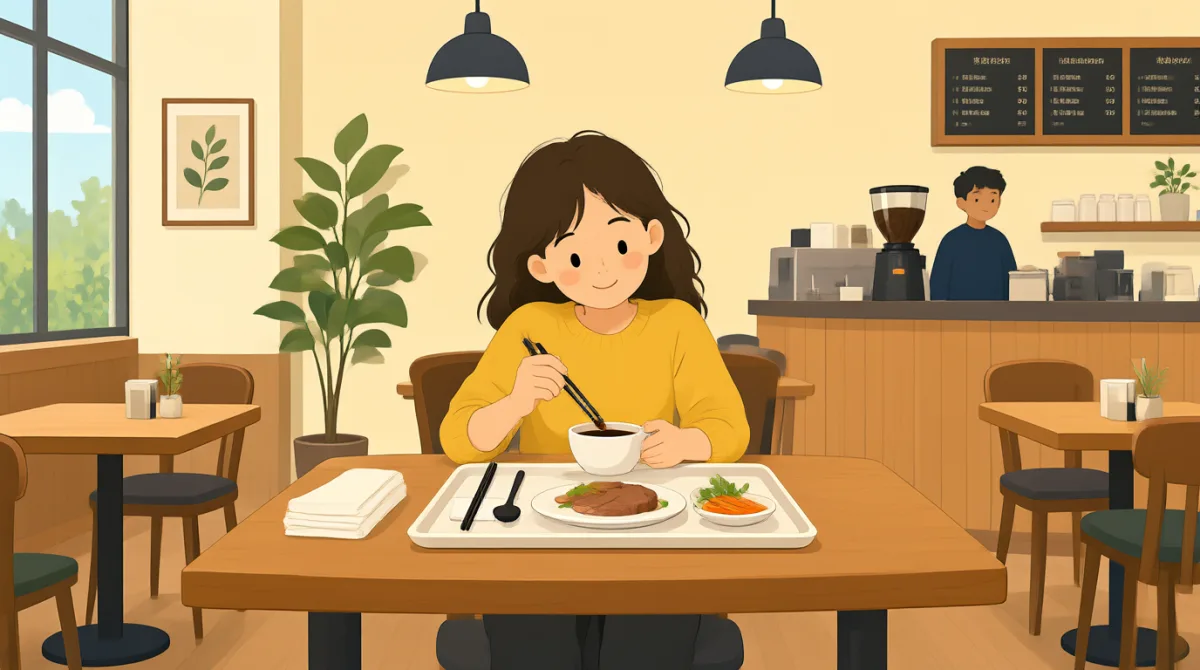

Excuse me, I just picked up my order for a 'David Chen,' but I realized I didn't get any napkins or forks. Could I grab some?
ขอโทษนะครับ ผมเพิ่งมารับออร์เดอร์ในชื่อ ‘David Chen’ แต่เพิ่งรู้ตัวว่าไม่ได้กระดาษเช็ดปากหรือส้อมเลย ขอเพิ่มหน่อยได้ไหมครับ

Certainly! They should have been in the bag, but no worries. How many forks and napkins do you need?
ได้เลยค่ะ ปกติของพวกนี้ควรจะอยู่ในถุง แต่ไม่เป็นไรค่ะ ต้องการส้อมกับกระดาษเช็ดปากอย่างละกี่ชิ้นคะ
Just two forks, please, and a handful of napkins would be great. Oh, and do you happen to have any soy sauce packets?
ขอส้อมสองคันครับ แล้วก็กระดาษเช็ดปากสักกำมือก็ดีครับ อ้อ แล้วพอจะมีซอสถั่วเหลืองแบบซองไหมครับ
Yes, we do. Are you looking for regular soy sauce or low-sodium?
มีค่ะ ต้องการซอสถั่วเหลืองธรรมดาหรือแบบโซเดียมต่ำคะ
Just the regular kind, please. Maybe three packets.
แบบธรรมดาครับ ขอสามซองก็ได้ครับ
Alright, two forks, a handful of napkins, and three regular soy sauce packets coming right up!
ได้เลยค่ะ ส้อมสองคัน กระดาษเช็ดปากหนึ่งกำมือ แล้วก็ซอสถั่วเหลืองธรรมดาสามซอง กำลังจัดให้เลยค่ะ
Thank you so much! You're a lifesaver.
ขอบคุณมากเลยครับ ช่วยชีวิตผมไว้เลย
You're very welcome! Have a great day and enjoy your meal!
ยินดีมากค่ะ ขอให้วันนี้เป็นวันที่ดี แล้วก็ทานให้อร่อยนะคะ
คำศัพท์11
- Excuse meขอโทษนะครับ/คะ
A polite way to get someone's attention or interrupt nicely, often used in public places like restaurants.
คำสุภาพที่ใช้เรียกความสนใจหรือขัดจังหวะใครอย่างนุ่มนวล มักใช้ในที่สาธารณะ เช่น ร้านอาหาร
- picked upไปรับมา
Past tense of 'pick up,' meaning to collect or retrieve something, like an order from a store or restaurant.
รูปอดีตของ 'pick up' หมายถึงไปรับหรือไปเอาบางอย่างมา เช่น ออร์เดอร์จากร้านค้าหรือร้านอาหาร
- napkinsกระดาษเช็ดปาก
Paper tissues used for wiping hands or mouth while eating; essential for takeout food to avoid mess.
กระดาษที่ใช้เช็ดมือหรือปากระหว่างรับประทานอาหาร จำเป็นมากสำหรับอาหารสั่งกลับบ้านเพื่อไม่ให้เลอะเทอะ
- forksส้อม
Utensils with prongs for eating food; plastic ones are common for to-go orders.
อุปกรณ์ที่มีซี่สำหรับใช้รับประทานอาหาร ส้อมพลาสติกเป็นของที่พบได้บ่อยในออร์เดอร์กลับบ้าน
- grabหยิบ
Informal word meaning to quickly take or get something, like extra items from a counter.
คำไม่เป็นทางการ หมายถึงหยิบหรือเอาบางอย่างอย่างรวดเร็ว เช่น ของเพิ่มเติมจากเคาน์เตอร์
- handfulหนึ่งกำมือ
A small amount that fits in one hand, used to describe a casual quantity like napkins.
ปริมาณเล็กน้อยที่ใส่ได้ในมือหนึ่งข้าง ใช้บอกปริมาณแบบคร่าว ๆ เช่น กระดาษเช็ดปาก
- soy sauce packetsซอสถั่วเหลืองแบบซอง
Small sealed packets of soy sauce, a common Asian condiment for flavoring food in takeout.
ซอสถั่วเหลืองบรรจุซองเล็ก ๆ ที่ปิดสนิท เป็นเครื่องปรุงรสอาหารที่พบได้ทั่วไปในอาหารสั่งกลับบ้าน
- regularธรรมดา
Meaning the standard or normal version, not special or modified, like regular soy sauce vs. low-salt.
หมายถึงแบบมาตรฐานหรือแบบปกติ ไม่ใช่แบบพิเศษหรือแบบที่ปรับเปลี่ยน เช่น ซอสถั่วเหลืองธรรมดาเทียบกับแบบเกลือต่ำ
- low-sodiumโซเดียมต่ำ
A type of food or condiment with reduced salt content, popular for health reasons.
อาหารหรือเครื่องปรุงที่มีปริมาณเกลือลดลง เป็นที่นิยมในหมู่คนที่ใส่ใจสุขภาพ
- coming right upกำลังจัดให้เลย
An idiomatic expression meaning something will be ready very soon, often said by service staff.
สำนวนที่หมายถึงบางอย่างจะพร้อมในอีกไม่นาน พนักงานบริการมักพูดสำนวนนี้
- lifesaverผู้ช่วยชีวิต
Slang for someone who provides crucial help in a difficult situation, showing strong gratitude.
คำสแลงเรียกคนที่ช่วยเหลืออย่างสำคัญในสถานการณ์ลำบาก ใช้แสดงความขอบคุณอย่างมาก
ประโยคสำคัญ10
- 1
Excuse me, I just picked up my order for a 'David Chen,' but I realized I didn't get any napkins or forks. Could I grab some?
ขอโทษนะครับ ผมเพิ่งมารับออร์เดอร์ในชื่อ ‘David Chen’ แต่เพิ่งรู้ตัวว่าไม่ได้กระดาษเช็ดปากหรือส้อมเลย ขอเพิ่มหน่อยได้ไหมครับ
This polite request uses 'excuse me' to start, past tense 'picked up' and 'realized' for recent actions, and 'could I' for a soft request. Useful for politely asking for missing items after collecting an order.
คำขออย่างสุภาพนี้เริ่มด้วย 'excuse me' ใช้รูปอดีต 'picked up' และ 'realized' เพื่อพูดถึงสิ่งที่เพิ่งเกิดขึ้น และใช้ 'could I' เพื่อขออย่างนุ่มนวล เหมาะสำหรับขอของที่ขาดหลังจากรับออร์เดอร์แล้ว
- 2
Certainly! They should have been in the bag, but no worries.
ได้เลยค่ะ ปกติของพวกนี้ควรจะอยู่ในถุง แต่ไม่เป็นไรค่ะ
'Certainly' means 'of course' politely; 'should have been' expresses expectation, and 'no worries' reassures casually. Great for customer service responses to show helpfulness without blame.
'Certainly' หมายถึง ‘ได้เลย’ ในแบบสุภาพ ส่วน 'should have been' แสดงถึงสิ่งที่คาดว่าน่าจะเป็นเช่นนั้น และ 'no worries' ใช้พูดปลอบใจแบบเป็นกันเอง เหมาะสำหรับพนักงานบริการที่ต้องการช่วยเหลือโดยไม่กล่าวโทษใคร
- 3
How many forks and napkins do you need?
ต้องการส้อมกับกระดาษเช็ดปากอย่างละกี่ชิ้นคะ
A simple question using 'how many' for quantity, with plural nouns. Practical for clarifying customer needs in service situations like restaurants.
คำถามง่าย ๆ ที่ใช้ 'how many' เพื่อถามจำนวน ตามด้วยคำนามพหูพจน์ ใช้ถามให้ชัดเจนว่าลูกค้าต้องการอะไรในสถานการณ์บริการ เช่น ในร้านอาหาร
- 4
Just two forks, please, and a handful of napkins would be great.
ขอส้อมสองคันครับ แล้วก็กระดาษเช็ดปากสักกำมือก็ดีครับ
'Just' softens the request, 'please' adds politeness, and 'would be great' expresses preference positively. Use this to specify quantities casually and appreciatively.
'Just' ทำให้คำขอฟังนุ่มนวลขึ้น 'please' เพิ่มความสุภาพ และ 'would be great' ใช้บอกความต้องการในแง่บวก ใช้ระบุจำนวนอย่างเป็นกันเองและสุภาพได้
- 5
Oh, and do you happen to have any soy sauce packets?
อ้อ แล้วพอจะมีซอสถั่วเหลืองแบบซองไหมครับ
'Do you happen to have' is a polite way to ask if something is available by chance. The 'oh, and' adds an afterthought. Ideal for adding extra requests naturally.
'Do you happen to have' เป็นวิธีสุภาพในการถามว่าบังเอิญมีของบางอย่างหรือไม่ ส่วน 'oh, and' ใช้เพิ่มเรื่องที่เพิ่งนึกขึ้นได้ เหมาะสำหรับขอของเพิ่มเติมอย่างเป็นธรรมชาติ
- 6
Are you looking for regular soy sauce or low-sodium?
ต้องการซอสถั่วเหลืองธรรมดาหรือแบบโซเดียมต่ำคะ
An alternative question using 'or' to offer choices. 'Looking for' means seeking. Useful in service to confirm preferences and show attentiveness.
คำถามแบบให้เลือกโดยใช้ 'or' เพื่อเสนอตัวเลือก 'Looking for' หมายถึงกำลังหาอยู่ เหมาะกับการถามยืนยันความต้องการของลูกค้าและแสดงความใส่ใจในการบริการ
- 7
Just the regular kind, please. Maybe three packets.
แบบธรรมดาครับ ขอสามซองก็ได้ครับ
'Just' specifies simply, 'kind' refers to type, and 'maybe' suggests tentatively. Helps in making precise requests for items like condiments.
'Just' ใช้ระบุแบบที่ต้องการอย่างชัดเจน 'kind' หมายถึงประเภท และ 'maybe' ทำให้ฟังดูเป็นการเสนออย่างไม่ยืนยัน เหมาะสำหรับขอของอย่างเครื่องปรุงให้ได้ตรงตามต้องการ
- 8
Alright, two forks, a handful of napkins, and three regular soy sauce packets coming right up!
ได้เลยค่ะ ส้อมสองคัน กระดาษเช็ดปากหนึ่งกำมือ แล้วก็ซอสถั่วเหลืองธรรมดาสามซอง กำลังจัดให้เลยค่ะ
'Alright' acknowledges, lists items for confirmation, and 'coming right up' means soon. This repeating order summary builds trust and is common in fast service.
'Alright' ใช้รับคำขอ จากนั้นทวนรายการเพื่อยืนยัน และ 'coming right up' หมายถึงจะจัดให้ในไม่ช้า การทวนรายการช่วยสร้างความมั่นใจและเป็นเรื่องปกติในการบริการที่รวดเร็ว
- 9
Thank you so much! You're a lifesaver.
ขอบคุณมากเลยครับ ช่วยชีวิตผมไว้เลย
Intensifier 'so much' shows strong thanks; 'lifesaver' is idiomatic gratitude. Use after receiving help to end interactions warmly.
'So much' ใช้เน้นความขอบคุณอย่างมาก ส่วน 'lifesaver' เป็นสำนวนแสดงความซาบซึ้งใจ ใช้พูดหลังได้รับความช่วยเหลือเพื่อจบการสนทนาอย่างอบอุ่น
- 10
You're very welcome! Have a great day and enjoy your meal!
ยินดีมากค่ะ ขอให้วันนี้เป็นวันที่ดี แล้วก็ทานให้อร่อยนะคะ
'You're very welcome' is a polite response to thanks; well-wishes like 'have a great day' are standard farewells. Perfect for positive customer interactions.
'You're very welcome' เป็นคำตอบอย่างสุภาพเมื่อมีคนกล่าวขอบคุณ ส่วนคำอวยพรอย่าง 'have a great day' เป็นคำกล่าวลาแบบมาตรฐาน เหมาะสำหรับปิดท้ายการพูดคุยกับลูกค้าในทางที่ดี