Requesting Utensils/Condiments
बर्तन और सॉस माँगना
You've received your order but realize you need extra napkins, forks, or specific condiments like soy sauce. You ask the staff for these additional items.
आपको अपना ऑर्डर मिल गया है, लेकिन आपको एहसास होता है कि आपको कुछ अतिरिक्त नैपकिन, काँटे या सोया सॉस जैसी कोई खास चटनी चाहिए। आप स्टाफ़ से ये चीज़ें माँगते हैं।
संवाद8
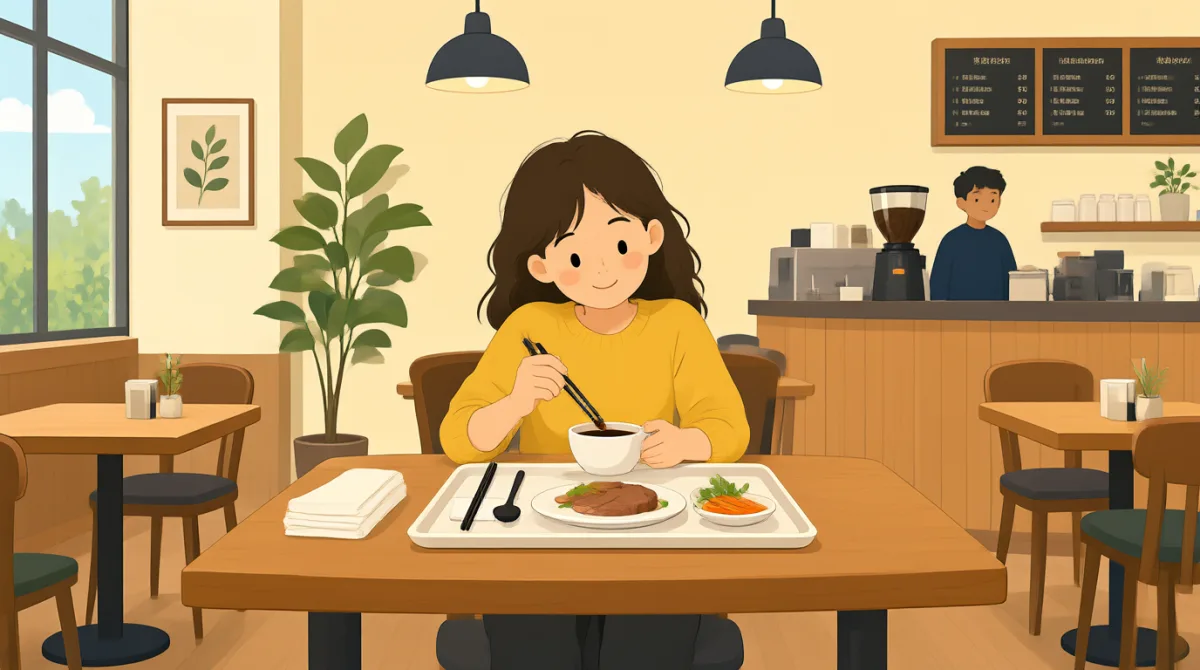

Excuse me, I just picked up my order for a 'David Chen,' but I realized I didn't get any napkins or forks. Could I grab some?
माफ़ कीजिए, मैंने अभी ‘David Chen’ के नाम का ऑर्डर लिया है, लेकिन मुझे एहसास हुआ कि मुझे नैपकिन या काँटे नहीं मिले। क्या मैं कुछ ले सकता हूँ?

Certainly! They should have been in the bag, but no worries. How many forks and napkins do you need?
बिलकुल! वे बैग में होने चाहिए थे, लेकिन कोई बात नहीं। आपको कितने काँटे और नैपकिन चाहिए?
Just two forks, please, and a handful of napkins would be great. Oh, and do you happen to have any soy sauce packets?
बस दो काँटे, कृपया, और थोड़े से नैपकिन भी दे दीजिए। अरे, क्या आपके पास सोया सॉस के छोटे पैकेट भी हैं?
Yes, we do. Are you looking for regular soy sauce or low-sodium?
हाँ, हैं। आपको सामान्य सोया सॉस चाहिए या कम नमक वाला?
Just the regular kind, please. Maybe three packets.
बस सामान्य वाला, कृपया। शायद तीन पैकेट।
Alright, two forks, a handful of napkins, and three regular soy sauce packets coming right up!
ठीक है, दो काँटे, थोड़े से नैपकिन और सामान्य सोया सॉस के तीन पैकेट अभी लाती हूँ!
Thank you so much! You're a lifesaver.
बहुत-बहुत धन्यवाद! आपने मेरी बड़ी मदद की।
You're very welcome! Have a great day and enjoy your meal!
आपका बहुत स्वागत है! आपका दिन अच्छा रहे और खाने का आनंद लीजिए!
शब्दावली11
- Excuse meमाफ़ कीजिए
A polite way to get someone's attention or interrupt nicely, often used in public places like restaurants.
किसी का ध्यान खींचने या विनम्रता से बीच में बोलने का एक शिष्ट तरीका। इसका इस्तेमाल अक्सर रेस्तराँ जैसी सार्वजनिक जगहों पर किया जाता है।
- picked upले लिया
Past tense of 'pick up,' meaning to collect or retrieve something, like an order from a store or restaurant.
'pick up' का भूतकाल, जिसका अर्थ है किसी चीज़ को लेने या हासिल करने जाना, जैसे दुकान या रेस्तराँ से ऑर्डर लेना।
- napkinsनैपकिन
Paper tissues used for wiping hands or mouth while eating; essential for takeout food to avoid mess.
खाने के दौरान हाथ या मुँह पोंछने के लिए इस्तेमाल होने वाले कागज़ के रूमाल। खाना ले जाते समय गंदगी से बचने के लिए ये बहुत काम आते हैं।
- forksकाँटे
Utensils with prongs for eating food; plastic ones are common for to-go orders.
खाना खाने के लिए इस्तेमाल होने वाले नुकीले दाँतों वाले बर्तन। बाहर ले जाने वाले खाने के साथ अक्सर प्लास्टिक के काँटे दिए जाते हैं।
- grabले लेना
Informal word meaning to quickly take or get something, like extra items from a counter.
अनौपचारिक शब्द, जिसका मतलब है किसी चीज़ को जल्दी से लेना या हासिल करना, जैसे काउंटर से कुछ अतिरिक्त चीज़ें ले लेना।
- handfulमुट्ठी भर
A small amount that fits in one hand, used to describe a casual quantity like napkins.
इतनी थोड़ी मात्रा जो एक हाथ में आ जाए। नैपकिन जैसी चीज़ों की अनुमानित मात्रा बताने के लिए इसका इस्तेमाल होता है।
- soy sauce packetsसोया सॉस के पैकेट
Small sealed packets of soy sauce, a common Asian condiment for flavoring food in takeout.
सोया सॉस के छोटे, सीलबंद पैकेट। बाहर ले जाने वाले खाने में स्वाद बढ़ाने के लिए यह आम तौर पर दिया जाता है।
- regularसामान्य
Meaning the standard or normal version, not special or modified, like regular soy sauce vs. low-salt.
जिसका मतलब है आम या मानक वाला, न कि कोई खास या बदला हुआ प्रकार; जैसे सामान्य सोया सॉस, कम नमक वाले सोया सॉस से अलग होता है।
- low-sodiumकम नमक वाला
A type of food or condiment with reduced salt content, popular for health reasons.
ऐसा खाना या सॉस जिसमें नमक की मात्रा कम हो। सेहत का ध्यान रखने वाले लोग इसे पसंद करते हैं।
- coming right upअभी लाते हैं
An idiomatic expression meaning something will be ready very soon, often said by service staff.
एक मुहावरेदार अभिव्यक्ति, जिसका मतलब है कि कोई चीज़ बहुत जल्द तैयार हो जाएगी। सेवा कर्मचारी अक्सर इसका इस्तेमाल करते हैं।
- lifesaverबड़ी मदद करने वाला
Slang for someone who provides crucial help in a difficult situation, showing strong gratitude.
मुश्किल स्थिति में ज़रूरी मदद करने वाले व्यक्ति के लिए अनौपचारिक शब्द। इससे बहुत आभार जताया जाता है।
मुख्य वाक्य10
- 1
Excuse me, I just picked up my order for a 'David Chen,' but I realized I didn't get any napkins or forks. Could I grab some?
माफ़ कीजिए, मैंने अभी ‘David Chen’ के नाम का ऑर्डर लिया है, लेकिन मुझे एहसास हुआ कि मुझे नैपकिन या काँटे नहीं मिले। क्या मैं कुछ ले सकता हूँ?
This polite request uses 'excuse me' to start, past tense 'picked up' and 'realized' for recent actions, and 'could I' for a soft request. Useful for politely asking for missing items after collecting an order.
यह विनम्र अनुरोध 'excuse me' से शुरू होता है। हाल में हुई बातों के लिए 'picked up' और 'realized' का भूतकाल इस्तेमाल हुआ है, और 'could I' अनुरोध को नरम बनाता है। ऑर्डर लेने के बाद छूटी हुई चीज़ें विनम्रता से माँगने के लिए यह वाक्य उपयोगी है।
- 2
Certainly! They should have been in the bag, but no worries.
बिलकुल! वे बैग में होने चाहिए थे, लेकिन कोई बात नहीं।
'Certainly' means 'of course' politely; 'should have been' expresses expectation, and 'no worries' reassures casually. Great for customer service responses to show helpfulness without blame.
'Certainly' का अर्थ विनम्रता से 'बिलकुल' कहना है। 'Should have been' से अपेक्षा जताई जाती है, जबकि 'no worries' अनौपचारिक ढंग से आश्वस्त करता है। ग्राहक सेवा में बिना किसी को दोष दिए मददगार जवाब देने के लिए यह अच्छा वाक्य है।
- 3
How many forks and napkins do you need?
आपको कितने काँटे और नैपकिन चाहिए?
A simple question using 'how many' for quantity, with plural nouns. Practical for clarifying customer needs in service situations like restaurants.
यह एक सरल सवाल है जिसमें मात्रा पूछने के लिए 'how many' और बहुवचन संज्ञाओं का इस्तेमाल हुआ है। रेस्तराँ जैसी सेवा की स्थितियों में ग्राहक की ज़रूरत स्पष्ट करने के लिए यह काम आता है।
- 4
Just two forks, please, and a handful of napkins would be great.
बस दो काँटे, कृपया, और थोड़े से नैपकिन भी दे दीजिए।
'Just' softens the request, 'please' adds politeness, and 'would be great' expresses preference positively. Use this to specify quantities casually and appreciatively.
'Just' अनुरोध को नरम बनाता है, 'please' विनम्रता जोड़ता है और 'would be great' पसंद को सकारात्मक ढंग से बताता है। मात्रा बताते हुए सहज और आभारपूर्ण लगने के लिए इसका इस्तेमाल करें।
- 5
Oh, and do you happen to have any soy sauce packets?
अरे, क्या आपके पास सोया सॉस के छोटे पैकेट भी हैं?
'Do you happen to have' is a polite way to ask if something is available by chance. The 'oh, and' adds an afterthought. Ideal for adding extra requests naturally.
'Do you happen to have' किसी चीज़ के उपलब्ध होने के बारे में विनम्रता से पूछने का तरीका है। 'Oh, and' से बाद में याद आई बात जोड़ी जाती है। अतिरिक्त चीज़ें सहज ढंग से माँगने के लिए यह वाक्य बढ़िया है।
- 6
Are you looking for regular soy sauce or low-sodium?
आपको सामान्य सोया सॉस चाहिए या कम नमक वाला?
An alternative question using 'or' to offer choices. 'Looking for' means seeking. Useful in service to confirm preferences and show attentiveness.
यह 'or' का इस्तेमाल करके विकल्प देने वाला सवाल है। 'Looking for' का मतलब है किसी चीज़ की तलाश करना या उसे चाहना। सेवा के दौरान पसंद की पुष्टि करने और ध्यान रखने का एहसास दिलाने के लिए यह उपयोगी है।
- 7
Just the regular kind, please. Maybe three packets.
बस सामान्य वाला, कृपया। शायद तीन पैकेट।
'Just' specifies simply, 'kind' refers to type, and 'maybe' suggests tentatively. Helps in making precise requests for items like condiments.
'Just' से साफ़ तौर पर बताया जाता है कि बस वही चाहिए, 'kind' का मतलब प्रकार है और 'maybe' से अनिश्चितता या अंदाज़ा जताया जाता है। सॉस जैसी चीज़ें ठीक-ठीक माँगने में यह मदद करता है।
- 8
Alright, two forks, a handful of napkins, and three regular soy sauce packets coming right up!
ठीक है, दो काँटे, थोड़े से नैपकिन और सामान्य सोया सॉस के तीन पैकेट अभी लाती हूँ!
'Alright' acknowledges, lists items for confirmation, and 'coming right up' means soon. This repeating order summary builds trust and is common in fast service.
'Alright' से बात स्वीकार की जाती है, फिर चीज़ों की सूची दोहराकर पुष्टि की जाती है और 'coming right up' का मतलब है कि वे जल्द ही मिल जाएँगी। ऑर्डर की पुष्टि इस तरह दोहराने से भरोसा बढ़ता है और तेज़ सेवा में यह आम है।
- 9
Thank you so much! You're a lifesaver.
बहुत-बहुत धन्यवाद! आपने मेरी बड़ी मदद की।
Intensifier 'so much' shows strong thanks; 'lifesaver' is idiomatic gratitude. Use after receiving help to end interactions warmly.
'So much' धन्यवाद को ज़ोरदार बनाता है और 'lifesaver' आभार जताने का मुहावरा है। मदद मिलने के बाद बातचीत को गर्मजोशी से समाप्त करने के लिए इसका इस्तेमाल करें।
- 10
You're very welcome! Have a great day and enjoy your meal!
आपका बहुत स्वागत है! आपका दिन अच्छा रहे और खाने का आनंद लीजिए!
'You're very welcome' is a polite response to thanks; well-wishes like 'have a great day' are standard farewells. Perfect for positive customer interactions.
'You're very welcome' धन्यवाद के जवाब में कहा जाने वाला विनम्र वाक्य है। 'Have a great day' जैसी शुभकामनाएँ विदा लेते समय आम तौर पर कही जाती हैं। ग्राहकों के साथ सकारात्मक बातचीत के लिए यह एक बढ़िया तरीका है।