Clarifying General Pool Rules
Làm rõ các nội quy chung của hồ bơi
A swimmer observes signs or hears announcements and wants to confirm general rules such as 'no diving,' 'no running,' or 'shower before entering,' and asks a staff member for clarification.
Một người bơi nhìn thấy biển báo hoặc nghe thông báo và muốn xác nhận các nội quy chung như “không được nhảy cắm đầu”, “không chạy” hay “tắm vòi sen trước khi xuống hồ”, nên hỏi nhân viên để được giải thích rõ hơn.
Hội thoại9
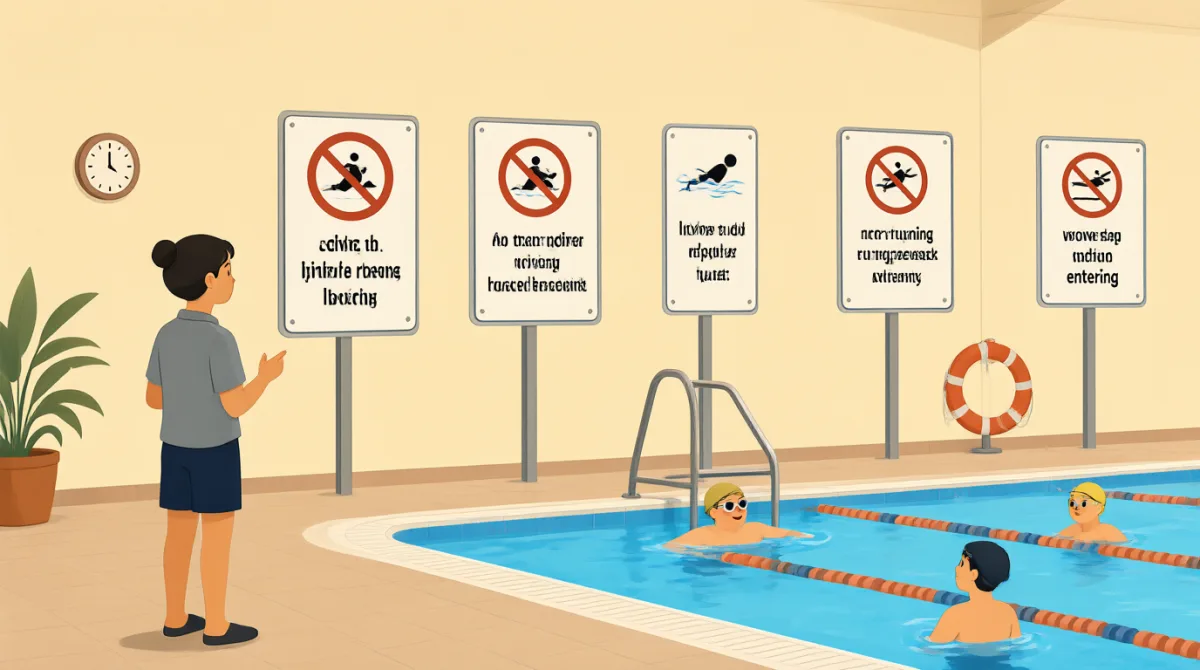

Excuse me, I just wanted to clarify a few things about the pool rules.
Xin lỗi, tôi muốn hỏi rõ một vài điều về nội quy hồ bơi.

Certainly, I'm here to help. What would you like to know?
Vâng, tôi sẵn lòng giúp. Bạn muốn hỏi điều gì?
I saw a few signs and heard an announcement earlier. Is it strictly 'no diving' anywhere in the pool?
Lúc nãy tôi thấy vài biển báo và nghe thông báo. Có phải hồ cấm nhảy cắm đầu ở mọi khu vực không?
That's correct. For safety reasons, diving is not permitted in any area of the pool. The water depth isn't suitable.
Đúng vậy. Vì lý do an toàn, không được phép nhảy cắm đầu ở bất kỳ khu vực nào trong hồ. Độ sâu của nước không phù hợp.
Okay, got it. And what about the 'no running' rule? Does that apply to the pool deck as well?
Được rồi, tôi hiểu. Còn quy định “không chạy” thì sao? Quy định đó cũng áp dụng ở khu vực xung quanh hồ chứ?
Yes, absolutely. The pool deck can be very slippery when wet, so running is prohibited to prevent accidents.
Đúng vậy. Sàn quanh hồ có thể rất trơn khi ướt, nên cấm chạy để tránh tai nạn.
Understood. And one last thing, is showering before entering the pool mandatory?
Tôi hiểu rồi. Còn một điều cuối cùng, có bắt buộc phải tắm vòi sen trước khi xuống hồ không?
Indeed it is. It's for hygiene purposes, to keep the pool water clean for everyone. Thanks for asking!
Đúng vậy. Việc này nhằm đảm bảo vệ sinh, giữ cho nước hồ sạch sẽ để mọi người cùng sử dụng. Cảm ơn bạn đã hỏi!
No problem! Thanks for clarifying everything.
Không có gì! Cảm ơn anh đã giải thích rõ mọi thứ.
Từ vựng8
- clarifylàm rõ
To explain something clearly to avoid confusion. Use it when you need more details about rules or instructions.
Giải thích điều gì đó thật rõ ràng để tránh hiểu lầm. Dùng từ này khi bạn cần biết thêm chi tiết về các quy định hoặc hướng dẫn.
- rulesnội quy
Guidelines or laws that must be followed in a place like a pool. They help keep everyone safe.
Những hướng dẫn hoặc quy định cần tuân theo ở một nơi như hồ bơi. Nội quy giúp giữ an toàn cho mọi người.
- divingnhảy cắm đầu
Jumping into water headfirst with your body straight. In pools, it's often not allowed for safety.
Nhảy xuống nước với đầu hướng xuống trước và thân người duỗi thẳng. Ở hồ bơi, việc này thường bị cấm vì lý do an toàn.
- prohibitedbị cấm
Something that is not allowed by rules. Say 'prohibited' when explaining bans, like 'running is prohibited.'
Không được phép làm theo quy định. Dùng từ “prohibited” khi nói về những điều bị cấm, chẳng hạn “running is prohibited” (cấm chạy).
- decksàn quanh hồ bơi
The flat area around a swimming pool where people walk. It's important to know because rules often apply there too.
Khu vực bằng phẳng xung quanh hồ bơi, nơi mọi người đi lại. Cần biết từ này vì các quy định thường cũng áp dụng ở khu vực đó.
- slipperytrơn
Something wet and smooth that makes it easy to fall. Use it to describe dangerous wet surfaces like pool decks.
Bề mặt ướt và nhẵn khiến người ta dễ bị ngã. Dùng từ này để miêu tả những bề mặt ướt nguy hiểm như sàn quanh hồ bơi.
- mandatorybắt buộc
Required; you must do it. For example, showering before entering the pool is mandatory for hygiene.
Là điều cần phải làm. Ví dụ, tắm vòi sen trước khi xuống hồ là điều bắt buộc để đảm bảo vệ sinh.
- hygienevệ sinh
Practices to keep clean and healthy. In pools, it means showering to keep the water clean for all.
Những thói quen giúp giữ gìn sự sạch sẽ và sức khỏe. Ở hồ bơi, từ này nói đến việc tắm vòi sen để giữ nước sạch cho mọi người.
Câu trọng tâm8
- 1
Excuse me, I just wanted to clarify a few things about the pool rules.
Xin lỗi, tôi muốn hỏi rõ một vài điều về nội quy hồ bơi.
This is a polite way to start a conversation and ask for explanation. Use it when you see signs but need more details. 'Wanted to' is past tense for politeness.
Đây là cách lịch sự để bắt đầu cuộc trò chuyện và hỏi xin giải thích. Hãy dùng câu này khi bạn thấy biển báo nhưng cần biết thêm chi tiết. “Wanted to” là thì quá khứ, được dùng để nói lịch sự hơn.
- 2
Certainly, I'm here to help. What would you like to know?
Vâng, tôi sẵn lòng giúp. Bạn muốn hỏi điều gì?
A helpful response from staff. 'Certainly' means 'of course.' Use this to offer assistance and ask for specifics in service situations.
Đây là câu trả lời thân thiện của nhân viên. “Certainly” có nghĩa là “of course”. Hãy dùng câu này để đề nghị hỗ trợ và hỏi cụ thể hơn trong các tình huống phục vụ khách hàng.
- 3
Is it strictly 'no diving' anywhere in the pool?
Có phải hồ cấm nhảy cắm đầu ở mọi khu vực không?
Asking for confirmation about a rule. 'Strictly' means completely enforced. Useful for checking if a ban applies everywhere; question form with 'is it' for yes/no answers.
Dùng câu này để hỏi xác nhận về một quy định. “Strictly” có nghĩa là được thực thi tuyệt đối. Câu này hữu ích khi bạn muốn biết lệnh cấm có áp dụng ở mọi nơi không; cấu trúc “is it” dùng trong câu hỏi có/không.
- 4
For safety reasons, diving is not permitted in any area of the pool.
Vì lý do an toàn, không được phép nhảy cắm đầu ở bất kỳ khu vực nào trong hồ.
Explaining a rule with a reason. 'Not permitted' is formal for 'not allowed.' Use this pattern to give reasons: 'For [reason], [action] is not [allowed].'
Giải thích quy định kèm theo lý do. “Not permitted” là cách nói trang trọng của “not allowed”. Dùng cấu trúc “For [reason], [action] is not [allowed].” để nêu lý do.
- 5
What about the 'no running' rule? Does that apply to the pool deck as well?
Còn quy định “không chạy” thì sao? Quy định đó cũng áp dụng ở khu vực xung quanh hồ chứ?
Following up on another rule. 'What about' introduces a new question. 'As well' means 'also.' Great for clarifying if rules extend to other areas.
Đây là câu hỏi tiếp theo về một quy định khác. “What about” mở đầu một câu hỏi mới. “As well” có nghĩa là “also”. Cách nói này rất hữu ích khi bạn muốn làm rõ liệu quy định có áp dụng ở những khu vực khác hay không.
- 6
The pool deck can be very slippery when wet, so running is prohibited to prevent accidents.
Sàn quanh hồ có thể rất trơn khi ướt, nên cấm chạy để tránh tai nạn.
Giving a reason for a rule with 'so' for cause and effect. 'To prevent' shows purpose. Use this to explain why rules exist in everyday conversations.
Nêu lý do của một quy định bằng “so” để thể hiện quan hệ nguyên nhân và kết quả. “To prevent” diễn tả mục đích. Dùng cấu trúc này để giải thích lý do tồn tại của các quy định trong giao tiếp hằng ngày.
- 7
Is showering before entering the pool mandatory?
Có bắt buộc phải tắm vòi sen trước khi xuống hồ không?
Yes/no question about a requirement. 'Mandatory' means must do. Useful in places with hygiene rules; structure: 'Is [action] [adjective]?'
Đây là câu hỏi có/không về một yêu cầu. “Mandatory” có nghĩa là bắt buộc, phải làm. Từ này hữu ích ở những nơi có quy định về vệ sinh. Cấu trúc câu: “Is [action] [adjective]?”.
- 8
It's for hygiene purposes, to keep the pool water clean for everyone. Thanks for asking!
Việc này nhằm đảm bảo vệ sinh, giữ cho nước hồ sạch sẽ để mọi người cùng sử dụng. Cảm ơn bạn đã hỏi!
Explaining purpose with 'for [reason]' and infinitive 'to [goal].' Ends positively. Use to respond helpfully and encourage questions.
Giải thích mục đích bằng “for [reason]” và động từ nguyên mẫu “to [goal]”. Câu kết thúc theo hướng tích cực. Dùng cách nói này để trả lời hữu ích và khuyến khích mọi người đặt câu hỏi.