Checking into a Hotel
Nhận phòng khách sạn
You've just checked into your hotel room and want to get online. You either look for information in the room or call the front desk to ask for the Wi-Fi details.
Bạn vừa nhận phòng khách sạn và muốn kết nối internet. Bạn có thể tìm thông tin trong phòng hoặc gọi lễ tân để hỏi thông tin Wi-Fi.
Hội thoại8
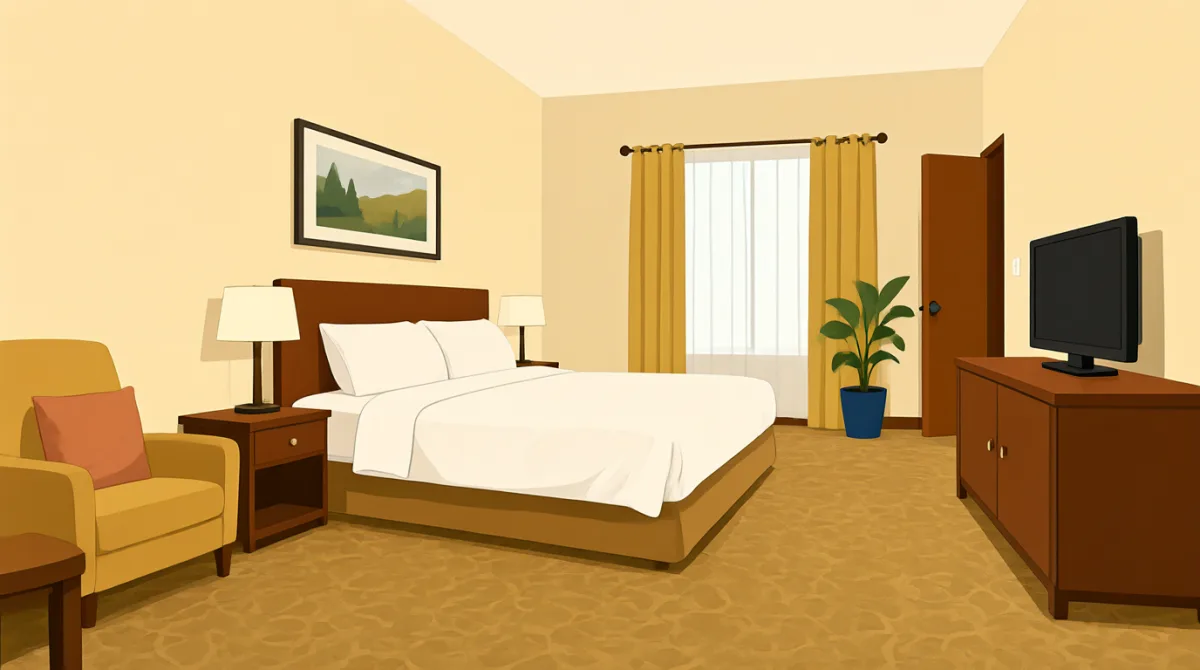

Hello, this is room 305. I just checked in and wanted to ask about the Wi-Fi.
Xin chào, tôi ở phòng 305. Tôi vừa nhận phòng và muốn hỏi về Wi-Fi.

Certainly, sir. Are you looking for the network name or the password?
Dạ được ạ. Quý khách cần tên mạng hay mật khẩu ạ?
Both, please. I can't seem to find the information in the room.
Cho tôi xin cả hai. Tôi tìm mãi mà không thấy thông tin trong phòng.
No problem. The Wi-Fi network name is 'HotelGuest' and the password is 'Welcome2024'.
Không vấn đề gì ạ. Tên mạng Wi-Fi là 'HotelGuest' và mật khẩu là 'Welcome2024'.
Got it. So that's 'HotelGuest' and 'Welcome2024'. Is it case-sensitive?
Tôi biết rồi. Vậy là 'HotelGuest' và 'Welcome2024'. Mật khẩu có phân biệt chữ hoa chữ thường không?
Yes, it is case-sensitive, so please make sure to use a capital 'W' for 'Welcome'.
Dạ có, mật khẩu có phân biệt chữ hoa chữ thường, nên quý khách nhớ dùng chữ 'W' viết hoa trong 'Welcome' nhé.
Okay, thank you so much for your help!
Được rồi, cảm ơn cô rất nhiều vì đã giúp tôi!
You're welcome! Enjoy your stay.
Không có gì ạ! Chúc quý khách có kỳ nghỉ vui vẻ.
Từ vựng5
- Wi-FiWi-Fi
Wi-Fi is a wireless technology that allows devices like phones and laptops to connect to the internet without cables. In this dialogue, it's used to refer to the hotel's internet service.
Wi-Fi là công nghệ không dây cho phép các thiết bị như điện thoại và máy tính xách tay kết nối internet mà không cần dây cáp. Trong đoạn hội thoại này, từ này chỉ dịch vụ internet của khách sạn.
- passwordmật khẩu
A password is a secret word or code you enter to access something protected, like a Wi-Fi network. Here, it's the key to connect to the hotel's Wi-Fi.
Mật khẩu là từ hoặc mã bí mật bạn nhập để truy cập vào thứ gì đó được bảo vệ, chẳng hạn như mạng Wi-Fi. Ở đây, đó là chìa khóa để kết nối với Wi-Fi của khách sạn.
- network nametên mạng
The network name, also called SSID, is the label or title given to a Wi-Fi connection so you can select it on your device. In the dialogue, it's 'HotelGuest'.
Tên mạng, còn gọi là SSID, là tên được đặt cho kết nối Wi-Fi để bạn có thể chọn trên thiết bị của mình. Trong đoạn hội thoại, tên mạng là 'HotelGuest'.
- checked inđã nhận phòng
To check in means to arrive at a hotel and complete the registration process to get your room. Jack says he just checked in, meaning he has recently arrived.
“Checked in” có nghĩa là đến khách sạn và hoàn tất thủ tục đăng ký để nhận phòng. Jack nói mình vừa nhận phòng, tức là anh ấy mới đến khách sạn.
- case-sensitivephân biệt chữ hoa chữ thường
Case-sensitive means that uppercase and lowercase letters are treated differently, so 'Welcome' is not the same as 'welcome'. This is important for entering passwords correctly.
“Case-sensitive” có nghĩa là chữ hoa và chữ thường được xem là khác nhau, vì vậy 'Welcome' không giống 'welcome'. Điều này rất quan trọng khi nhập mật khẩu cho chính xác.
Câu trọng tâm7
- 1
Hello, this is room 305. I just checked in and wanted to ask about the Wi-Fi.
Xin chào, tôi ở phòng 305. Tôi vừa nhận phòng và muốn hỏi về Wi-Fi.
This is a polite way to introduce yourself on a phone call and state your purpose. Use it when calling a hotel front desk. 'Wanted to ask' is past tense for politeness, showing a request.
Đây là cách lịch sự để giới thiệu bản thân qua điện thoại và nói rõ mục đích cuộc gọi. Bạn có thể dùng câu này khi gọi cho lễ tân khách sạn. 'Wanted to ask' dùng thì quá khứ để câu hỏi nghe lịch sự hơn.
- 2
Certainly, sir. Are you looking for the network name or the password?
Dạ được ạ. Quý khách cần tên mạng hay mật khẩu ạ?
This shows polite customer service. 'Certainly' means 'of course' or 'yes, happily'. The question uses 'or' to offer choices, helpful when helping someone with options.
Câu này thể hiện cách phục vụ khách hàng lịch sự. 'Certainly' có nghĩa là “tất nhiên” hoặc “vâng, rất sẵn lòng”. Câu hỏi dùng 'or' để đưa ra các lựa chọn, rất hữu ích khi bạn muốn giúp ai đó chọn giữa nhiều thứ.
- 3
Both, please. I can't seem to find the information in the room.
Cho tôi xin cả hai. Tôi tìm mãi mà không thấy thông tin trong phòng.
'Both, please' politely requests two things. 'Can't seem to find' is a soft way to say you looked but didn't succeed, avoiding blame. Useful for expressing mild frustration.
'Both, please' là cách lịch sự để yêu cầu cả hai thứ. 'Can't seem to find' là cách nói nhẹ nhàng rằng bạn đã tìm nhưng không thấy, tránh đổ lỗi cho ai. Cách diễn đạt này hữu ích khi muốn nói mình hơi khó chịu hoặc bất tiện.
- 4
The Wi-Fi network name is 'HotelGuest' and the password is 'Welcome2024'.
Tên mạng Wi-Fi là 'HotelGuest' và mật khẩu là 'Welcome2024'.
This clearly provides information. Use this structure to give details: subject + 'is' + information. It's direct and helpful in service situations like hotels or cafes.
Câu này cung cấp thông tin rõ ràng. Hãy dùng cấu trúc chủ ngữ + 'is' + thông tin để đưa ra chi tiết. Cách nói trực tiếp và hữu ích trong các tình huống dịch vụ như ở khách sạn hoặc quán cà phê.
- 5
Got it. So that's 'HotelGuest' and 'Welcome2024'. Is it case-sensitive?
Tôi biết rồi. Vậy là 'HotelGuest' và 'Welcome2024'. Mật khẩu có phân biệt chữ hoa chữ thường không?
'Got it' means 'I understand'. Repeating the info confirms accuracy. Asking 'Is it case-sensitive?' shows caution with tech details, common when setting up Wi-Fi.
'Got it' có nghĩa là “tôi hiểu rồi”. Nhắc lại thông tin giúp xác nhận rằng bạn đã nghe chính xác. Hỏi 'Is it case-sensitive?' cho thấy bạn cẩn thận với các chi tiết công nghệ, điều thường gặp khi kết nối Wi-Fi.
- 6
Yes, it is case-sensitive, so please make sure to use a capital 'W' for 'Welcome'.
Dạ có, mật khẩu có phân biệt chữ hoa chữ thường, nên quý khách nhớ dùng chữ 'W' viết hoa trong 'Welcome' nhé.
This explains a detail clearly. 'So' connects the reason to advice. 'Make sure to' is a polite instruction. Use this to give tips on precise actions like typing passwords.
Câu này giải thích một chi tiết rõ ràng. 'So' nối lý do với lời khuyên. 'Make sure to' là cách đưa ra hướng dẫn lịch sự. Hãy dùng cách nói này khi hướng dẫn ai đó thực hiện chính xác một việc, chẳng hạn như nhập mật khẩu.
- 7
Okay, thank you so much for your help!
Được rồi, cảm ơn cô rất nhiều vì đã giúp tôi!
This is a standard way to end a helpful conversation. 'Thank you so much' adds emphasis for extra politeness. Say it after receiving assistance to show appreciation.
Đây là cách phổ biến để kết thúc một cuộc trò chuyện khi bạn vừa được giúp đỡ. 'Thank you so much' nhấn mạnh lời cảm ơn và khiến câu nói lịch sự hơn. Hãy nói câu này sau khi nhận được sự giúp đỡ để thể hiện sự biết ơn.