Seeing the Poster
เห็นโปสเตอร์
Emma and Mia see a poster for a neighborhood clean-up day at the park. They talk about joining the event.
เอ็มมากับมีอาเห็นโปสเตอร์ประกาศวันทำความสะอาดชุมชนที่สวนสาธารณะ ทั้งคู่คุยกันเรื่องการเข้าร่วมกิจกรรม
บทสนทนา8
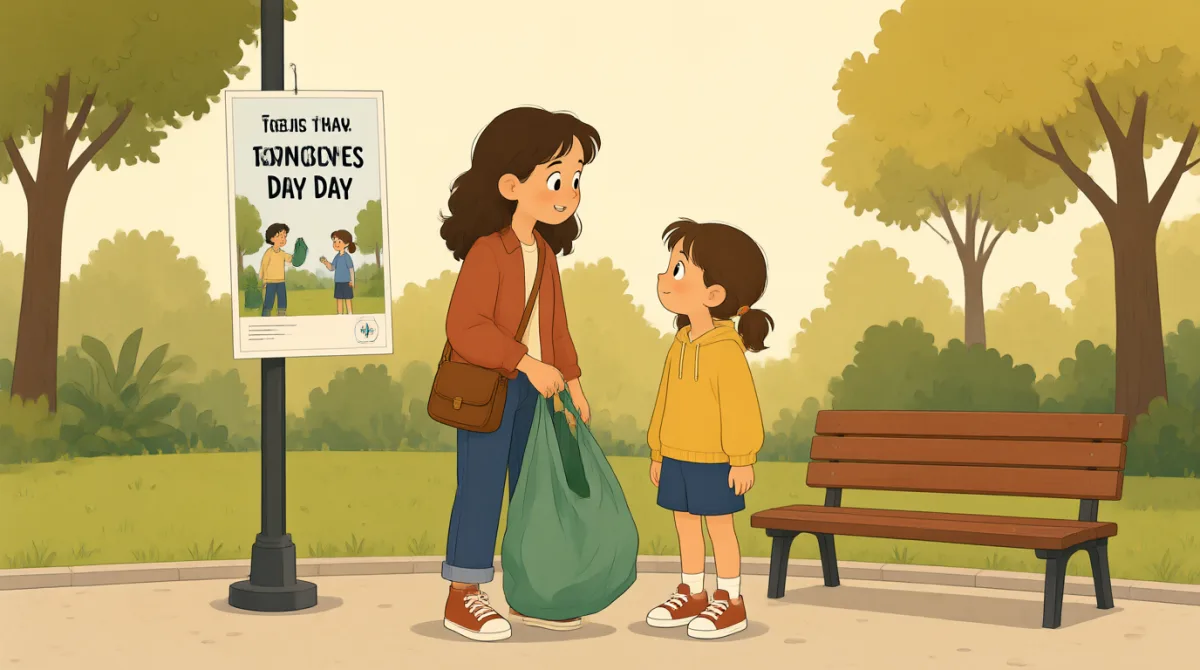

Mia, look at that poster by the park gate. It says “Neighborhood Clean-Up Day.”
มีอา ดูโปสเตอร์ตรงประตูสวนสาธารณะสิ เขียนว่า “วันทำความสะอาดชุมชน”

Oh, nice! When is it? I’d like to help clean up the park.
อ๋อ ดีจัง! จัดวันไหนเหรอ? ฉันอยากช่วยทำความสะอาดสวนสาธารณะ
It’s this Saturday morning, from nine to noon. Are you free then?
วันเสาร์นี้ตอนเช้า ตั้งแต่เก้าโมงถึงเที่ยง เธอว่างไหม?
Yes, I am. I usually take a walk there on Saturdays anyway.
ว่างสิ ปกติวันเสาร์ฉันก็ไปเดินเล่นที่นั่นอยู่แล้ว
Great! We can pick up litter and make the park look nicer.
เยี่ยมเลย! เราช่วยกันเก็บขยะ แล้วทำให้สวนสาธารณะดูน่าอยู่ขึ้นได้
Do we need to bring anything, like gloves or trash bags?
เราต้องเอาอะไรไปไหม เช่น ถุงมือหรือถุงขยะ?
The poster says tools will be provided. We just need to show up on time.
ในโปสเตอร์บอกว่าจะมีอุปกรณ์เตรียมไว้ให้ เราแค่ไปให้ตรงเวลาก็พอ
Sounds good. Let’s join! We can ask the organizer where to meet.
ฟังดูดีนะ ไปร่วมกันเถอะ! เราถามผู้จัดงานได้ว่าต้องไปเจอกันที่ไหน
คำศัพท์7
- clean upทำความสะอาด
To clean a place by removing dirt or rubbish. Here, Mia wants to help clean the park.
ทำให้สถานที่สะอาดโดยกำจัดสิ่งสกปรกหรือขยะ ในที่นี้มีอาอยากช่วยทำความสะอาดสวนสาธารณะ
- pick up litterเก็บขยะ
To collect rubbish from the ground. You can use this phrase when talking about cleaning a public place.
เก็บขยะจากพื้น วลีนี้ใช้พูดถึงการทำความสะอาดพื้นที่สาธารณะได้
- look nicerดูน่าอยู่ขึ้น
To appear more attractive or pleasant. Use it to describe how a place may look after cleaning.
มีรูปลักษณ์ที่สวยงามหรือน่ารื่นรมย์ขึ้น ใช้พูดถึงสถานที่หลังจากทำความสะอาดแล้วได้
- be providedมีเตรียมไว้ให้
To be supplied or given for people to use. Here, the organizers will supply the tools.
จัดหาหรือมอบสิ่งของให้คนอื่นนำไปใช้ ในที่นี้ผู้จัดงานจะจัดหาอุปกรณ์ให้
- show up on timeไปให้ตรงเวลา
To arrive at the expected time. This phrase is useful for plans and events.
ไปถึงตามเวลาที่กำหนด วลีนี้มีประโยชน์เวลาพูดถึงแผนหรือกิจกรรมต่าง ๆ
- joinเข้าร่วม
To take part in an activity with other people. Here, Mia agrees to take part in the clean-up.
ร่วมทำกิจกรรมกับคนอื่น ในที่นี้มีอาตกลงเข้าร่วมกิจกรรมทำความสะอาด
- ask the organizerถามผู้จัดงาน
To speak to the person who plans or manages an event. You can ask the organizer for information about where to meet.
พูดคุยกับคนที่วางแผนหรือดูแลงาน คุณถามผู้จัดงานเพื่อขอข้อมูลเกี่ยวกับสถานที่นัดพบได้
ประโยคสำคัญ8
- 1
When is it?
จัดวันไหนเหรอ?
This is a simple way to ask when an event or activity will happen. You can use it after someone tells you about a plan.
ประโยคนี้เป็นวิธีง่าย ๆ ในการถามว่างานหรือกิจกรรมจะจัดขึ้นเมื่อไร ใช้ถามได้หลังจากมีคนบอกแผนให้ฟัง
- 2
I’d like to help clean up the park.
ฉันอยากช่วยทำความสะอาดสวนสาธารณะ
Use “I’d like to” to say what you want to do politely. You can replace “clean up the park” with another activity.
ใช้ “I’d like to” เพื่อบอกอย่างสุภาพว่าอยากทำอะไร คุณเปลี่ยน “clean up the park” เป็นกิจกรรมอื่นได้
- 3
Are you free then?
ตอนนั้นเธอว่างไหม?
This is a common way to ask if someone is available at a particular time. “Then” refers to a time that was just mentioned.
นี่เป็นวิธีถามที่ใช้กันทั่วไปว่ามีใครว่างในเวลาหนึ่งหรือไม่ “Then” หมายถึงเวลาที่เพิ่งพูดถึงไป
- 4
We can pick up litter and make the park look nicer.
เราช่วยกันเก็บขยะ แล้วทำให้สวนสาธารณะดูน่าอยู่ขึ้นได้
This sentence suggests two things people can do together. Use “We can” to talk about possible activities or plans.
ประโยคนี้เสนอสิ่งที่คนหลายคนทำด้วยกันได้สองอย่าง ใช้ “We can” พูดถึงกิจกรรมหรือแผนที่เป็นไปได้
- 5
Do we need to bring anything, like gloves or trash bags?
เราต้องเอาอะไรไปไหม เช่น ถุงมือหรือถุงขยะ?
Use this question to find out what you should bring to an event. “Like” introduces examples of useful things.
ใช้คำถามนี้เพื่อถามว่าควรนำอะไรไปงานบ้าง “Like” ใช้ยกตัวอย่างสิ่งของที่อาจมีประโยชน์
- 6
We just need to show up on time.
เราแค่ต้องไปให้ตรงเวลาก็พอ
This tells someone what they need to do. Use “just need to” when the task or requirement is simple.
ประโยคนี้บอกอีกฝ่ายว่าต้องทำอะไร ใช้ “just need to” เมื่องานหรือข้อกำหนดนั้นไม่ยุ่งยาก
- 7
Let’s join!
ไปร่วมกันเถอะ!
Use “Let’s” to suggest doing something together. You can replace “join” with another activity, such as “Let’s go.”
ใช้ “Let’s” เพื่อชวนกันทำบางอย่าง คุณเปลี่ยน “join” เป็นกิจกรรมอื่นได้ เช่น “Let’s go.”
- 8
We can ask the organizer where to meet.
เราถามผู้จัดงานได้ว่าต้องไปเจอกันที่ไหน
This sentence suggests asking someone for information. Use “where to meet” when you need to find out the meeting place.
ประโยคนี้เสนอให้ถามใครสักคนเพื่อขอข้อมูล ใช้ “where to meet” เมื่อต้องการรู้สถานที่นัดพบ