Seeing the Poster
Afişi Görmek
Emma and Mia see a poster for a neighborhood clean-up day at the park. They talk about joining the event.
Emma ve Mia parkta mahalle temizlik günüyle ilgili bir afiş görür. Etkinliğe katılmayı konuşurlar.
Diyalog8
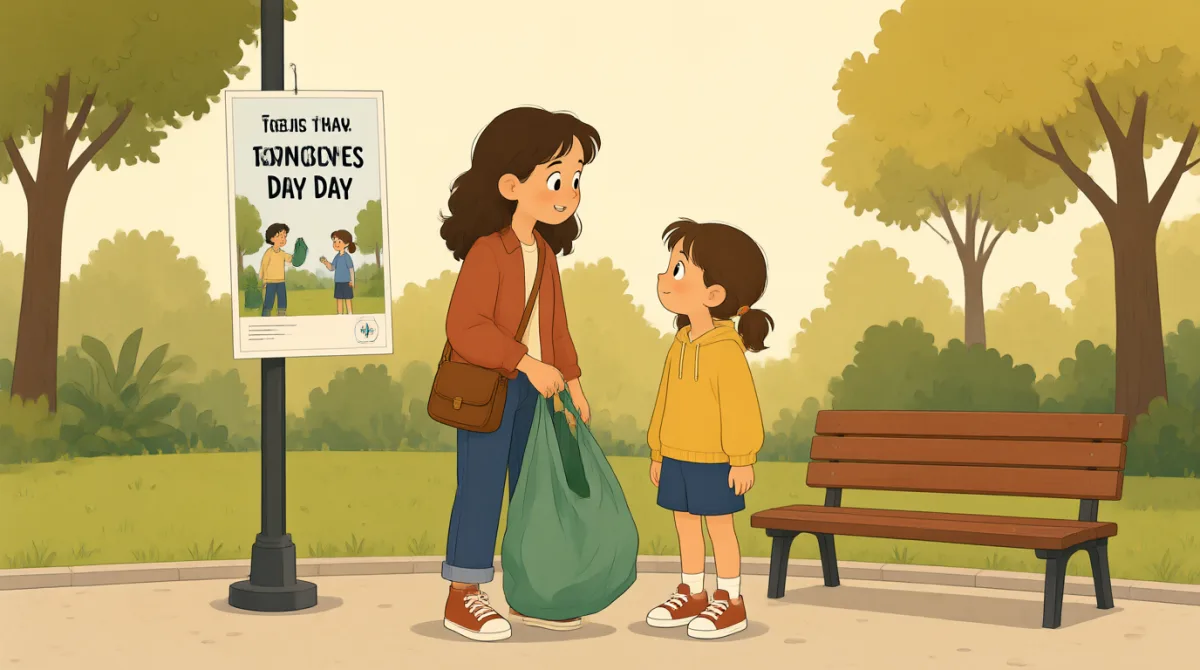

Mia, look at that poster by the park gate. It says “Neighborhood Clean-Up Day.”
Mia, park girişindeki şu afişe bak. “Mahalle Temizlik Günü” yazıyor.

Oh, nice! When is it? I’d like to help clean up the park.
Aa, harika! Ne zaman? Parkı temizlemeye yardım etmek isterim.
It’s this Saturday morning, from nine to noon. Are you free then?
Bu cumartesi sabahı, dokuzdan öğlene kadar. O zaman müsait misin?
Yes, I am. I usually take a walk there on Saturdays anyway.
Evet, müsaitim. Zaten cumartesileri genellikle orada yürüyüş yapıyorum.
Great! We can pick up litter and make the park look nicer.
Harika! Yerdeki çöpleri toplayıp parkı daha güzel hâle getirebiliriz.
Do we need to bring anything, like gloves or trash bags?
Eldiven ya da çöp torbası gibi bir şey getirmemiz gerekiyor mu?
The poster says tools will be provided. We just need to show up on time.
Afişte gerekli araç gerecin sağlanacağı yazıyor. Sadece zamanında gelmemiz yeterli.
Sounds good. Let’s join! We can ask the organizer where to meet.
Kulağa güzel geliyor. Katılalım! Nerede buluşacağımızı organizatöre sorabiliriz.
Kelime Bilgisi7
- clean uptemizlemek
To clean a place by removing dirt or rubbish. Here, Mia wants to help clean the park.
Bir yeri kir veya çöpleri kaldırarak temizlemek demektir. Burada Mia, parkın temizlenmesine yardım etmek istiyor.
- pick up litteryerdeki çöpleri toplamak
To collect rubbish from the ground. You can use this phrase when talking about cleaning a public place.
Yerdeki çöpleri toplamak demektir. Kamusal bir yeri temizlemekten bahsederken bu ifadeyi kullanabilirsin.
- look nicerdaha güzel görünmek
To appear more attractive or pleasant. Use it to describe how a place may look after cleaning.
Daha çekici ya da hoş görünmek demektir. Temizlendikten sonra bir yerin nasıl görüneceğini anlatmak için kullanabilirsin.
- be providedsağlanmak
To be supplied or given for people to use. Here, the organizers will supply the tools.
İnsanların kullanması için temin edilmek ya da verilmek demektir. Burada araç gereci organizatörler sağlayacak.
- show up on timezamanında gelmek
To arrive at the expected time. This phrase is useful for plans and events.
Beklenen saatte varmak demektir. Bu ifade planlardan ve etkinliklerden bahsederken işe yarar.
- joinkatılmak
To take part in an activity with other people. Here, Mia agrees to take part in the clean-up.
Başkalarıyla birlikte bir etkinliğe iştirak etmek demektir. Burada Mia, temizlik etkinliğine katılmayı kabul ediyor.
- ask the organizerorganizatöre sormak
To speak to the person who plans or manages an event. You can ask the organizer for information about where to meet.
Bir etkinliği planlayan ya da yöneten kişiyle konuşmak demektir. Nerede buluşulacağıyla ilgili bilgi almak için organizatöre sorabilirsin.
Önemli Cümleler8
- 1
When is it?
Ne zaman?
This is a simple way to ask when an event or activity will happen. You can use it after someone tells you about a plan.
Bir etkinliğin ya da aktivitenin ne zaman olacağını sormanın basit bir yoludur. Biri sana bir plandan söz ettikten sonra kullanabilirsin.
- 2
I’d like to help clean up the park.
Parkı temizlemeye yardım etmek isterim.
Use “I’d like to” to say what you want to do politely. You can replace “clean up the park” with another activity.
“I’d like to” kibarca ne yapmak istediğini söylemek için kullanılır. “Clean up the park” yerine başka bir etkinlik koyabilirsin.
- 3
Are you free then?
O zaman müsait misin?
This is a common way to ask if someone is available at a particular time. “Then” refers to a time that was just mentioned.
Birine belirli bir zamanda müsait olup olmadığını sormanın yaygın bir yoludur. “Then”, az önce sözü edilen zamanı ifade eder.
- 4
We can pick up litter and make the park look nicer.
Yerdeki çöpleri toplayıp parkı daha güzel hâle getirebiliriz.
This sentence suggests two things people can do together. Use “We can” to talk about possible activities or plans.
Bu cümle, insanların birlikte yapabileceği iki şey öneriyor. Olası etkinliklerden ya da planlardan bahsetmek için “We can” kalıbını kullan.
- 5
Do we need to bring anything, like gloves or trash bags?
Eldiven ya da çöp torbası gibi bir şey getirmemiz gerekiyor mu?
Use this question to find out what you should bring to an event. “Like” introduces examples of useful things.
Bir etkinliğe ne getirmen gerektiğini öğrenmek için bu soruyu kullan. “Like”, işe yarayabilecek şeylere örnek verir.
- 6
We just need to show up on time.
Sadece zamanında gelmemiz yeterli.
This tells someone what they need to do. Use “just need to” when the task or requirement is simple.
Bu cümle, birine ne yapması gerektiğini söyler. Yapılacak şey ya da gereklilik basit olduğunda “just need to” kalıbını kullan.
- 7
Let’s join!
Katılalım!
Use “Let’s” to suggest doing something together. You can replace “join” with another activity, such as “Let’s go.”
Bir şeyi birlikte yapmayı önermek için “Let’s” kullanılır. “Join” yerine “Let’s go” gibi başka bir etkinlik koyabilirsin.
- 8
We can ask the organizer where to meet.
Nerede buluşacağımızı organizatöre sorabiliriz.
This sentence suggests asking someone for information. Use “where to meet” when you need to find out the meeting place.
Bu cümle, birinden bilgi istemeyi önerir. Buluşma yerini öğrenmen gerektiğinde “where to meet” ifadesini kullan.