Signing Up
ลงชื่อเข้าร่วม
Emma and Mia meet Grace, who is organizing the clean-up. They sign up and learn when and where to meet.
เอ็มมากับมีอาพบเกรซ ผู้จัดกิจกรรมเก็บขยะ ทั้งคู่ลงชื่อเข้าร่วมและสอบถามเวลาและสถานที่นัดพบ
บทสนทนา8
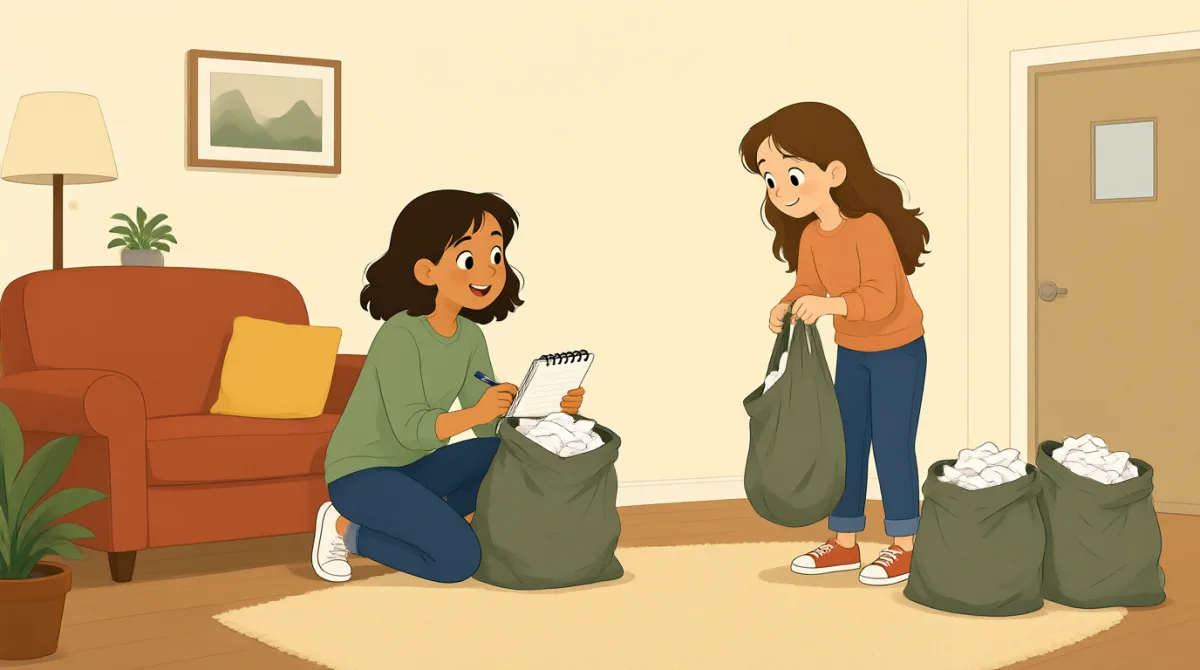

Hi, Grace. Mia and I saw the clean-up poster. Can we sign up?
หวัดดีเกรซ มีอากับฉันเห็นประกาศกิจกรรมเก็บขยะ เราลงชื่อเข้าร่วมได้ไหม

Of course! Please write your names on this sign-up sheet.
ได้เลย! เขียนชื่อของพวกเธอลงในใบลงชื่อแผ่นนี้ได้เลย

Do we need to bring anything, like gloves or trash bags?
เราต้องเอาอะไรไปบ้างไหม เช่น ถุงมือหรือถุงขยะ
No, I have tools for everyone. Just wear comfortable shoes and clothes.
ไม่ต้องหรอก ฉันมีอุปกรณ์ให้ทุกคนแล้ว แค่ใส่รองเท้ากับเสื้อผ้าที่ใส่สบายก็พอ
Great! What time should we meet, and where in the park?
เยี่ยมเลย! เราควรเจอกันกี่โมง แล้วเจอกันตรงไหนในสวนสาธารณะ
Meet at nine on Saturday by the park's main entrance.
เจอกันวันเสาร์เก้าโมง ที่ทางเข้าหลักของสวนสาธารณะนะ
Got it. We’ll be there at nine. How long will we work?
เข้าใจแล้ว เราจะไปถึงที่นั่นตอนเก้าโมง แล้วเราจะทำงานกันนานแค่ไหน
About two hours. Then we’ll take a short break and have snacks.
ประมาณสองชั่วโมง จากนั้นเราจะพักสั้น ๆ แล้วกินของว่างกัน
คำศัพท์7
- sign upลงชื่อเข้าร่วม
To sign up means to put your name on a list to join an activity. You can use it when you want to take part in an event or class.
“sign up” หมายถึงเขียนชื่อลงในรายชื่อเพื่อเข้าร่วมกิจกรรม ใช้ได้เมื่อต้องการเข้าร่วมงานหรือชั้นเรียน
- sign-up sheetใบลงชื่อ
A sign-up sheet is a paper where people write their names to join an activity. It helps the organizer know who is coming.
“sign-up sheet” คือกระดาษที่ให้คนเขียนชื่อเพื่อเข้าร่วมกิจกรรม ช่วยให้ผู้จัดรู้ว่าใครบ้างที่จะมา
- bring anythingเอาอะไรไปบ้าง
This asks if you need to take something with you. You can use it before an event or visit.
“bring anything” ใช้ถามว่าจำเป็นต้องเอาของอะไรติดตัวไปไหม มักใช้ก่อนเข้าร่วมงานหรือไปเยี่ยมใคร
- comfortable shoes and clothesรองเท้ากับเสื้อผ้าที่ใส่สบาย
These are shoes and clothes that feel good to wear. You can use this phrase when asking what to wear for an activity.
“comfortable shoes and clothes” หมายถึงรองเท้าและเสื้อผ้าที่สวมใส่สบาย ใช้ถามหรือบอกว่าควรใส่อะไรไปทำกิจกรรม
- main entranceทางเข้าหลัก
The main entrance is the most important or usual way into a place. It is useful for giving a clear meeting point.
“main entrance” คือทางเข้าหลักหรือทางเข้าที่คนมักใช้เข้าไปในสถานที่ ใช้บอกจุดนัดพบให้ชัดเจนได้
- be thereไปถึงที่นั่น
To be there means to arrive at or be in a place. You can use it to confirm that you will come.
“be there” หมายถึงไปถึงหรืออยู่ ณ สถานที่นั้น ใช้ยืนยันว่าจะไปเข้าร่วมได้
- take a short breakพักสั้น ๆ
This means to stop working for a little while to rest. You can use it when talking about a pause during an activity.
“take a short break” หมายถึงหยุดพักจากการทำงานสักครู่ ใช้พูดถึงการพักระหว่างทำกิจกรรม
ประโยคสำคัญ8
- 1
Can we sign up?
เราลงชื่อเข้าร่วมได้ไหม
Use this to ask if you can join an activity or event. You can replace “sign up” with another action, such as “come along.”
ใช้ประโยค “Can we sign up?” เพื่อถามว่าเข้าร่วมกิจกรรมหรืองานได้ไหม จะเปลี่ยน “sign up” เป็นการกระทำอื่น เช่น “come along” ก็ได้
- 2
Do we need to bring anything, like gloves or trash bags?
เราต้องเอาอะไรไปบ้างไหม เช่น ถุงมือหรือถุงขยะ
This is a useful way to ask what you should take with you. You can name a few examples after “like.”
ประโยค “Do we need to bring anything, like gloves or trash bags?” ใช้ถามว่าควรเอาอะไรติดตัวไปบ้าง หลังคำว่า “like” คุณยกตัวอย่างของสองสามอย่างได้
- 3
Just wear comfortable shoes and clothes.
แค่ใส่รองเท้ากับเสื้อผ้าที่ใส่สบายก็พอ
Use this to give simple advice about what to wear. Replace “comfortable shoes and clothes” with other suitable clothing.
ใช้ประโยค “Just wear comfortable shoes and clothes.” เพื่อแนะนำง่าย ๆ ว่าควรใส่อะไร เปลี่ยน “comfortable shoes and clothes” เป็นเสื้อผ้าแบบอื่นที่เหมาะสมได้
- 4
What time should we meet, and where in the park?
เราควรเจอกันกี่โมง แล้วเจอกันตรงไหนในสวนสาธารณะ
This asks for both the meeting time and place. You can use the same question pattern to make plans for other locations.
ประโยค “What time should we meet, and where in the park?” ใช้ถามทั้งเวลาและสถานที่นัดพบ คุณใช้รูปแบบคำถามเดียวกันนี้เมื่อนัดหมายในสถานที่อื่นได้
- 5
Meet at nine on Saturday by the park's main entrance.
เจอกันวันเสาร์เก้าโมง ที่ทางเข้าหลักของสวนสาธารณะนะ
This gives a clear meeting time, day, and place. You can use this pattern to tell someone where and when to meet.
ประโยค “Meet at nine on Saturday by the park's main entrance.” บอกเวลา วัน และสถานที่นัดพบอย่างชัดเจน ใช้รูปแบบนี้บอกใครสักคนได้ว่าจะเจอกันที่ไหนและเมื่อไร
- 6
We’ll be there at nine.
เราจะไปถึงที่นั่นตอนเก้าโมง
Use this to confirm that you will arrive at a certain time. Replace “nine” with another time.
ใช้ประโยค “We’ll be there at nine.” เพื่อยืนยันว่าจะไปถึงตามเวลาที่กำหนด เปลี่ยน “nine” เป็นเวลาอื่นได้
- 7
How long will we work?
เราจะทำงานกันนานแค่ไหน
Use this to ask about the length of a future activity. You can replace “work” with another activity, such as “clean” or “wait.”
ใช้ประโยค “How long will we work?” เพื่อถามว่ากิจกรรมในอนาคตจะใช้เวลานานเท่าไร เปลี่ยน “work” เป็นกิจกรรมอื่น เช่น “clean” หรือ “wait” ได้
- 8
Then we’ll take a short break and have snacks.
จากนั้นเราจะพักสั้น ๆ แล้วกินของว่างกัน
This explains what will happen after the main activity. You can use “Then we’ll…” to describe the next steps in a plan.
ประโยค “Then we’ll take a short break and have snacks.” อธิบายว่าจะทำอะไรหลังจากกิจกรรมหลัก คุณใช้ “Then we’ll…” เพื่อบอกขั้นตอนถัดไปในแผนได้