End of a Class
เลิกเรียน
A student is leaving a class and says goodbye to the teacher and fellow students.
นักเรียนคนหนึ่งกำลังจะออกจากห้องเรียน และกล่าวลากับครูและเพื่อนร่วมชั้น
บทสนทนา6
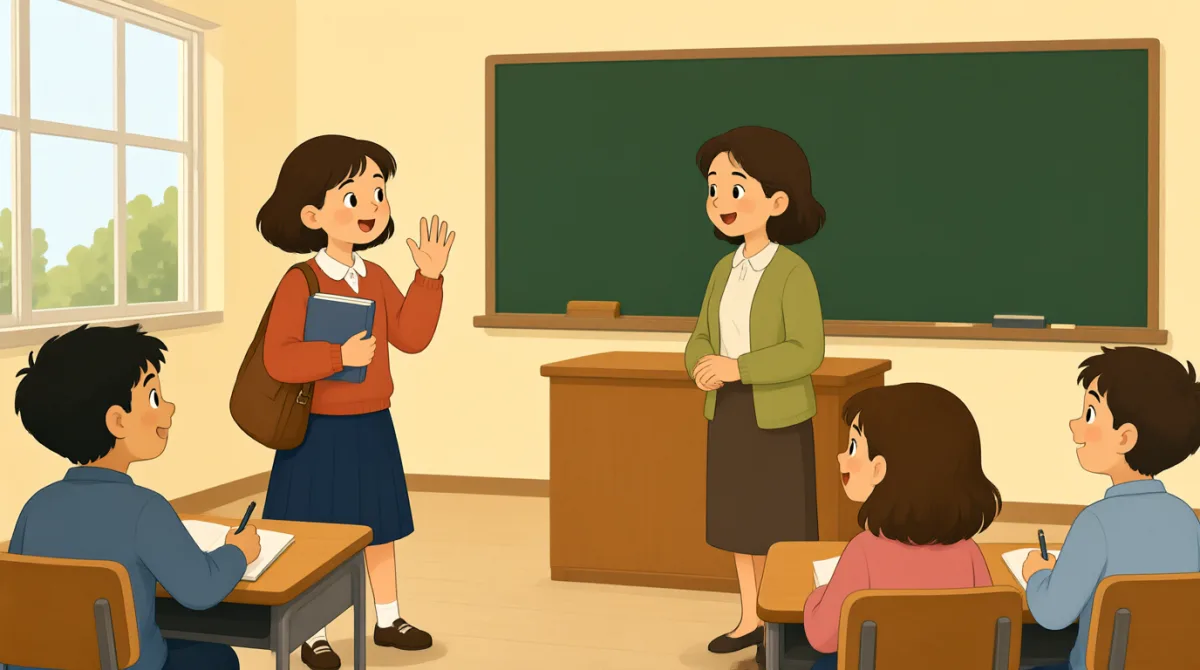

Okay, class dismissed! Have a great afternoon, everyone.
เอาล่ะ เลิกเรียนได้! ขอให้ทุกคนมีช่วงบ่ายที่ดีนะ

Thank you, Grace! You too.
ขอบคุณนะ เกรซ! เช่นกันนะ

Bye, Leo! See you tomorrow.
บ๊ายบาย ลีโอ! เจอกันพรุ่งนี้นะ
Bye, Emma! Have a good one.
บาย เอ็มมา! ขอให้วันนี้เป็นวันที่ดีนะ
Goodbye, Leo! Have a good evening.
ลาก่อนนะ ลีโอ! ขอให้มีค่ำคืนที่ดีนะ
Goodbye, Grace!
ลาก่อน เกรซ!
คำศัพท์8
- dismissedเลิก (เรียน/ประชุม)
This word means the class or meeting is officially ended by the teacher or leader. Use it in school or work settings like 'Class dismissed!' to say it's over.
คำนี้หมายถึงครูหรือผู้นำประกาศอย่างเป็นทางการว่าชั้นเรียนหรือการประชุมจบแล้ว ใช้ในโรงเรียนหรือที่ทำงานได้ เช่น 'Class dismissed!' (เลิกเรียนได้!)
- afternoonช่วงบ่าย
The time of day from noon until evening, around 12 PM to 6 PM. It's common in goodbyes like 'Have a great afternoon' to wish someone well for the rest of the day.
ช่วงเวลาตั้งแต่เที่ยงวันจนถึงเย็น ประมาณเที่ยงวันถึง 6 โมงเย็น มักใช้กล่าวลาเพื่ออวยพรให้ใครสักคนมีวันที่เหลือที่ดี เช่น 'Have a great afternoon' (ขอให้มีช่วงบ่ายที่ดีนะ)
- everyoneทุกคน
A word meaning all the people in a group. Use it to address a class or crowd politely, like 'Have a great day, everyone.'
หมายถึงคนทั้งหมดในกลุ่ม ใช้เรียกคนในชั้นเรียนหรือกลุ่มคนอย่างสุภาพได้ เช่น 'Have a great day, everyone.' (ขอให้ทุกคนมีวันที่ดีนะ)
- tooเช่นกัน
This means 'also' and is used to return a wish, like if someone says 'Have a great day' and you reply 'You too' to say the same to them.
หมายถึง “ด้วยเหมือนกัน” ใช้ตอบกลับคำอวยพร เช่น เมื่อมีคนพูดว่า 'Have a great day' (ขอให้มีวันที่ดีนะ) ก็ตอบว่า 'You too' (เช่นกันนะ) ได้
- byeบาย
A short, casual way to say goodbye. It's informal and used with friends or in quick goodbyes, like 'Bye, see you later.'
คำสั้น ๆ แบบไม่เป็นทางการที่ใช้กล่าวลา มักใช้กับเพื่อนหรือเวลาจากกันอย่างรวดเร็ว เช่น 'Bye, see you later.' (บาย แล้วเจอกันนะ)
- tomorrowพรุ่งนี้
The day after today. It's useful in goodbyes when you'll meet again soon, like 'See you tomorrow' to plan for the next day.
วันถัดจากวันนี้ ใช้กล่าวลาเมื่อจะได้พบกันอีกเร็ว ๆ นี้ เช่น 'See you tomorrow' (เจอกันพรุ่งนี้นะ)
- goodbyeลาก่อน
A standard farewell word meaning 'see you later' or 'farewell.' It's more formal than 'bye' and used in most situations.
คำกล่าวลาทั่วไป มีความหมายว่า “แล้วพบกันใหม่” หรือ “อำลา” เป็นทางการกว่า 'bye' และใช้ได้ในหลายสถานการณ์
- eveningช่วงเย็น
The time of day from late afternoon until night, around 6 PM to bedtime. Say 'Have a good evening' to wish well for the later part of the day.
ช่วงเวลาตั้งแต่บ่ายแก่ ๆ ไปจนถึงกลางคืน ประมาณ 6 โมงเย็นจนถึงเวลาเข้านอน ใช้ 'Have a good evening' (ขอให้มีค่ำคืนที่ดีนะ) เพื่ออวยพรให้ใครสักคนมีช่วงเวลาที่ดีในตอนเย็น
ประโยคสำคัญ6
- 1
Okay, class dismissed!
เอาล่ะ เลิกเรียนได้!
This sentence is used by a teacher to end a class. 'Dismissed' means it's over, and 'okay' softens it. It's practical for school or meetings to signal the end.
ครูใช้ประโยคนี้เพื่อบอกว่าจบชั้นเรียนแล้ว 'Dismissed' หมายถึงเลิกหรือจบ ส่วน 'okay' ช่วยให้ฟังนุ่มนวลขึ้น ใช้ในโรงเรียนหรือการประชุมเพื่อบอกว่าจบแล้วได้
- 2
Have a great afternoon, everyone.
ขอให้ทุกคนมีช่วงบ่ายที่ดีนะ
A polite goodbye wishing a good afternoon to a group. 'Have a great' is an idiom for 'enjoy,' and 'everyone' includes all. Use it at the end of morning activities.
เป็นคำกล่าวลาอย่างสุภาพที่อวยพรให้คนในกลุ่มมีช่วงบ่ายที่ดี 'Have a great' เป็นสำนวนที่มีความหมายว่า “ขอให้มีช่วงเวลาที่ดี” และ 'everyone' หมายถึงทุกคน ใช้กล่าวลาหลังทำกิจกรรมช่วงเช้าได้
- 3
Thank you, Grace! You too.
ขอบคุณนะ เกรซ! เช่นกันนะ
This responds to a wish by saying thanks and returning it. 'You too' means 'the same to you.' It's a simple, polite pattern for any mutual goodbye.
ใช้ตอบรับคำอวยพรด้วยการขอบคุณและอวยพรกลับ 'You too' หมายถึง “เช่นกัน” เป็นรูปแบบง่าย ๆ และสุภาพสำหรับใช้กล่าวลาเมื่ออวยพรให้กัน
- 4
Bye, Leo! See you tomorrow.
บ๊ายบาย ลีโอ! เจอกันพรุ่งนี้นะ
A casual farewell with a name and future meeting. 'See you tomorrow' implies you'll meet again. Use this when parting but planning to see someone soon; no grammar changes needed.
เป็นคำกล่าวลาแบบเป็นกันเองที่เรียกชื่ออีกฝ่ายและพูดถึงการพบกันครั้งหน้า 'See you tomorrow' สื่อว่าจะได้เจอกันอีก ใช้เมื่อกำลังแยกกันแต่มีแผนจะพบกันเร็ว ๆ นี้ โดยไม่ต้องเปลี่ยนรูปประโยค
- 5
Have a good one.
ขอให้วันนี้เป็นวันที่ดีนะ
An informal idiom meaning 'have a good day' or whatever time it is. It's versatile for quick goodbyes without specifying time. Useful in everyday conversations.
สำนวนไม่เป็นทางการที่หมายถึง 'ขอให้เป็นวันที่ดี' หรือคำอวยพรอื่น ๆ ตามช่วงเวลา ใช้บอกลาแบบรวดเร็วได้หลายโอกาสโดยไม่ต้องระบุช่วงเวลา เหมาะสำหรับบทสนทนาในชีวิตประจำวัน
- 6
Goodbye, Leo! Have a good evening.
ลาก่อน ลีโอ! ขอให้มีค่ำคืนที่ดีนะ
A formal goodbye with a name and time-specific wish. 'Have a good evening' is like 'have a great afternoon' but for later. Use it in professional or polite settings.
เป็นคำกล่าวลาอย่างสุภาพที่เรียกชื่ออีกฝ่ายและอวยพรตามช่วงเวลา 'Have a good evening' คล้ายกับ 'have a great afternoon' แต่ใช้กับช่วงเย็น ใช้ในสถานการณ์ที่เป็นทางการหรือสุภาพได้