Recalling Where it Was Lost
นึกย้อนดูว่าทำหายไว้ที่ไหน
The staff member asks where the learner thinks they might have lost the item. The learner recounts their movements and the last place they remember having it.
พนักงานถามว่าผู้เรียนคิดว่าทำของหายไว้ที่ไหน ผู้เรียนเล่าถึงสถานที่ที่ไปและสถานที่สุดท้ายที่จำได้ว่ายังมีของอยู่
บทสนทนา8
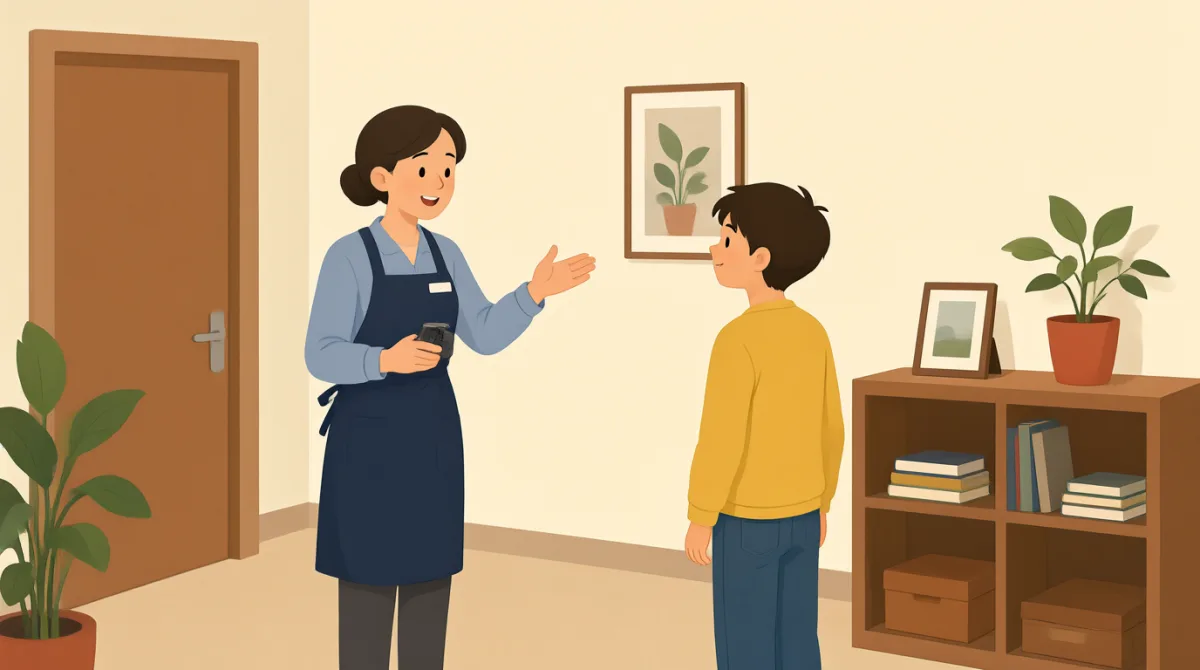

Excuse me, I think I've lost my wallet somewhere here. I was wondering if anyone might have turned it in?
ขอโทษนะคะ ฉันคิดว่าทำกระเป๋าสตางค์หายไว้แถวนี้ ไม่ทราบว่ามีใครเก็บมาส่งไว้บ้างไหมคะ

Oh no, I'm sorry to hear that. Can you tell me where you think you might have lost it? Roughly, what time were you here?
แย่จัง เสียใจด้วยนะครับ พอจะบอกได้ไหมครับว่าคิดว่าทำหายไว้ที่ไหน แล้วมาที่นี่ประมาณกี่โมงครับ
Well, I arrived around 10 AM. I had it when I first came in and ordered coffee at the counter. Then I sat at a table near the window.
เอ่อ ฉันมาถึงประมาณสิบโมงเช้าค่ะ ตอนเข้ามาแรก ๆ ยังมีกระเป๋าสตางค์อยู่ แล้วก็สั่งกาแฟที่เคาน์เตอร์ จากนั้นไปนั่งที่โต๊ะใกล้หน้าต่างค่ะ
Okay, so you had it when you ordered and sat down. Where did you go after that?
เข้าใจแล้วครับ แสดงว่าตอนสั่งกาแฟกับตอนนั่งลงยังมีอยู่ แล้วหลังจากนั้นไปไหนต่อครับ
I went to the restroom about 15 minutes later, and I think I took it with me then. I remember putting my phone and wallet down on the shelf inside.
ประมาณ 15 นาทีต่อมา ฉันไปห้องน้ำค่ะ แล้วคิดว่าตอนนั้นเอากระเป๋าสตางค์ติดตัวไปด้วย จำได้ว่าฉันวางโทรศัพท์กับกระเป๋าสตางค์ไว้บนชั้นข้างในค่ะ
So, the restroom is a possibility. Did you go anywhere else before leaving?
ถ้าอย่างนั้น ห้องน้ำก็เป็นไปได้ครับ ก่อนออกจากร้านได้ไปที่อื่นอีกไหมครับ
Only to the exit. I don't recall taking it out again until I realized it was gone when I got to my car. I must have left it either at the table or in the restroom.
ไม่ได้ไปไหนแล้วค่ะ แค่เดินไปทางออก ฉันจำไม่ได้ว่าเอากระเป๋าสตางค์ออกมาอีกตอนไหน มารู้ตัวว่าหายไปตอนถึงรถแล้วค่ะ น่าจะลืมไว้ที่โต๊ะหรือไม่ก็ในห้องน้ำค่ะ
Alright, so the window table or the restroom. We'll check both areas thoroughly for you. Can you describe the wallet and leave your contact details?
ได้ครับ งั้นก็อาจจะอยู่ที่โต๊ะใกล้หน้าต่างหรือในห้องน้ำ เดี๋ยวเราจะตรวจดูทั้งสองบริเวณให้ละเอียดนะครับ ช่วยบอกรายละเอียดกระเป๋าสตางค์และให้ข้อมูลติดต่อไว้ได้ไหมครับ
คำศัพท์9
- lostทำหาย
Past tense of 'lose', meaning you cannot find something you owned. Use it when reporting missing items, like 'I lost my keys.'
'lost' เป็นรูปอดีตของ 'lose' หมายถึงทำของที่เป็นของตัวเองหายไป ใช้เมื่อแจ้งของหาย เช่น 'I lost my keys.' (ฉันทำกุญแจหาย)
- walletกระเป๋าสตางค์
A small case for holding money, cards, and ID. Common in lost item reports; say 'I lost my wallet' to describe what was misplaced.
กระเป๋าใบเล็กสำหรับใส่เงิน บัตร และบัตรประจำตัว เวลารายงานของหายมักพูดว่า 'I lost my wallet' (ฉันทำกระเป๋าสตางค์หาย) เพื่อบอกว่าทำอะไรหาย
- turned it inนำมาส่งคืน
Means handing over a found item to the right place, like lost and found. Useful when asking if someone returned your lost thing.
'turned it in' หมายถึงนำของที่เก็บได้ไปส่งให้สถานที่ที่เหมาะสม เช่น แผนกของหาย ใช้ถามว่ามีใครนำของที่เราทำหายมาคืนหรือไม่
- roughlyประมาณ
Means approximately or about, not exactly. Use it for estimates, like 'roughly 10 AM' when recalling time or place.
'roughly' หมายถึงประมาณ ไม่ได้ระบุอย่างแม่นยำ ใช้บอกเวลา หรือสถานที่คร่าว ๆ เช่น 'roughly 10 AM' (ประมาณสิบโมงเช้า)
- counterเคาน์เตอร์
A long table where you order or pay in places like cafes. Say 'at the counter' to describe where you did something.
โต๊ะยาวที่ใช้สั่งอาหารหรือชำระเงินในสถานที่อย่างร้านกาแฟ พูดว่า 'at the counter' เพื่อบอกว่าทำสิ่งนั้นที่เคาน์เตอร์
- restroomห้องน้ำ
A polite word for bathroom or toilet. Use it in formal situations, like 'I went to the restroom' when explaining movements.
'restroom' เป็นคำสุภาพที่หมายถึงห้องน้ำ ใช้ในสถานการณ์ที่เป็นทางการ เช่น 'I went to the restroom' (ฉันไปห้องน้ำ) เพื่อเล่าว่าไปที่ไหนมาบ้าง
- realizedรู้ตัว
Past tense of 'realize', meaning to become aware of something. Common for sudden discoveries, like 'I realized it was gone.'
'realized' เป็นรูปอดีตของ 'realize' หมายถึงเริ่มรู้หรือสังเกตเห็นบางอย่าง มักใช้เมื่อเพิ่งพบสิ่งที่ไม่ทันสังเกต เช่น 'I realized it was gone.' (ฉันเพิ่งรู้ว่ามันหายไปแล้ว)
- thoroughlyอย่างละเอียด
Means completely or carefully. Use it to ask for a detailed search, like 'check thoroughly' in lost item scenarios.
'thoroughly' หมายถึงอย่างครบถ้วนหรือระมัดระวัง ใช้ขอให้ค้นหาอย่างละเอียด เช่น 'check thoroughly' (ตรวจดูอย่างละเอียด) ในสถานการณ์ของหาย
- contact detailsข้อมูลติดต่อ
Information like phone number or email for reaching you. Essential when reporting lost items so staff can call you.
ข้อมูลที่ใช้ติดต่อคุณได้ เช่น เบอร์โทรศัพท์หรืออีเมล เป็นสิ่งสำคัญเมื่อต้องแจ้งของหาย เพื่อให้พนักงานติดต่อกลับได้
ประโยคสำคัญ8
- 1
Excuse me, I think I've lost my wallet somewhere here.
ขอโทษนะคะ ฉันคิดว่าทำกระเป๋าสตางค์หายไว้แถวนี้
This polite opening starts a report of a lost item. 'Excuse me' gets attention, 'I think I've lost' uses present perfect for recent events. Useful for beginning conversations at service places.
ประโยคเปิดบทสนทนาอย่างสุภาพเพื่อแจ้งของหาย 'Excuse me' ใช้เรียกความสนใจ ส่วน 'I think I've lost' ใช้ present perfect กับเหตุการณ์ที่เพิ่งเกิดขึ้น นำไปใช้เริ่มพูดคุยกับพนักงานได้
- 2
I was wondering if anyone might have turned it in?
ไม่ทราบว่ามีใครเก็บมาส่งไว้บ้างไหมคะ
A soft way to ask about a found item. 'I was wondering' is polite for questions; 'might have' shows possibility. Use this to inquire without being direct.
เป็นวิธีถามอย่างนุ่มนวลว่ามีคนนำของที่เก็บได้มาส่งไว้หรือไม่ 'I was wondering' ทำให้คำถามสุภาพขึ้น ส่วน 'might have' แสดงความเป็นไปได้ ใช้ถามโดยไม่พูดตรงเกินไปได้
- 3
Can you tell me where you think you might have lost it?
พอจะบอกได้ไหมครับว่าคิดว่าทำหายไว้ที่ไหน
Asks for details on location. 'Where you think you might have lost' uses 'might have' for uncertainty in past actions. Helpful for staff gathering info in lost reports.
ใช้ถามรายละเอียดเกี่ยวกับสถานที่ 'Where you think you might have lost' ใช้ 'might have' เพื่อแสดงความไม่แน่ใจเกี่ยวกับสิ่งที่อาจเกิดขึ้นในอดีต พนักงานใช้ถามข้อมูลเมื่อลูกค้าแจ้งของหายได้
- 4
I arrived around 10 AM. I had it when I first came in and ordered coffee at the counter.
ฉันมาถึงประมาณสิบโมงเช้าค่ะ ตอนเข้ามาแรก ๆ ยังมีกระเป๋าสตางค์อยู่ แล้วก็สั่งกาแฟที่เคาน์เตอร์ค่ะ
Recounts timeline and actions. 'Around' means approximately; 'I had it' means possessed it. Use simple past to describe sequence of events when explaining where you lost something.
ใช้เล่าลำดับเวลาและสิ่งที่ทำ 'Around' หมายถึงประมาณ ส่วน 'I had it' หมายถึงตอนนั้นยังมีของชิ้นนั้นอยู่ ใช้ past simple เล่าเหตุการณ์ตามลำดับเมื่อต้องอธิบายว่าทำของหายที่ไหน
- 5
I went to the restroom about 15 minutes later, and I think I took it with me then.
ประมาณ 15 นาทีต่อมา ฉันไปห้องน้ำค่ะ แล้วคิดว่าตอนนั้นเอากระเป๋าสตางค์ติดตัวไปด้วย
Describes movement and memory. 'About 15 minutes later' shows time sequence; 'I think' expresses uncertainty. Practical for narrating steps in a story of loss.
ใช้เล่าการเคลื่อนที่และความทรงจำ 'About 15 minutes later' บอกลำดับเวลา ส่วน 'I think' แสดงความไม่แน่ใจ ใช้เล่าเหตุการณ์ตามขั้นตอนเมื่อต้องอธิบายเรื่องของหายได้
- 6
I must have left it either at the table or in the restroom.
ฉันน่าจะลืมไว้ที่โต๊ะหรือไม่ก็ในห้องน้ำค่ะ
'Must have' expresses strong probability about the past. 'Either...or' lists options. Use this to guess possible locations when you can't remember exactly.
'Must have' ใช้แสดงความมั่นใจค่อนข้างมากเกี่ยวกับสิ่งที่น่าจะเกิดขึ้นในอดีต ส่วน 'Either...or' ใช้บอกตัวเลือกสองอย่าง ใช้คาดเดาสถานที่ที่อาจทำของหายเมื่อจำไม่ได้แน่ชัด
- 7
We'll check both areas thoroughly for you.
เดี๋ยวเราจะตรวจดูทั้งสองบริเวณให้ละเอียดนะครับ
Promises action. 'We'll check' is future simple for plans; 'thoroughly' means carefully. Reassuring response from staff; learners can use similar to offer help.
เป็นการรับปากว่าจะช่วย 'We'll check' ใช้ future simple บอกแผนที่จะทำ ส่วน 'thoroughly' หมายถึงอย่างละเอียด เป็นคำตอบที่ช่วยให้ลูกค้าอุ่นใจ พนักงานนำรูปแบบคล้ายกันไปใช้เสนอความช่วยเหลือได้
- 8
Can you describe the wallet and leave your contact details?
ช่วยบอกรายละเอียดกระเป๋าสตางค์และให้ข้อมูลติดต่อไว้ได้ไหมครับ
Requests more info. 'Describe' means give details; imperative form after 'can you' is polite. Essential for ending lost item reports to aid recovery.
ใช้ขอข้อมูลเพิ่มเติม 'Describe' หมายถึงบอกรายละเอียด รูปประโยคคำถาม 'Can you' ทำให้คำขอสุภาพ จำเป็นเมื่อต้องปิดท้ายการแจ้งของหาย เพื่อช่วยให้ตามหาของและติดต่อเจ้าของได้