Recalling Where it Was Lost
खोई हुई चीज़ कहाँ खोई, यह याद करना
The staff member asks where the learner thinks they might have lost the item. The learner recounts their movements and the last place they remember having it.
कर्मचारी पूछता है कि सीखने वाले को कहाँ लगता है कि उनकी चीज़ खो गई होगी। सीखने वाला बताता है कि वे कहाँ-कहाँ गए थे और आख़िरी बार उन्हें वह चीज़ कहाँ याद है।
संवाद8
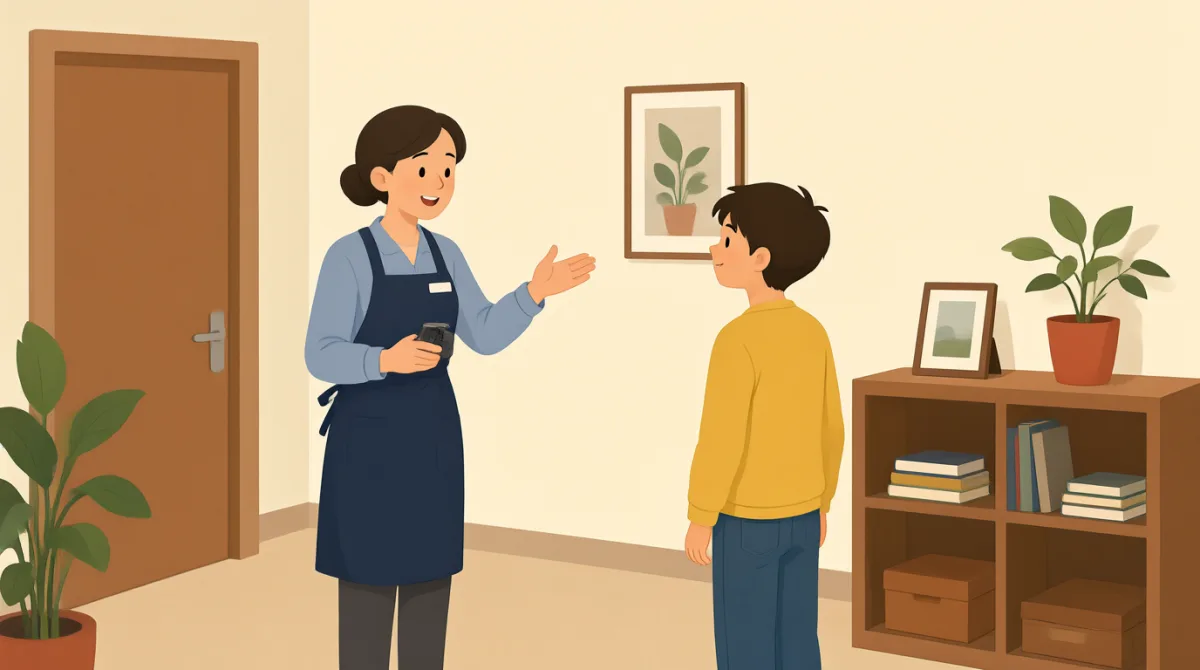

Excuse me, I think I've lost my wallet somewhere here. I was wondering if anyone might have turned it in?
माफ़ कीजिए, लगता है मेरा बटुआ यहीं कहीं खो गया है। मैं जानना चाहती थी कि क्या किसी को मिला हो और उसने जमा कराया हो?

Oh no, I'm sorry to hear that. Can you tell me where you think you might have lost it? Roughly, what time were you here?
अरे, यह सुनकर अफ़सोस हुआ। क्या आप बता सकती हैं कि आपको कहाँ लगता है कि आपका बटुआ खो गया होगा? आप लगभग कितने बजे यहाँ थीं?
Well, I arrived around 10 AM. I had it when I first came in and ordered coffee at the counter. Then I sat at a table near the window.
मैं सुबह करीब 10 बजे आई थी। जब मैं पहली बार अंदर आई और काउंटर पर कॉफ़ी का ऑर्डर दिया, तब बटुआ मेरे पास था। फिर मैं खिड़की के पास वाली मेज़ पर बैठ गई।
Okay, so you had it when you ordered and sat down. Where did you go after that?
अच्छा, तो ऑर्डर देते और बैठते समय बटुआ आपके पास था। उसके बाद आप कहाँ गईं?
I went to the restroom about 15 minutes later, and I think I took it with me then. I remember putting my phone and wallet down on the shelf inside.
करीब 15 मिनट बाद मैं शौचालय गई थी और मुझे लगता है कि तब बटुआ साथ ले गई थी। मुझे याद है कि मैंने अंदर शेल्फ़ पर अपना फ़ोन और बटुआ रख दिया था।
So, the restroom is a possibility. Did you go anywhere else before leaving?
तो, हो सकता है कि वह शौचालय में रह गया हो। जाने से पहले क्या आप कहीं और भी गई थीं?
Only to the exit. I don't recall taking it out again until I realized it was gone when I got to my car. I must have left it either at the table or in the restroom.
बस बाहर जाने के लिए निकास तक। मुझे याद नहीं कि उसके बाद मैंने बटुआ फिर निकाला हो। जब मैं अपनी कार तक पहुँची, तब मुझे एहसास हुआ कि वह गायब है। शायद वह मेज़ पर या शौचालय में छूट गया होगा।
Alright, so the window table or the restroom. We'll check both areas thoroughly for you. Can you describe the wallet and leave your contact details?
ठीक है, तो खिड़की के पास वाली मेज़ या शौचालय। हम आपके लिए दोनों जगह अच्छी तरह जाँचेंगे। क्या आप बटुए का विवरण बता सकती हैं और अपनी संपर्क जानकारी दे सकती हैं?
शब्दावली9
- lostखो दिया
Past tense of 'lose', meaning you cannot find something you owned. Use it when reporting missing items, like 'I lost my keys.'
'lose' का भूतकाल। इसका मतलब है कि आपकी कोई चीज़ अब आपको नहीं मिल रही। खोई हुई चीज़ की सूचना देते समय इसका इस्तेमाल करें, जैसे 'I lost my keys.' (मेरी चाबियाँ खो गईं।)
- walletबटुआ
A small case for holding money, cards, and ID. Common in lost item reports; say 'I lost my wallet' to describe what was misplaced.
पैसे, कार्ड और पहचान-पत्र रखने का छोटा-सा केस। खोई हुई चीज़ की रिपोर्ट में यह आम शब्द है। खोई हुई चीज़ बताने के लिए कहें 'I lost my wallet' (मेरा बटुआ खो गया)।
- turned it inजमा करा दिया
Means handing over a found item to the right place, like lost and found. Useful when asking if someone returned your lost thing.
इसका मतलब है मिली हुई चीज़ को सही जगह, जैसे खोया-पाया विभाग, में सौंप देना। यह पूछते समय काम आता है कि क्या किसी ने आपकी खोई हुई चीज़ लौटाकर जमा कराई है।
- roughlyलगभग
Means approximately or about, not exactly. Use it for estimates, like 'roughly 10 AM' when recalling time or place.
इसका मतलब है करीब-करीब, बिल्कुल ठीक नहीं। समय या जगह का अंदाज़ा बताते समय इसका इस्तेमाल करें, जैसे 'roughly 10 AM' (लगभग सुबह 10 बजे)।
- counterकाउंटर
A long table where you order or pay in places like cafes. Say 'at the counter' to describe where you did something.
कैफ़े जैसी जगह पर ऑर्डर देने या पैसे चुकाने के लिए बनी लंबी मेज़। आपने कोई काम कहाँ किया, यह बताने के लिए 'at the counter' (काउंटर पर) कहें।
- restroomशौचालय
A polite word for bathroom or toilet. Use it in formal situations, like 'I went to the restroom' when explaining movements.
बाथरूम या टॉयलेट के लिए इस्तेमाल होने वाला शिष्ट शब्द। औपचारिक बातचीत में अपनी गतिविधियाँ बताते समय कहें, 'I went to the restroom' (मैं शौचालय गई थी)।
- realizedएहसास हुआ
Past tense of 'realize', meaning to become aware of something. Common for sudden discoveries, like 'I realized it was gone.'
'realize' का भूतकाल। इसका मतलब है किसी बात का पता चलना या उसका एहसास होना। अचानक कुछ समझ में आने पर इसका इस्तेमाल होता है, जैसे 'I realized it was gone.' (मुझे एहसास हुआ कि वह गायब था।)
- thoroughlyअच्छी तरह
Means completely or carefully. Use it to ask for a detailed search, like 'check thoroughly' in lost item scenarios.
इसका मतलब है पूरी सावधानी से या ध्यानपूर्वक। खोई हुई चीज़ ढूँढ़ने के लिए विस्तार से जाँच का अनुरोध करते समय 'check thoroughly' (अच्छी तरह जाँच करना) कहें।
- contact detailsसंपर्क जानकारी
Information like phone number or email for reaching you. Essential when reporting lost items so staff can call you.
आपसे संपर्क करने के लिए ज़रूरी जानकारी, जैसे फ़ोन नंबर या ईमेल। खोई हुई चीज़ की रिपोर्ट करते समय यह देना ज़रूरी है, ताकि कर्मचारी आपको फ़ोन कर सकें।
मुख्य वाक्य8
- 1
Excuse me, I think I've lost my wallet somewhere here.
माफ़ कीजिए, लगता है मेरा बटुआ यहीं कहीं खो गया है।
This polite opening starts a report of a lost item. 'Excuse me' gets attention, 'I think I've lost' uses present perfect for recent events. Useful for beginning conversations at service places.
खोई हुई चीज़ की सूचना देने के लिए यह एक विनम्र शुरुआत है। 'Excuse me' से आप सामने वाले का ध्यान खींचते हैं, और 'I think I've lost' हाल की घटना के लिए present perfect का इस्तेमाल करता है। किसी सेवा-केंद्र पर बातचीत शुरू करने के लिए यह वाक्य काम आता है।
- 2
I was wondering if anyone might have turned it in?
मैं जानना चाहती थी कि क्या किसी को मिला हो और उसने जमा कराया हो?
A soft way to ask about a found item. 'I was wondering' is polite for questions; 'might have' shows possibility. Use this to inquire without being direct.
मिली हुई चीज़ के बारे में पूछने का यह एक नरम तरीका है। 'I was wondering' सवाल को विनम्र बनाता है और 'might have' संभावना जताता है। बिना सीधे पूछे जानकारी लेने के लिए इसका इस्तेमाल करें।
- 3
Can you tell me where you think you might have lost it?
क्या आप बता सकती हैं कि आपको कहाँ लगता है कि आपका बटुआ खो गया होगा?
Asks for details on location. 'Where you think you might have lost' uses 'might have' for uncertainty in past actions. Helpful for staff gathering info in lost reports.
यह वाक्य जगह के बारे में जानकारी माँगता है। 'Where you think you might have lost' में 'might have' बीते समय की किसी अनिश्चित घटना के लिए इस्तेमाल हुआ है। खोई हुई चीज़ की रिपोर्ट लेते समय कर्मचारियों के लिए यह उपयोगी है।
- 4
I arrived around 10 AM. I had it when I first came in and ordered coffee at the counter.
मैं करीब सुबह 10 बजे आई थी। जब मैं पहली बार अंदर आई और काउंटर पर कॉफ़ी का ऑर्डर दिया, तब बटुआ मेरे पास था।
Recounts timeline and actions. 'Around' means approximately; 'I had it' means possessed it. Use simple past to describe sequence of events when explaining where you lost something.
यह वाक्य घटनाओं का क्रम और समय बताता है। 'Around' का मतलब है लगभग, और 'I had it' का मतलब है कि वह चीज़ आपके पास थी। कोई चीज़ कहाँ खोई, यह बताते समय घटनाओं का क्रम समझाने के लिए simple past का इस्तेमाल करें।
- 5
I went to the restroom about 15 minutes later, and I think I took it with me then.
करीब 15 मिनट बाद मैं शौचालय गई थी और मुझे लगता है कि तब बटुआ साथ ले गई थी।
Describes movement and memory. 'About 15 minutes later' shows time sequence; 'I think' expresses uncertainty. Practical for narrating steps in a story of loss.
यह वाक्य आपकी आवाजाही और याद की बात बताता है। 'About 15 minutes later' समय का क्रम दिखाता है और 'I think' अनिश्चितता जताता है। कोई चीज़ खोने की घटना बताते समय यह तरीका काम आता है।
- 6
I must have left it either at the table or in the restroom.
शायद वह मेज़ पर या शौचालय में छूट गया होगा।
'Must have' expresses strong probability about the past. 'Either...or' lists options. Use this to guess possible locations when you can't remember exactly.
'Must have' बीती हुई किसी बात के बारे में पक्का-सा अनुमान जताता है। 'Either...or' दो विकल्प बताता है। जब आपको ठीक-ठीक याद न हो, तो संभावित जगहों का अंदाज़ा देने के लिए इसका इस्तेमाल करें।
- 7
We'll check both areas thoroughly for you.
हम आपके लिए दोनों जगह अच्छी तरह जाँचेंगे।
Promises action. 'We'll check' is future simple for plans; 'thoroughly' means carefully. Reassuring response from staff; learners can use similar to offer help.
यह वाक्य मदद करने का भरोसा देता है। 'We'll check' किसी योजना के लिए future simple है और 'thoroughly' का मतलब है सावधानी से। कर्मचारी इस तरह आश्वासन दे सकता है; आप भी मदद की पेशकश करते समय ऐसा कह सकते हैं।
- 8
Can you describe the wallet and leave your contact details?
क्या आप बटुए का विवरण बता सकती हैं और अपनी संपर्क जानकारी दे सकती हैं?
Requests more info. 'Describe' means give details; imperative form after 'can you' is polite. Essential for ending lost item reports to aid recovery.
यह वाक्य कुछ और जानकारी माँगता है। 'Describe' का मतलब है किसी चीज़ का विवरण देना। 'Can you' के बाद क्रिया का मूल रूप लगाकर विनम्र अनुरोध किया जाता है। खोई हुई चीज़ ढूँढ़ने में मदद के लिए रिपोर्ट के अंत में यह पूछना ज़रूरी है।