Initial Report to Staff
แจ้งพนักงานครั้งแรก
The learner approaches a staff member at the venue (e.g., cafe counter, library reception) and states that they have lost an item. They initiate the conversation and explain the purpose of their visit.
ผู้เรียนเข้าไปแจ้งพนักงานในสถานที่นั้น เช่น พนักงานที่เคาน์เตอร์คาเฟ่หรือแผนกต้อนรับของห้องสมุด ว่าทำของหาย โดยเริ่มต้นบทสนทนาและอธิบายจุดประสงค์ที่มา
บทสนทนา8
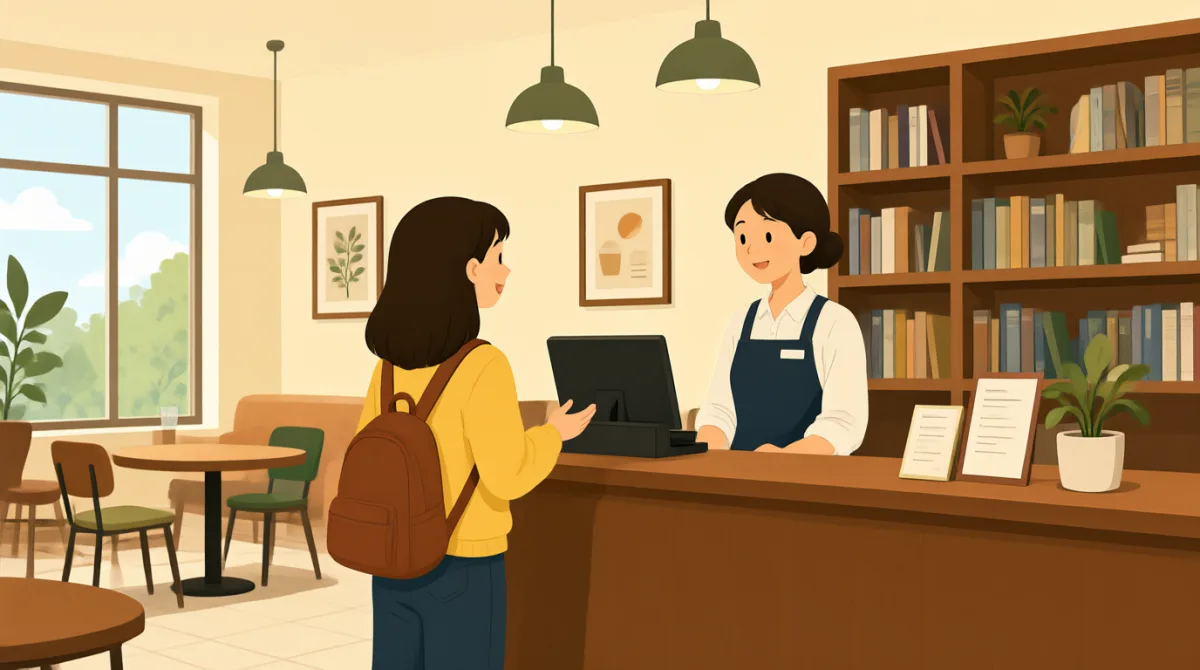

Excuse me, I hate to bother you, but I think I might have lost something here.
ขอโทษนะคะ ไม่อยากรบกวนเลย แต่คิดว่าอาจทำของหายไว้ที่นี่ค่ะ

No bother at all. How can I help you? What exactly are you looking for?
ไม่รบกวนเลยครับ ให้ผมช่วยอะไรได้บ้างครับ กำลังตามหาอะไรอยู่ครับ
I seem to have misplaced my wallet. It's a small, black leather one, with a silver zipper.
เหมือนฉันจะทำกระเป๋าสตางค์หายค่ะ เป็นกระเป๋าหนังสีดำใบเล็ก มีซิปสีเงินค่ะ
Okay, a small, black leather wallet. Do you remember where you might have last seen it?
ได้ครับ กระเป๋าสตางค์หนังสีดำใบเล็ก คุณพอจำได้ไหมครับว่าครั้งสุดท้ายเห็นมันที่ไหน
I was sitting at the table near the window, the one in the corner, about an hour ago. I think it might have slipped out of my bag there.
ประมาณชั่วโมงที่แล้ว ฉันนั่งอยู่ที่โต๊ะใกล้หน้าต่าง ตัวที่อยู่ตรงมุมค่ะ คิดว่ามันอาจหล่นออกจากกระเป๋าตรงนั้นค่ะ
Got it. Let me check the lost and found, and I'll also have a look around that area for you. Can I get a name and phone number just in case we find it?
เข้าใจแล้วครับ เดี๋ยวผมไปดูที่จุดรับของหาย แล้วจะลองเดินหาบริเวณนั้นให้ด้วยนะครับ ขอชื่อกับเบอร์โทรศัพท์ไว้เผื่อเจอได้ไหมครับ
Certainly. My name is Emma Carter, and my number is 555-123-4567. Thank you so much for your help.
ได้ค่ะ ฉันชื่อ Emma Carter เบอร์โทร 555-123-4567 ขอบคุณมากนะคะที่ช่วยค่ะ
You're welcome, Emma. We'll do our best to find it. If we do, we'll give you a call right away.
ยินดีครับ Emma เราจะพยายามหาให้เต็มที่นะครับ ถ้าเจอแล้วจะรีบโทรหาเลยครับ
คำศัพท์7
- excuse meขอโทษนะคะ/ครับ
A polite phrase used to get someone's attention before speaking, especially when interrupting.
วลีสุภาพที่ใช้เรียกความสนใจของอีกฝ่ายก่อนเริ่มพูด โดยเฉพาะเมื่อต้องขัดจังหวะ
- botherรบกวน
To disturb or trouble someone; in 'I hate to bother you,' it shows reluctance to inconvenience the other person.
ทำให้อีกฝ่ายไม่สะดวกหรือเดือดร้อน ในวลี 'I hate to bother you' ผู้พูดแสดงว่าไม่อยากรบกวนอีกฝ่าย
- misplacedทำหายชั่วคราว
To lose something temporarily by forgetting where you put it; less serious than 'lost' and implies it might be found.
ลืมว่าตัวเองวางของไว้ที่ไหนจนหาไม่เจอชั่วคราว ความหมายไม่ร้ายแรงเท่า 'lost' และสื่อว่ายังมีโอกาสหาเจอ
- walletกระเป๋าสตางค์
A small flat case used to carry money, credit cards, and ID; common item to lose in public places.
กระเป๋าใบเล็กแบน ๆ สำหรับใส่เงิน บัตรเครดิต และบัตรประจำตัว เป็นของที่มักทำหายในที่สาธารณะ
- slipped outหล่นออกมา
To fall or slide out accidentally from something like a bag; describes how an item might get lost without noticing.
ตกหรือไถลออกจากสิ่งของอย่างกระเป๋าโดยไม่ตั้งใจ ใช้อธิบายว่าของอาจหายไปโดยที่เจ้าของไม่ทันสังเกต
- lost and foundจุดรับของหาย
A designated area or box at public places where lost items are kept until the owner claims them.
บริเวณหรือกล่องที่จัดไว้ตามสถานที่สาธารณะเพื่อเก็บของที่มีคนทำหาย จนกว่าเจ้าของจะมารับคืน
- just in caseเผื่อไว้
A phrase meaning 'to prepare for a possible situation'; used here to explain why contact details are needed if the item is found.
วลีที่หมายถึง 'เตรียมพร้อมรับมือกับเหตุการณ์ที่อาจเกิดขึ้น' ในบทสนทนานี้ใช้อธิบายว่าทำไมจึงต้องขอข้อมูลติดต่อ เผื่อหาเจอ
ประโยคสำคัญ8
- 1
Excuse me, I hate to bother you, but I think I might have lost something here.
ขอโทษนะคะ ไม่อยากรบกวนเลย แต่คิดว่าอาจทำของหายไว้ที่นี่ค่ะ
This is a polite way to start a conversation when reporting a lost item. 'I hate to bother you' softens the request, and 'might have' shows uncertainty, which is common in intermediate English for being tentative.
ประโยคนี้เป็นวิธีสุภาพในการเริ่มบทสนทนาเมื่อต้องแจ้งว่าทำของหาย 'I hate to bother you' ช่วยทำให้คำขอฟังนุ่มนวลขึ้น ส่วน 'might have' แสดงความไม่แน่ใจ ซึ่งมักใช้เมื่อพูดอย่างไม่ฟันธง
- 2
No bother at all. How can I help you?
ไม่รบกวนเลยครับ ให้ผมช่วยอะไรได้บ้างครับ
A friendly response to offer assistance. 'No bother at all' reassures the speaker they are not troubling you. Useful for service roles; the question invites more details.
เป็นคำตอบที่เป็นมิตรเพื่อเสนอตัวช่วย 'No bother at all' ช่วยให้อีกฝ่ายมั่นใจว่าไม่ได้รบกวนเรา เหมาะกับงานบริการ และคำถามนี้เปิดโอกาสให้อีกฝ่ายบอกรายละเอียดเพิ่ม
- 3
I seem to have misplaced my wallet.
เหมือนฉันจะทำกระเป๋าสตางค์หายค่ะ
Describes losing an item gently. 'Seem to have' expresses possibility, and 'misplaced' is a softer word for 'lost.' Good for describing personal belongings in reports.
ใช้บอกอย่างนุ่มนวลว่าของอาจหายไป 'Seem to have' สื่อถึงความเป็นไปได้ และ 'misplaced' เป็นคำที่ฟังเบากว่า 'lost' เหมาะสำหรับแจ้งเรื่องของใช้ส่วนตัว
- 4
Do you remember where you might have last seen it?
คุณพอจำได้ไหมครับว่าครั้งสุดท้ายเห็นมันที่ไหน
Asks for location details. 'Might have' adds politeness and uncertainty; 'last seen' focuses on the most recent memory. Essential for gathering information in lost item scenarios.
ใช้ถามรายละเอียดเกี่ยวกับสถานที่ 'Might have' ช่วยให้ประโยคสุภาพและแสดงความไม่แน่ใจ ส่วน 'last seen' เน้นความทรงจำครั้งล่าสุด การถามแบบนี้จำเป็นต่อการรวบรวมข้อมูลเมื่อมีคนแจ้งของหาย
- 5
I was sitting at the table near the window, about an hour ago.
ฉันนั่งอยู่ที่โต๊ะใกล้หน้าต่างประมาณชั่วโมงที่แล้วค่ะ
Provides specific details about time and place. Past continuous 'was sitting' describes the action at that time; useful for giving context in reports to help searches.
ให้รายละเอียดที่ชัดเจนเกี่ยวกับเวลาและสถานที่ รูปอดีตกาลต่อเนื่อง 'was sitting' ใช้บรรยายสิ่งที่กำลังทำอยู่ในช่วงเวลานั้น เหมาะสำหรับให้ข้อมูลประกอบการค้นหา
- 6
Can I get a name and phone number just in case we find it?
ขอชื่อกับเบอร์โทรศัพท์ไว้เผื่อเจอได้ไหมครับ
Requests contact information politely. 'Just in case' explains the purpose; imperative 'Can I get' is a soft request. Common in service interactions for follow-up.
ใช้ขอข้อมูลติดต่ออย่างสุภาพ 'Just in case' อธิบายเหตุผลที่ขอข้อมูล ส่วน 'Can I get' เป็นการขออย่างนุ่มนวล มักใช้ในการติดต่อเพื่อติดตามผลในงานบริการ
- 7
My name is Emma Carter, and my number is 555-123-4567.
ฉันชื่อ Emma Carter เบอร์โทร 555-123-4567 ค่ะ
Gives personal details clearly. Simple structure with 'is' for identification; practice saying phone numbers clearly. Useful when providing info for callbacks.
ใช้ให้ข้อมูลส่วนตัวอย่างชัดเจน โครงสร้างง่าย ๆ ใช้ 'is' เพื่อบอกข้อมูลระบุตัวตน ฝึกพูดหมายเลขโทรศัพท์ให้ชัดเจนด้วย ประโยคนี้มีประโยชน์เมื่อต้องให้ข้อมูลเพื่อให้ติดต่อกลับ
- 8
You're welcome. We'll do our best to find it.
ยินดีครับ เราจะพยายามหาให้เต็มที่ครับ
Polite closing response. 'You're welcome' acknowledges thanks; 'do our best' promises effort without guaranteeing success. Good for ending helpful conversations positively.
เป็นคำตอบสุภาพเพื่อปิดบทสนทนา 'You're welcome' เป็นการตอบรับคำขอบคุณ ส่วน 'do our best' สื่อว่าจะพยายามอย่างเต็มที่โดยไม่ได้รับประกันว่าจะหาเจอ เหมาะสำหรับจบบทสนทนาอย่างเป็นมิตร