Recalling Where it Was Lost
Kaybolduğu Yeri Hatırlama
The staff member asks where the learner thinks they might have lost the item. The learner recounts their movements and the last place they remember having it.
Görevli, eşyanın nerede kaybolmuş olabileceğini düşündüğünü sorar. Öğrenci gittiği yerleri ve eşyayı en son nerede hatırladığını anlatır.
Diyalog8
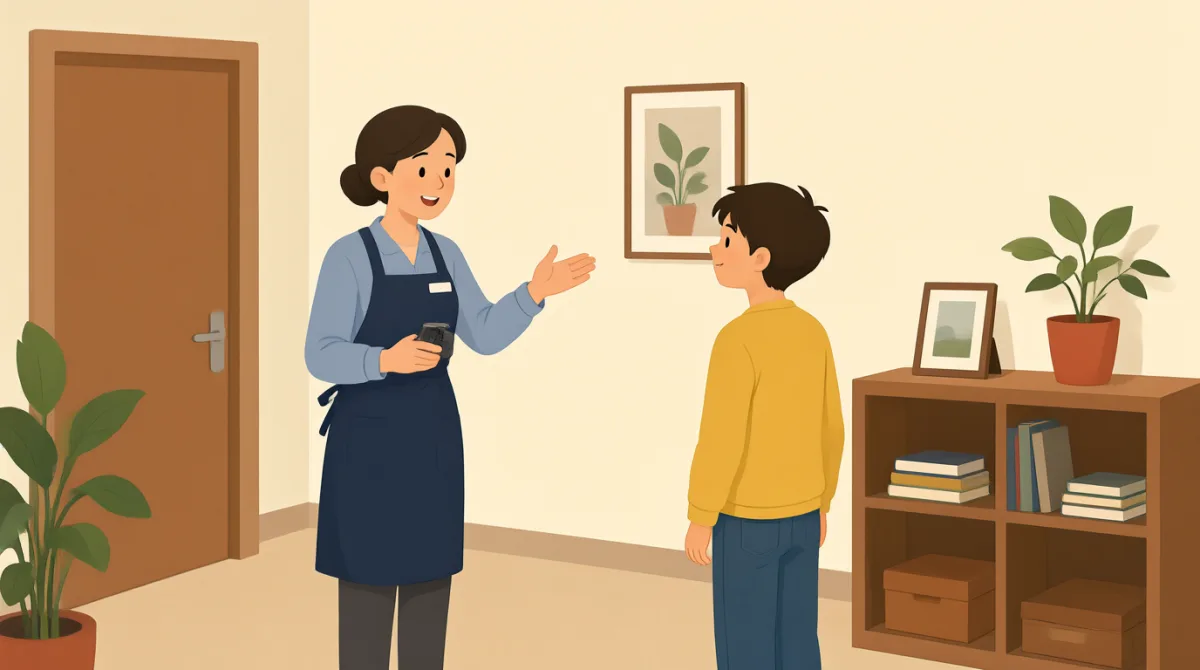

Excuse me, I think I've lost my wallet somewhere here. I was wondering if anyone might have turned it in?
Affedersiniz, sanırım cüzdanımı burada bir yerde kaybettim. Acaba biri bulup teslim etmiş olabilir mi?

Oh no, I'm sorry to hear that. Can you tell me where you think you might have lost it? Roughly, what time were you here?
Üzüldüm, geçmiş olsun. Nerede kaybetmiş olabileceğinizi düşündüğünüzü söyleyebilir misiniz? Yaklaşık saat kaçta buradaydınız?
Well, I arrived around 10 AM. I had it when I first came in and ordered coffee at the counter. Then I sat at a table near the window.
Şey, saat 10 gibi geldim. İlk geldiğimde ve tezgahta kahve sipariş ettiğimde cüzdanım yanımdaydı. Sonra pencerenin yanındaki bir masaya oturdum.
Okay, so you had it when you ordered and sat down. Where did you go after that?
Peki, yani sipariş verirken de otururken de yanınızdaymış. Ondan sonra nereye gittiniz?
I went to the restroom about 15 minutes later, and I think I took it with me then. I remember putting my phone and wallet down on the shelf inside.
Yaklaşık 15 dakika sonra tuvalete gittim ve sanırım o sırada yanıma aldım. İçerideki rafa telefonumu ve cüzdanımı bıraktığımı hatırlıyorum.
So, the restroom is a possibility. Did you go anywhere else before leaving?
Demek tuvalet de bir ihtimal. Çıkmadan önce başka bir yere gittiniz mi?
Only to the exit. I don't recall taking it out again until I realized it was gone when I got to my car. I must have left it either at the table or in the restroom.
Sadece çıkışa. Arabama vardığımda kaybolduğunu fark edene kadar cüzdanımı tekrar çıkardığımı hatırlamıyorum. Ya masada ya da tuvalette bırakmış olmalıyım.
Alright, so the window table or the restroom. We'll check both areas thoroughly for you. Can you describe the wallet and leave your contact details?
Peki, pencere kenarındaki masa ya da tuvalet. İkisini de sizin için iyice kontrol edeceğiz. Cüzdanı tarif edip iletişim bilgilerinizi bırakabilir misiniz?
Kelime Bilgisi9
- lostkaybetmek
Past tense of 'lose', meaning you cannot find something you owned. Use it when reporting missing items, like 'I lost my keys.'
'Lose' fiilinin geçmiş zaman hâlidir; sahip olduğunuz bir şeyi bulamadığınız anlamına gelir. 'I lost my keys.' (Anahtarlarımı kaybettim.) gibi, kayıp eşyalardan söz ederken kullanılır.
- walletcüzdan
A small case for holding money, cards, and ID. Common in lost item reports; say 'I lost my wallet' to describe what was misplaced.
Para, kart ve kimlik taşımak için kullanılan küçük bir kılıftır. Kayıp eşya bildirirken sık kullanılır; kaybettiğiniz şeyi söylemek için 'I lost my wallet' diyebilirsiniz.
- turned it inbulup teslim etmek
Means handing over a found item to the right place, like lost and found. Useful when asking if someone returned your lost thing.
Bulunan bir eşyayı kayıp eşya bürosu gibi ilgili yere vermek anlamına gelir. Birinin kaybettiğiniz şeyi teslim edip etmediğini sorarken kullanışlıdır.
- roughlyyaklaşık
Means approximately or about, not exactly. Use it for estimates, like 'roughly 10 AM' when recalling time or place.
Tam olarak değil, aşağı yukarı anlamına gelir. Saati ya da yeri hatırlarken tahmini belirtmek için, örneğin 'roughly 10 AM' şeklinde kullanılır.
- countertezgâh
A long table where you order or pay in places like cafes. Say 'at the counter' to describe where you did something.
Kafe gibi yerlerde sipariş verilen veya ödeme yapılan uzun masadır. Bir şeyi nerede yaptığınızı anlatırken 'at the counter' ifadesini kullanabilirsiniz.
- restroomtuvalet
A polite word for bathroom or toilet. Use it in formal situations, like 'I went to the restroom' when explaining movements.
'Bathroom' veya 'toilet' yerine kullanılan daha kibar bir sözcüktür. Gittiğiniz yerleri anlatırken, örneğin 'I went to the restroom' şeklinde kullanılabilir.
- realizedfark etti
Past tense of 'realize', meaning to become aware of something. Common for sudden discoveries, like 'I realized it was gone.'
'Realize' fiilinin geçmiş zaman hâlidir; bir şeyin farkına varmak anlamına gelir. 'I realized it was gone.' (Yerinde olmadığını fark ettim.) gibi, bir şeyi sonradan anladığınızda kullanılır.
- thoroughlyiyice
Means completely or carefully. Use it to ask for a detailed search, like 'check thoroughly' in lost item scenarios.
Tamamen ya da dikkatlice anlamına gelir. Kayıp eşya durumunda ayrıntılı arama istemek için 'check thoroughly' ifadesindeki gibi kullanılır.
- contact detailsiletişim bilgileri
Information like phone number or email for reaching you. Essential when reporting lost items so staff can call you.
Size ulaşmak için gereken telefon numarası veya e-posta gibi bilgilerdir. Görevlilerin size haber verebilmesi için kayıp eşya bildirirken önemlidir.
Önemli Cümleler8
- 1
Excuse me, I think I've lost my wallet somewhere here.
Affedersiniz, sanırım cüzdanımı burada bir yerde kaybettim.
This polite opening starts a report of a lost item. 'Excuse me' gets attention, 'I think I've lost' uses present perfect for recent events. Useful for beginning conversations at service places.
Bu kibar giriş, kayıp eşya bildirimini başlatır. 'Excuse me' (Affedersiniz) dikkat çekmek için kullanılır; 'I think I've lost' ise yakın zamanda gerçekleşen bir olay için present perfect yapısını kullanır. Hizmet veren bir yerde konuşmaya başlarken işinize yarar.
- 2
I was wondering if anyone might have turned it in?
Acaba biri bulup teslim etmiş olabilir mi?
A soft way to ask about a found item. 'I was wondering' is polite for questions; 'might have' shows possibility. Use this to inquire without being direct.
Bulunan bir eşyayı sormanın nazik bir yoludur. 'I was wondering' soruları kibarlaştırır; 'might have' ise olasılık belirtir. Doğrudan sormadan bilgi edinmek için kullanabilirsiniz.
- 3
Can you tell me where you think you might have lost it?
Nerede kaybetmiş olabileceğinizi düşündüğünüzü söyleyebilir misiniz?
Asks for details on location. 'Where you think you might have lost' uses 'might have' for uncertainty in past actions. Helpful for staff gathering info in lost reports.
Eşyanın kaybolduğu yerle ilgili ayrıntı ister. 'Where you think you might have lost' ifadesindeki 'might have', geçmişte ne olduğuna dair belirsizlik belirtir. Kayıp eşya bildiriminde görevlinin bilgi toplamasına yardımcı olur.
- 4
I arrived around 10 AM. I had it when I first came in and ordered coffee at the counter.
Saat 10 gibi geldim. İlk geldiğimde ve tezgahta kahve sipariş ettiğimde cüzdanım yanımdaydı.
Recounts timeline and actions. 'Around' means approximately; 'I had it' means possessed it. Use simple past to describe sequence of events when explaining where you lost something.
Olayların sırasını ve neler yaptığınızı anlatır. 'Around' yaklaşık demektir; 'I had it' ise eşyanın yanınızda olduğunu belirtir. Bir şeyin nerede kaybolduğunu anlatırken olayları sıralamak için simple past kullanılır.
- 5
I went to the restroom about 15 minutes later, and I think I took it with me then.
Yaklaşık 15 dakika sonra tuvalete gittim ve sanırım o sırada yanıma aldım.
Describes movement and memory. 'About 15 minutes later' shows time sequence; 'I think' expresses uncertainty. Practical for narrating steps in a story of loss.
Gittiğiniz yeri ve hatırladıklarınızı anlatır. 'About 15 minutes later' zaman sırasını gösterir; 'I think' ise emin olmadığınızı belirtir. Bir kayıp olayını adım adım anlatırken kullanışlıdır.
- 6
I must have left it either at the table or in the restroom.
Ya masada ya da tuvalette bırakmış olmalıyım.
'Must have' expresses strong probability about the past. 'Either...or' lists options. Use this to guess possible locations when you can't remember exactly.
'Must have' geçmişle ilgili güçlü bir tahmini ifade eder. 'Either...or' ise seçenekleri sıralar. Tam olarak hatırlamadığınızda olası yerleri tahmin etmek için kullanabilirsiniz.
- 7
We'll check both areas thoroughly for you.
İkisini de sizin için iyice kontrol edeceğiz.
Promises action. 'We'll check' is future simple for plans; 'thoroughly' means carefully. Reassuring response from staff; learners can use similar to offer help.
Bir şey yapacağınızı belirtir. 'We'll check' planlanan bir eylem için future simple yapısını, 'thoroughly' ise dikkatlice anlamını taşır. Görevlinin güven veren yanıtıdır; siz de yardım teklif ederken benzer ifadeler kullanabilirsiniz.
- 8
Can you describe the wallet and leave your contact details?
Cüzdanı tarif edip iletişim bilgilerinizi bırakabilir misiniz?
Requests more info. 'Describe' means give details; imperative form after 'can you' is polite. Essential for ending lost item reports to aid recovery.
Daha fazla bilgi ister. 'Describe' ayrıntı vermek demektir; 'can you' sonrasındaki fiil yalın hâlde kullanılır ve rica ifadesini kibarlaştırır. Kayıp eşya bildirimini tamamlarken eşyanın bulunmasına yardımcı olur.