Initial Report to Staff
कर्मचारी को पहली बार खोई हुई चीज़ की जानकारी देना
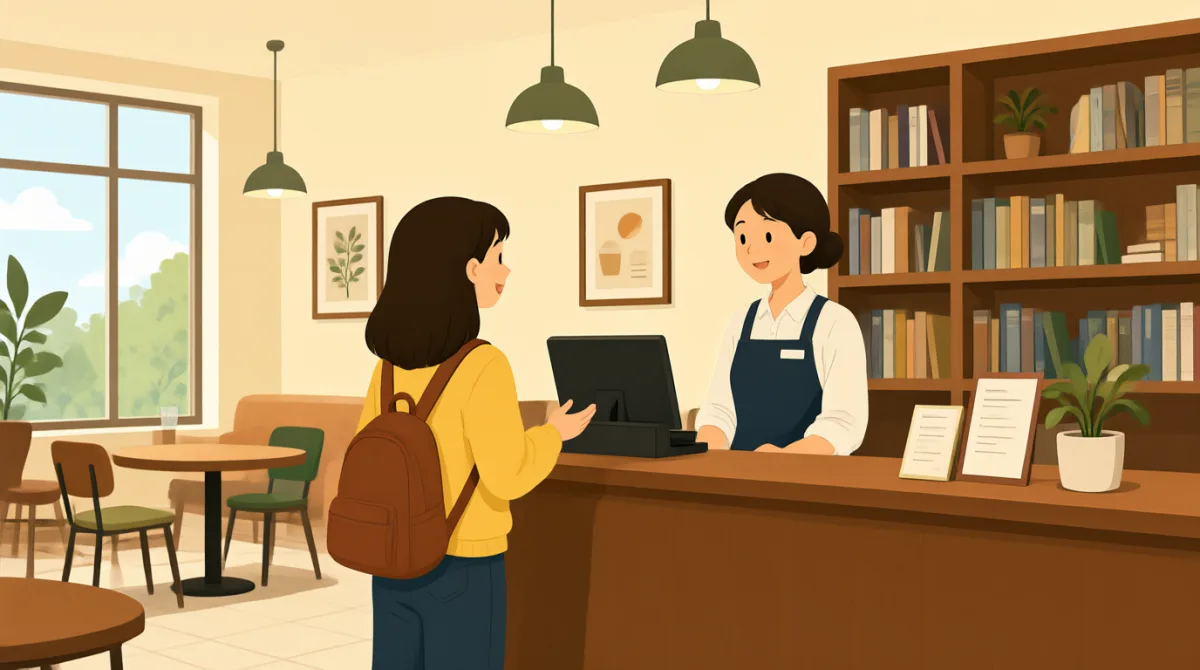
The learner approaches a staff member at the venue (e.g., cafe counter, library reception) and states that they have lost an item. They initiate the conversation and explain the purpose of their visit.
सीखने वाला उस जगह के किसी कर्मचारी (जैसे कैफ़े के काउंटर या पुस्तकालय के स्वागत-कक्ष पर) के पास जाकर बताता है कि उसकी कोई चीज़ खो गई है। वह बातचीत शुरू करके आने का कारण समझाता है।
संवाद8

Excuse me, I hate to bother you, but I think I might have lost something here.
माफ़ कीजिए, आपको परेशान करना अच्छा नहीं लग रहा, लेकिन मुझे लगता है कि शायद मेरी कोई चीज़ यहाँ खो गई है।

No bother at all. How can I help you? What exactly are you looking for?
कोई बात नहीं। मैं आपकी क्या मदद कर सकता हूँ? आप क्या ढूँढ़ रहे हैं?
I seem to have misplaced my wallet. It's a small, black leather one, with a silver zipper.
लगता है मेरा बटुआ कहीं रखकर भूल गई हूँ। वह छोटा, काले चमड़े का है और उसमें चाँदी की ज़िप लगी है।
Okay, a small, black leather wallet. Do you remember where you might have last seen it?
अच्छा, छोटा काले चमड़े का बटुआ। आपको याद है कि आपने उसे आख़िरी बार कहाँ देखा था?
I was sitting at the table near the window, the one in the corner, about an hour ago. I think it might have slipped out of my bag there.
करीब एक घंटे पहले मैं खिड़की के पास वाली मेज़ पर बैठी थी, कोने वाली मेज़ पर। मुझे लगता है, वहीं मेरा बैग से बाहर फिसल गया होगा।
Got it. Let me check the lost and found, and I'll also have a look around that area for you. Can I get a name and phone number just in case we find it?
समझ गया। मैं खोई हुई चीज़ों वाले विभाग में देखता हूँ और उस जगह के आसपास भी ढूँढ़ता हूँ। अगर वह मिल जाए, तो क्या आप अपना नाम और फ़ोन नंबर दे सकती हैं?
Certainly. My name is Emma Carter, and my number is 555-123-4567. Thank you so much for your help.
ज़रूर। मेरा नाम Emma Carter है और मेरा नंबर 555-123-4567 है। आपकी मदद के लिए बहुत-बहुत धन्यवाद।
You're welcome, Emma. We'll do our best to find it. If we do, we'll give you a call right away.
कोई बात नहीं, Emma। हम उसे ढूँढ़ने की पूरी कोशिश करेंगे। अगर वह मिल गया, तो हम आपको तुरंत फ़ोन करेंगे।
शब्दावली7
- excuse meमाफ़ कीजिए
A polite phrase used to get someone's attention before speaking, especially when interrupting.
किसी से बात शुरू करने से पहले, ख़ासकर उसकी बात बीच में रोकते समय, उसका ध्यान खींचने के लिए इस्तेमाल किया जाने वाला विनम्र वाक्यांश।
- botherपरेशान करना
To disturb or trouble someone; in 'I hate to bother you,' it shows reluctance to inconvenience the other person.
किसी को तंग करना या असुविधा पहुँचाना। 'I hate to bother you' में यह दिखाता है कि बोलने वाला दूसरे व्यक्ति को परेशान नहीं करना चाहता।
- misplacedकहीं रखकर भूल जाना
To lose something temporarily by forgetting where you put it; less serious than 'lost' and implies it might be found.
यह भूल जाने के कारण किसी चीज़ को कुछ समय के लिए खो देना कि उसे कहाँ रखा था। यह 'lost' से कम गंभीर है और इसका मतलब है कि चीज़ मिल सकती है।
- walletबटुआ
A small flat case used to carry money, credit cards, and ID; common item to lose in public places.
पैसे, क्रेडिट कार्ड और पहचान-पत्र रखने का छोटा, चपटा केस। सार्वजनिक जगहों पर यह अक्सर खो जाता है।
- slipped outफिसलकर बाहर निकल जाना
To fall or slide out accidentally from something like a bag; describes how an item might get lost without noticing.
बैग जैसी किसी चीज़ से अनजाने में गिरकर या फिसलकर बाहर निकल जाना। यह बताता है कि कोई चीज़ बिना ध्यान दिए कैसे खो सकती है।
- lost and foundखोई हुई चीज़ों का विभाग
A designated area or box at public places where lost items are kept until the owner claims them.
सार्वजनिक जगहों पर निर्धारित जगह या डिब्बा, जहाँ खोई हुई चीज़ें उनके मालिक के लेने आने तक रखी जाती हैं।
- just in caseएहतियात के तौर पर
A phrase meaning 'to prepare for a possible situation'; used here to explain why contact details are needed if the item is found.
इसका मतलब है 'किसी संभावित स्थिति के लिए तैयारी करना'। यहाँ इसका इस्तेमाल यह समझाने के लिए हुआ है कि चीज़ मिलने पर संपर्क करने के लिए जानकारी क्यों चाहिए।
मुख्य वाक्य8
- 1
Excuse me, I hate to bother you, but I think I might have lost something here.
माफ़ कीजिए, आपको परेशान करना अच्छा नहीं लग रहा, लेकिन मुझे लगता है कि शायद मेरी कोई चीज़ यहाँ खो गई है।
This is a polite way to start a conversation when reporting a lost item. 'I hate to bother you' softens the request, and 'might have' shows uncertainty, which is common in intermediate English for being tentative.
खोई हुई चीज़ की जानकारी देते समय बातचीत शुरू करने का यह एक विनम्र तरीका है। 'I hate to bother you' अनुरोध को थोड़ा नरम बनाता है, और 'might have' अनिश्चितता दिखाता है। बीच के स्तर की अंग्रेज़ी में बात को सावधानी से कहने के लिए इसका इस्तेमाल आम है।
- 2
No bother at all. How can I help you?
कोई बात नहीं। मैं आपकी क्या मदद कर सकता हूँ?
A friendly response to offer assistance. 'No bother at all' reassures the speaker they are not troubling you. Useful for service roles; the question invites more details.
मदद की पेशकश करने वाला एक दोस्ताना जवाब। 'No bother at all' सामने वाले को भरोसा दिलाता है कि वह आपको परेशान नहीं कर रहा। सेवा-संबंधी कामों में यह उपयोगी है; सवाल से आप और जानकारी देने के लिए कहते हैं।
- 3
I seem to have misplaced my wallet.
लगता है मैंने अपना बटुआ कहीं रखकर भूल गई हूँ।
Describes losing an item gently. 'Seem to have' expresses possibility, and 'misplaced' is a softer word for 'lost.' Good for describing personal belongings in reports.
किसी चीज़ के खोने की बात नरम ढंग से कहने का तरीका। 'Seem to have' संभावना जताता है, और 'misplaced' का अर्थ 'lost' से थोड़ा हल्का है। खोई हुई निजी चीज़ों की जानकारी देते समय यह उपयोगी है।
- 4
Do you remember where you might have last seen it?
आपको याद है कि आपने उसे आख़िरी बार कहाँ देखा था?
Asks for location details. 'Might have' adds politeness and uncertainty; 'last seen' focuses on the most recent memory. Essential for gathering information in lost item scenarios.
यह जगह के बारे में जानकारी पूछता है। 'Might have' बात में विनम्रता और अनिश्चितता जोड़ता है; 'last seen' सबसे हाल की याद पर ध्यान देता है। खोई हुई चीज़ के बारे में जानकारी जुटाने में यह बहुत काम आता है।
- 5
I was sitting at the table near the window, about an hour ago.
करीब एक घंटे पहले मैं खिड़की के पास वाली मेज़ पर बैठी थी।
Provides specific details about time and place. Past continuous 'was sitting' describes the action at that time; useful for giving context in reports to help searches.
यह समय और जगह की खास जानकारी देता है। Past continuous 'was sitting' उस समय चल रही क्रिया बताता है। खोज में मदद के लिए जानकारी देते समय यह उपयोगी है।
- 6
Can I get a name and phone number just in case we find it?
अगर वह मिल जाए, तो क्या आप अपना नाम और फ़ोन नंबर दे सकती हैं?
Requests contact information politely. 'Just in case' explains the purpose; imperative 'Can I get' is a soft request. Common in service interactions for follow-up.
यह विनम्रता से संपर्क की जानकारी माँगता है। 'Just in case' इसका कारण बताता है; 'Can I get' अनुरोध को नरम बनाता है। सेवा-संबंधी बातचीत में बाद में संपर्क करने के लिए यह आम है।
- 7
My name is Emma Carter, and my number is 555-123-4567.
मेरा नाम Emma Carter है और मेरा नंबर 555-123-4567 है।
Gives personal details clearly. Simple structure with 'is' for identification; practice saying phone numbers clearly. Useful when providing info for callbacks.
यह निजी जानकारी साफ़ तौर पर देता है। पहचान बताने के लिए 'is' वाली सरल बनावट का इस्तेमाल किया गया है; फ़ोन नंबर साफ़-साफ़ बोलने का अभ्यास करें। बाद में फ़ोन किए जाने के लिए जानकारी देते समय यह उपयोगी है।
- 8
You're welcome. We'll do our best to find it.
कोई बात नहीं। हम उसे ढूँढ़ने की पूरी कोशिश करेंगे।
Polite closing response. 'You're welcome' acknowledges thanks; 'do our best' promises effort without guaranteeing success. Good for ending helpful conversations positively.
बातचीत को विनम्रता से ख़त्म करने वाला जवाब। 'You're welcome' धन्यवाद का जवाब है; 'do our best' सफलता की गारंटी दिए बिना पूरी कोशिश करने का भरोसा देता है। मददगार बातचीत को सकारात्मक ढंग से समाप्त करने के लिए यह अच्छा है।