Initial Report to Staff
কর্মীদের কাছে প্রথমবার জানানো
The learner approaches a staff member at the venue (e.g., cafe counter, library reception) and states that they have lost an item. They initiate the conversation and explain the purpose of their visit.
শিক্ষার্থী কোনো প্রতিষ্ঠানের কর্মীর কাছে (যেমন ক্যাফের কাউন্টার বা লাইব্রেরির অভ্যর্থনাকক্ষে) গিয়ে জানান যে তাঁর একটি জিনিস হারিয়ে গেছে। তিনি নিজে কথোপকথন শুরু করে আসার উদ্দেশ্য ব্যাখ্যা করেন।
সংলাপ8
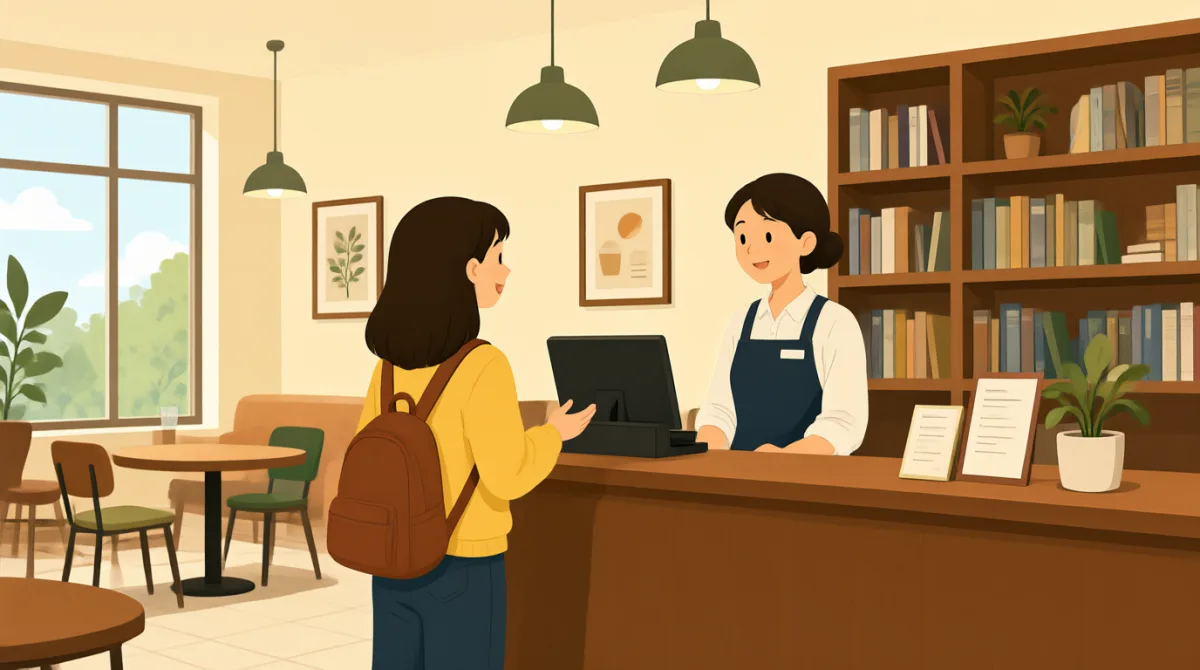

Excuse me, I hate to bother you, but I think I might have lost something here.
মাফ করবেন, আপনাকে বিরক্ত করতে চাই না, তবে মনে হয় এখানে আমার কিছু একটা হারিয়ে গেছে।

No bother at all. How can I help you? What exactly are you looking for?
একদমই বিরক্ত হচ্ছি না। কীভাবে সাহায্য করতে পারি? ঠিক কী খুঁজছেন?
I seem to have misplaced my wallet. It's a small, black leather one, with a silver zipper.
মনে হচ্ছে আমার মানিব্যাগটা কোথাও রেখে ভুলে গেছি। ছোট, কালো চামড়ার মানিব্যাগ, রুপালি চেইন দেওয়া।
Okay, a small, black leather wallet. Do you remember where you might have last seen it?
আচ্ছা, ছোট কালো চামড়ার মানিব্যাগ। শেষ কোথায় দেখেছিলেন মনে আছে?
I was sitting at the table near the window, the one in the corner, about an hour ago. I think it might have slipped out of my bag there.
প্রায় এক ঘণ্টা আগে জানালার পাশে, কোণার টেবিলে বসেছিলাম। মনে হয় সেখানেই ব্যাগ থেকে পড়ে গেছে।
Got it. Let me check the lost and found, and I'll also have a look around that area for you. Can I get a name and phone number just in case we find it?
বুঝেছি। হারানো জিনিসের জায়গাটা দেখে নিচ্ছি, আর আপনার জন্য ওই এলাকাটাও খুঁজে দেখব। পেয়ে গেলে জানাতে আপনার নাম আর ফোন নম্বরটা দিতে পারবেন?
Certainly. My name is Emma Carter, and my number is 555-123-4567. Thank you so much for your help.
অবশ্যই। আমার নাম এমা কার্টার, আর আমার নম্বর 555-123-4567। এত সাহায্য করার জন্য অনেক ধন্যবাদ।
You're welcome, Emma. We'll do our best to find it. If we do, we'll give you a call right away.
আপনাকে স্বাগতম, এমা। খুঁজে বের করার জন্য আমরা যথাসাধ্য চেষ্টা করব। পেলে সঙ্গে সঙ্গেই আপনাকে ফোন করব।
শব্দভান্ডার7
- excuse meমাফ করবেন
A polite phrase used to get someone's attention before speaking, especially when interrupting.
কথা বলার আগে কারও মনোযোগ আকর্ষণ করতে, বিশেষ করে কারও কথায় বাধা দিতে হলে, এই ভদ্র কথাটি বলা হয়।
- botherবিরক্ত করা
To disturb or trouble someone; in 'I hate to bother you,' it shows reluctance to inconvenience the other person.
কাউকে বিরক্ত করা বা অসুবিধায় ফেলা। 'I hate to bother you'-তে বোঝায় যে বক্তা অন্য ব্যক্তিকে অসুবিধায় ফেলতে চান না।
- misplacedকোথাও রেখে ভুলে যাওয়া
To lose something temporarily by forgetting where you put it; less serious than 'lost' and implies it might be found.
কোনো জিনিস কোথায় রেখেছেন তা ভুলে গিয়ে সাময়িকভাবে হারিয়ে ফেলা। 'lost'-এর চেয়ে এটি কম গুরুতর; এতে বোঝায় যে জিনিসটি খুঁজে পাওয়ার সম্ভাবনা আছে।
- walletমানিব্যাগ
A small flat case used to carry money, credit cards, and ID; common item to lose in public places.
টাকা, ক্রেডিট কার্ড ও পরিচয়পত্র রাখার ছোট, চ্যাপ্টা থলে। জনসমাগমের জায়গায় এটি প্রায়ই হারিয়ে যায়।
- slipped outপড়ে বেরিয়ে যাওয়া
To fall or slide out accidentally from something like a bag; describes how an item might get lost without noticing.
ব্যাগের মতো কোনো জিনিসের ভেতর থেকে অসাবধানতাবশত পড়ে বা গড়িয়ে বেরিয়ে যাওয়া। কোনো জিনিস অজান্তে কীভাবে হারিয়ে যেতে পারে, তা বোঝায়।
- lost and foundহারানো জিনিসের বিভাগ
A designated area or box at public places where lost items are kept until the owner claims them.
সর্বজনীন স্থানে নির্দিষ্ট কোনো জায়গা বা বাক্স, যেখানে হারানো জিনিস মালিকের দাবি করার আগ পর্যন্ত রাখা হয়।
- just in caseযদি এমন হয়
A phrase meaning 'to prepare for a possible situation'; used here to explain why contact details are needed if the item is found.
'just in case' কথাটির অর্থ সম্ভাব্য কোনো পরিস্থিতির জন্য প্রস্তুতি নেওয়া। এখানে জিনিসটি পাওয়া গেলে যোগাযোগের জন্য কেন তথ্য নেওয়া হচ্ছে, তা বোঝাতে ব্যবহৃত হয়েছে।
গুরুত্বপূর্ণ বাক্য8
- 1
Excuse me, I hate to bother you, but I think I might have lost something here.
মাফ করবেন, আপনাকে বিরক্ত করতে চাই না, তবে মনে হয় এখানে আমার কিছু একটা হারিয়ে গেছে।
This is a polite way to start a conversation when reporting a lost item. 'I hate to bother you' softens the request, and 'might have' shows uncertainty, which is common in intermediate English for being tentative.
হারানো জিনিসের খবর দেওয়ার সময় কথোপকথন শুরু করার এটি একটি ভদ্র উপায়। 'I hate to bother you' অনুরোধটিকে নম্র করে, আর 'might have' অনিশ্চয়তা বোঝায়। ভদ্রভাবে বা দ্বিধা প্রকাশ করে কথা বলতে মধ্যম স্তরের ইংরেজিতে এটি প্রচলিত।
- 2
No bother at all. How can I help you?
একদমই বিরক্ত হচ্ছি না। কীভাবে সাহায্য করতে পারি?
A friendly response to offer assistance. 'No bother at all' reassures the speaker they are not troubling you. Useful for service roles; the question invites more details.
সাহায্যের প্রস্তাব দেওয়ার এটি একটি আন্তরিক জবাব। 'No bother at all' বলে বক্তাকে আশ্বস্ত করা হয় যে তিনি কোনো অসুবিধা করছেন না। সেবামূলক কাজে এটি কাজে লাগে; প্রশ্নটি আরও বিস্তারিত বলার সুযোগ দেয়।
- 3
I seem to have misplaced my wallet.
মনে হচ্ছে আমার মানিব্যাগটা কোথাও রেখে ভুলে গেছি।
Describes losing an item gently. 'Seem to have' expresses possibility, and 'misplaced' is a softer word for 'lost.' Good for describing personal belongings in reports.
কোনো জিনিস হারানোর কথা নরমভাবে জানানোর উপায় এটি। 'Seem to have' সম্ভাবনা বোঝায়, আর 'misplaced' হলো 'lost'-এর চেয়ে কোমল শব্দ। হারানো জিনিসের খবর দেওয়ার সময় নিজের জিনিসপত্রের কথা বলতে এটি ভালো কাজে লাগে।
- 4
Do you remember where you might have last seen it?
শেষ কোথায় দেখেছিলেন মনে আছে?
Asks for location details. 'Might have' adds politeness and uncertainty; 'last seen' focuses on the most recent memory. Essential for gathering information in lost item scenarios.
জিনিসটি কোথায় ছিল, সে সম্পর্কে জানতে এই প্রশ্ন করা হয়। 'Might have' ভদ্রতা ও অনিশ্চয়তা যোগ করে; 'last seen' সবচেয়ে সাম্প্রতিক স্মৃতির দিকে মনোযোগ দেয়। হারানো জিনিসের খোঁজে তথ্য সংগ্রহের জন্য এটি খুব দরকারি।
- 5
I was sitting at the table near the window, about an hour ago.
প্রায় এক ঘণ্টা আগে জানালার পাশের টেবিলে বসেছিলাম।
Provides specific details about time and place. Past continuous 'was sitting' describes the action at that time; useful for giving context in reports to help searches.
এখানে সময় ও স্থান সম্পর্কে নির্দিষ্ট তথ্য দেওয়া হয়েছে। অতীতে কোনো সময়ে চলমান কাজ বোঝাতে past continuous 'was sitting' ব্যবহৃত হয়েছে। খোঁজাখুঁজিতে সাহায্যের জন্য ঘটনার প্রেক্ষাপট জানাতে এটি কাজে লাগে।
- 6
Can I get a name and phone number just in case we find it?
পেয়ে গেলে জানাতে আপনার নাম আর ফোন নম্বরটা দিতে পারবেন?
Requests contact information politely. 'Just in case' explains the purpose; imperative 'Can I get' is a soft request. Common in service interactions for follow-up.
এটি ভদ্রভাবে যোগাযোগের তথ্য চাওয়ার উপায়। 'just in case' তথ্য নেওয়ার কারণ বোঝায়; 'Can I get' নরমভাবে কিছু চাওয়ার একটি ভঙ্গি। পরে যোগাযোগ করতে সেবামূলক কথোপকথনে এটি প্রায়ই ব্যবহৃত হয়।
- 7
My name is Emma Carter, and my number is 555-123-4567.
আমার নাম এমা কার্টার, আর আমার নম্বর 555-123-4567।
Gives personal details clearly. Simple structure with 'is' for identification; practice saying phone numbers clearly. Useful when providing info for callbacks.
এভাবে ব্যক্তিগত তথ্য স্পষ্টভাবে জানানো হয়। পরিচয় দেওয়ার জন্য 'is' দিয়ে তৈরি সহজ বাক্যগঠনটি ব্যবহার করা হয়েছে। ফোন নম্বর স্পষ্ট করে বলতে অনুশীলন করুন। পরে ফোন করার জন্য তথ্য দেওয়ার সময় এটি কাজে লাগে।
- 8
You're welcome. We'll do our best to find it.
আপনাকে স্বাগতম। খুঁজে বের করার জন্য আমরা যথাসাধ্য চেষ্টা করব।
Polite closing response. 'You're welcome' acknowledges thanks; 'do our best' promises effort without guaranteeing success. Good for ending helpful conversations positively.
কথোপকথন ভদ্রভাবে শেষ করার জবাব এটি। 'You're welcome' ধন্যবাদের উত্তরে বলা হয়; 'do our best' সফলতার নিশ্চয়তা না দিয়ে যথাসাধ্য চেষ্টা করার প্রতিশ্রুতি দেয়। সহায়ক কথোপকথন ইতিবাচকভাবে শেষ করতে এটি ভালো।