Initial Report to Staff
الإبلاغ الأولي للموظفين
The learner approaches a staff member at the venue (e.g., cafe counter, library reception) and states that they have lost an item. They initiate the conversation and explain the purpose of their visit.
يتوجه المتعلم إلى أحد الموظفين في المكان (مثلًا عند منضدة مقهى أو مكتب استقبال مكتبة) ويخبره بأنه فقد غرضًا. يبدأ الحديث ويوضح سبب مجيئه.
حوار8
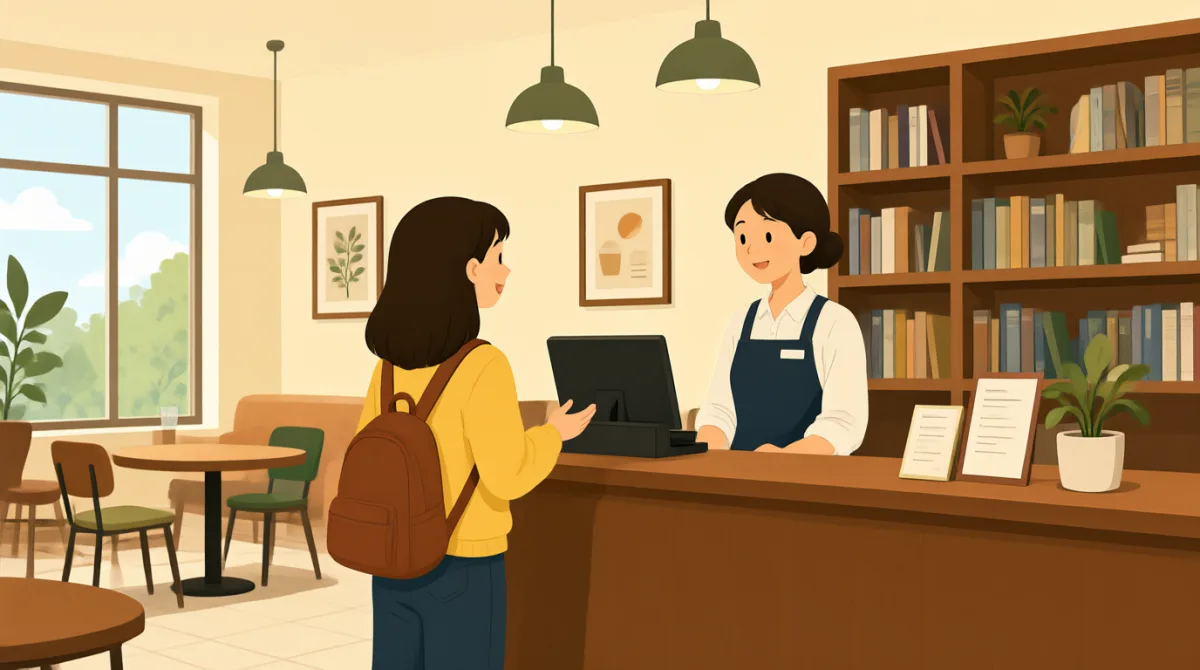

Excuse me, I hate to bother you, but I think I might have lost something here.
عذرًا، لا أود إزعاجك، لكن أعتقد أنني ربما فقدت شيئًا هنا.

No bother at all. How can I help you? What exactly are you looking for?
لا إزعاج على الإطلاق. كيف يمكنني مساعدتك؟ ما الذي تبحثين عنه تحديدًا؟
I seem to have misplaced my wallet. It's a small, black leather one, with a silver zipper.
يبدو أنني أضعت محفظتي. إنها صغيرة وسوداء ومصنوعة من الجلد، وبها سحّاب فضي.
Okay, a small, black leather wallet. Do you remember where you might have last seen it?
حسنًا، محفظة جلدية صغيرة سوداء. هل تتذكرين أين رأيتها آخر مرة؟
I was sitting at the table near the window, the one in the corner, about an hour ago. I think it might have slipped out of my bag there.
كنت أجلس إلى الطاولة قرب النافذة، تلك الموجودة في الزاوية، قبل نحو ساعة. أعتقد أنها ربما انزلقت من حقيبتي هناك.
Got it. Let me check the lost and found, and I'll also have a look around that area for you. Can I get a name and phone number just in case we find it?
حسنًا. دعيني أتحقق من قسم المفقودات، وسأبحث أيضًا في تلك المنطقة من أجلك. هل يمكنني معرفة اسمك ورقم هاتفك تحسبًا لأن نعثر عليها؟
Certainly. My name is Emma Carter, and my number is 555-123-4567. Thank you so much for your help.
بالتأكيد. اسمي إيما كارتر، ورقمي هو 555-123-4567. شكرًا جزيلًا على مساعدتك.
You're welcome, Emma. We'll do our best to find it. If we do, we'll give you a call right away.
على الرحب والسعة يا إيما. سنبذل قصارى جهدنا للعثور عليها. وإذا عثرنا عليها، فسنتصل بك فورًا.
المفردات7
- excuse meعذرًا
A polite phrase used to get someone's attention before speaking, especially when interrupting.
عبارة مهذبة تُستخدم لجذب انتباه شخص قبل التحدث إليه، ولا سيما عند مقاطعته.
- botherإزعاج
To disturb or trouble someone; in 'I hate to bother you,' it shows reluctance to inconvenience the other person.
التسبب في إزعاج شخص أو مضايقته؛ وفي 'I hate to bother you'، تعبّر العبارة عن عدم الرغبة في إثقال كاهل الشخص الآخر.
- misplacedأضاع
To lose something temporarily by forgetting where you put it; less serious than 'lost' and implies it might be found.
أن تفقد شيئًا مؤقتًا لأنك نسيت أين وضعته؛ وهي أقل حدة من 'lost' وتشير إلى احتمال العثور عليه.
- walletمحفظة
A small flat case used to carry money, credit cards, and ID; common item to lose in public places.
حافظة صغيرة ومسطحة لحمل النقود وبطاقات الائتمان والهوية؛ ومن الشائع فقدانها في الأماكن العامة.
- slipped outانزلق إلى الخارج
To fall or slide out accidentally from something like a bag; describes how an item might get lost without noticing.
أن يسقط شيء أو ينزلق إلى الخارج من شيء مثل الحقيبة عن غير قصد؛ وتصف العبارة كيف يمكن أن يُفقد غرض من دون أن يلاحظ صاحبه.
- lost and foundقسم المفقودات
A designated area or box at public places where lost items are kept until the owner claims them.
مكان أو صندوق مخصص في الأماكن العامة لحفظ الأغراض المفقودة إلى أن يأتي أصحابها لاستلامها.
- just in caseتحسبًا
A phrase meaning 'to prepare for a possible situation'; used here to explain why contact details are needed if the item is found.
عبارة تعني «استعدادًا لاحتمال حدوث أمر ما»؛ وتُستخدم هنا لتوضيح سبب الحاجة إلى بيانات الاتصال إذا عُثر على الغرض.
الجمل الأساسية8
- 1
Excuse me, I hate to bother you, but I think I might have lost something here.
عذرًا، لا أود إزعاجك، لكن أعتقد أنني ربما فقدت شيئًا هنا.
This is a polite way to start a conversation when reporting a lost item. 'I hate to bother you' softens the request, and 'might have' shows uncertainty, which is common in intermediate English for being tentative.
هذه طريقة مهذبة لبدء محادثة عند الإبلاغ عن غرض مفقود. تخفف عبارة 'I hate to bother you' من حدة الطلب، ويعبّر 'might have' عن عدم اليقين، وهو أمر شائع في الإنجليزية المتوسطة المستوى عند التحدث بتحفظ.
- 2
No bother at all. How can I help you?
لا إزعاج على الإطلاق. كيف يمكنني مساعدتك؟
A friendly response to offer assistance. 'No bother at all' reassures the speaker they are not troubling you. Useful for service roles; the question invites more details.
رد ودود يعرض تقديم المساعدة. تطمئن عبارة 'No bother at all' المتحدث إلى أنه لا يسبب لك إزعاجًا. وهي مفيدة في وظائف خدمة العملاء؛ أما السؤال فيدعوه إلى تقديم مزيد من التفاصيل.
- 3
I seem to have misplaced my wallet.
يبدو أنني أضعت محفظتي.
Describes losing an item gently. 'Seem to have' expresses possibility, and 'misplaced' is a softer word for 'lost.' Good for describing personal belongings in reports.
تصف العبارة فقدان غرض بلطف. يعبّر 'seem to have' عن الاحتمال، و' misplaced' كلمة ألطف من 'lost'. وهي مناسبة لوصف الأغراض الشخصية عند الإبلاغ عن فقدانها.
- 4
Do you remember where you might have last seen it?
هل تتذكرين أين رأيتها آخر مرة؟
Asks for location details. 'Might have' adds politeness and uncertainty; 'last seen' focuses on the most recent memory. Essential for gathering information in lost item scenarios.
يسأل عن تفاصيل المكان. يضيف 'might have' قدرًا من التهذيب وعدم اليقين، بينما تركز 'last seen' على آخر مرة يتذكر فيها الشخص رؤية الغرض. وهذا مهم لجمع المعلومات عند البحث عن غرض مفقود.
- 5
I was sitting at the table near the window, about an hour ago.
كنت أجلس إلى الطاولة قرب النافذة قبل نحو ساعة.
Provides specific details about time and place. Past continuous 'was sitting' describes the action at that time; useful for giving context in reports to help searches.
تقدم العبارة تفاصيل محددة عن الزمان والمكان. يصف الماضي المستمر في 'was sitting' الفعل الجاري في ذلك الوقت؛ وهو مفيد لتقديم سياق يساعد في البحث عند الإبلاغ عن غرض مفقود.
- 6
Can I get a name and phone number just in case we find it?
هل يمكنني معرفة اسمك ورقم هاتفك تحسبًا لأن نعثر عليها؟
Requests contact information politely. 'Just in case' explains the purpose; imperative 'Can I get' is a soft request. Common in service interactions for follow-up.
يطلب معلومات الاتصال بطريقة مهذبة. توضح 'just in case' الغرض من الطلب، وتُعد صيغة الطلب 'Can I get' لطيفة وغير مباشرة. وهذا شائع في التعاملات الخدمية للمتابعة لاحقًا.
- 7
My name is Emma Carter, and my number is 555-123-4567.
اسمي إيما كارتر، ورقمي هو 555-123-4567.
Gives personal details clearly. Simple structure with 'is' for identification; practice saying phone numbers clearly. Useful when providing info for callbacks.
تقدم العبارة المعلومات الشخصية بوضوح. تركيبها بسيط ويستخدم 'is' للتعريف؛ تدرب على نطق أرقام الهاتف بوضوح. وهي مفيدة عند تقديم معلومات للاتصال بك لاحقًا.
- 8
You're welcome. We'll do our best to find it.
على الرحب والسعة. سنبذل قصارى جهدنا للعثور عليها.
Polite closing response. 'You're welcome' acknowledges thanks; 'do our best' promises effort without guaranteeing success. Good for ending helpful conversations positively.
رد مهذب لاختتام المحادثة. ترد عبارة 'You're welcome' على الشكر، بينما تعد عبارة 'do our best' ببذل الجهد من دون ضمان النجاح. وهي مناسبة لإنهاء محادثة تتضمن تقديم المساعدة بشكل إيجابي.