Dealing with Crowded Public Transport
การเดินทางในขนส่งสาธารณะที่แออัด
A passenger is trying to get on or off a crowded bus or subway car, navigating through people, or dealing with limited personal space.
ผู้โดยสารพยายามขึ้นหรือลงจากรถเมล์หรือรถไฟใต้ดินที่แออัด เบียดผ่านผู้คน หรือรับมือกับพื้นที่ส่วนตัวที่มีจำกัด
บทสนทนา9
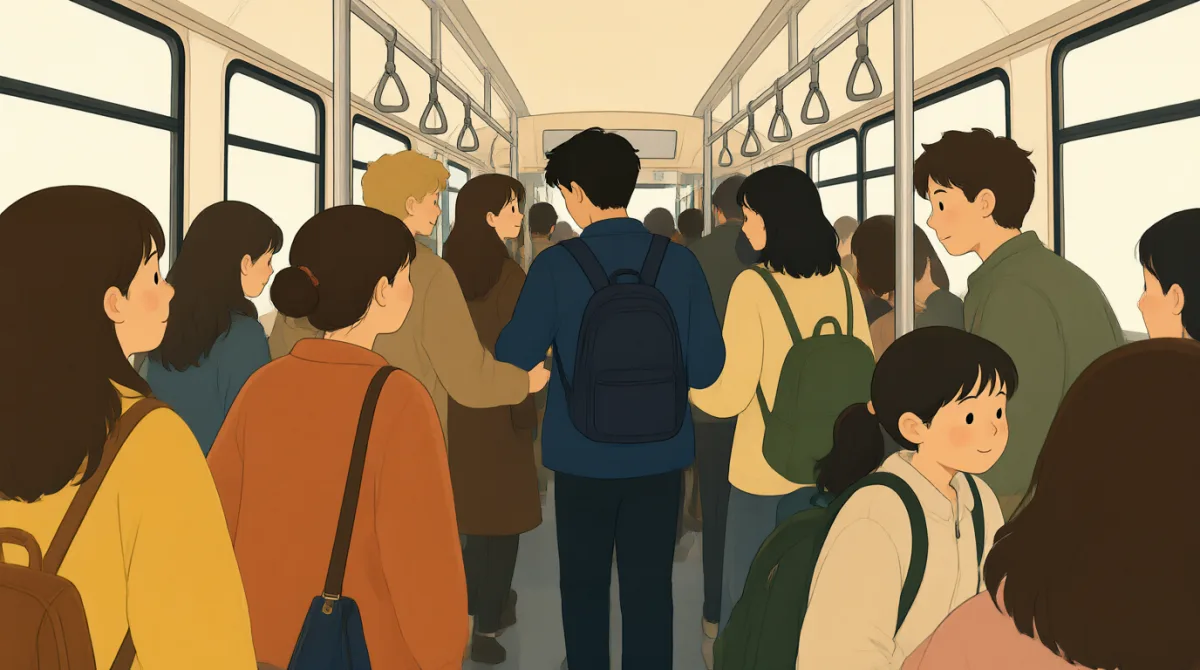

Excuse me, I need to get off at the next stop. Could you please let me through?
ขอโทษนะครับ ผมต้องลงป้ายหน้า ช่วยหลีกทางให้ผมหน่อยได้ไหมครับ

Oh, sure, just a moment. It's really packed in here, isn't it?
อ๋อ ได้สิ รอแป๊บนะ คนแน่นจริง ๆ เลยเนอะ
Tell me about it! I usually try to avoid rush hour, but not today. Thanks for moving.
นั่นสิ! ปกติผมพยายามเลี่ยงช่วงเวลาเร่งด่วน แต่วันนี้ไม่ทันแล้ว ขอบคุณที่ขยับให้นะครับ
No problem. Are you heading towards the door now?
ไม่เป็นไร ตอนนี้กำลังจะไปที่ประตูเหรอ
Yes, if I can. Just trying to secure a good spot near the exit before the doors open.
ใช่ครับ ถ้าไปได้นะ แค่พยายามหาที่ใกล้ประตูทางออกก่อนประตูจะเปิด

Mind if I squeeze by, too? I'm getting off at the same station.
ขอเบียดผ่านไปด้วยได้ไหม ฉันลงสถานีเดียวกัน
Go for it. It's a tight fit, but we'll manage. Just watch your step.
ได้เลย ที่แคบหน่อย แต่เราผ่านไปได้ ระวังเท้าด้วยนะ
Thanks! This is why I prefer the bus, less crowded sometimes.
ขอบคุณนะ! นี่แหละเหตุผลที่ฉันชอบขึ้นรถเมล์มากกว่า บางครั้งคนไม่แน่นเท่า
True, but the subway is much faster, even with all these people. Almost there.
จริง แต่รถไฟใต้ดินเร็วกว่าเยอะ ถึงคนจะเยอะขนาดนี้ก็เถอะ ใกล้ถึงแล้ว
คำศัพท์9
- excuse meขอโทษนะ
A polite way to get someone's attention or ask them to move in crowded places like public transport.
คำสุภาพที่ใช้เรียกความสนใจหรือขอให้ใครขยับให้ ในที่แออัดอย่างขนส่งสาธารณะ
- get offลงรถ
To leave a bus, train, or subway at a stop. Use it when telling others you need to exit.
ออกจากรถเมล์ รถไฟ หรือรถไฟใต้ดินที่ป้ายหรือสถานี ใช้บอกคนอื่นว่าคุณต้องลง
- next stopป้ายหน้า
The upcoming station or place where the vehicle will stop next. Common in directions on public transport.
สถานีหรือจุดถัดไปที่รถจะจอด มักใช้บอกทางหรือแจ้งจุดหมายบนขนส่งสาธารณะ
- let me throughขอทางหน่อย
A request to allow passage through a crowd. Polite for navigating tight spaces.
คำขอให้คนอื่นเปิดทางให้ผ่านฝูงชน เป็นคำพูดสุภาพที่ใช้เมื่อต้องเบียดผ่านพื้นที่แคบ
- packedแน่นขนัด
Very full or crowded with people. Describes busy public transport during peak times.
มีคนอยู่เต็มหรือแออัดมาก ใช้บรรยายขนส่งสาธารณะที่คนแน่นในช่วงเวลาเร่งด่วน
- rush hourช่วงเวลาเร่งด่วน
The busiest time of day for commuting, usually morning and evening. Best to avoid if possible to escape crowds.
ช่วงเวลาที่คนเดินทางไปทำงานหรือกลับบ้านกันมากที่สุด โดยทั่วไปคือช่วงเช้าและเย็น หากเลี่ยงได้ก็ควรเลี่ยงเพื่อไม่ต้องเจอคนแน่น
- squeeze byเบียดผ่าน
To move through a narrow or crowded space by pushing gently. Useful for getting past people.
เคลื่อนตัวผ่านพื้นที่แคบหรือแออัดโดยค่อย ๆ เบียด เหมาะกับการพูดถึงการผ่านผู้คน
- tight fitที่แคบมาก
A space that is very narrow or crowded, making it hard to move. Often used in transport contexts.
พื้นที่ที่แคบหรือแออัดจนเคลื่อนตัวลำบาก มักใช้พูดถึงการเดินทาง
- watch your stepระวังเท้า
A warning to be careful where you put your feet, especially in crowded or uneven areas to avoid tripping.
คำเตือนให้ระวังเวลาวางเท้า โดยเฉพาะในที่แออัดหรือพื้นไม่เรียบ เพื่อไม่ให้สะดุดล้ม
ประโยคสำคัญ8
- 1
Excuse me, I need to get off at the next stop. Could you please let me through?
ขอโทษนะครับ ผมต้องลงป้ายหน้า ช่วยหลีกทางให้ผมหน่อยได้ไหมครับ
This is a polite request to pass through a crowd to exit. It's useful for crowded transport; uses 'excuse me' for politeness and a question form to ask for help.
ประโยคนี้เป็นคำขออย่างสุภาพเพื่อขอผ่านฝูงชนไปลงรถ เหมาะกับการเดินทางที่แออัด โดยใช้ 'excuse me' เพื่อแสดงความสุภาพ และใช้รูปประโยคคำถามเพื่อขอความช่วยเหลือ
- 2
It's really packed in here, isn't it?
คนแน่นจริง ๆ เลยเนอะ
A casual way to comment on the crowd and agree with others. The tag question 'isn't it?' invites agreement, making conversation friendly in shared situations.
เป็นวิธีพูดสบาย ๆ เพื่อแสดงความคิดเห็นเรื่องคนแน่นและเห็นด้วยกับคนอื่น คำถามท้ายประโยค 'isn't it?' ชวนให้อีกฝ่ายเห็นด้วย ทำให้บทสนทนาเป็นกันเองในสถานการณ์ที่ต้องใช้พื้นที่ร่วมกัน
- 3
Tell me about it!
นั่นสิ!
An idiomatic expression to show strong agreement, like 'I know exactly what you mean!' Useful in everyday chats about common problems like crowds.
สำนวนที่ใช้แสดงความเห็นด้วยอย่างมาก คล้ายกับ 'I know exactly what you mean!' (เข้าใจเลยว่าคุณหมายถึงอะไร) ใช้ได้ดีในการคุยทั่วไปเกี่ยวกับปัญหาที่หลายคนเจอ เช่น คนแน่น
- 4
I usually try to avoid rush hour, but not today.
ปกติผมพยายามเลี่ยงช่วงเวลาเร่งด่วน แต่วันนี้ไม่ทันแล้ว
Explains a habit with 'usually try to avoid' and a contrast with 'but not today.' Great for discussing routines and exceptions in transport planning.
ประโยคนี้บอกความเคยชินด้วย 'usually try to avoid' และบอกความแตกต่างด้วย 'but not today.' เหมาะสำหรับพูดถึงกิจวัตรและข้อยกเว้นในการวางแผนเดินทาง
- 5
Mind if I squeeze by, too?
ขอเบียดผ่านไปด้วยได้ไหม
A polite way to ask permission to pass. 'Mind if' is a common structure for requests; use it in tight spaces to show consideration for others.
เป็นวิธีขออนุญาตผ่านอย่างสุภาพ 'Mind if' เป็นโครงสร้างที่ใช้ขอร้องกันบ่อย ใช้ในที่แคบเพื่อแสดงความเกรงใจผู้อื่น
- 6
Go for it.
ได้เลย
Informal encouragement meaning 'go ahead' or 'do it.' Short and useful for giving permission quickly in social situations like sharing space.
เป็นคำพูดไม่เป็นทางการเพื่อให้กำลังใจหรืออนุญาต หมายถึง 'go ahead' หรือ 'do it.' สั้นและมีประโยชน์เมื่อต้องอนุญาตอย่างรวดเร็วในสถานการณ์ที่ต้องใช้พื้นที่ร่วมกัน
- 7
It's a tight fit, but we'll manage.
ที่แคบหน่อย แต่เราผ่านไปได้
Acknowledges difficulty with 'tight fit' but reassures with 'we'll manage' (future tense for coping). Helps in teaming up during crowded moments.
ประโยคนี้ยอมรับว่าลำบากด้วย 'tight fit' แต่ก็ช่วยให้อุ่นใจด้วย 'we'll manage' ซึ่งใช้รูปอนาคตเพื่อบอกว่าจะรับมือได้ เหมาะกับการช่วยกันในช่วงที่คนแน่น
- 8
Just watch your step.
ระวังเท้าด้วยนะ
A simple imperative warning for safety. Use it to remind others to be careful, especially when moving in crowds or near doors.
ประโยคคำสั่งสั้น ๆ ที่ใช้เตือนเรื่องความปลอดภัย ใช้เตือนให้คนอื่นระวัง โดยเฉพาะตอนเบียดฝูงชนหรืออยู่ใกล้ประตู