Dealing with Crowded Public Transport
भीड़भाड़ वाले सार्वजनिक परिवहन में सफ़र
A passenger is trying to get on or off a crowded bus or subway car, navigating through people, or dealing with limited personal space.
एक यात्री भीड़भरी बस या मेट्रो में चढ़ने या उतरने की कोशिश कर रहा है, लोगों के बीच से रास्ता बना रहा है या निजी जगह की कमी से जूझ रहा है।
संवाद9
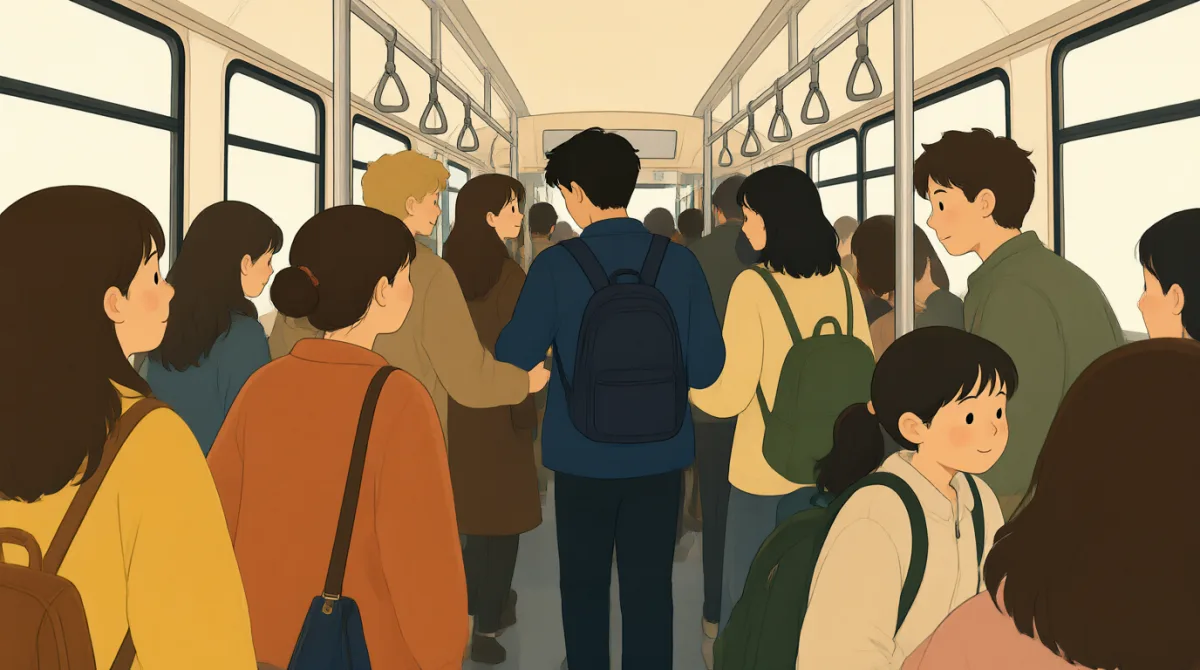

Excuse me, I need to get off at the next stop. Could you please let me through?
माफ़ कीजिए, मुझे अगले स्टॉप पर उतरना है। क्या आप कृपया मुझे रास्ता देंगे?

Oh, sure, just a moment. It's really packed in here, isn't it?
ओह, ज़रूर, बस एक मिनट। यहाँ सचमुच बहुत भीड़ है, है न?
Tell me about it! I usually try to avoid rush hour, but not today. Thanks for moving.
सच में! मैं आम तौर पर भीड़भाड़ के समय सफ़र करने से बचने की कोशिश करता हूँ, लेकिन आज नहीं बच पाया। रास्ता देने के लिए शुक्रिया।
No problem. Are you heading towards the door now?
कोई बात नहीं। क्या आप अब दरवाज़े की तरफ़ जा रहे हैं?
Yes, if I can. Just trying to secure a good spot near the exit before the doors open.
हाँ, अगर जा पाया तो। दरवाज़े खुलने से पहले बाहर निकलने के लिए अच्छी जगह पकड़ने की कोशिश कर रहा हूँ।

Mind if I squeeze by, too? I'm getting off at the same station.
क्या मैं भी ज़रा आपके पास से निकल जाऊँ? मुझे भी उसी स्टेशन पर उतरना है।
Go for it. It's a tight fit, but we'll manage. Just watch your step.
हाँ, ज़रूर। जगह बहुत कम है, लेकिन हम निकल जाएँगे। बस ध्यान से कदम रखना।
Thanks! This is why I prefer the bus, less crowded sometimes.
शुक्रिया! इसीलिए मुझे बस ज़्यादा पसंद है—कभी-कभी उसमें कम भीड़ होती है।
True, but the subway is much faster, even with all these people. Almost there.
सही है, लेकिन इतने लोगों के बावजूद मेट्रो बहुत तेज़ है। बस पहुँचने ही वाले हैं।
शब्दावली9
- excuse meमाफ़ कीजिए
A polite way to get someone's attention or ask them to move in crowded places like public transport.
भीड़भाड़ वाली जगहों, जैसे सार्वजनिक परिवहन में, किसी का ध्यान खींचने या उनसे रास्ता देने के लिए कहने का विनम्र तरीका।
- get offउतरना
To leave a bus, train, or subway at a stop. Use it when telling others you need to exit.
किसी स्टॉप पर बस, ट्रेन या मेट्रो से बाहर निकलना। दूसरों को बताने के लिए कि आपको उतरना है, इस शब्द का इस्तेमाल करें।
- next stopअगला स्टॉप
The upcoming station or place where the vehicle will stop next. Common in directions on public transport.
अगला स्टेशन या वह जगह जहाँ वाहन रुकने वाला है। सार्वजनिक परिवहन में दिशा-निर्देश देते समय यह आम तौर पर इस्तेमाल होता है।
- let me throughमुझे रास्ता दीजिए
A request to allow passage through a crowd. Polite for navigating tight spaces.
भीड़ में से गुज़रने की अनुमति माँगने का अनुरोध। तंग जगहों से निकलने के लिए यह विनम्र तरीका है।
- packedखचाखच भरा हुआ
Very full or crowded with people. Describes busy public transport during peak times.
लोगों से पूरी तरह भरा हुआ या बहुत भीड़भाड़ वाला। व्यस्त समय में सार्वजनिक परिवहन की स्थिति बताने के लिए इसका इस्तेमाल होता है।
- rush hourभीड़भाड़ का समय
The busiest time of day for commuting, usually morning and evening. Best to avoid if possible to escape crowds.
आने-जाने के लिए दिन का सबसे व्यस्त समय, आम तौर पर सुबह और शाम। भीड़ से बचने के लिए हो सके तो इस समय सफ़र न करना बेहतर है।
- squeeze byभीड़ में से निकलना
To move through a narrow or crowded space by pushing gently. Useful for getting past people.
संकीर्ण या भीड़भरी जगह में हल्का धक्का देते हुए आगे बढ़ना। लोगों के पास से निकलने के लिए यह उपयोगी है।
- tight fitबहुत तंग जगह
A space that is very narrow or crowded, making it hard to move. Often used in transport contexts.
ऐसी जगह जो बहुत संकरी या भीड़भरी हो और जहाँ चलना मुश्किल हो। परिवहन के संदर्भ में इसका इस्तेमाल अक्सर होता है।
- watch your stepसंभलकर चलना
A warning to be careful where you put your feet, especially in crowded or uneven areas to avoid tripping.
पैर कहाँ रख रहे हैं, इस बारे में सावधान रहने की चेतावनी। ठोकर से बचने के लिए भीड़भरी या ऊबड़-खाबड़ जगहों पर इसका इस्तेमाल करें।
मुख्य वाक्य8
- 1
Excuse me, I need to get off at the next stop. Could you please let me through?
माफ़ कीजिए, मुझे अगले स्टॉप पर उतरना है। क्या आप कृपया मुझे रास्ता देंगे?
This is a polite request to pass through a crowd to exit. It's useful for crowded transport; uses 'excuse me' for politeness and a question form to ask for help.
भीड़ में से निकलकर बाहर जाने के लिए रास्ता माँगने का यह विनम्र तरीका है। भीड़भरे परिवहन में यह काम आता है। इसमें विनम्रता दिखाने के लिए 'excuse me' और मदद माँगने के लिए सवाल का रूप इस्तेमाल किया गया है।
- 2
It's really packed in here, isn't it?
यहाँ सचमुच बहुत भीड़ है, है न?
A casual way to comment on the crowd and agree with others. The tag question 'isn't it?' invites agreement, making conversation friendly in shared situations.
भीड़ के बारे में बात करने और दूसरों से सहमति जताने का यह अनौपचारिक तरीका है। अंत में लगा 'isn't it?' सहमति की उम्मीद जताता है और साझा स्थिति में बातचीत को दोस्ताना बनाता है।
- 3
Tell me about it!
सच में!
An idiomatic expression to show strong agreement, like 'I know exactly what you mean!' Useful in everyday chats about common problems like crowds.
'Tell me about it!' एक मुहावरेदार अभिव्यक्ति है, जिससे आप पूरी तरह सहमत होते हैं—जैसे कहना, 'मैं अच्छी तरह समझता हूँ कि आपका क्या मतलब है!' भीड़ जैसी आम मुश्किलों के बारे में रोज़मर्रा की बातचीत में यह उपयोगी है।
- 4
I usually try to avoid rush hour, but not today.
मैं आम तौर पर भीड़भाड़ के समय सफ़र करने से बचने की कोशिश करता हूँ, लेकिन आज नहीं बच पाया।
Explains a habit with 'usually try to avoid' and a contrast with 'but not today.' Great for discussing routines and exceptions in transport planning.
'usually try to avoid' से किसी आदत के बारे में बताया जाता है और 'but not today' से उसके अपवाद के बारे में। सफ़र की दिनचर्या और योजनाओं में होने वाले बदलावों की बात करते समय यह वाक्य काम आता है।
- 5
Mind if I squeeze by, too?
क्या मैं भी ज़रा आपके पास से निकल जाऊँ?
A polite way to ask permission to pass. 'Mind if' is a common structure for requests; use it in tight spaces to show consideration for others.
जाने की अनुमति माँगने का यह विनम्र तरीका है। 'Mind if' अनुरोध करने का एक आम ढाँचा है। दूसरों का लिहाज़ दिखाने के लिए तंग जगहों में इसका इस्तेमाल करें।
- 6
Go for it.
हाँ, ज़रूर।
Informal encouragement meaning 'go ahead' or 'do it.' Short and useful for giving permission quickly in social situations like sharing space.
'Go for it.' अनौपचारिक ढंग से प्रोत्साहित करने का तरीका है, जिसका अर्थ है 'आगे बढ़िए' या 'कर लीजिए।' दूसरों के साथ जगह साझा करते समय जल्दी से अनुमति देने के लिए यह छोटा और उपयोगी वाक्य है।
- 7
It's a tight fit, but we'll manage.
जगह बहुत कम है, लेकिन हम निकल जाएँगे।
Acknowledges difficulty with 'tight fit' but reassures with 'we'll manage' (future tense for coping). Helps in teaming up during crowded moments.
'tight fit' से मुश्किल स्थिति को माना गया है, जबकि 'we'll manage' भरोसा दिलाता है कि हम संभाल लेंगे। भीड़भाड़ के समय साथ मिलकर आगे बढ़ने के लिए यह वाक्य उपयोगी है।
- 8
Just watch your step.
बस ध्यान से कदम रखना।
A simple imperative warning for safety. Use it to remind others to be careful, especially when moving in crowds or near doors.
यह सावधान रहने की एक सीधी चेतावनी है। भीड़ में या दरवाज़ों के पास चलते समय दूसरों को सतर्क करने के लिए इसका इस्तेमाल करें।