Dealing with Crowded Public Transport
應對擁擠的公共交通
A passenger is trying to get on or off a crowded bus or subway car, navigating through people, or dealing with limited personal space.
乘客試圖擠上或擠下擁擠的公共汽車或地鐵車廂,在人群中穿梭,或應對有限的個人空間。
對話9
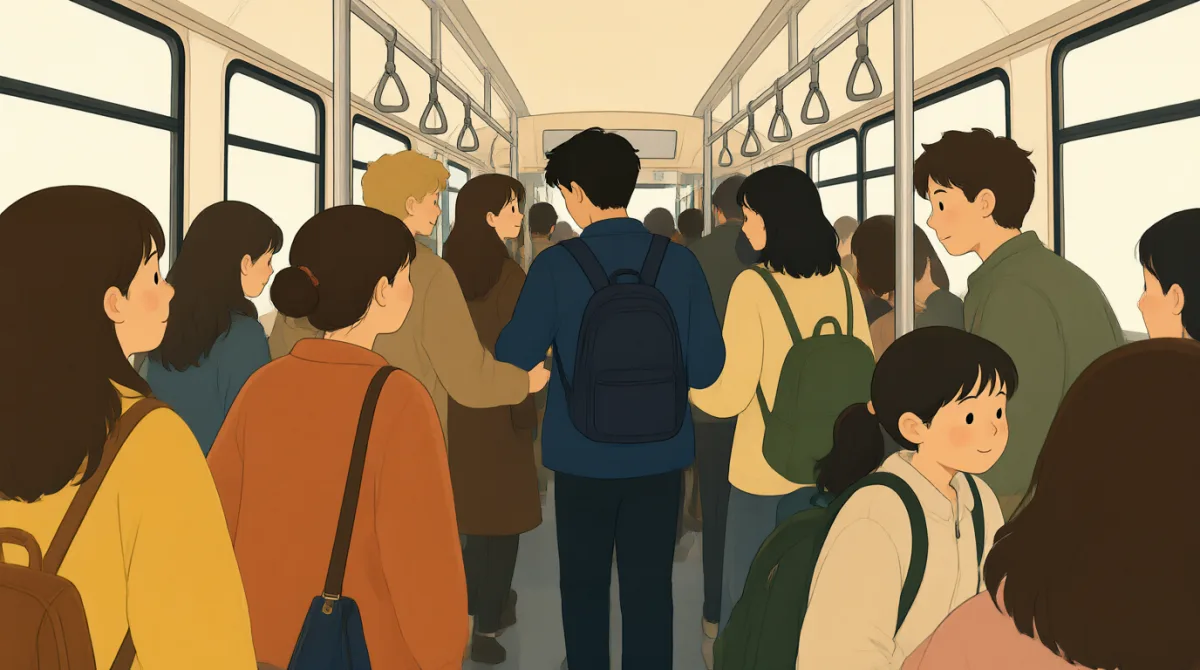

Excuse me, I need to get off at the next stop. Could you please let me through?
不好意思,我下一站要下車。您能讓我過去一下嗎?

Oh, sure, just a moment. It's really packed in here, isn't it?
哦,好的,等一下。這裡真是擠滿了人,不是嗎?
Tell me about it! I usually try to avoid rush hour, but not today. Thanks for moving.
可不是嘛!我通常都儘量避開高峰期,但今天沒辦法了。謝謝你讓開。
No problem. Are you heading towards the door now?
沒問題。你現在是要往門口走嗎?
Yes, if I can. Just trying to secure a good spot near the exit before the doors open.
是的,如果我能擠過去的話。我只是想在車門開啟前,在出口附近找個好位置。

Mind if I squeeze by, too? I'm getting off at the same station.
介意我也擠過去一下嗎?我是在同一站下車。
Go for it. It's a tight fit, but we'll manage. Just watch your step.
去吧。雖然很擠,但我們會行的。小心腳下。
Thanks! This is why I prefer the bus, less crowded sometimes.
謝謝!這就是我為什麼更喜歡坐公交車,有時沒那麼擠。
True, but the subway is much faster, even with all these people. Almost there.
確實,但地鐵快多了,即使人再多也一樣。快到了。
詞彙9
- excuse me不好意思
A polite way to get someone's attention or ask them to move in crowded places like public transport.
在公共交通等擁擠的地方,用來禮貌地引起別人的注意或請對方讓一讓。
- get off下車
To leave a bus, train, or subway at a stop. Use it when telling others you need to exit.
在某一站離開公共汽車、火車或地鐵。告訴別人你需要下車時可以用這個短語。
- next stop下一站
The upcoming station or place where the vehicle will stop next. Common in directions on public transport.
車輛接下來要停靠的車站或地點。公共交通指示中經常會用到這個說法。
- let me through讓我過去
A request to allow passage through a crowd. Polite for navigating tight spaces.
請別人讓你穿過人群的說法。在空間狹窄時,這樣請求很禮貌。
- packed擠滿了
Very full or crowded with people. Describes busy public transport during peak times.
形容裡面人很多、非常擁擠。常用來描述高峰時段擁擠的公共交通。
- rush hour高峰期
The busiest time of day for commuting, usually morning and evening. Best to avoid if possible to escape crowds.
人們上下班最集中的時段,通常是早上和傍晚。如果可以,避開這段時間就不容易遇上擁擠的人群。
- squeeze by擠過去
To move through a narrow or crowded space by pushing gently. Useful for getting past people.
輕輕擠著穿過狹窄或擁擠的空間。想從別人身邊過去時很實用。
- tight fit空間很擠
A space that is very narrow or crowded, making it hard to move. Often used in transport contexts.
指空間狹窄或人很多,讓人難以移動。這個說法常用於公共交通場景。
- watch your step小心腳下
A warning to be careful where you put your feet, especially in crowded or uneven areas to avoid tripping.
提醒別人注意腳下,尤其是在擁擠或地面不平的地方,以免絆倒。
關鍵句8
- 1
Excuse me, I need to get off at the next stop. Could you please let me through?
不好意思,我下一站要下車。您能讓我過去一下嗎?
This is a polite request to pass through a crowd to exit. It's useful for crowded transport; uses 'excuse me' for politeness and a question form to ask for help.
這是在人群中請求讓路、方便自己下車的一種禮貌說法。在擁擠的公共交通上很實用;用“Excuse me”顯得客氣,再用問句請求對方幫忙。
- 2
It's really packed in here, isn't it?
這裡真是擠滿了人,不是嗎?
A casual way to comment on the crowd and agree with others. The tag question 'isn't it?' invites agreement, making conversation friendly in shared situations.
這是隨口評論人多、並尋求對方認同的說法。句尾的反意疑問“isn't it?”會邀請對方表示贊同,讓共同經歷這種情況的人聊起來更輕鬆。
- 3
Tell me about it!
可不是嘛!
An idiomatic expression to show strong agreement, like 'I know exactly what you mean!' Useful in everyday chats about common problems like crowds.
這是表示強烈贊同的習慣說法,相當於“我太懂你的意思了!”聊到擁擠這類常見煩惱時很實用。
- 4
I usually try to avoid rush hour, but not today.
我通常都儘量避開高峰期,但今天沒辦法了。
Explains a habit with 'usually try to avoid' and a contrast with 'but not today.' Great for discussing routines and exceptions in transport planning.
用“usually try to avoid”說明平時的習慣,再用“but not today”表達轉折。聊出行安排中的日常習慣和例外情況時,這個句型很有用。
- 5
Mind if I squeeze by, too?
介意我也擠過去一下嗎?
A polite way to ask permission to pass. 'Mind if' is a common structure for requests; use it in tight spaces to show consideration for others.
這是禮貌地請求對方允許自己透過的說法。“Mind if”是常見的請求句式;在人多擁擠的地方使用,能體現對他人的體諒。
- 6
Go for it.
請便。
Informal encouragement meaning 'go ahead' or 'do it.' Short and useful for giving permission quickly in social situations like sharing space.
這是非正式的鼓勵或許可,相當於“請吧”或“去做吧”。在一起分享空間等日常場合,簡短地表示同意很方便。
- 7
It's a tight fit, but we'll manage.
雖然很擠,但我們會行的。
Acknowledges difficulty with 'tight fit' but reassures with 'we'll manage' (future tense for coping). Helps in teaming up during crowded moments.
“tight fit”承認空間狹窄、行動不便,“we'll manage”則表示安慰,意思是我們會應付過去。人多的時候,這樣說能讓彼此配合起來。
- 8
Just watch your step.
小心腳下。
A simple imperative warning for safety. Use it to remind others to be careful, especially when moving in crowds or near doors.
這是簡單直接的祈使句,用來提醒別人注意安全。在人群中移動或靠近車門時,可以用它提醒對方當心。