Asking for Directions/Help on a Train/Bus
การถามทางหรือขอความช่วยเหลือบนรถไฟหรือรถโดยสาร
A passenger is lost, needs to know their stop, or has a question about the route or connections while on a bus, train, or subway, and asks a fellow passenger or staff member for assistance.
ผู้โดยสารหลงทาง ต้องการทราบว่าต้องลงป้ายไหน หรือมีคำถามเกี่ยวกับเส้นทางหรือการต่อรถระหว่างอยู่บนรถโดยสาร รถไฟ หรือรถไฟใต้ดิน จึงขอความช่วยเหลือจากผู้โดยสารคนอื่นหรือพนักงาน
บทสนทนา7
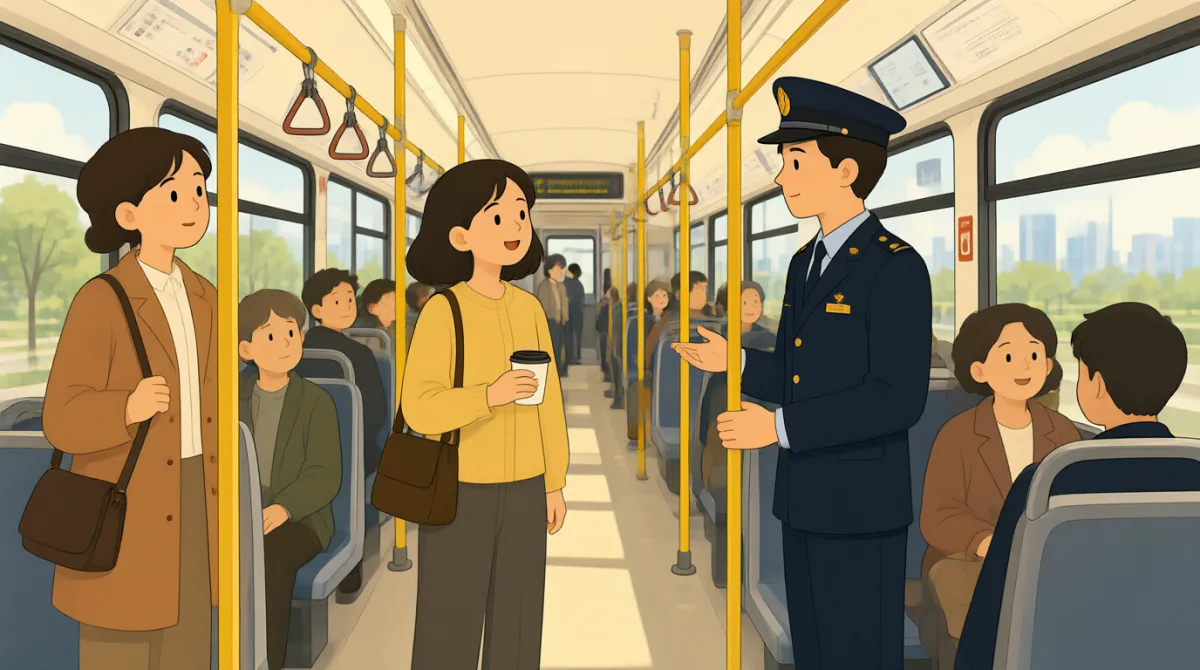

Excuse me, I hope you don't mind me asking. Is this train going towards the city center?
ขอโทษนะคะ รบกวนถามหน่อยได้ไหมคะ รถไฟขบวนนี้ไปทางใจกลางเมืองหรือเปล่าคะ

Yes, it is. This is the downtown express. Are you looking to get to a specific station?
ใช่ครับ ขบวนนี้เป็นรถด่วนเข้าเมือง คุณกำลังจะไปสถานีไหนเป็นพิเศษหรือเปล่าครับ
Oh, great! Yes, I need to get to Grand Central. How many more stops is that from here?
อ๋อ ดีจังเลยค่ะ ใช่ค่ะ ฉันต้องไปแกรนด์เซ็นทรัล จากตรงนี้ต้องนั่งไปอีกกี่ป้ายคะ
Grand Central? Let me see... we just passed 34th Street. Grand Central is actually the next stop, so you'll be getting off pretty soon.
แกรนด์เซ็นทรัลเหรอครับ ขอผมดูหน่อย... เราเพิ่งผ่านถนน 34 มาเอง จริง ๆ แล้วแกรนด์เซ็นทรัลเป็นป้ายถัดไป คุณก็ใกล้จะได้ลงแล้วครับ
Really? That's perfect! I was worried I might miss it. Thank you so much, I really appreciate your help.
จริงเหรอคะ ดีเลยค่ะ! ฉันกลัวว่าจะเลยไป ขอบคุณมากนะคะ ฉันซาบซึ้งในความช่วยเหลือของคุณจริง ๆ ค่ะ
No problem at all! Glad I could help. Just make sure to be ready, the doors open quickly.
ไม่เป็นไรเลยครับ ยินดีที่ช่วยได้ อย่าลืมเตรียมตัวไว้ให้พร้อมนะครับ ประตูเปิดแป๊บเดียว
I will. Thanks again!
ได้ค่ะ ขอบคุณอีกครั้งนะคะ!
คำศัพท์7
- excuse meขอโทษนะ
A polite way to get someone's attention when you want to ask a question, like starting a conversation on public transport.
คำสุภาพที่ใช้เรียกความสนใจของใครสักคนก่อนถามคำถาม เช่น ตอนเริ่มคุยกับผู้โดยสารคนอื่นบนรถสาธารณะ
- towardsไปทาง
Means in the direction of a place; use it when asking if something is heading to a certain area, like 'going towards the city center.'
หมายถึงมุ่งหน้าไปในทิศทางของสถานที่หนึ่ง ใช้ถามว่าสิ่งใดกำลังมุ่งหน้าไปยังบริเวณไหน เช่น 'going towards the city center' (มุ่งหน้าไปทางใจกลางเมือง)
- expressรถด่วน
A type of train or bus that goes faster and skips some stops; common in public transportation to describe quicker routes.
รถไฟหรือรถโดยสารประเภทที่วิ่งเร็วกว่าและไม่จอดบางป้าย มักใช้เรียกเส้นทางที่รวดเร็วกว่าในระบบขนส่งสาธารณะ
- stopsป้ายจอด
The places where a bus or train pauses to let people on or off; useful for asking 'how many more stops' to your destination.
สถานที่ที่รถโดยสารหรือรถไฟจอดให้ผู้โดยสารขึ้นหรือลง ใช้ถามได้ว่า 'how many more stops' (ต้องนั่งไปอีกกี่ป้าย) ก่อนถึงจุดหมาย
- getting offลงจากรถ
Means leaving the bus or train at a stop; say 'getting off at the next stop' when you plan to exit soon.
หมายถึงออกจากรถโดยสารหรือรถไฟที่ป้ายหนึ่ง พูดว่า 'getting off at the next stop' (ลงที่ป้ายถัดไป) เมื่อวางแผนว่าจะลงในไม่ช้า
- appreciateซาบซึ้ง
To feel grateful for someone's help; use it in polite thanks like 'I appreciate your help' after getting directions.
รู้สึกขอบคุณสำหรับความช่วยเหลือของใครสักคน ใช้กล่าวขอบคุณอย่างสุภาพ เช่น 'I appreciate your help' (ฉันซาบซึ้งในความช่วยเหลือของคุณ) หลังจากได้รับคำแนะนำ
- no problemไม่เป็นไร
A casual way to say 'you're welcome' or 'it's okay'; respond with this when someone thanks you for assistance.
คำตอบสบาย ๆ ที่ใช้แทนคำว่า 'ยินดี' หรือ 'ไม่เป็นไร' ใช้ตอบเมื่อมีคนขอบคุณที่ช่วยเหลือ
ประโยคสำคัญ6
- 1
Excuse me, I hope you don't mind me asking. Is this train going towards the city center?
ขอโทษนะคะ รบกวนถามหน่อยได้ไหมคะ รถไฟขบวนนี้ไปทางใจกลางเมืองหรือเปล่าคะ
This is a polite way to start asking for directions on public transport. 'Don't mind me asking' softens the request, making it courteous. Use it when interrupting someone.
นี่เป็นวิธีสุภาพในการเริ่มถามทางบนรถสาธารณะ วลี 'don't mind me asking' (คงไม่รังเกียจที่ฉันจะถามนะคะ) ช่วยทำให้คำถามฟังนุ่มนวลและสุภาพ ใช้เมื่อต้องขัดจังหวะใครสักคน
- 2
This is the downtown express. Are you looking to get to a specific station?
ขบวนนี้เป็นรถด่วนเข้าเมือง คุณกำลังจะไปสถานีไหนเป็นพิเศษหรือเปล่าครับ
Here, 'downtown express' describes a fast route to the city center. The question uses 'looking to get to' for inquiring about destinations, helpful for offering help.
ในที่นี้ 'downtown express' หมายถึงเส้นทางด่วนเข้าใจกลางเมือง คำถามใช้ 'looking to get to' เพื่อถามถึงจุดหมาย ซึ่งเหมาะเมื่อเสนอความช่วยเหลือ
- 3
How many more stops is that from here?
จากตรงนี้ต้องนั่งไปอีกกี่ป้ายคะ
A practical question for checking distance on a route. 'How many more stops' is a common pattern in transportation; 'from here' specifies the current location.
คำถามที่ใช้ได้จริงเพื่อตรวจสอบระยะทางตามเส้นทาง 'How many more stops' เป็นรูปแบบคำถามที่พบบ่อยเกี่ยวกับการเดินทาง ส่วน 'from here' ระบุตำแหน่งปัจจุบัน
- 4
Grand Central is actually the next stop, so you'll be getting off pretty soon.
แกรนด์เซ็นทรัลเป็นป้ายถัดไป คุณก็ใกล้จะได้ลงแล้วครับ
This gives clear directions using 'next stop' for immediacy and 'getting off' for exiting. 'Pretty soon' means very shortly; useful for reassuring someone.
ประโยคนี้บอกทางอย่างชัดเจน โดยใช้ 'next stop' เพื่อบอกว่าป้ายอยู่ถัดไป และ 'getting off' เพื่อหมายถึงการลงจากรถ 'Pretty soon' หมายถึงอีกไม่นาน ใช้พูดเพื่อให้ใครสักคนสบายใจได้
- 5
Thank you so much, I really appreciate your help.
ขอบคุณมากนะคะ ฉันซาบซึ้งในความช่วยเหลือของคุณจริง ๆ ค่ะ
A strong expression of thanks. 'Thank you so much' emphasizes gratitude, and 'appreciate your help' shows politeness. Use after receiving assistance.
เป็นคำกล่าวขอบคุณอย่างจริงใจ 'Thank you so much' เน้นความรู้สึกขอบคุณ ส่วน 'appreciate your help' แสดงความสุภาพ ใช้หลังจากได้รับความช่วยเหลือ
- 6
No problem at all! Glad I could help.
ไม่เป็นไรเลยครับ ยินดีที่ช่วยได้
A friendly response to thanks. 'No problem at all' is casual for 'you're welcome,' and 'glad I could help' expresses pleasure in assisting. Common in everyday interactions.
คำตอบเป็นมิตรเมื่อมีคนกล่าวขอบคุณ 'No problem at all' เป็นคำพูดสบาย ๆ ที่มีความหมายว่า 'ยินดี' ส่วน 'glad I could help' แสดงความยินดีที่ได้ช่วยเหลือ เป็นสำนวนที่ใช้กันทั่วไปในชีวิตประจำวัน