Asking for Directions/Help on a Train/Bus
طلب الاتجاهات أو المساعدة في القطار أو الحافلة
A passenger is lost, needs to know their stop, or has a question about the route or connections while on a bus, train, or subway, and asks a fellow passenger or staff member for assistance.
يريد أحد الركاب معرفة وجهته أو مكان نزوله، أو لديه سؤال عن المسار أو وسائل النقل المتصلة أثناء وجوده في حافلة أو قطار أو مترو الأنفاق، فيطلب المساعدة من راكب آخر أو أحد الموظفين.
حوار7
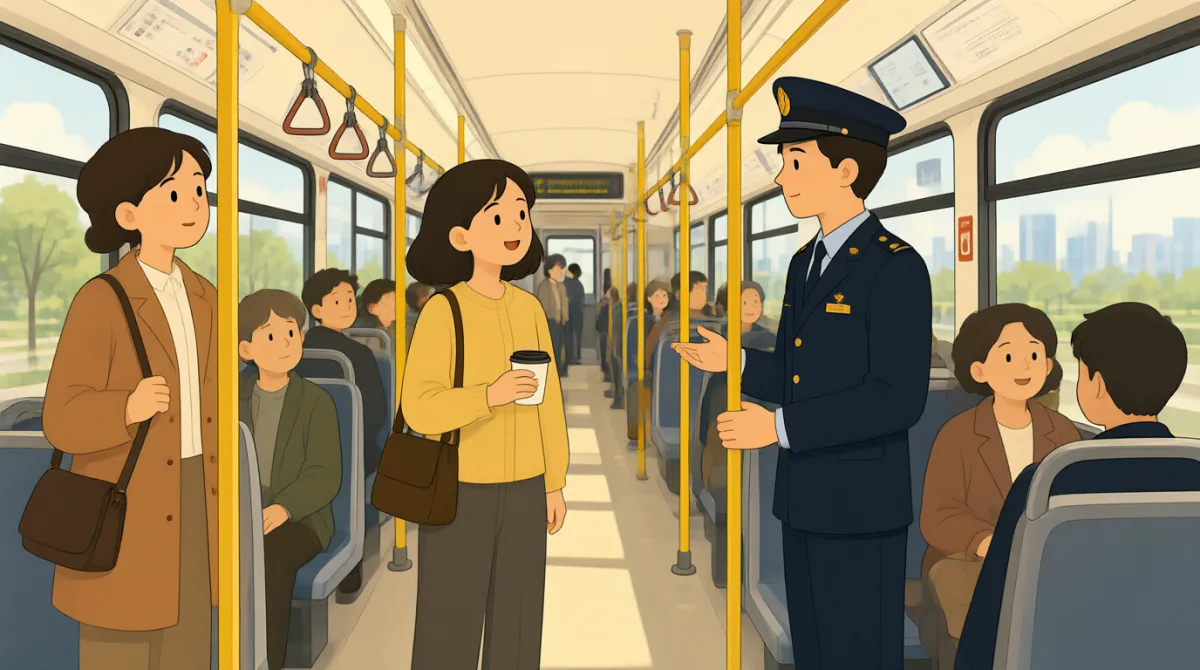

Excuse me, I hope you don't mind me asking. Is this train going towards the city center?
عذرًا، آمل ألا تمانع سؤالي. هل يتجه هذا القطار إلى وسط المدينة؟

Yes, it is. This is the downtown express. Are you looking to get to a specific station?
نعم. هذا قطار سريع إلى وسط المدينة. هل تريد الوصول إلى محطة معينة؟
Oh, great! Yes, I need to get to Grand Central. How many more stops is that from here?
رائع! نعم، أحتاج إلى الذهاب إلى غراند سنترال. كم محطة تفصلنا عنها من هنا؟
Grand Central? Let me see... we just passed 34th Street. Grand Central is actually the next stop, so you'll be getting off pretty soon.
غراند سنترال؟ دعيني أرى... تجاوزنا للتو محطة شارع 34. في الواقع، غراند سنترال هي المحطة التالية، لذا ستنزلين بعد قليل.
Really? That's perfect! I was worried I might miss it. Thank you so much, I really appreciate your help.
حقًا؟ هذا ممتاز! كنت أخشى أن تفوتني المحطة. شكرًا جزيلًا، أقدّر مساعدتك حقًا.
No problem at all! Glad I could help. Just make sure to be ready, the doors open quickly.
لا شكر على واجب! يسعدني أنني استطعت مساعدتك. فقط كوني مستعدة، فالأبواب تُفتح بسرعة.
I will. Thanks again!
سأفعل. شكرًا مرة أخرى!
المفردات7
- excuse meعذرًا
A polite way to get someone's attention when you want to ask a question, like starting a conversation on public transport.
عبارة مهذبة للفت انتباه شخص عندما تريد سؤاله، مثل بدء حديث في وسائل النقل العام.
- towardsباتجاه
Means in the direction of a place; use it when asking if something is heading to a certain area, like 'going towards the city center.'
تعني في اتجاه مكان ما. استخدمها للسؤال عما إذا كان شيء ما يتجه إلى منطقة معينة، مثل 'going towards the city center' (يتجه إلى وسط المدينة).
- expressسريع
A type of train or bus that goes faster and skips some stops; common in public transportation to describe quicker routes.
نوع من القطارات أو الحافلات يسير بسرعة أكبر ويتجاوز بعض المحطات. تُستخدم الكلمة كثيرًا في وسائل النقل العام لوصف المسارات الأسرع.
- stopsمحطات
The places where a bus or train pauses to let people on or off; useful for asking 'how many more stops' to your destination.
الأماكن التي تتوقف فيها الحافلة أو القطار لركوب الركاب أو نزولهم. تفيد هذه الكلمة عند السؤال عن 'how many more stops' (كم محطة أخرى) قبل الوصول إلى وجهتك.
- getting offالنزول
Means leaving the bus or train at a stop; say 'getting off at the next stop' when you plan to exit soon.
تعني مغادرة الحافلة أو القطار عند إحدى المحطات. يمكنك قول 'getting off at the next stop' (سأنزل في المحطة التالية) عندما تخطط للنزول قريبًا.
- appreciateيقدّر
To feel grateful for someone's help; use it in polite thanks like 'I appreciate your help' after getting directions.
أن تشعر بالامتنان لمساعدة شخص ما. استخدمها في عبارات الشكر المهذبة مثل 'I appreciate your help' (أقدّر مساعدتك) بعد أن يرشدك أحدهم.
- no problemلا مشكلة
A casual way to say 'you're welcome' or 'it's okay'; respond with this when someone thanks you for assistance.
عبارة غير رسمية تعني «على الرحب والسعة» أو «لا بأس». يمكنك الرد بها عندما يشكرك أحدهم على مساعدته.
الجمل الأساسية6
- 1
Excuse me, I hope you don't mind me asking. Is this train going towards the city center?
عذرًا، آمل ألا تمانع سؤالي. هل يتجه هذا القطار إلى وسط المدينة؟
This is a polite way to start asking for directions on public transport. 'Don't mind me asking' softens the request, making it courteous. Use it when interrupting someone.
هذه طريقة مهذبة لبدء السؤال عن الاتجاهات في وسائل النقل العام. تخفف عبارة 'Don't mind me asking' (آمل ألا تمانع سؤالي) من وقع الطلب، فتجعله أكثر لطفًا. استخدمها عندما تقاطع شخصًا لتسأله.
- 2
This is the downtown express. Are you looking to get to a specific station?
هذا قطار سريع إلى وسط المدينة. هل تريد الوصول إلى محطة معينة؟
Here, 'downtown express' describes a fast route to the city center. The question uses 'looking to get to' for inquiring about destinations, helpful for offering help.
تصف عبارة 'downtown express' هنا مسارًا سريعًا إلى وسط المدينة. ويُستخدم التعبير 'looking to get to' للسؤال عن الوجهات، وهو مفيد عند عرض المساعدة.
- 3
How many more stops is that from here?
كم محطة تفصلنا عنها من هنا؟
A practical question for checking distance on a route. 'How many more stops' is a common pattern in transportation; 'from here' specifies the current location.
سؤال عملي لمعرفة المسافة المتبقية على المسار. تُستخدم صيغة 'How many more stops' كثيرًا في سياق المواصلات، وتحدد عبارة 'from here' موقعك الحالي.
- 4
Grand Central is actually the next stop, so you'll be getting off pretty soon.
في الواقع، غراند سنترال هي المحطة التالية، لذا ستنزلين بعد قليل.
This gives clear directions using 'next stop' for immediacy and 'getting off' for exiting. 'Pretty soon' means very shortly; useful for reassuring someone.
تعطي هذه الجملة إرشادات واضحة باستخدام 'next stop' للدلالة على قرب المحطة، و'getting off' للدلالة على النزول. تعني 'Pretty soon' بعد وقت قصير جدًا، وهي مفيدة لطمأنة شخص ما.
- 5
Thank you so much, I really appreciate your help.
شكرًا جزيلًا، أقدّر مساعدتك حقًا.
A strong expression of thanks. 'Thank you so much' emphasizes gratitude, and 'appreciate your help' shows politeness. Use after receiving assistance.
عبارة قوية للتعبير عن الشكر. تؤكد 'Thank you so much' الامتنان، وتُظهر 'appreciate your help' الأدب والتقدير. استخدم هذه العبارة بعد تلقي المساعدة.
- 6
No problem at all! Glad I could help.
لا شكر على واجب! يسعدني أنني استطعت مساعدتك.
A friendly response to thanks. 'No problem at all' is casual for 'you're welcome,' and 'glad I could help' expresses pleasure in assisting. Common in everyday interactions.
ردّ ودود على الشكر. تُستخدم 'No problem at all' بشكل غير رسمي بمعنى «على الرحب والسعة»، وتعبّر 'glad I could help' عن السرور بتقديم المساعدة. وهما شائعتان في التعاملات اليومية.