Asking for Directions/Help on a Train/Bus
ट्रेन/बस में रास्ता या मदद पूछना
A passenger is lost, needs to know their stop, or has a question about the route or connections while on a bus, train, or subway, and asks a fellow passenger or staff member for assistance.
बस, ट्रेन या मेट्रो में कोई यात्री रास्ता भटक जाता है, अपना स्टॉप जानना चाहता है या रास्ते अथवा कनेक्शन के बारे में कुछ पूछना चाहता है। वह मदद के लिए किसी सहयात्री या कर्मचारी से पूछता है।
संवाद7
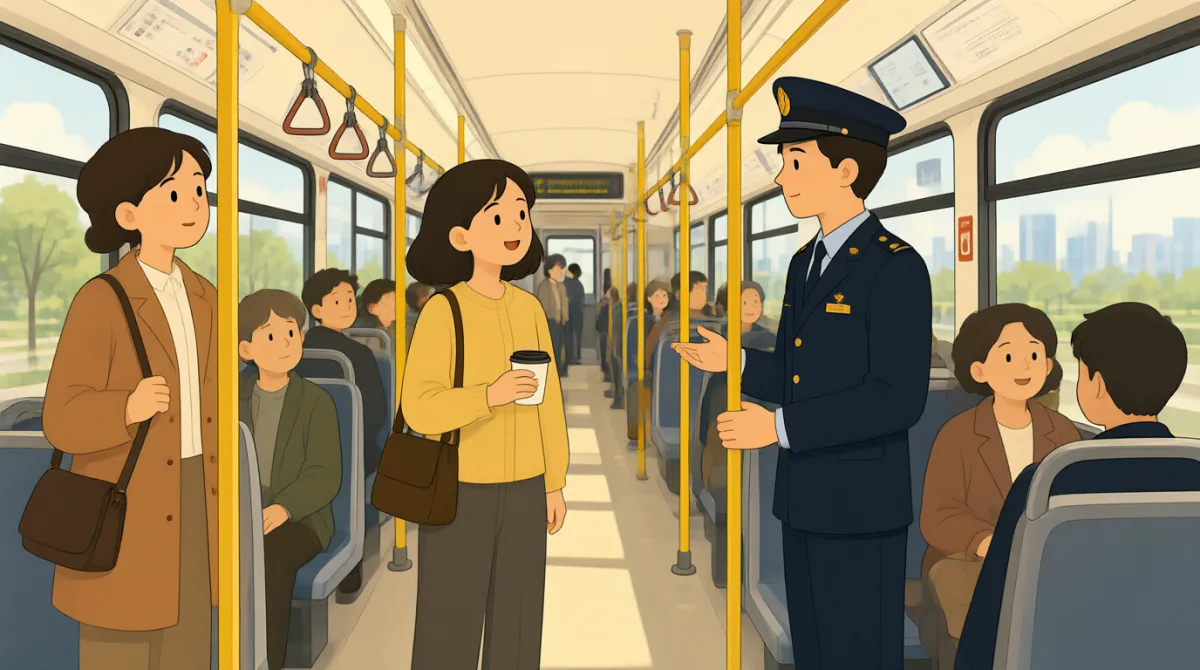

Excuse me, I hope you don't mind me asking. Is this train going towards the city center?
माफ़ कीजिए, उम्मीद है आपको मेरे पूछने से कोई परेशानी नहीं होगी। क्या यह ट्रेन शहर के केंद्र की ओर जा रही है?

Yes, it is. This is the downtown express. Are you looking to get to a specific station?
हाँ, जा रही है। यह डाउनटाउन एक्सप्रेस है। क्या आपको किसी खास स्टेशन पर जाना है?
Oh, great! Yes, I need to get to Grand Central. How many more stops is that from here?
ओह, बढ़िया! हाँ, मुझे ग्रैंड सेंट्रल जाना है। यहाँ से वहाँ तक कितने स्टॉप और हैं?
Grand Central? Let me see... we just passed 34th Street. Grand Central is actually the next stop, so you'll be getting off pretty soon.
ग्रैंड सेंट्रल? मुझे देखने दीजिए... हम अभी 34वीं स्ट्रीट से गुज़रे हैं। ग्रैंड सेंट्रल तो अगला ही स्टॉप है, इसलिए आपको बहुत जल्द उतरना होगा।
Really? That's perfect! I was worried I might miss it. Thank you so much, I really appreciate your help.
सच में? बहुत अच्छा! मुझे डर था कि कहीं मेरा स्टॉप छूट न जाए। आपका बहुत-बहुत धन्यवाद, आपने मेरी सचमुच बहुत मदद की।
No problem at all! Glad I could help. Just make sure to be ready, the doors open quickly.
कोई बात नहीं! मदद करके खुशी हुई। बस उतरने के लिए तैयार रहिएगा, दरवाज़े जल्दी खुलते हैं।
I will. Thanks again!
जी, बिल्कुल। फिर से धन्यवाद!
शब्दावली7
- excuse meमाफ़ कीजिए
A polite way to get someone's attention when you want to ask a question, like starting a conversation on public transport.
किसी से सवाल पूछने के लिए उसका ध्यान विनम्रता से खींचने का तरीका। सार्वजनिक परिवहन में बातचीत शुरू करते समय इसका इस्तेमाल कर सकते हैं।
- towardsकी ओर
Means in the direction of a place; use it when asking if something is heading to a certain area, like 'going towards the city center.'
इसका मतलब है किसी जगह की दिशा में। यह पूछते समय इसका इस्तेमाल करें कि कोई चीज़ किसी खास इलाके की तरफ़ जा रही है या नहीं, जैसे 'going towards the city center.'
- expressएक्सप्रेस ट्रेन/बस
A type of train or bus that goes faster and skips some stops; common in public transportation to describe quicker routes.
ऐसी ट्रेन या बस जो तेज़ चलती है और कुछ स्टॉप छोड़ देती है। सार्वजनिक परिवहन में तेज़ रास्तों के लिए इस शब्द का इस्तेमाल होता है।
- stopsस्टॉप
The places where a bus or train pauses to let people on or off; useful for asking 'how many more stops' to your destination.
वे जगहें जहाँ बस या ट्रेन यात्रियों को चढ़ाने या उतारने के लिए रुकती है। अपनी मंज़िल तक कितने स्टॉप बाकी हैं, यह पूछने के लिए 'how many more stops' कह सकते हैं।
- getting offउतरना
Means leaving the bus or train at a stop; say 'getting off at the next stop' when you plan to exit soon.
बस या ट्रेन के किसी स्टॉप पर बाहर निकलना। अगर आप जल्द ही उतरने वाले हैं, तो 'getting off at the next stop' कहें।
- appreciateआभारी होना
To feel grateful for someone's help; use it in polite thanks like 'I appreciate your help' after getting directions.
किसी की मदद के लिए कृतज्ञ महसूस करना। रास्ता बताने के बाद विनम्रता से धन्यवाद देते हुए 'I appreciate your help' कह सकते हैं।
- no problemकोई बात नहीं
A casual way to say 'you're welcome' or 'it's okay'; respond with this when someone thanks you for assistance.
'आपका स्वागत है' या 'कोई परेशानी नहीं' कहने का अनौपचारिक तरीका। जब कोई मदद के लिए धन्यवाद कहे, तो आप जवाब में इसका इस्तेमाल कर सकते हैं।
मुख्य वाक्य6
- 1
Excuse me, I hope you don't mind me asking. Is this train going towards the city center?
माफ़ कीजिए, उम्मीद है आपको मेरे पूछने से कोई परेशानी नहीं होगी। क्या यह ट्रेन शहर के केंद्र की ओर जा रही है?
This is a polite way to start asking for directions on public transport. 'Don't mind me asking' softens the request, making it courteous. Use it when interrupting someone.
सार्वजनिक परिवहन में रास्ता पूछना शुरू करने का यह एक विनम्र तरीका है। 'Don't mind me asking' सवाल को नरम और शिष्ट बनाता है। किसी की बात बीच में रोककर पूछते समय इसका इस्तेमाल करें।
- 2
This is the downtown express. Are you looking to get to a specific station?
यह डाउनटाउन एक्सप्रेस है। क्या आपको किसी खास स्टेशन पर जाना है?
Here, 'downtown express' describes a fast route to the city center. The question uses 'looking to get to' for inquiring about destinations, helpful for offering help.
यहाँ 'downtown express' शहर के केंद्र तक जाने वाले तेज़ रास्ते को बताता है। किसी की मंज़िल पूछने के लिए 'looking to get to' का इस्तेमाल होता है; मदद की पेशकश करते समय यह काम आता है।
- 3
How many more stops is that from here?
यहाँ से वहाँ तक कितने स्टॉप और हैं?
A practical question for checking distance on a route. 'How many more stops' is a common pattern in transportation; 'from here' specifies the current location.
रास्ते में दूरी जानने के लिए यह एक उपयोगी सवाल है। सार्वजनिक परिवहन में 'How many more stops' आम तौर पर पूछा जाता है; 'from here' बताता है कि आप अभी कहाँ हैं।
- 4
Grand Central is actually the next stop, so you'll be getting off pretty soon.
ग्रैंड सेंट्रल तो अगला ही स्टॉप है, इसलिए आपको बहुत जल्द उतरना होगा।
This gives clear directions using 'next stop' for immediacy and 'getting off' for exiting. 'Pretty soon' means very shortly; useful for reassuring someone.
'next stop' से बताया जाता है कि मंज़िल बस आने ही वाली है, और 'getting off' का मतलब है उतरना। 'Pretty soon' का अर्थ है बहुत जल्द। किसी को आश्वस्त करने के लिए यह वाक्य उपयोगी है।
- 5
Thank you so much, I really appreciate your help.
आपका बहुत-बहुत धन्यवाद, आपने मेरी सचमुच बहुत मदद की।
A strong expression of thanks. 'Thank you so much' emphasizes gratitude, and 'appreciate your help' shows politeness. Use after receiving assistance.
धन्यवाद देने का यह एक प्रभावशाली तरीका है। 'Thank you so much' आभार पर ज़ोर देता है और 'appreciate your help' विनम्रता दिखाता है। मदद मिलने के बाद इसका इस्तेमाल करें।
- 6
No problem at all! Glad I could help.
कोई बात नहीं! मदद करके खुशी हुई।
A friendly response to thanks. 'No problem at all' is casual for 'you're welcome,' and 'glad I could help' expresses pleasure in assisting. Common in everyday interactions.
धन्यवाद के जवाब में यह दोस्ताना प्रतिक्रिया है। 'No problem at all' अनौपचारिक ढंग से 'आपका स्वागत है' कहता है, और 'glad I could help' से पता चलता है कि मदद करके खुशी हुई। रोज़मर्रा की बातचीत में ये आम हैं।