Putting Bags on the Bus
Colocando as malas no ônibus
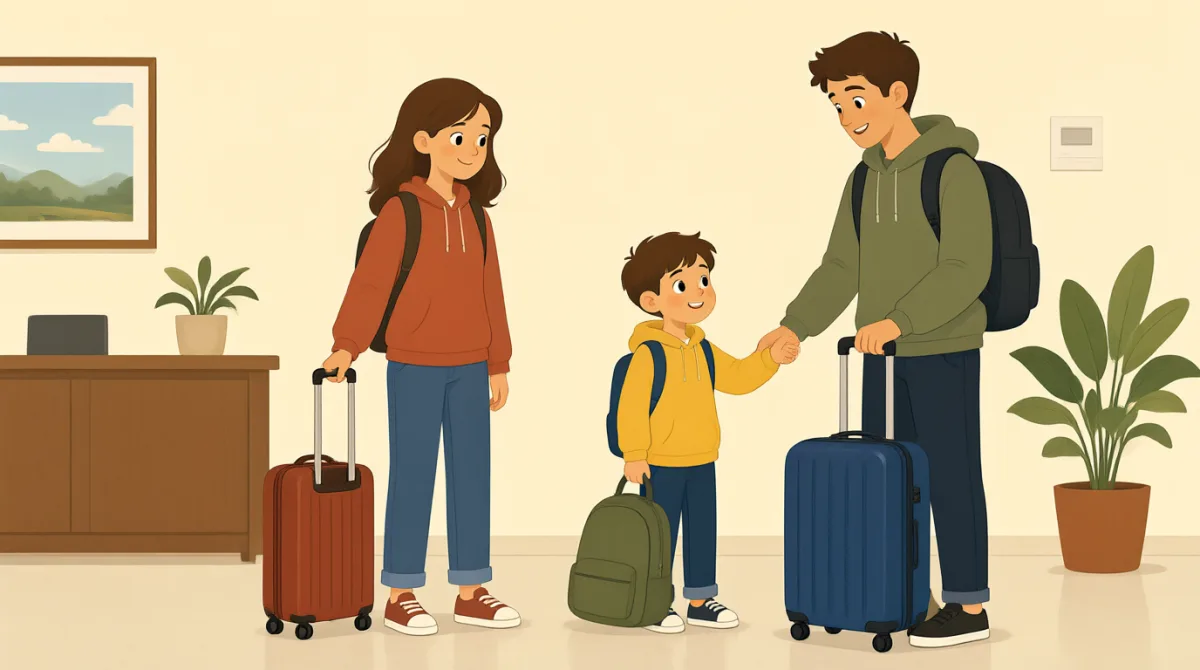
Emma and Leo put their bags on the shuttle. David helps them with a suitcase and checks that everyone is ready.
Emma e Leo colocam as malas no ônibus. David os ajuda com uma mala e confere se todos estão prontos.
Diálogo9

Leo, can you help me put my suitcase on the shuttle?
Leo, você pode me ajudar a colocar minha mala no ônibus?

Sure! I'll lift this one. You can put your bag by the door.
Claro! Vou levantar esta aqui. Você pode colocar sua bolsa perto da porta.

Careful with that suitcase. I'll help you lift it into the luggage area.
Cuidado com essa mala. Vou ajudar você a colocá-la no compartimento de bagagem.
Thanks, David. Should we keep our small bags with us?
Obrigado, David. Devemos ficar com nossas bolsas menores?
Yes, please keep those with you. There is more room inside the shuttle.
Sim, por favor, fiquem com elas. Há mais espaço dentro do ônibus.
I've put my backpack on my seat. Are we ready to go?
Coloquei minha mochila no meu assento. Já podemos ir?
Almost. Please check that you have everything, then get on the shuttle.
Quase. Confiram se estão com tudo e depois entrem no ônibus.
I have my phone and my bag. Leo, do you have your ticket?
Estou com meu celular e minha bolsa. Leo, você está com sua passagem?
Yes, I have it. Let's get on before I forget anything else!
Sim, estou com ela. Vamos entrar antes que eu esqueça mais alguma coisa!
Vocabulário8
- put my suitcase on the shuttlecolocar minha mala no ônibus
To place your suitcase on the shuttle. Use this phrase when asking someone to help you load your luggage.
Colocar sua mala no ônibus. Use essa expressão ao pedir ajuda para colocar sua bagagem no veículo.
- lift it into the luggage areacolocá-la no compartimento de bagagem
To pick something up and put it in the place for suitcases. You can use “lift it into” when moving a heavy item into a space.
Pegar algo e colocá-lo no espaço destinado às malas. Você pode usar “lift it into” ao colocar um objeto pesado em algum espaço.
- keep those with youficar com elas
To hold on to some items and not put them away. Use this phrase for small bags or other things you want to keep close.
Manter alguns objetos com você em vez de guardá-los. Use essa expressão para falar de bolsas pequenas ou outras coisas que você quer manter por perto.
- I've put my backpack on my seat.Coloquei minha mochila no meu assento.
This means the speaker has placed their backpack on a seat. Use “I've put” to say something is already in a particular place.
Isso quer dizer que a pessoa colocou a mochila em um assento. Use “I've put” para dizer que algo já está em determinado lugar.
- check that you have everythingconferir se você está com tudo
To make sure you haven't forgotten anything. This is useful before leaving or getting on a bus.
Verificar se você não esqueceu nada. Essa expressão é útil antes de sair ou entrar em um ônibus.
- get on the shuttleentrar no ônibus
To enter the shuttle and travel on it. Use “get on” for buses, trains, and other forms of public transport.
Entrar no ônibus para viajar nele. Use “get on” para ônibus, trens e outros meios de transporte público.
- Are we ready to go?Já podemos ir?
A way to ask if everyone is prepared to leave. You can use this question before starting a trip.
Uma forma de perguntar se todos estão prontos para sair. Você pode usar essa pergunta antes de começar uma viagem.
- Do you have your ticket?Você está com sua passagem?
A way to check whether someone has their ticket. You can use this question before boarding transport or entering an event.
Uma forma de verificar se alguém está com a passagem. Você pode usar essa pergunta antes de embarcar ou entrar em um evento.
Frases-chave6
- 1
Leo, can you help me put my suitcase on the shuttle?
Leo, você pode me ajudar a colocar minha mala no ônibus?
This is a polite way to ask someone for help. You can reuse “Can you help me [action]?” for everyday tasks.
Essa é uma forma educada de pedir ajuda. Você pode usar “Can you help me [action]?” para falar de tarefas do dia a dia.
- 2
I'll help you lift it into the luggage area.
Vou ajudar você a colocá-la no compartimento de bagagem.
This offers help with a specific task. Use “I'll help you [action]” when you decide to assist someone.
Essa frase oferece ajuda com uma tarefa específica. Use “I'll help you [action]” quando decidir ajudar alguém.
- 3
Should we keep our small bags with us?
Devemos ficar com nossas bolsas menores?
This asks whether it is better to keep something nearby. You can use “Should we...?” to ask for advice or instructions.
Essa pergunta é usada para saber se é melhor manter algo por perto. Você pode usar “Should we...?” para pedir conselho ou instruções.
- 4
Please check that you have everything, then get on the shuttle.
Por favor, confiram se estão com tudo e depois entrem no ônibus.
This gives two clear instructions: make sure nothing is missing, and then board. You can use “Please check that...” before leaving a place.
Essa frase dá duas instruções claras: verificar se não está faltando nada e depois embarcar. Você pode usar “Please check that...” antes de sair de algum lugar.
- 5
I have my phone and my bag.
Estou com meu celular e minha bolsa.
This tells someone which belongings you have with you. You can use “I have my...” to confirm you have important items.
Essa frase informa a alguém quais objetos você está levando. Você pode usar “I have my...” para confirmar que está com itens importantes.
- 6
Leo, do you have your ticket?
Leo, você está com sua passagem?
This checks whether someone has an important item before departure. You can replace “ticket” with another item, such as “passport” or “keys”.
Essa pergunta verifica se alguém está com um item importante antes da partida. Você pode substituir “ticket” por outro item, como “passport” ou “keys”.