Putting Bags on the Bus
बस में सामान रखना
Emma and Leo put their bags on the shuttle. David helps them with a suitcase and checks that everyone is ready.
एमा और लियो अपना सामान शटल में रखते हैं। डेविड सूटकेस रखने में उनकी मदद करता है और देखता है कि सब तैयार हैं या नहीं।
संवाद9
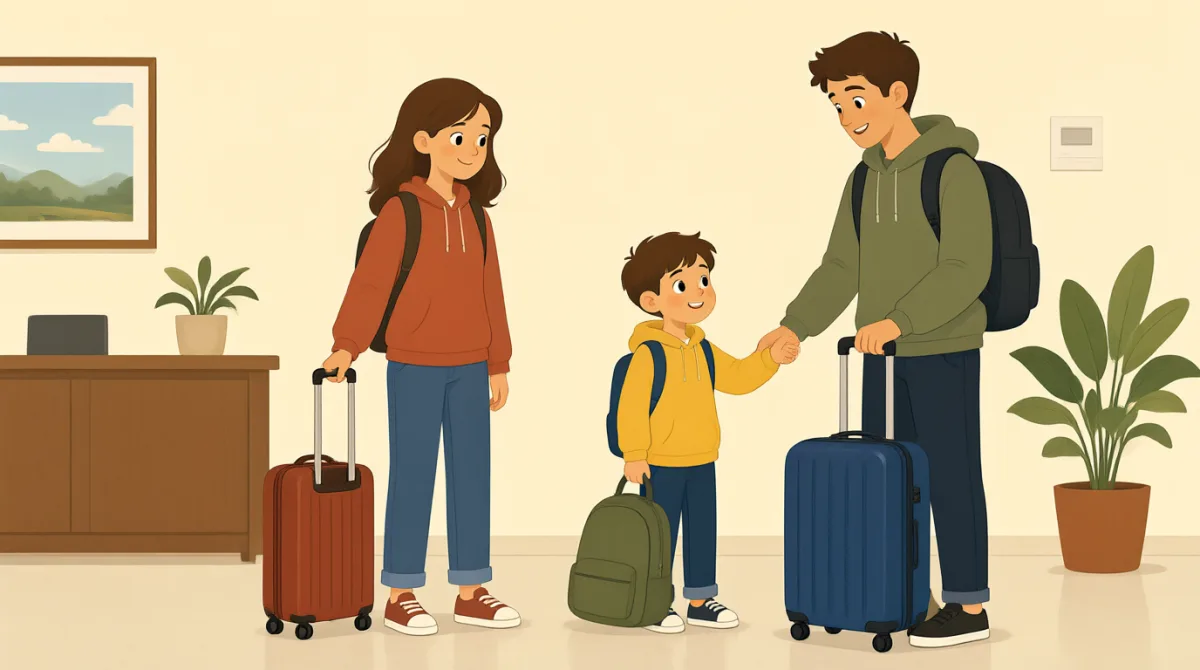

Leo, can you help me put my suitcase on the shuttle?
लियो, क्या तुम मेरा सूटकेस शटल में रखने में मेरी मदद कर सकते हो?

Sure! I'll lift this one. You can put your bag by the door.
ज़रूर! मैं यह वाला उठा देता हूँ। तुम अपना बैग दरवाज़े के पास रख दो।

Careful with that suitcase. I'll help you lift it into the luggage area.
उस सूटकेस को संभालकर। इसे सामान रखने की जगह में उठाने में मैं तुम्हारी मदद करता हूँ।
Thanks, David. Should we keep our small bags with us?
धन्यवाद, डेविड। क्या हमें अपने छोटे बैग अपने पास रखने चाहिए?
Yes, please keep those with you. There is more room inside the shuttle.
हाँ, कृपया उन्हें अपने पास ही रखिए। शटल के अंदर ज़्यादा जगह है।
I've put my backpack on my seat. Are we ready to go?
मैंने अपना बैकपैक अपनी सीट पर रख दिया है। क्या हम चलने के लिए तैयार हैं?
Almost. Please check that you have everything, then get on the shuttle.
लगभग। कृपया देख लीजिए कि आपके पास सब कुछ है, फिर शटल में चढ़ जाइए।
I have my phone and my bag. Leo, do you have your ticket?
मेरे पास मेरा फ़ोन और बैग है। लियो, तुम्हारे पास टिकट है?
Yes, I have it. Let's get on before I forget anything else!
हाँ, मेरे पास है। इससे पहले कि मैं कुछ और भूल जाऊँ, चलो शटल में चढ़ते हैं!
शब्दावली8
- put my suitcase on the shuttleअपना सूटकेस शटल में रखना
To place your suitcase on the shuttle. Use this phrase when asking someone to help you load your luggage.
सूटकेस को शटल में रखना। सामान चढ़ाने में किसी से मदद माँगते समय इस वाक्यांश का इस्तेमाल करें।
- lift it into the luggage areaउसे सामान रखने की जगह में उठाकर रखना
To pick something up and put it in the place for suitcases. You can use “lift it into” when moving a heavy item into a space.
किसी चीज़ को उठाकर सूटकेस रखने की जगह में रखना। किसी भारी चीज़ को जगह के अंदर ले जाकर रखने के लिए “lift it into” का इस्तेमाल कर सकते हैं।
- keep those with youउन्हें अपने पास रखना
To hold on to some items and not put them away. Use this phrase for small bags or other things you want to keep close.
कुछ चीज़ें अपने पास रखना, उन्हें कहीं और न रख देना। छोटे बैग या ऐसी चीज़ों के लिए इस वाक्यांश का इस्तेमाल करें जिन्हें आप पास रखना चाहते हैं।
- I've put my backpack on my seat.मैंने अपना बैकपैक अपनी सीट पर रख दिया है।
This means the speaker has placed their backpack on a seat. Use “I've put” to say something is already in a particular place.
इसका मतलब है कि बोलने वाले ने अपना बैकपैक सीट पर रख दिया है। किसी चीज़ के पहले से किसी जगह पर होने की बात बताने के लिए “I've put” का इस्तेमाल करें।
- check that you have everythingदेख लेना कि तुम्हारे पास सब कुछ है
To make sure you haven't forgotten anything. This is useful before leaving or getting on a bus.
यह पक्का करना कि आप कुछ भी भूल नहीं गए हैं। कहीं से निकलने या बस में चढ़ने से पहले यह कहना उपयोगी है।
- get on the shuttleशटल में चढ़ना
To enter the shuttle and travel on it. Use “get on” for buses, trains, and other forms of public transport.
शटल में चढ़कर उसमें सफ़र करना। बस, ट्रेन और सार्वजनिक परिवहन के दूसरे साधनों में चढ़ने के लिए “get on” का इस्तेमाल करें।
- Are we ready to go?क्या हम चलने के लिए तैयार हैं?
A way to ask if everyone is prepared to leave. You can use this question before starting a trip.
यह पूछने का एक तरीका कि क्या सब लोग निकलने के लिए तैयार हैं। यात्रा शुरू करने से पहले आप यह सवाल पूछ सकते हैं।
- Do you have your ticket?क्या तुम्हारे पास टिकट है?
A way to check whether someone has their ticket. You can use this question before boarding transport or entering an event.
यह जानने का एक तरीका कि किसी के पास उसका टिकट है या नहीं। वाहन में चढ़ने या किसी कार्यक्रम में जाने से पहले यह सवाल पूछ सकते हैं।
मुख्य वाक्य6
- 1
Leo, can you help me put my suitcase on the shuttle?
लियो, क्या तुम मेरा सूटकेस शटल में रखने में मेरी मदद कर सकते हो?
This is a polite way to ask someone for help. You can reuse “Can you help me [action]?” for everyday tasks.
किसी से मदद माँगने का यह एक विनम्र तरीका है। रोज़मर्रा के कामों के लिए “Can you help me [action]?” का दोबारा इस्तेमाल कर सकते हैं।
- 2
I'll help you lift it into the luggage area.
इसे सामान रखने की जगह में उठाने में मैं तुम्हारी मदद करता हूँ।
This offers help with a specific task. Use “I'll help you [action]” when you decide to assist someone.
यह किसी खास काम में मदद करने की पेशकश है। जब आप किसी की मदद करने का फ़ैसला करें, तो “I'll help you [action]” का इस्तेमाल करें।
- 3
Should we keep our small bags with us?
क्या हमें अपने छोटे बैग अपने पास रखने चाहिए?
This asks whether it is better to keep something nearby. You can use “Should we...?” to ask for advice or instructions.
यह पूछने के लिए कि क्या किसी चीज़ को पास रखना बेहतर होगा। सलाह या निर्देश माँगने के लिए “Should we...?” का इस्तेमाल कर सकते हैं।
- 4
Please check that you have everything, then get on the shuttle.
कृपया देख लीजिए कि आपके पास सब कुछ है, फिर शटल में चढ़ जाइए।
This gives two clear instructions: make sure nothing is missing, and then board. You can use “Please check that...” before leaving a place.
इसमें दो साफ़ निर्देश दिए गए हैं: यह पक्का करें कि कुछ छूटा नहीं है, फिर वाहन में चढ़ें। किसी जगह से निकलने से पहले “Please check that...” का इस्तेमाल कर सकते हैं।
- 5
I have my phone and my bag.
मेरे पास मेरा फ़ोन और बैग है।
This tells someone which belongings you have with you. You can use “I have my...” to confirm you have important items.
इससे आप किसी को बताते हैं कि आपके पास कौन-सी चीज़ें हैं। ज़रूरी चीज़ें पास होने की पुष्टि करने के लिए “I have my...” का इस्तेमाल कर सकते हैं।
- 6
Leo, do you have your ticket?
लियो, तुम्हारे पास टिकट है?
This checks whether someone has an important item before departure. You can replace “ticket” with another item, such as “passport” or “keys”.
यह रवाना होने से पहले पता करता है कि किसी के पास ज़रूरी चीज़ है या नहीं। “ticket” की जगह “passport” या “keys” जैसी दूसरी चीज़ रख सकते हैं।