Putting Bags on the Bus
把行李放上车
Emma and Leo put their bags on the shuttle. David helps them with a suitcase and checks that everyone is ready.
Emma和Leo把行李放上接驳车。David帮他们搬一个行李箱,并确认大家都准备好了。
对话9
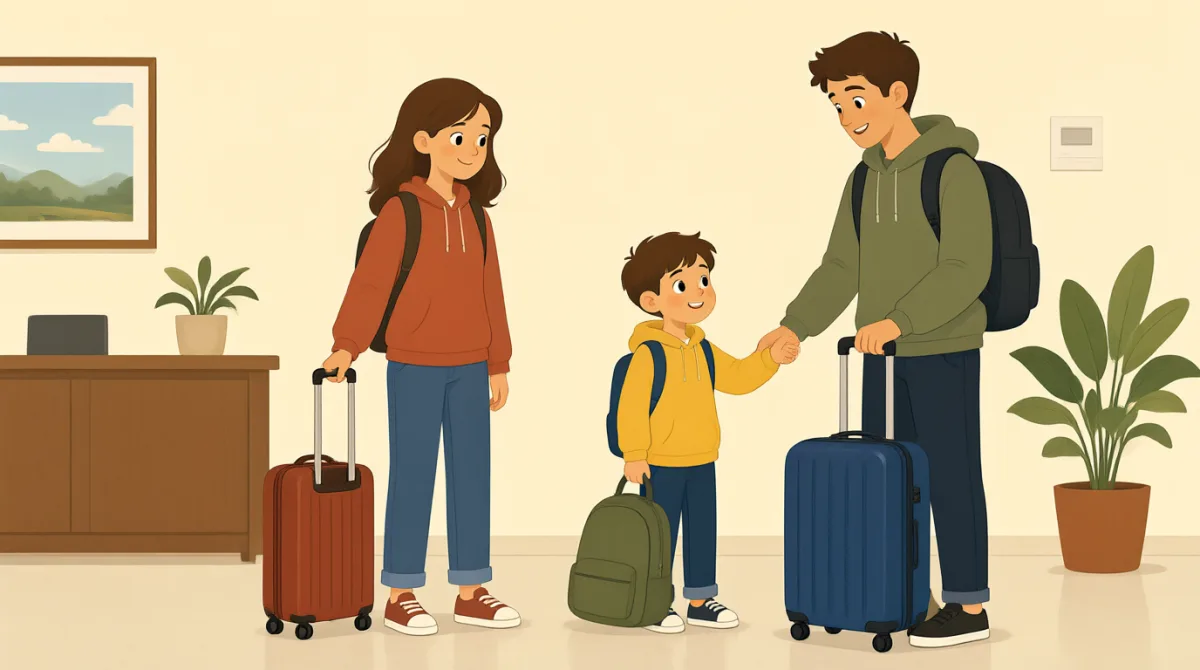

Leo, can you help me put my suitcase on the shuttle?
Leo,你能帮我把行李箱放到接驳车上吗?

Sure! I'll lift this one. You can put your bag by the door.
当然!我来抬这个。你可以把包放在车门旁边。

Careful with that suitcase. I'll help you lift it into the luggage area.
小心那个行李箱。我来帮你把它抬进行李区。
Thanks, David. Should we keep our small bags with us?
谢谢你,David。我们的小包要自己拿着吗?
Yes, please keep those with you. There is more room inside the shuttle.
是的,请把小包带在身边。接驳车里面空间更大。
I've put my backpack on my seat. Are we ready to go?
我把背包放在座位上了。我们可以出发了吗?
Almost. Please check that you have everything, then get on the shuttle.
快好了。请检查一下有没有东西落下,然后上车吧。
I have my phone and my bag. Leo, do you have your ticket?
我带了手机和包。Leo,你带车票了吗?
Yes, I have it. Let's get on before I forget anything else!
带了。我们快上车吧,免得我又忘了什么!
词汇8
- put my suitcase on the shuttle把我的行李箱放到接驳车上
To place your suitcase on the shuttle. Use this phrase when asking someone to help you load your luggage.
把你的行李箱放到接驳车上。请别人帮你搬行李时,可以用这个说法。
- lift it into the luggage area把它抬进行李区
To pick something up and put it in the place for suitcases. You can use “lift it into” when moving a heavy item into a space.
把某样东西抬起来,放进行李箱存放的地方。搬重物进某个空间时,可以用“lift it into”。
- keep those with you把那些东西带在身边
To hold on to some items and not put them away. Use this phrase for small bags or other things you want to keep close.
把一些东西拿在手边,不要收起来。小包或其他想随身带着的物品,可以用这个说法。
- I've put my backpack on my seat.我把背包放在座位上了。
This means the speaker has placed their backpack on a seat. Use “I've put” to say something is already in a particular place.
意思是说话的人已经把背包放在座位上了。用“I've put”可以表示某样东西已经被放在某个地方。
- check that you have everything检查一下东西有没有带齐
To make sure you haven't forgotten anything. This is useful before leaving or getting on a bus.
确认自己没有忘带任何东西。离开前或上车前,这样说很实用。
- get on the shuttle上接驳车
To enter the shuttle and travel on it. Use “get on” for buses, trains, and other forms of public transport.
进入接驳车并乘坐它。说到公交车、火车等公共交通工具时,可以用“get on”。
- Are we ready to go?我们准备好出发了吗?
A way to ask if everyone is prepared to leave. You can use this question before starting a trip.
用来询问大家是否都准备好出发了。旅行开始前可以这样问。
- Do you have your ticket?你带车票了吗?
A way to check whether someone has their ticket. You can use this question before boarding transport or entering an event.
用来确认某人有没有带车票。上车或进入活动场地前,可以这样问。
重点句子6
- 1
Leo, can you help me put my suitcase on the shuttle?
利奥,你能帮我把行李箱放到接驳车上吗?
This is a polite way to ask someone for help. You can reuse “Can you help me [action]?” for everyday tasks.
这是礼貌地向别人求助的说法。日常需要帮忙时,可以套用“Can you help me [action]?”。
- 2
I'll help you lift it into the luggage area.
我来帮你把它抬进行李区。
This offers help with a specific task. Use “I'll help you [action]” when you decide to assist someone.
这是主动帮忙做某件具体事情的说法。决定帮别人时,可以用“I'll help you [action]”。
- 3
Should we keep our small bags with us?
我们的小包要带在身边吗?
This asks whether it is better to keep something nearby. You can use “Should we...?” to ask for advice or instructions.
这是在询问是否最好把某样东西放在身边。可以用“Should we...?”来征求建议或询问该怎么做。
- 4
Please check that you have everything, then get on the shuttle.
请检查一下东西有没有带齐,然后上接驳车。
This gives two clear instructions: make sure nothing is missing, and then board. You can use “Please check that...” before leaving a place.
这句话给出了两个明确的指示:确认没有东西落下,然后上车。离开某个地方前,可以用“Please check that...”提醒别人检查。
- 5
I have my phone and my bag.
我带了手机和包。
This tells someone which belongings you have with you. You can use “I have my...” to confirm you have important items.
这句话告诉别人你随身带着哪些东西。确认重要物品都带在身上时,可以用“I have my...”。
- 6
Leo, do you have your ticket?
利奥,你带车票了吗?
This checks whether someone has an important item before departure. You can replace “ticket” with another item, such as “passport” or “keys”.
这是在出发前确认某人有没有带重要物品。你可以把“ticket”换成其他物品,比如“passport”或“keys”。