Putting Bags on the Bus
وضع الحقائب في الحافلة
Emma and Leo put their bags on the shuttle. David helps them with a suitcase and checks that everyone is ready.
تضع إيما وليو حقائبهما في الحافلة الصغيرة. يساعدهما ديفيد في حمل حقيبة سفر ويتأكد من أن الجميع مستعد.
حوار9
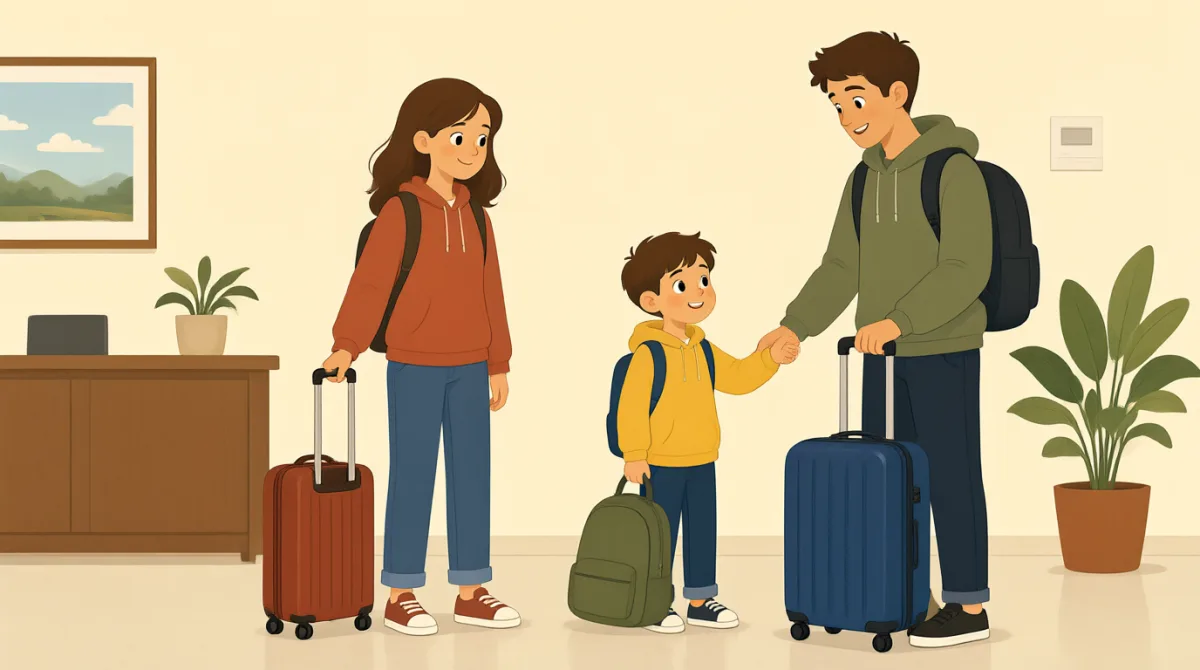

Leo, can you help me put my suitcase on the shuttle?
ليو، هل يمكنك مساعدتي في وضع حقيبة سفري في الحافلة الصغيرة؟

Sure! I'll lift this one. You can put your bag by the door.
بالتأكيد! سأرفع هذه الحقيبة. يمكنك وضع حقيبتك بجانب الباب.

Careful with that suitcase. I'll help you lift it into the luggage area.
انتبه إلى تلك الحقيبة. سأساعدك في رفعها إلى منطقة الأمتعة.
Thanks, David. Should we keep our small bags with us?
شكرًا يا ديفيد. هل ينبغي أن نحتفظ بحقائبنا الصغيرة معنا؟
Yes, please keep those with you. There is more room inside the shuttle.
نعم، من فضلكما احتفظا بها معكما. هناك مساحة أكبر داخل الحافلة الصغيرة.
I've put my backpack on my seat. Are we ready to go?
لقد وضعت حقيبة ظهري على مقعدي. هل نحن مستعدون للانطلاق؟
Almost. Please check that you have everything, then get on the shuttle.
تقريبًا. من فضلك تأكد من أن لديك كل شيء، ثم اصعد إلى الحافلة الصغيرة.
I have my phone and my bag. Leo, do you have your ticket?
معي هاتفي وحقيبتي. ليو، هل معك تذكرتك؟
Yes, I have it. Let's get on before I forget anything else!
نعم، إنها معي. لنصعد قبل أن أنسى شيئًا آخر!
المفردات8
- put my suitcase on the shuttleضع حقيبة سفري في الحافلة الصغيرة
To place your suitcase on the shuttle. Use this phrase when asking someone to help you load your luggage.
يعني وضع حقيبة سفرك في الحافلة الصغيرة. استخدم هذه العبارة عندما تطلب من شخص مساعدتك في تحميل أمتعتك.
- lift it into the luggage areaارفعها إلى منطقة الأمتعة
To pick something up and put it in the place for suitcases. You can use “lift it into” when moving a heavy item into a space.
يعني رفع شيء ووضعه في المكان المخصص لحقائب السفر. يمكنك استخدام “lift it into” عند نقل شيء ثقيل إلى مكان ما.
- keep those with youاحتفظ بتلك الأشياء معك
To hold on to some items and not put them away. Use this phrase for small bags or other things you want to keep close.
يعني الاحتفاظ ببعض الأشياء وعدم وضعها بعيدًا. استخدم هذه العبارة للحقائب الصغيرة أو الأشياء الأخرى التي تريد إبقاءها قريبة منك.
- I've put my backpack on my seat.لقد وضعت حقيبة ظهري على مقعدي.
This means the speaker has placed their backpack on a seat. Use “I've put” to say something is already in a particular place.
هذا يعني أن المتحدث وضع حقيبة ظهره على مقعد. استخدم “I've put” لتقول إن شيئًا أصبح بالفعل في مكان معين.
- check that you have everythingتأكد من أن لديك كل شيء
To make sure you haven't forgotten anything. This is useful before leaving or getting on a bus.
يعني التأكد من أنك لم تنسَ شيئًا. وهذا مفيد قبل المغادرة أو الصعود إلى الحافلة.
- get on the shuttleاصعد إلى الحافلة الصغيرة
To enter the shuttle and travel on it. Use “get on” for buses, trains, and other forms of public transport.
يعني الدخول إلى الحافلة الصغيرة والسفر فيها. استخدم “get on” مع الحافلات والقطارات ووسائل النقل العام الأخرى.
- Are we ready to go?هل نحن مستعدون للانطلاق؟
A way to ask if everyone is prepared to leave. You can use this question before starting a trip.
طريقة للسؤال عما إذا كان الجميع مستعدين للمغادرة. يمكنك استخدام هذا السؤال قبل بدء رحلة.
- Do you have your ticket?هل معك تذكرتك؟
A way to check whether someone has their ticket. You can use this question before boarding transport or entering an event.
طريقة للتأكد من أن شخصًا ما يحمل تذكرته. يمكنك استخدام هذا السؤال قبل ركوب وسيلة نقل أو دخول فعالية.
الجمل الأساسية6
- 1
Leo, can you help me put my suitcase on the shuttle?
ليو، هل يمكنك مساعدتي في وضع حقيبة سفري في الحافلة الصغيرة؟
This is a polite way to ask someone for help. You can reuse “Can you help me [action]?” for everyday tasks.
هذه طريقة مهذبة لطلب المساعدة من شخص. يمكنك إعادة استخدام “Can you help me [action]?” في المهام اليومية.
- 2
I'll help you lift it into the luggage area.
سأساعدك في رفعها إلى منطقة الأمتعة.
This offers help with a specific task. Use “I'll help you [action]” when you decide to assist someone.
تقدم هذه الجملة المساعدة في مهمة محددة. استخدم “I'll help you [action]” عندما تقرر مساعدة شخص ما.
- 3
Should we keep our small bags with us?
هل ينبغي أن نحتفظ بحقائبنا الصغيرة معنا؟
This asks whether it is better to keep something nearby. You can use “Should we...?” to ask for advice or instructions.
يسأل هذا السؤال عما إذا كان من الأفضل الاحتفاظ بشيء قريبًا. يمكنك استخدام “Should we...?” لطلب النصيحة أو التعليمات.
- 4
Please check that you have everything, then get on the shuttle.
من فضلك تأكد من أن لديك كل شيء، ثم اصعد إلى الحافلة الصغيرة.
This gives two clear instructions: make sure nothing is missing, and then board. You can use “Please check that...” before leaving a place.
تعطي هذه الجملة تعليمَين واضحين: التأكد من عدم فقدان أي شيء، ثم الصعود إلى الحافلة. يمكنك استخدام “Please check that...” قبل مغادرة مكان ما.
- 5
I have my phone and my bag.
معي هاتفي وحقيبتي.
This tells someone which belongings you have with you. You can use “I have my...” to confirm you have important items.
تخبر هذه الجملة شخصًا بالأغراض التي تحملها معك. يمكنك استخدام “I have my...” لتأكيد أنك تحمل أشياء مهمة.
- 6
Leo, do you have your ticket?
ليو، هل معك تذكرتك؟
This checks whether someone has an important item before departure. You can replace “ticket” with another item, such as “passport” or “keys”.
يتحقق هذا السؤال من أن شخصًا ما يحمل غرضًا مهمًا قبل المغادرة. يمكنك استبدال “ticket” بغرض آخر، مثل “passport” أو “keys”.