Putting Bags on the Bus
วางกระเป๋าบนรถรับส่ง
Emma and Leo put their bags on the shuttle. David helps them with a suitcase and checks that everyone is ready.
เอ็มมาและลีโอวางกระเป๋าบนรถรับส่ง เดวิดช่วยยกกระเป๋าเดินทางและตรวจดูว่าทุกคนพร้อมหรือยัง
บทสนทนา9
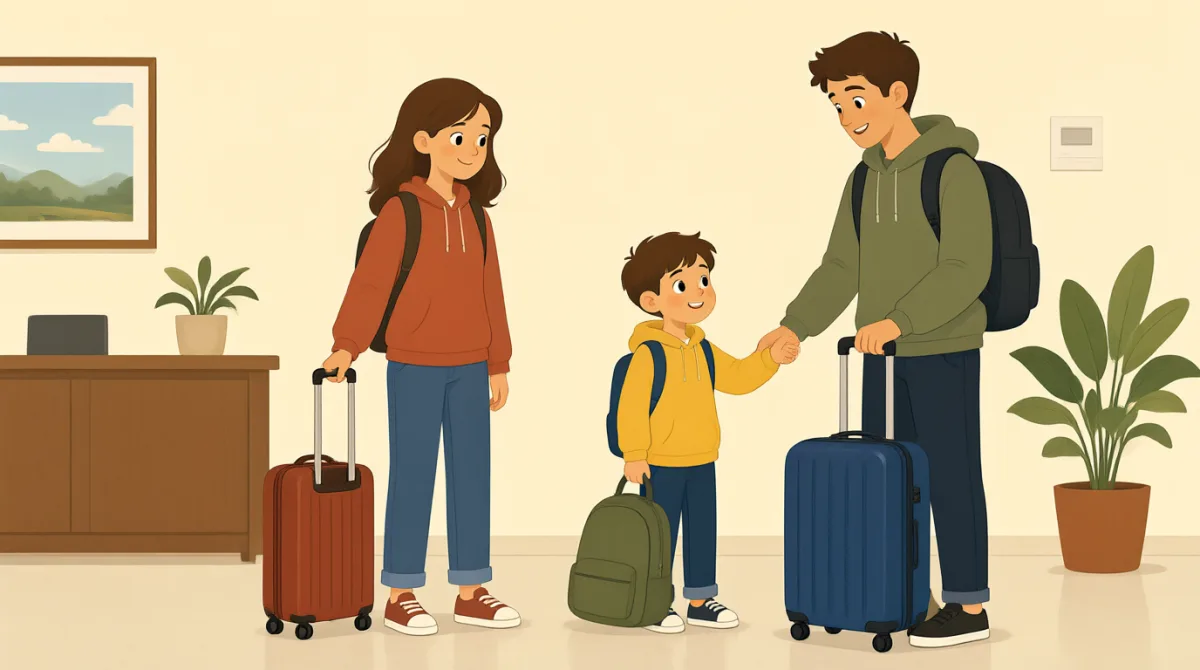

Leo, can you help me put my suitcase on the shuttle?
ลีโอ ช่วยฉันวางกระเป๋าเดินทางบนรถรับส่งได้ไหม

Sure! I'll lift this one. You can put your bag by the door.
ได้เลย! ฉันจะยกใบนี้เอง เธอวางกระเป๋าไว้ข้างประตูได้เลย

Careful with that suitcase. I'll help you lift it into the luggage area.
ระวังกระเป๋าใบนั้นนะ เดี๋ยวฉันช่วยยกเข้าไปไว้ในช่องเก็บกระเป๋า
Thanks, David. Should we keep our small bags with us?
ขอบใจนะ เดวิด เราควรถือกระเป๋าใบเล็กไว้กับตัวไหม
Yes, please keep those with you. There is more room inside the shuttle.
ใช่ ช่วยถือไว้กับตัวนะ ข้างในรถรับส่งมีที่ว่างมากกว่า
I've put my backpack on my seat. Are we ready to go?
ฉันวางเป้ไว้บนที่นั่งแล้ว เราพร้อมไปหรือยัง
Almost. Please check that you have everything, then get on the shuttle.
เกือบแล้ว ช่วยเช็กให้แน่ใจว่ามีของครบแล้วค่อยขึ้นรถรับส่งนะ
I have my phone and my bag. Leo, do you have your ticket?
ฉันมีโทรศัพท์กับกระเป๋าแล้ว ลีโอ ตั๋วอยู่กับเธอไหม
Yes, I have it. Let's get on before I forget anything else!
มีสิ ขึ้นรถกันเถอะ ก่อนที่ฉันจะลืมของอย่างอื่นอีก!
คำศัพท์8
- put my suitcase on the shuttleวางกระเป๋าเดินทางบนรถรับส่ง
To place your suitcase on the shuttle. Use this phrase when asking someone to help you load your luggage.
หมายถึงการนำกระเป๋าเดินทางไปวางบนรถรับส่ง ใช้ประโยคนี้เวลาขอให้ใครช่วยขนสัมภาระขึ้นรถ
- lift it into the luggage areaยกเข้าไปไว้ในช่องเก็บกระเป๋า
To pick something up and put it in the place for suitcases. You can use “lift it into” when moving a heavy item into a space.
หมายถึงยกของขึ้นแล้วนำไปวางในที่เก็บกระเป๋า ใช้ “lift it into” เมื่อต้องยกของหนักเข้าไปในพื้นที่หนึ่ง
- keep those with youถือของพวกนั้นไว้กับตัว
To hold on to some items and not put them away. Use this phrase for small bags or other things you want to keep close.
หมายถึงเก็บของบางอย่างไว้กับตัว ไม่เอาไปเก็บที่อื่น ใช้ประโยคนี้กับกระเป๋าใบเล็กหรือของอื่น ๆ ที่อยากให้อยู่ใกล้มือ
- I've put my backpack on my seat.ฉันวางเป้ไว้บนที่นั่งแล้ว
This means the speaker has placed their backpack on a seat. Use “I've put” to say something is already in a particular place.
หมายถึงผู้พูดวางเป้ไว้บนที่นั่งแล้ว ใช้ “I've put” เพื่อบอกว่าของถูกวางไว้ในตำแหน่งหนึ่งเรียบร้อยแล้ว
- check that you have everythingตรวจดูว่ามีของครบหรือเปล่า
To make sure you haven't forgotten anything. This is useful before leaving or getting on a bus.
หมายถึงตรวจให้แน่ใจว่าไม่ได้ลืมอะไร ประโยคนี้มีประโยชน์ก่อนออกเดินทางหรือขึ้นรถ
- get on the shuttleขึ้นรถรับส่ง
To enter the shuttle and travel on it. Use “get on” for buses, trains, and other forms of public transport.
หมายถึงเข้าไปบนรถรับส่งเพื่อโดยสาร ใช้ “get on” กับรถโดยสาร รถไฟ และการขนส่งสาธารณะประเภทอื่น ๆ
- Are we ready to go?เราพร้อมไปหรือยัง
A way to ask if everyone is prepared to leave. You can use this question before starting a trip.
ใช้ถามว่าทุกคนพร้อมออกเดินทางหรือยัง ถามแบบนี้ได้ก่อนเริ่มเดินทาง
- Do you have your ticket?ตั๋วอยู่กับคุณไหม
A way to check whether someone has their ticket. You can use this question before boarding transport or entering an event.
ใช้ถามว่าอีกฝ่ายมีตั๋วอยู่หรือเปล่า ถามแบบนี้ได้ก่อนขึ้นรถหรือเข้างาน
ประโยคสำคัญ6
- 1
Leo, can you help me put my suitcase on the shuttle?
ลีโอ ช่วยฉันวางกระเป๋าเดินทางบนรถรับส่งได้ไหม
This is a polite way to ask someone for help. You can reuse “Can you help me [action]?” for everyday tasks.
นี่เป็นวิธีขอความช่วยเหลือจากใครสักคนอย่างสุภาพ นำ “Can you help me [action]?” ไปใช้กับงานทั่วไปในชีวิตประจำวันได้
- 2
I'll help you lift it into the luggage area.
เดี๋ยวฉันช่วยยกเข้าไปไว้ในช่องเก็บกระเป๋า
This offers help with a specific task. Use “I'll help you [action]” when you decide to assist someone.
ประโยคนี้ใช้เสนอตัวช่วยทำงานอย่างหนึ่งโดยเฉพาะ ใช้ “I'll help you [action]” เมื่อคุณตัดสินใจว่าจะช่วยใครสักคน
- 3
Should we keep our small bags with us?
เราควรถือกระเป๋าใบเล็กไว้กับตัวไหม
This asks whether it is better to keep something nearby. You can use “Should we...?” to ask for advice or instructions.
ประโยคนี้ใช้ถามว่าควรเก็บของไว้ใกล้ตัวหรือไม่ ใช้ “Should we...?” เพื่อขอคำแนะนำหรือถามว่าควรทำอย่างไร
- 4
Please check that you have everything, then get on the shuttle.
ช่วยตรวจดูให้แน่ใจว่ามีของครบ แล้วค่อยขึ้นรถรับส่งนะ
This gives two clear instructions: make sure nothing is missing, and then board. You can use “Please check that...” before leaving a place.
ประโยคนี้ให้คำแนะนำสองขั้นตอนชัดเจน คือเช็กว่าไม่มีของตกหล่น แล้วจึงขึ้นรถ ใช้ “Please check that...” ก่อนออกจากสถานที่ได้
- 5
I have my phone and my bag.
ฉันมีโทรศัพท์กับกระเป๋าแล้ว
This tells someone which belongings you have with you. You can use “I have my...” to confirm you have important items.
ประโยคนี้บอกอีกฝ่ายว่าคุณมีสิ่งของอะไรอยู่กับตัว ใช้ “I have my...” เพื่อยืนยันว่ามีของสำคัญครบ
- 6
Leo, do you have your ticket?
ลีโอ ตั๋วอยู่กับเธอไหม
This checks whether someone has an important item before departure. You can replace “ticket” with another item, such as “passport” or “keys”.
ประโยคนี้ใช้ตรวจสอบว่าอีกฝ่ายมีของสำคัญก่อนออกเดินทางหรือไม่ คุณเปลี่ยน “ticket” เป็นของอย่างอื่นได้ เช่น “passport” หรือ “keys”