Putting Bags on the Bus
Wkładanie bagaży do busa
Emma and Leo put their bags on the shuttle. David helps them with a suitcase and checks that everyone is ready.
Emma i Leo wkładają swoje bagaże do busa. David pomaga im z walizką i sprawdza, czy wszyscy są gotowi.
Dialog9
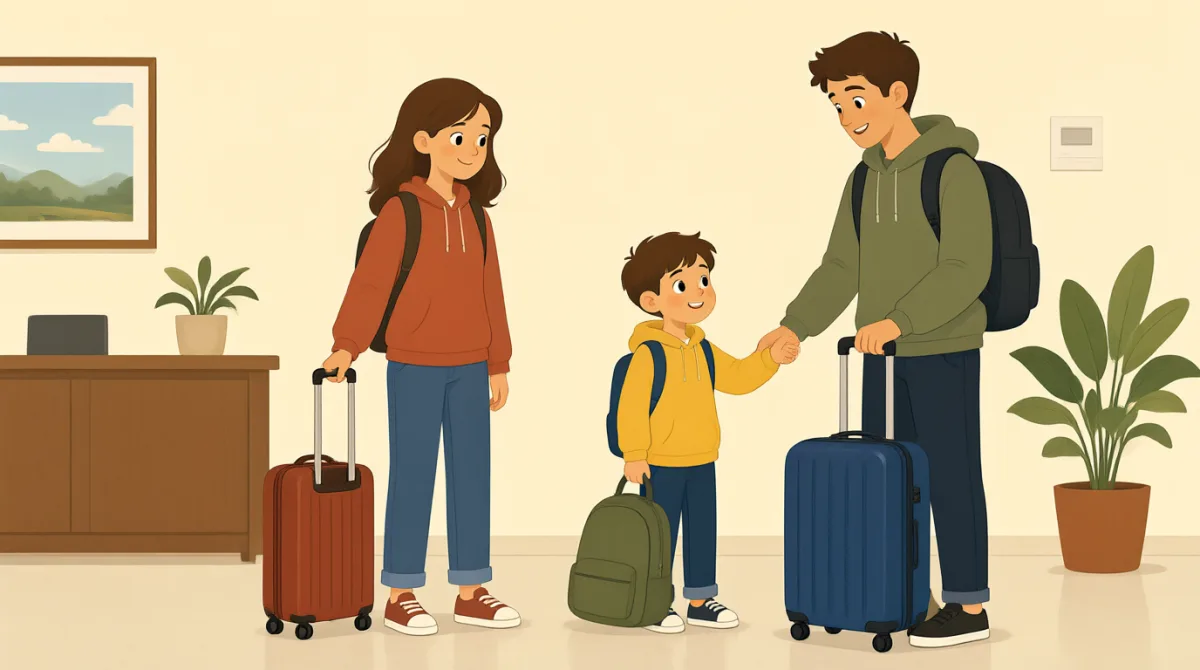

Leo, can you help me put my suitcase on the shuttle?
Leo, pomożesz mi włożyć walizkę do busa?

Sure! I'll lift this one. You can put your bag by the door.
Jasne! Podniosę tę. Możesz postawić swoją torbę przy drzwiach.

Careful with that suitcase. I'll help you lift it into the luggage area.
Proszę uważać na tę walizkę. Pomogę ją włożyć do luku bagażowego.
Thanks, David. Should we keep our small bags with us?
Dziękuję, Davidzie. Małe torby mamy trzymać przy sobie?
Yes, please keep those with you. There is more room inside the shuttle.
Tak, proszę je mieć przy sobie. W środku busa jest więcej miejsca.
I've put my backpack on my seat. Are we ready to go?
Położyłem plecak na swoim siedzeniu. Możemy już jechać?
Almost. Please check that you have everything, then get on the shuttle.
Prawie. Proszę sprawdzić, czy mają Państwo wszystko, a potem wsiąść do busa.
I have my phone and my bag. Leo, do you have your ticket?
Mam telefon i torbę. Leo, masz bilet?
Yes, I have it. Let's get on before I forget anything else!
Tak, mam. Wsiadajmy, zanim zapomnę o czymś jeszcze!
Słownictwo8
- put my suitcase on the shuttlewłożyć walizkę do busa
To place your suitcase on the shuttle. Use this phrase when asking someone to help you load your luggage.
Umieścić walizkę w busie. Użyj tego zwrotu, gdy prosisz kogoś o pomoc przy załadowaniu bagażu.
- lift it into the luggage areawłożyć ją do luku bagażowego
To pick something up and put it in the place for suitcases. You can use “lift it into” when moving a heavy item into a space.
Podnieść coś i umieścić w miejscu przeznaczonym na walizki. Zwrot “lift it into” oznacza włożenie czegoś do środka, zwłaszcza gdy przedmiot jest ciężki.
- keep those with youmieć je przy sobie
To hold on to some items and not put them away. Use this phrase for small bags or other things you want to keep close.
Zatrzymać jakieś rzeczy przy sobie, zamiast je odkładać. Tego zwrotu używa się w odniesieniu do małych toreb i innych rzeczy, które chcesz mieć pod ręką.
- I've put my backpack on my seat.Położyłem plecak na swoim siedzeniu.
This means the speaker has placed their backpack on a seat. Use “I've put” to say something is already in a particular place.
To znaczy, że mówiąca osoba położyła plecak na siedzeniu. Użyj “I've put”, aby powiedzieć, że coś już znajduje się w określonym miejscu.
- check that you have everythingsprawdzić, czy ma się wszystko
To make sure you haven't forgotten anything. This is useful before leaving or getting on a bus.
Upewnić się, że niczego się nie zapomniało. Przydaje się przed wyjściem lub wejściem do autobusu.
- get on the shuttlewsiąść do busa
To enter the shuttle and travel on it. Use “get on” for buses, trains, and other forms of public transport.
Wejść do busa, żeby nim jechać. Zwrotu “get on” używa się w odniesieniu do autobusów, pociągów i innych środków transportu publicznego.
- Are we ready to go?Możemy już jechać?
A way to ask if everyone is prepared to leave. You can use this question before starting a trip.
Sposób, by zapytać, czy wszyscy są gotowi do drogi. Możesz zadać to pytanie przed rozpoczęciem podróży.
- Do you have your ticket?Masz bilet?
A way to check whether someone has their ticket. You can use this question before boarding transport or entering an event.
Sposób, by sprawdzić, czy ktoś ma bilet. Możesz zadać to pytanie przed wejściem do środka transportu lub na wydarzenie.
Kluczowe zdania6
- 1
Leo, can you help me put my suitcase on the shuttle?
Leo, pomożesz mi włożyć walizkę do busa?
This is a polite way to ask someone for help. You can reuse “Can you help me [action]?” for everyday tasks.
To uprzejmy sposób, by poprosić kogoś o pomoc. Możesz używać “Can you help me [action]?” w codziennych sytuacjach, gdy prosisz o pomoc.
- 2
I'll help you lift it into the luggage area.
Pomogę ci włożyć ją do luku bagażowego.
This offers help with a specific task. Use “I'll help you [action]” when you decide to assist someone.
W ten sposób oferujesz pomoc przy konkretnym zadaniu. Użyj “I'll help you [action]”, gdy postanawiasz komuś pomóc.
- 3
Should we keep our small bags with us?
Małe torby mamy trzymać przy sobie?
This asks whether it is better to keep something nearby. You can use “Should we...?” to ask for advice or instructions.
To pytanie, czy lepiej mieć coś przy sobie. Możesz użyć “Should we...?”, by poprosić o radę lub instrukcję.
- 4
Please check that you have everything, then get on the shuttle.
Proszę sprawdzić, czy mają Państwo wszystko, a potem wsiąść do busa.
This gives two clear instructions: make sure nothing is missing, and then board. You can use “Please check that...” before leaving a place.
To dwie jasne instrukcje: upewnić się, że niczego nie brakuje, a potem wsiąść. Możesz użyć “Please check that...”, zanim opuścisz jakieś miejsce.
- 5
I have my phone and my bag.
Mam telefon i torbę.
This tells someone which belongings you have with you. You can use “I have my...” to confirm you have important items.
Ta wypowiedź informuje kogoś, jakie rzeczy masz przy sobie. Użyj “I have my...”, by potwierdzić, że masz ważne przedmioty.
- 6
Leo, do you have your ticket?
Leo, masz bilet?
This checks whether someone has an important item before departure. You can replace “ticket” with another item, such as “passport” or “keys”.
To pytanie sprawdza, czy ktoś ma ważną rzecz przed odjazdem. Możesz zastąpić “ticket” innym przedmiotem, na przykład “passport” lub “keys”.