Meeting Outside the Venue
Spotkanie przed salą koncertową
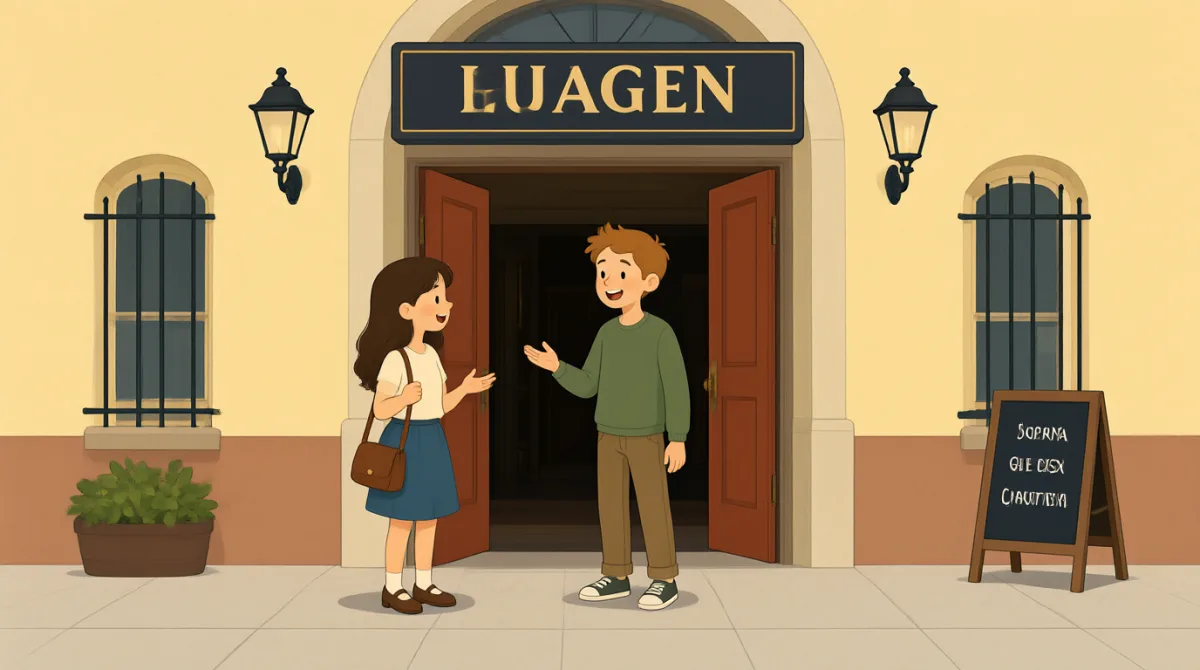
Emma and Jack meet outside the concert venue. They talk about the singer and get ready to go in.
Emma i Jack spotykają się przed salą koncertową. Rozmawiają o piosenkarce i szykują się do wejścia.
Dialog8

Hi, Jack! I’m glad we got here early. The concert starts in thirty minutes.
Cześć, Jack! Cieszę się, że przyszliśmy wcześniej. Koncert zaczyna się za pół godziny.

Me too. The line is already getting long. Do you have your tickets?
Ja też. Kolejka już robi się długa. Masz bilety?
Yes, they’re on my phone. I’m so excited to hear the singer live!
Tak, mam je w telefonie. Nie mogę się doczekać, aż usłyszę piosenkarkę na żywo!
I know! Her new songs are great. I listened to the whole album yesterday.
Wiem! Jej nowe piosenki są świetne. Wczoraj przesłuchałem cały album.
Which song do you hope she sings tonight? I really like “Stay Close.”
Którą piosenkę chciałabyś, żeby dziś zaśpiewała? Bardzo lubię „Stay Close”.
That one’s my favorite, too. Let’s go in when the doors open.
Też najbardziej ją lubię. Wejdźmy, gdy otworzą drzwi.
Good idea. I’ll get my ticket ready. Do you know where our seats are?
Dobry pomysł. Przygotuję bilet. Wiesz, gdzie są nasze miejsca?
Yes, they’re on the floor level, near the middle. We should have a good view.
Tak, na płycie, blisko środka. Powinniśmy mieć dobry widok.
Słownictwo8
- got here earlyprzyszliśmy wcześniej
Arrived at this place before the expected time. Use it to say when you arrived somewhere.
Dotarliśmy w to miejsce przed planowanym czasem. Użyj tego wyrażenia, żeby powiedzieć, że przybyłeś gdzieś wcześniej.
- the line is already getting longkolejka już robi się długa
More people are joining the line, so it is growing. Use this phrase to describe a line that is becoming longer.
Do kolejki dołączają kolejne osoby, więc się wydłuża. Tego wyrażenia używa się, by opisać kolejkę, która staje się coraz dłuższa.
- on my phonew telefonie
Stored or available on my phone. You can use this phrase for tickets, photos, or other things you keep on your phone.
Zapisane lub dostępne w telefonie. Możesz użyć tego wyrażenia w odniesieniu do biletów, zdjęć i innych rzeczy, które przechowujesz w telefonie.
- livena żywo
Happening in person, not in a recording. Here, the speaker is excited to hear the singer perform in person.
Odbywające się na miejscu, a nie z nagrania. W tym zdaniu osoba cieszy się, że usłyszy piosenkarkę podczas występu na żywo.
- the whole albumcały album
All the songs on an album. Use “the whole” to say you listened to or watched something completely.
Wszystkie piosenki z albumu. Użyj „the whole”, żeby powiedzieć, że czegoś w całości wysłuchałeś lub coś w całości obejrzałeś.
- go inwejść
Enter a place. You can use it when talking about entering a venue, building, or room.
Dostać się do środka jakiegoś miejsca. Możesz użyć tego wyrażenia, mówiąc o wejściu do sali koncertowej, budynku lub pokoju.
- get my ticket readyprzygotować bilet
Prepare my ticket so I can show it or use it. This phrase is useful before entering an event.
Przygotować bilet, żeby go pokazać lub użyć. To przydatne wyrażenie, gdy szykujesz się do wejścia na wydarzenie.
- floor levelpłyta
The level of a venue where the floor is, rather than an upper level. Here, it tells where the seats are.
Poziom sali, na którym znajduje się podłoga, a nie wyższa kondygnacja. W tym przypadku wskazuje, gdzie znajdują się miejsca.
Kluczowe zdania8
- 1
I’m glad we got here early.
Cieszę się, że przyszliśmy wcześniej.
Use this to say you are happy you arrived before a busy time. You can replace “here” with another place, such as “I’m glad we got to the station early.”
Użyj tego zdania, by powiedzieć, że cieszysz się, że dotarłeś na miejsce przed godzinami największego ruchu. Zamiast „here” możesz podać inne miejsce, na przykład „I’m glad we got to the station early.” (Cieszę się, że dotarliśmy na stację wcześniej).
- 2
Do you have your tickets?
Masz bilety?
This is a simple way to check whether someone has what they need to enter an event. Replace “tickets” with another item, such as “your keys” or “your phone.”
To prosty sposób, by sprawdzić, czy ktoś ma to, czego potrzebuje, żeby wejść na wydarzenie. Zamiast „tickets” możesz użyć nazwy innej rzeczy, na przykład „your keys” albo „your phone.”
- 3
I’m so excited to hear the singer live!
Nie mogę się doczekać, aż usłyszę piosenkarkę na żywo!
Use this to show strong excitement about an upcoming event. You can change the activity, as in “I’m so excited to see the band live!”
Użyj tego zdania, by wyrazić wielkie podekscytowanie nadchodzącym wydarzeniem. Możesz zmienić czynność, na przykład: „I’m so excited to see the band live!” (Nie mogę się doczekać, aż zobaczę zespół na żywo!).
- 4
I listened to the whole album yesterday.
Wczoraj przesłuchałem cały album.
This sentence says you listened to every song on an album. You can replace “the whole album” with another thing, such as “the whole podcast.”
To zdanie oznacza, że wysłuchałeś wszystkich piosenek z albumu. Zamiast „the whole album” możesz podać coś innego, na przykład „the whole podcast.”
- 5
Which song do you hope she sings tonight?
Którą piosenkę chciałabyś, żeby dziś zaśpiewała?
Use this question to ask which song someone wants to hear at a performance. Change “song” or “she” to fit the event.
Użyj tego pytania, by dowiedzieć się, którą piosenkę ktoś chciałby usłyszeć podczas występu. Zmień „song” lub „she”, by dopasować je do wydarzenia.
- 6
Let’s go in when the doors open.
Wejdźmy, gdy otworzą drzwi.
Use “Let’s” to suggest doing something together, and “when” to say when you will do it. You can reuse the pattern with another action, such as “Let’s sit down when the show starts.”
Użyj „Let’s”, by zaproponować wspólne działanie, a „when”, by powiedzieć, kiedy to zrobicie. Możesz zastosować ten schemat z inną czynnością, na przykład: „Let’s sit down when the show starts.” (Usiądźmy, gdy zacznie się występ).
- 7
I’ll get my ticket ready.
Przygotuję bilet.
Use “I’ll” to say what you plan to do. This sentence is useful when you are preparing to enter an event.
Użyj „I’ll”, by powiedzieć, co zamierzasz zrobić. To zdanie przydaje się, gdy szykujesz się do wejścia na wydarzenie.
- 8
We should have a good view.
Powinniśmy mieć dobry widok.
Use this to say you expect to see something well. You can change “view” to another noun, such as “We should have a good seat.”
Użyj tego zdania, by powiedzieć, że spodziewasz się dobrze coś widzieć. Zamiast „view” możesz użyć innego rzeczownika, na przykład „We should have a good seat.” (Powinniśmy mieć dobre miejsca).