Talking About a Family Member
Rozmowa o członku rodziny
Leo tells David about his older sister and shares what makes her patient and helpful, even when they disagree.
Leo opowiada Davidowi o swojej starszej siostrze i o tym, co sprawia, że jest cierpliwa i pomocna, nawet gdy się nie zgadzają.
Dialog9
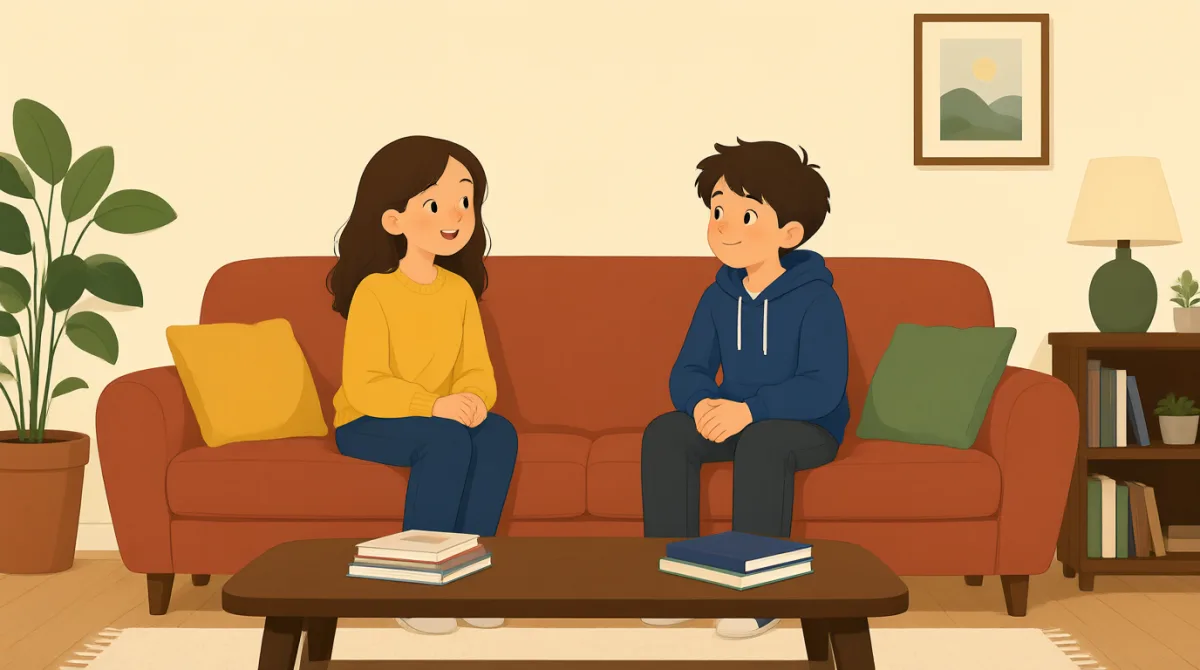

My older sister is very patient, even when I make the same mistake twice.
Moja starsza siostra jest bardzo cierpliwa, nawet gdy dwa razy popełnię ten sam błąd.

That’s a good quality. Does she help you when you need something?
To dobra cecha. Pomaga ci, kiedy czegoś potrzebujesz?
Yes, she helps me with my homework and gives me good advice.
Tak, pomaga mi w odrabianiu lekcji i daje mi dobre rady.
She sounds helpful. Do you always agree with each other?
Wydaje się pomocna. Zawsze się ze sobą zgadzacie?
Not always. We disagree about small things, like what to watch on TV.
Nie zawsze. Nie zgadzamy się w drobnych sprawach, na przykład co oglądać w telewizji.
And how does she handle those disagreements?
A jak radzi sobie z takimi nieporozumieniami?
She listens to me, then explains what she thinks. She never gets angry.
Słucha mnie, a potem wyjaśnia, co myśli. Nigdy się nie złości.
You’re lucky to have a sister like that. Try listening to her, too.
Masz szczęście, że masz taką siostrę. Ty też spróbuj jej posłuchać.
I will. She’s patient and helpful, and I can learn from her.
Spróbuję. Jest cierpliwa i pomocna, mogę się od niej wiele nauczyć.
Słownictwo7
- patientcierpliwy
Patient describes someone who stays calm and does not get upset when something takes time or happens again.
Patient opisuje osobę, która zachowuje spokój i nie denerwuje się, gdy coś trwa długo albo powtarza się ponownie.
- make the same mistake twicedwa razy popełnić ten sam błąd
This means to do the same thing wrong two times. You can use it to talk about mistakes you repeat.
To znaczy zrobić dwa razy to samo źle. Możesz użyć tego wyrażenia, mówiąc o powtarzających się błędach.
- good advicedobra rada
Good advice is helpful guidance about what to do. You can say someone gives you good advice.
Good advice to pomocna wskazówka dotycząca tego, co zrobić. Możesz powiedzieć, że ktoś daje ci dobre rady.
- disagree aboutnie zgadzać się w sprawie
To disagree about something means to have different opinions about it. Use it to say what people do not agree on.
Disagree about coś znaczy mieć na ten temat odmienne zdanie. Użyj tego wyrażenia, by powiedzieć, w czym ludzie się nie zgadzają.
- handle those disagreementsradzić sobie z nieporozumieniami
To handle disagreements means to deal with times when people have different opinions. You can use this phrase to ask how someone responds.
Handle disagreements znaczy radzić sobie z sytuacjami, w których ludzie mają odmienne zdania. Możesz użyć tego wyrażenia, by zapytać, jak ktoś reaguje.
- gets angryzłościć się
To get angry means to become upset or mad. Use it to describe how someone reacts.
Get angry znaczy zdenerwować się lub rozzłościć. Użyj tego wyrażenia, by opisać czyjąś reakcję.
- learn from heruczyć się od niej
To learn from someone means to gain useful ideas or skills by listening to or watching that person.
Learn from someone znaczy zdobywać przydatne pomysły lub umiejętności, słuchając tej osoby albo ją obserwując.
Kluczowe zdania7
- 1
My older sister is very patient, even when I make the same mistake twice.
Moja starsza siostra jest bardzo cierpliwa, nawet gdy dwa razy popełnię ten sam błąd.
Use this sentence to describe a family member’s personality and give an example. You can change “older sister” to another person and describe how they stay patient.
Użyj tego zdania, by opisać osobowość członka rodziny i podać przykład. Możesz zmienić “older sister” na inną osobę i opisać, jak zachowuje cierpliwość.
- 2
She helps me with my homework and gives me good advice.
Pomaga mi w odrabianiu lekcji i daje mi dobre rady.
This sentence explains how someone helps you. You can replace “homework” with another task or situation.
To zdanie wyjaśnia, jak ktoś ci pomaga. Możesz zastąpić “homework” innym zadaniem lub sytuacją.
- 3
We disagree about small things, like what to watch on TV.
Nie zgadzamy się w drobnych sprawach, na przykład co oglądać w telewizji.
Use this to say that you and another person have different opinions. You can change the example after “like” to name something you disagree about.
Użyj tego zdania, by powiedzieć, że ty i ktoś inny macie odmienne zdania. Możesz zmienić przykład po “like”, by wymienić sprawę, w której się nie zgadzacie.
- 4
She listens to me, then explains what she thinks.
Słucha mnie, a potem wyjaśnia, co myśli.
This sentence describes a calm way to share different opinions. You can use the pattern “listens to me, then explains” to talk about someone’s response.
To zdanie opisuje spokojny sposób wyrażania odmiennych opinii. Możesz użyć wzoru “listens to me, then explains”, by opisać czyjąś reakcję.
- 5
She never gets angry.
Ona nigdy się nie złości.
This is a simple way to describe how someone reacts. You can replace “She” with another person’s name or pronoun.
To prosty sposób, by opisać czyjąś reakcję. Możesz zastąpić “She” imieniem lub zaimkiem innej osoby.
- 6
Try listening to her, too.
Ty też spróbuj jej posłuchać.
Use this sentence to give someone gentle advice. You can change “her” to “him” or “them” depending on the person.
Użyj tego zdania, by udzielić komuś łagodnej rady. Możesz zmienić “her” na “him” lub “them”, zależnie od tego, o kim mówisz.
- 7
She’s patient and helpful, and I can learn from her.
Jest cierpliwa i pomocna, mogę się od niej wiele nauczyć.
This sentence describes two good qualities and says what you can gain from the person. You can change the qualities and use “learn from” for someone you admire.
To zdanie opisuje dwie dobre cechy i mówi, co możesz zyskać dzięki tej osobie. Możesz zmienić cechy i użyć “learn from”, mówiąc o kimś, kogo podziwiasz.