Asking What’s in Season
Emma asks David, a local farmer, which fruits and vegetables are fresh and in season. He recommends a few choices for her meals.
Dialogue7
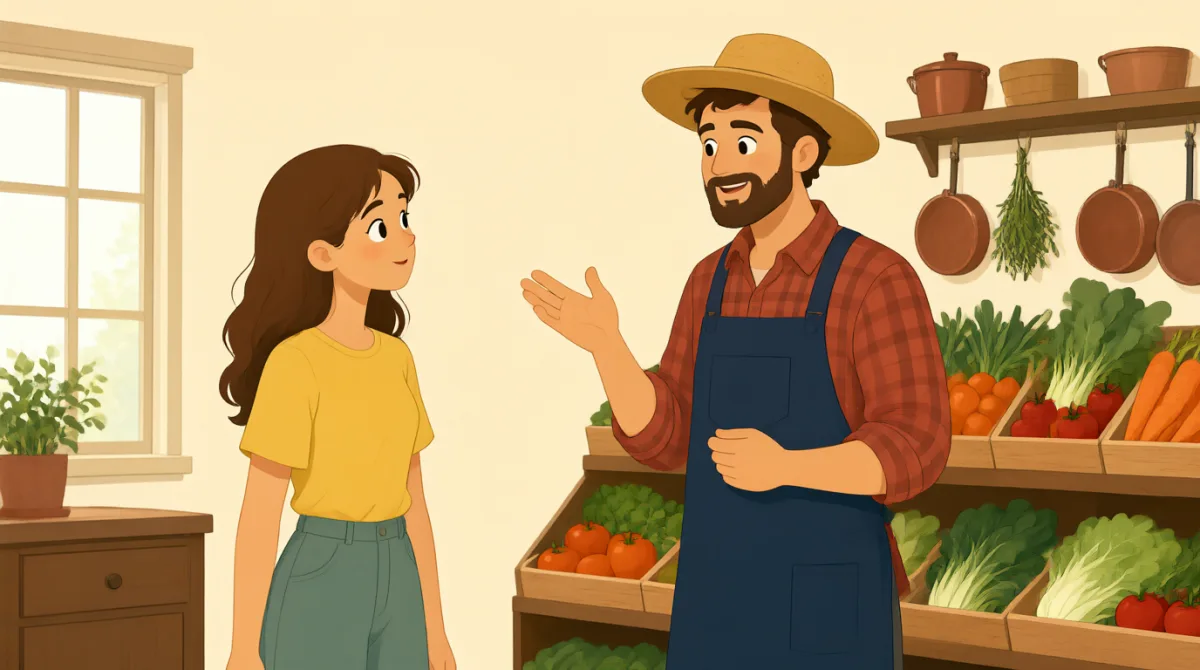

Hi, David. What fruits and vegetables are fresh and in season today?

The strawberries are sweet, and the peas came in this morning.
Those sound good. Are the tomatoes ready to eat now?
Yes, they’re ripe. You can take some home for a salad.
Great. What would you recommend for a simple dinner tonight?
Try the peas with fresh potatoes. They’re both local and easy to cook.
Thanks! I’ll get some potatoes and strawberries, too.
Vocabulary8
- in season
This describes fruits or vegetables that are growing and ready to eat at a certain time of year.
- came in
Here, this means the peas arrived at the market today. You can use it to talk about new products arriving.
- ripe
Ripe means ready to eat. You can use it to ask or say whether fruit is ready.
- take some home
This means to buy or get some and bring it home. Use it when talking about food you want to bring with you.
- recommend
To recommend something is to suggest it because you think it is a good choice. You can ask, “What would you recommend?” when you want advice.
- simple dinner
A simple dinner is an easy meal to prepare. You can use this phrase when asking for an easy meal idea.
- local
Local means from the area nearby. You can ask whether food is local to learn where it comes from.
- easy to cook
This describes food that does not take much effort to prepare. Use it when talking about convenient meals.
Key Sentences8
- 1
What fruits and vegetables are fresh and in season today?
Use this question at a market to ask what produce is fresh now. You can replace “fruits and vegetables” with a specific type of food.
- 2
The strawberries are sweet, and the peas came in this morning.
This sentence describes the taste of one food and when another arrived. Use the pattern to share details about fresh products.
- 3
Are the tomatoes ready to eat now?
Use this question to check whether produce is ripe and ready. You can replace “the tomatoes” with another fruit or vegetable.
- 4
You can take some home for a salad.
This is a helpful suggestion about how to use food. You can replace “for a salad” with another meal or dish.
- 5
What would you recommend for a simple dinner tonight?
Use this polite question when you want a meal suggestion. You can change “a simple dinner tonight” to another meal or occasion.
- 6
Try the peas with fresh potatoes.
This is a simple way to suggest two foods that go well together. You can replace the foods with other ingredients.
- 7
They’re both local and easy to cook.
This sentence gives two reasons to choose the foods. Use “They’re both…” to describe two things with shared qualities.
- 8
I’ll get some potatoes and strawberries, too.
Use this sentence to say what you have decided to buy. “I’ll get…” is a natural way to choose items while shopping.