Asking People Nearby
近くの人に尋ねる
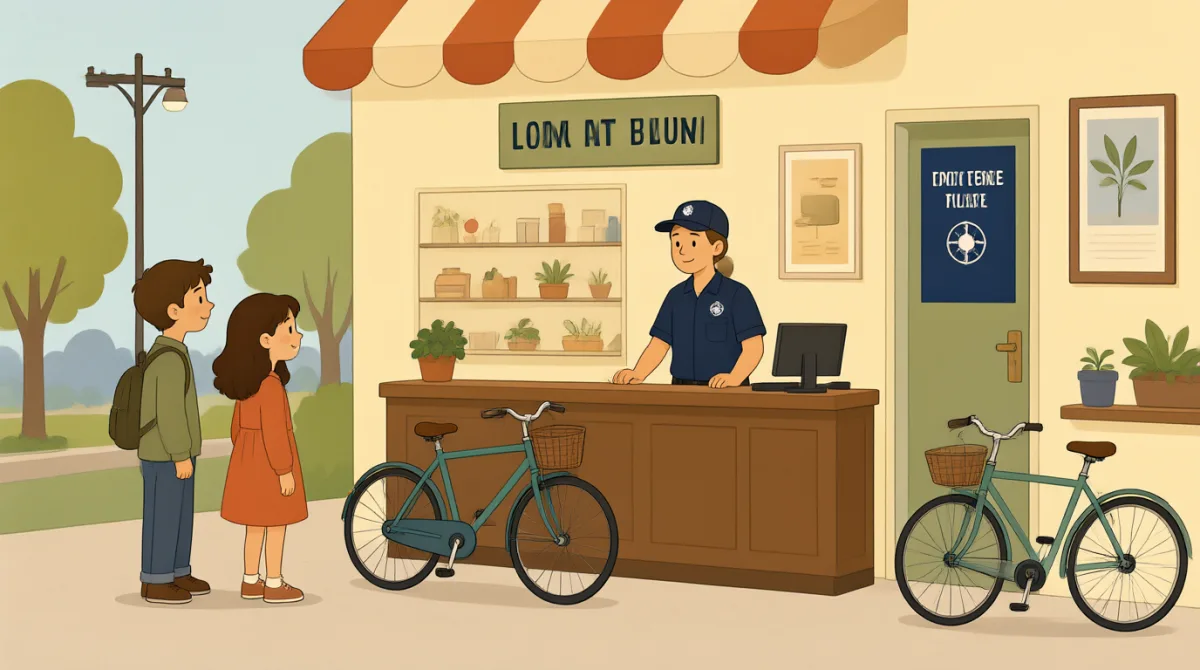
Leo and Emma ask a nearby shop worker if anyone saw the bike. They learn when it was last seen and decide to go to the police station.
レオとエマは近くの店員に、自転車を見た人がいないか尋ねます。最後に目撃された時間を聞き、警察署へ行くことにします。
会話9

Hi, did you see a blue bike near the rack this morning?
こんにちは。今朝、駐輪ラックの近くで青い自転車を見ませんでしたか?

I work at the shop next door. What time did you leave it there?
隣のお店で働いています。何時ごろそこに置いたんですか?
Around ten. I came back at noon, but it was gone.
10時ごろ。正午に戻ってきたら、もうなかったんだ。

Did you notice anyone taking it, or see where they went?
誰かが乗っていくのに気づきましたか?それとも、どこへ行ったか見ましたか?
I saw someone ride away on a blue bike around eleven thirty.
11時半ごろ、青い自転車に乗って走り去る人を見ました。
Was it a man or a woman? Did you see their face?
男の人でしたか、女の人でしたか?顔は見ましたか?
I couldn't see their face. They wore a dark jacket and a helmet.
顔は見えませんでした。暗い色のジャケットを着て、ヘルメットをかぶっていました。
Thanks. We should go to the police station and report it now.
ありがとうございます。今すぐ警察署に行って、盗難届を出したほうがいいですね。
Okay. Can you come with me? I don't know what to bring.
わかった。一緒に来てくれる?何を持っていけばいいのかわからないんだ。
語彙8
- next door隣に
This means in the building or place right beside another one. Here, Grace works at the shop beside the bike rack.
「next door」は、別の建物や場所のすぐ隣にあるという意味です。ここでは、グレースは駐輪ラックの隣にあるお店で働いています。
- came back戻ってきた
This means returned to a place. You can say, “I came back at noon” to explain when you returned.
「came back」は、ある場所に戻ったという意味です。戻った時間を伝えるときは、「I came back at noon」(正午に戻ってきました)のように言えます。
- it was goneなくなっていた
This means something was no longer there. Use it to say that an item has disappeared.
「it was gone」は、何かがもうそこになかったという意味です。物がなくなったことを伝えるときに使います。
- notice気づく
To notice someone is to see or become aware of what they are doing. Ask, “Did you notice anyone?” when looking for information.
「notice someone」は、誰かを見たり、その人が何をしているかに気づいたりすることです。情報を聞きたいときは、「Did you notice anyone?」(誰かに気づきましたか?)と尋ねられます。
- ride away乗って走り去る
This means to leave while riding a bike or another vehicle. You can say, “She rode away” to describe someone leaving by bike.
「ride away」は、自転車やほかの乗り物に乗ってその場を離れるという意味です。自転車で立ち去る人については、「She rode away」(彼女は乗って走り去りました)のように言えます。
- couldn't see見えなかった
This means was not able to see. Use it to explain that something was difficult or impossible to see.
「couldn't see」は、見ることができなかったという意味です。何かが見えにくかった、または見られなかったことを説明するときに使います。
- police station警察署
This is a place where police officers work. People can go there to report a crime.
「police station」は、警察官が働く場所です。犯罪の被害を届け出るために行くことができます。
- bring持っていく
To bring something is to take it with you to a place. You can ask what to bring when you are not sure what you will need.
「bring something」は、何かをある場所まで持っていくという意味です。必要なものがわからないときは、何を持っていけばいいか尋ねられます。
重要な文8
- 1
Hi, did you see a blue bike near the rack this morning?
こんにちは。今朝、駐輪ラックの近くで青い自転車を見ませんでしたか?
Use this question to ask if someone saw a specific item at a particular time and place. Change “a blue bike” and “this morning” to fit your situation.
特定の時間と場所で、ある物を見たかどうか尋ねる表現です。「a blue bike」と「this morning」を状況に合わせて変えてみましょう。
- 2
What time did you leave it there?
何時ごろそこに置いたんですか?
This asks when someone left an item in a place. You can use the same question to ask about a bag, phone, or other object.
人がある物をいつその場所に置いたのか尋ねる表現です。バッグや携帯電話など、ほかの物についても同じように尋ねられます。
- 3
I came back at noon, but it was gone.
正午に戻ってきたら、もうなかったんだ。
This explains when you returned and that the item was missing. Replace “at noon” with another time to give a clear timeline.
いつ戻ったのか、そしてその物がなくなっていたことを伝える表現です。いつ何が起きたかをはっきり伝えるには、「at noon」を別の時間に置き換えられます。
- 4
Did you notice anyone taking it, or see where they went?
誰かがそれを持っていくのに気づきましたか?それとも、その人がどこへ行ったか見ましたか?
Use this to ask whether someone saw a person take something or where that person went. It is useful when asking witnesses for details.
誰かが物を持ち去るところを見たか、またはその人がどこへ行ったかを尋ねる表現です。目撃者に詳しい情報を尋ねるときに役立ちます。
- 5
I couldn't see their face.
その人の顔は見えませんでした。
This is a simple way to explain that you could not identify someone. You can replace “their face” with another detail you could not see.
相手を特定できなかったことを簡潔に伝える表現です。「their face」を、見えなかったほかの特徴に置き換えることもできます。
- 6
We should go to the police station and report it now.
警察署に行って、今すぐ盗難届を出したほうがいいですね。
Use “We should” to suggest an action. You can replace “report it” with another useful step, such as “call the shop.”
「We should」は、何かをすることを提案するときに使います。「report it」を「call the shop」のような、ほかに役立つ行動に置き換えられます。
- 7
Can you come with me?
一緒に来てくれる?
This is a polite, everyday way to ask someone to go somewhere with you. Change “with me” to “with us” when inviting more than one person.
誰かに一緒に来てもらいたいときの、日常的で丁寧な尋ね方です。複数の人を誘うときは、「with me」を「with us」に変えましょう。
- 8
I don't know what to bring.
何を持っていけばいいのかわからないんだ。
Use this to say you are unsure which things to take with you. It is useful before going to an appointment or office.
何を持っていけばいいのか迷っていると伝える表現です。予約や用事でオフィスなどへ行く前に役立ちます。